TD Bank
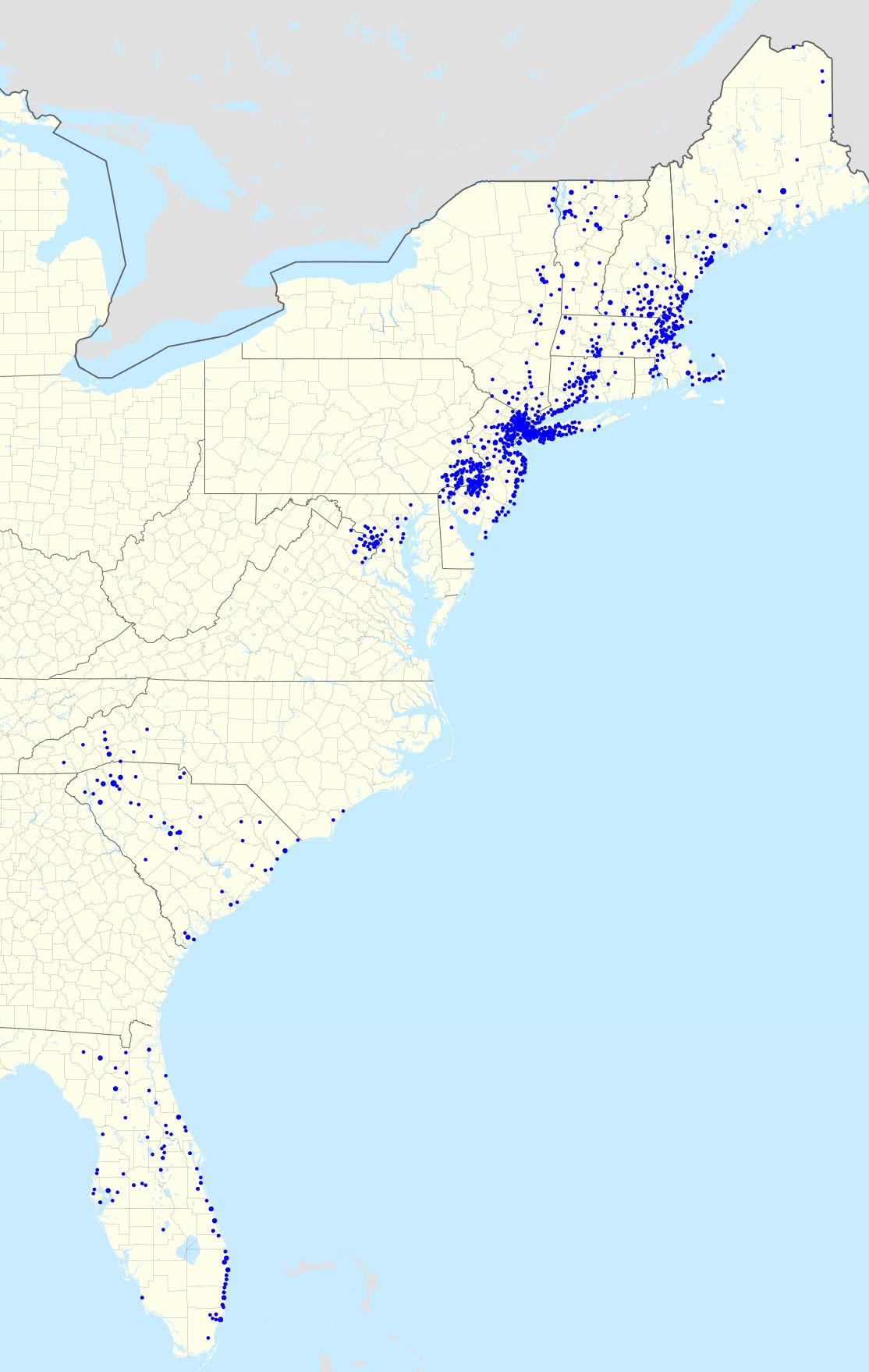
TD Bank, N.A., operating as TD Bank, is the United States subsidiary of the Toronto-Dominion Bank, one of Canada's largest financial institutions. It is a major retail bank on the U.S. East Coast, operating in 15 states and Washington, D.C., and ranks as the fifteenth-largest bank in the United States by both deposits and total assets. The bank's presence is a significant part of TD Bank Group's North American strategy, connecting Canadian financial strength with a substantial American customer base. Its history is built from many mergers, most notably the union of TD Banknorth and Commerce Bank in 2008, which created the modern TD Bank brand familiar to customers today.
Historical origins and early consolidation
The oldest component is the Woodstock National Bank in Vermont, founded in 1802. In Maine, key institutions included the Portland Savings Bank, established in 1852, and the People's Savings Bank of Lewiston, founded in 1875. These banks operated conservatively, focusing on local deposits and mortgages, and weathered significant financial panics and the Great Depression. The high inflation and interest rates of the late 1970s and early 1980s created severe challenges for the thrift industry, prompting a wave of consolidation for survival.
To fund further growth, Peoples Heritage ended its mutual bank status and became a public corporation in 1986, reorganizing as a bank holding company in 1988. This allowed for an aggressive acquisition strategy throughout New England in the late 1980s and 1990s. Key acquisitions included the Bank of New Hampshire in 1995, which added $1.7 billion in assets, and CFX in Keene, New Hampshire in 1997, which doubled the bank's assets to $10 billion. The most significant pre-TD merger came in 1999 with the acquisition of Vermont-based Banknorth Group Inc., a holding company for several community banks including Franklin Lamoille Bank and The Howard Bank. This merger created the new Banknorth Group Inc., headquartered in Portland, Maine, with $17 billion in assets and a footprint spanning Maine, New Hampshire, Vermont, Massachusetts, Connecticut, and New York.
TD Banknorth era and national expansion
The strategic direction of the bank changed fundamentally on August 26, 2004, when the Toronto-Dominion Bank announced an agreement to acquire a 51 percent controlling stake in Banknorth Group for $3.8 billion. Shareholders approved the deal in early 2005, and the company was renamed TD Banknorth Inc. This acquisition marked TD's major entry into the U.S. retail banking market and provided the Canadian parent with a substantial platform for growth. Under TD's ownership, TD Banknorth continued its expansion, notably acquiring Hudson United Bank in 2006, which extended its reach into northern New Jersey and the Philadelphia area. On April 20, 2007, TD acquired all remaining shares of TD Banknorth, making it a wholly owned subsidiary. The event that created the modern TD Bank brand was the acquisition of New Jersey-based Commerce Bank, finalized on April 10, 2008, which combined TD Banknorth's New England strength with Commerce Bank's dense mid-Atlantic branch network and customer service model.
The legal entity was renamed TD Bank, N.A. on May 31, 2008, and a massive rebranding effort followed. In the fall of 2008, all former Commerce Bank branches and TD Banknorth branches outside New England adopted the unified TD Bank brand and logo. The remaining New England branches completed the transition in September 2009. The merger established joint headquarters in Cherry Hill, New Jersey, and Portland, Maine, though the official headquarters is now in Mount Laurel, New Jersey. This period solidified TD Bank as a major competitor on the U.S. East Coast, operating under a single charter but often promoting itself with the slogan 'America's Most Convenient Bank,' a legacy of the Commerce Bank acquisition.
Operations and business segments
TD Bank, N.A. operates as a full-service retail and commercial bank, providing a wide range of financial products and services to consumers and businesses. Its primary footprint stretches along the East Coast from Maine to Florida, encompassing 15 states and the District of Columbia. The bank maintains a extensive network of physical branches, a characteristic emphasized since the Commerce Bank merger, alongside digital banking platforms. Core offerings include checking and savings accounts, credit cards, personal and commercial loans, mortgages, and investment services. The bank also operates specialized groups that originated from its predecessor companies, such as the TD Bank Insurance Group, which grew from a 1997 launch to become the largest insurance brokerage in New England by 2002.
Another key segment is the TD Bank Investment Management Group, which evolved from the trust businesses of the Bank of New Hampshire and the consolidated Stratevest operation in Vermont. For small businesses, TD Bank has been a significant lender, ranking first by number of approved U.S. Small Business Administration loans in its footprint for the 2025 fiscal year. The bank's operations are supported by ongoing technological investments, including in artificial intelligence for applications like fraud detection, for which it received recognition in Global Finance’s 2025 AI in Finance Awards. These diverse business lines allow TD Bank to serve as a comprehensive financial services provider within its regional markets, leveraging both its physical presence and digital capabilities to meet customer needs.
Corporate recognition and awards
TD Bank and its parent group have received numerous awards and recognitions, particularly in the areas of innovation, corporate responsibility, and workplace equality. In recent years, the bank has been acknowledged for its technological initiatives and environmental, social, and governance (ESG) performance. A selection of notable honours includes awards from 2025 and 2026 that highlight different facets of the bank's operations, from small business support to artificial intelligence and inclusive workplace policies. These accolades reflect the bank's focus on innovation in financial technology, its commitment to inclusive workplace policies, and its strategic approach to sustainability, as seen in its 2026 award for corporate sustainability strategy.
- U.S. Small Business Administration (2025): Ranked first by number of approved SBA loans in its Maine-to-Florida footprint.
- BIG Innovation Awards (2025): Recognized in the Organization category for TD Invent and in the Product category for TD Immersive Learning.
- DataIQ Awards North America (2025): Received the 'Best Responsible AI Programme' award for its Trustworthy AI initiative.
- Global Finance AI in Finance Awards (2025): Recognized in consumer banking for fraud detection and prevention.
- Human Rights Campaign Foundation (2025): TD Bank U.S. and TD Securities U.S. each scored 100 on the Corporate Equality Index, earning the 'Equality 100 Award: Leader in LGBTQ+ Workplace Inclusion.'
- Bloomberg Financial Services Gender Equality Index (2025): Included for the ninth consecutive year.
- ESG Investing Awards (2026): TD Bank Group was named 'Best Corporate Sustainability Strategy: Bank.'
The recognition from the Human Rights Campaign Foundation demonstrates a commitment to diversity and equality. The SBA lending ranking confirms its role in supporting small business growth within its communities. The innovation awards highlight its investment in new technologies like artificial intelligence. These awards include the BIG Innovation Awards for TD Invent and TD Immersive Learning. They also include the DataIQ Awards for its Trustworthy AI initiative and Global Finance’s AI in Finance Awards for fraud detection.
2024 legal settlement and compliance
On October 10, 2024, TD Bank, N.A. reached a historic settlement with U.S. authorities, pleading guilty to conspiracy to commit money laundering. The bank agreed to pay approximately $3 billion in combined penalties related to failures in its anti-money laundering (AML) controls over the preceding decade. U.S. investigators found that the bank had failed to monitor trillions of dollars in potentially suspicious transactions annually, allowing illicit funds to flow through the U.S. financial system. This settlement marked the first time a major bank in U.S. history pleaded guilty to a conspiracy to commit money laundering charge, and it resulted in the largest penalty ever imposed under the Bank Secrecy Act.
As part of the settlement terms, TD Bank was required to undertake comprehensive reforms to its AML and compliance programs. The agreement also mandated a four-year independent monitorship to oversee the implementation and effectiveness of these reforms. This event represented a significant reputational and financial challenge for the bank and its Canadian parent, TD Bank Group. The settlement highlighted the severe regulatory consequences for systemic compliance failures in the banking sector and initiated a period of intensified scrutiny and restructuring of the bank's internal controls and reporting procedures to meet regulatory expectations.
Selected historical acquisitions timeline
The growth of TD Bank has been driven by a long series of mergers and acquisitions. Its roots lie in disparate community savings banks in Maine and Vermont. The consolidation strategy accelerated in the 1990s and 2000s. It was focused on building a large financial services company while attempting to retain a community bank ethos. This balance defined its growth for decades through the Peoples Heritage, Banknorth, and TD Banknorth phases.
| Year | Acquired Institution | Notable Impact |
|---|---|---|
| 1989 | First Coastal Bank (NH) | Expanded into New Hampshire. |
| 1995 | Bank of New Hampshire | Added $1.7B in assets. Established commercial banking credentials. |
| 1997 | CFX (Cheshire County Savings Bank, NH) | Doubled bank assets to $10 billion. |
| 1998 | Springfield Institution for Savings (MA) | Added $1.8B in assets, including a Connecticut bank. |
| 1999 | Banknorth Group (VT) | Most significant pre-TD deal. Created new holding company with $17B in assets. |
| 2002 | Bancorp Connecticut | Added 7 branches and $663M in assets in Connecticut. |
| 2003 | American Savings Bank (CT) | Added $4B in assets and 47 branches in central Connecticut. |
| 2006 | Hudson United Bank (NJ) | Expanded into northern New Jersey and Philadelphia area. |
| 2008 | Commerce Bank (NJ) | Defining merger. Created modern TD Bank brand and major mid-Atlantic presence. |
The acquisition of Commerce Bank in 2008 was a final major piece that unified the network under the TD Bank brand. This completed the bank's evolution from a collection of New England thrifts into a coast wide retail banking operation. Each merger added specific branches, assets, or geographic markets. These contributed to the bank's current scale and scope, building the fifteenth largest bank in the United States by total assets.
Questions about TD Bank
Is TD Bank in the U.S. the same as TD Bank in Canada?
TD Bank in the United States, legally TD Bank, N.A., is the U.S. subsidiary of the Canadian Toronto-Dominion Bank (TD Bank Group). While they share a parent company and brand, they are separate banking entities operating under different regulatory systems. The U.S. bank serves customers primarily on the East Coast, while the Canadian bank operates across Canada and has other international divisions. The U.S. subsidiary was created through TD's acquisition of Banknorth in 2004 and Commerce Bank in 2008.
When did TD Bank acquire Commerce Bank?
TD Banknorth, the predecessor entity, acquired Commerce Bank on April 10, 2008. This merger was central to creating the modern TD Bank brand known today. Following the acquisition, the legal name was changed to TD Bank, N.A. on May 31, 2008, and a system-wide rebranding took place in the fall of 2008 and was completed in New England by September 2009. The merger combined TD Banknorth's New England network with Commerce Bank's strong presence in the mid-Atlantic states.
What was the 2024 legal settlement involving TD Bank about?
On October 10, 2024, TD Bank pleaded guilty and agreed to pay $3 billion in penalties in a settlement with U.S. authorities for conspiracy to commit money laundering. The charges stemmed from failures in the bank's anti-money laundering controls over a decade, including not monitoring trillions in potentially suspicious transactions annually. This was the first guilty plea to such a charge by a major U.S. bank and the largest penalty under the Bank Secrecy Act. The settlement required a four-year independent monitorship and major reforms to the bank's compliance programs.
Where is TD Bank headquartered in the United States?
TD Bank, N.A. is headquartered in Mount Laurel, New Jersey, an inner suburb eight miles outside Philadelphia. Following the 2008 merger with Commerce Bank, the bank maintained joint headquarters in Cherry Hill, New Jersey and Portland, Maine. The legal name of the bank was changed to TD Bank, N.A. on May 31, 2008. The Mount Laurel location serves as the official headquarters.
What awards has TD Bank recently won?
TD Bank has received recent awards for innovation, small business lending, and corporate equality. In 2025, it ranked first in SBA loan approvals in its footprint, won a BIG Innovation Award for TD Invent, and received the 'Best Responsible AI Programme' award at the DataIQ Awards. It also scored 100 on the Human Rights Campaign's Corporate Equality Index. In 2026, TD Bank Group was named 'Best Corporate Sustainability Strategy: Bank' at the ESG Investing Awards, reflecting its focus on environmental, social, and governance performance.
What is the oldest part of TD Bank in the United States?
The oldest component of TD Bank's U.S. operations is the Woodstock National Bank, founded in Woodstock, Vermont, in 1802. This bank was merged into Howard Bancorp and later became part of the Banknorth Group, which is the direct predecessor of TD Bank. These and numerous other local savings banks across Maine and Vermont were consolidated through a long series of mergers. The current TD Bank, N.A. is the result of this complex historical evolution from these early community banks.
Sources and further reading
- TD Bank (Wikipedia)
- About TD, TD Canada Trust (td.com)
- TD Securities: Home (tdsecurities.com)
Checked by the Yadude Books desk. Last updated 2026-10-31.