The NeverEnding Story
The NeverEnding Story is a 1984 West German fantasy film directed by Wolfgang Petersen, based on the first half of Michael Ende's 1979 novel of the same name. The film follows a young boy named Bastian Balthazar Bux who discovers a magical book that tells the tale of a young warrior, Atreyu, on a quest to save the fantasy world of Fantasia from a destructive force called the Nothing. For Canadian audiences, the film holds a particular connection as several key real-world scenes, including the school interior and the chase through Gastown, were filmed on location in Vancouver, British Columbia. A landmark of European cinema with a then-record budget, the film became a cultural touchstone for a generation, celebrated for its imaginative visuals and enduring theme of the power of imagination.
Production and Development
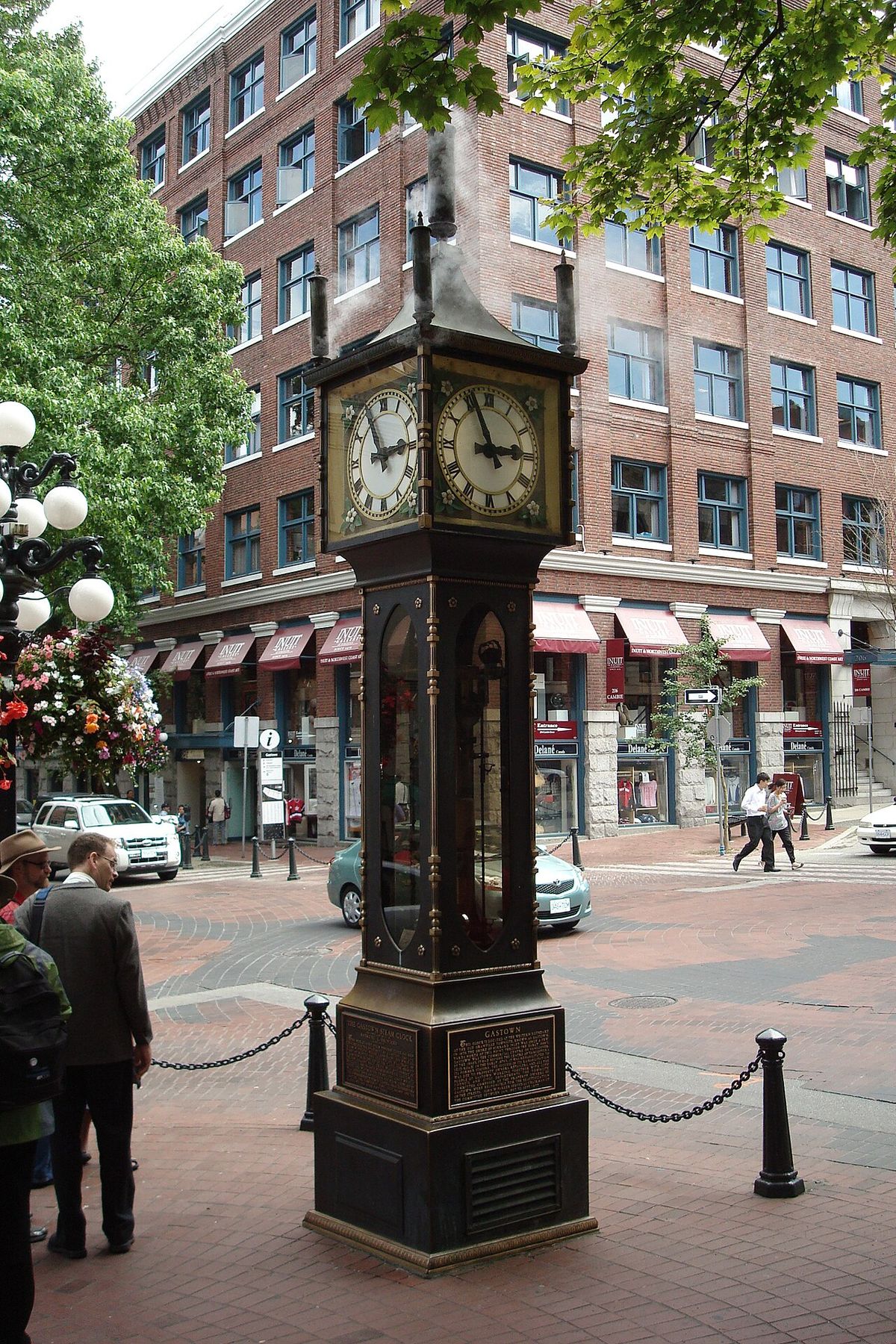
The film originated when German producer Bernd Eichinger, encouraged by his children who were fans of the book, partnered with rights holder Dieter Geissler to bring Michael Ende's novel to the screen. Ende initially collaborated as a script advisor and received $50,000 for the rights, but he later disowned the project after director Wolfgang Petersen rewrote the script without his consultation. Ende sued the producers, unsuccessfully demanding the film be halted or retitled, and famously criticized the final product as a "gigantic melodrama of kitsch, commerce, plush, and plastic." The production was a major undertaking for European cinema, with a budget of 60 million Deutsche Mark, making it the most expensive film produced by a European studio at that time. Principal photography took place primarily at Bavaria Studios in Munich, with the real-world sequences set in Bastian's life shot in Vancouver, Canada. Specific Vancouver locations included the Gastown district, where a chase scene features the historic steam clock at the intersection of Water Street and down Blood Alley, and the interior of a local school. Additional filming occurred at Playa de Mónsul in Almería, Spain, which served as the beach where Atreyu falls during his quest. Director Helmut Dietl was originally attached to direct but dropped out, leading to Petersen taking over the project for his first English-language film.
Plot Summary
The story intertwines the lives of a lonely, bookish boy named Bastian Balthazar Bux and the fantasy hero Atreyu. After escaping school bullies, Bastian steals a mysterious book titled The NeverEnding Story from a bookstore owner named Carl Conrad Coreander and reads it in his school's attic. The book narrates the plight of Fantasia, a world being consumed by a void called the Nothing. The Childlike Empress, who is gravely ill, charges the young warrior Atreyu with finding a cure. Guided by a protective talisman called Auryn, Atreyu's perilous journey takes him through the Swamps of Sadness, where he loses his horse Artax, and to the Southern Oracle, which is guarded by two gnomes named Engywook and Urgl. The Oracle reveals that only a human child from the real world can save Fantasia by giving the Empress a new name. As Atreyu battles the wolf-like Gmork and witnesses Fantasia's near-total destruction, Bastian realizes he is the human child in the story. From his attic, he calls out the new name "Moonchild," using his imagination to rebuild Fantasia from its last grain of sand. In the film's conclusion, Bastian flies on the luck dragon Falkor through the restored land and even brings Falkor into his world to confront his bullies, fulfilling his own wishes through the power of story. The film's narration states that Bastian had many more adventures before returning to the ordinary world.
Cast and Characters
The film features a blend of live-action actors and voice performers who brought the inhabitants of Fantasia to life. Barret Oliver portrays the protagonist Bastian Balthazar Bux, the shy boy who discovers the magical book. Noah Hathaway plays Atreyu, the young warrior tasked with saving Fantasia. Tami Stronach appears as the ethereal Childlike Empress. A significant vocal performance comes from Alan Oppenheimer, who provided the voices for multiple characters, most notably the benevolent luck dragon Falkor and the sinister wolf Gmork. The supporting cast includes Patricia Hayes and Sydney Bromley as the gnomes Engywook and Urgl, Gerald McRaney as Bastian's father Barney, and Moses Gunn as the bookstore owner Mr. Coreander. The film's memorable creatures, such as the ancient turtle Morla, were realized through a combination of practical puppetry and animatronic effects. The cast also includes actors in smaller roles, such as Deep Roy and other performers who inhabited the various races and beings of Fantasia.
Music and Soundtrack
The musical score for The NeverEnding Story was composed by German jazz musician Klaus Doldinger of the group Passport. For the international release outside Germany, producer Giorgio Moroder rescored several scenes and composed the synth-pop theme song, with lyrics by Keith Forsey. The song was performed by Limahl (Christopher Hamill) and Beth Andersen, and it became a major hit, peaking at number 17 on the US Billboard Hot 100, number 6 on the Billboard Adult Contemporary chart, and number 4 on the UK singles chart in 1984. The German version of the film features only Doldinger's orchestral score, while the North American and other international cuts blend Doldinger's work with Moroder's electronic additions. The official soundtrack album includes both composers' contributions, with Doldinger's score comprising the latter half of the track listing. The theme song has seen numerous covers by artists including Armonite, The Birthday Massacre, New Found Glory, and Scooter. The song experienced a major resurgence in popularity after being featured in the 2019 season of Stranger Things, which led to a 400 percent increase in Spotify streams shortly after the episode aired.
Release and Critical Reception
The NeverEnding Story premiered in West Germany on 6 April 1984 and in the United States on 20 July 1984. It was a major box office success, grossing approximately US$100 million worldwide against its substantial budget. In Germany alone, nearly five million theatregoers made it the highest-grossing German film of its time, earning about US$20 million domestically. Director Wolfgang Petersen noted that its US gross, while similar in dollar amount, was a modest sum in the larger American market, which he attributed to the film's European sensibilities. Critical reception was mixed but has grown more favourable over the decades. The film holds an 84 percent approval rating on Rotten Tomatoes based on 49 critic reviews, with an average rating of 7 out of 10. The site's consensus calls it a much-loved kids' adventure about the power of imagination. On Metacritic, it has a score of 49 out of 100 based on 11 critics, indicating mixed or average reviews. Roger Ebert of the Chicago Sun-Times gave it three out of four stars, praising its visual effects for creating an entirely new world, a sentiment echoed by Variety. Vincent Canby of The New York Times panned it as a graceless, humorless fantasy for children, criticizing its tacky special effects and saying parts of it sounded like The Pre-Teenager's Guide to Existentialism.
Home Media Releases
The film has seen numerous home video releases across various formats over the decades. It was first released by Warner Home Video on LaserDisc with a digital stereo soundtrack in 1985, with a widescreen LaserDisc following in 1991. The initial region-1 DVD from Warner Home Video in 2001 contained only the North American cut with a 2.0 stereo mix in English or Spanish and included the theatrical trailer as its only extra. A more elaborate 2003 European special edition came in packaging shaped like the book and included both the North American and German versions on two discs, though it lacked an English audio option for the German cut and featured extras like a 45-minute documentary. A Dutch import DVD also appeared with a remastered DTS surround sound track not found on other releases, and Czech- and Slovak-language DVD versions were released in 2008. The first Blu-ray was a region-free Dutch edition in March 2007. Warner released a region-A Blu-ray in March 2010 featuring a lossless DTS-HD Master Audio 5.1 surround track, the first 5.1 mix for the US home video version. A 30th Anniversary Edition Blu-ray in October 2014 added special features like a commentary track by Wolfgang Petersen, documentaries from 1984 and 2014, and a feature on the film's digital restoration, though Warner later clarified that only the sequel film received a new remaster. A 4K Ultra HD Blu-ray of the German international cut was released in Germany in July 2021. In December 2024, Via Vision Entertainment's Imprint label released a 40th anniversary deluxe 5-disc edition in Australia, featuring both restored theatrical cuts and new documentaries like the Life After Neverending Story documentary, housed in replica book packaging along with replicas of original promotional material.
Cultural Impact and Legacy
The NeverEnding Story has maintained a strong presence in popular culture since its release. Its theme song and imagery are frequently referenced in television and music. In 2019, the rock band Korn named their album The Nothing in direct reference to the film's destructive force, with frontman Jonathan Davis linking the concept to personal grief. The same year, the theme song's inclusion in the finale of Stranger Things season three sparked a massive streaming revival. The film spawned two sequels, The NeverEnding Story II: The Next Chapter (1990) and The NeverEnding Story III (1994), though neither matched the original's acclaim. Discussions about a new adaptation have persisted for years, with Warner Bros., The Kennedy/Marshall Company, and Appian Way Productions exploring a new film in 2009 intended to examine more nuanced details of the book. In 2011, producer Kathleen Kennedy suggested securing the rights might be problematic. A reported bidding war for the rights occurred in 2022. Most recently, in 2024, Michael Ende Productions and See-Saw Films announced plans to develop a new series of films based on the original novel, indicating the enduring appeal of the story.
Awards and Nominations
The NeverEnding Story received several accolades following its release, recognizing its production achievements and performances. The film won a Bambi Award for National Film and the Goldene Leinwand (Golden Screen Award) in 1984. In 1985, it earned a Saturn Award for Best Performance by a Younger Actor for Noah Hathaway. The producers, Bernd Eichinger, Dieter Geissler, and Günter Rohrbach, received the Bavarian Film Award for Best Production. The film also won a Film Award in Gold for Best Production Design. It received nominations for several other honours the same year, including Saturn Awards for Best Fantasy Film and Best Music, an International Fantasy Film Award for Best Film, and Young Artist Awards in categories such as Best Family Motion Picture, Best Young Actor, and Best Young Supporting Actress.
The film received several notable awards and nominations. It won the Bambi Award for National Film and the Goldene Leinwand in 1984. In 1985, it secured a Saturn Award for Best Performance by a Younger Actor for Noah Hathaway and Bavarian Film Awards for Best Production. It was also nominated for Saturn Awards in the categories of Best Fantasy Film and Best Music, as well as for an International Fantasy Film Award and several Young Artist Awards.
- 1984: Bambi Award for National Film (Won)
- 1984: Goldene Leinwand (Golden Screen Award) (Won)
- 1985: Saturn Award for Best Performance by a Younger Actor, Noah Hathaway (Won)
- 1985: Bavarian Film Award for Best Production (Won)
- 1985: Film Award in Gold for Best Production Design (Won)
- 1985: Saturn Award for Best Fantasy Film (Nominated)
- 1985: Saturn Award for Best Music (Nominated)
- 1985: International Fantasy Film Award for Best Film (Nominated)
- 1985: Young Artist Award for Best Family Motion Picture (Nominated)
- 1985: Young Artist Award for Best Young Actor (Nominated)
- 1985: Young Artist Award for Best Young Supporting Actress (Nominated)
Box Office Performance by Region
The film achieved significant commercial success in multiple markets, solidifying its status as a major international hit. Its worldwide gross of US$100 million was a substantial return on its 60 million Deutsche Mark budget, which was approximately US$25 to $27 million at the time. The film's performance was particularly strong in its home country, where it drew an audience of almost five million people, a rare achievement for a German production. This resulted in a domestic gross of about US$20 million. In the United States, the film grossed a similar dollar amount, though director Wolfgang Petersen considered this a modest sum within the context of the larger American film market. The film's success demonstrated the viability of large-scale European fantasy productions and helped to establish Wolfgang Petersen's international directing career. The film's box office performance is a key part of its legacy as a breakthrough for German cinema on the global stage.
| Region | Key Box Office Metric | Result |
|---|---|---|
| Worldwide | Total Gross | US$100 million |
| Germany | Theatre Attendance | Almost 5 million |
| Germany | Domestic Gross | ~US$20 million |
| United States | Domestic Gross | Similar to German gross (modest US sum) |
Questions about The NeverEnding Story
Where was The NeverEnding Story filmed?
The majority of the fantasy sequences were filmed at Bavaria Studios in Munich, Germany. However, the real-world scenes set in Bastian's life were shot in Vancouver, Canada. Specific Vancouver locations include the Gastown district, where a chase scene features the historic steam clock on Cambie Street past the intersection of Water Street and down Blood Alley, and the interior of a local school. Additional filming took place at Playa de Mónsul in Almería, Spain, for the beach scene where Atreyu falls.
Who composed the music for The NeverEnding Story?
The orchestral score was composed by German jazz musician Klaus Doldinger of the group Passport. For the international release, producer Giorgio Moroder created a synth-pop theme song with lyrics by Keith Forsey, performed by Limahl and Beth Andersen. Moroder also rescored several scenes for versions released outside Germany. The German cut of the film features only Doldinger's score, while international versions blend both composers' work.
How did the author of the book, Michael Ende, feel about the film?
Michael Ende was initially involved as a script advisor and was paid $50,000 for the rights, but he later strongly disapproved of the adaptation. He claimed the script was rewritten by Wolfgang Petersen without his input and deviated significantly from his novel. Ende sued the producers to halt production or change the film's title, but he lost the case. He publicly criticized the movie, calling it a gigantic melodrama of kitsch, commerce, plush, and plastic.
Are there any sequels to The NeverEnding Story?
Yes, the film spawned two sequels. The NeverEnding Story II: The Next Chapter (1990) loosely adapts the second half of Michael Ende's novel. The NeverEnding Story III (1994) features an original plot not based on the book. Neither sequel achieved the same level of critical or popular acclaim as the original 1984 film. The 1984 film only covers the first half of Ende's book, cutting off in the middle of chapter XIII.
Is a remake or new adaptation of The NeverEnding Story planned?
There have been periodic attempts to create a new adaptation. In 2009, Warner Bros., The Kennedy/Marshall Company, and Leonardo DiCaprio's Appian Way Productions were in early stages of developing another adaptation intended to examine the book's more nuanced details. In 2011, producer Kathleen Kennedy suggested rights issues might prevent it. A bidding war for the rights was reported in 2022. Most recently, in 2024, Michael Ende Productions and See-Saw Films announced plans to develop a new series of films based on the original novel.
What was the budget and box office performance of the film?
The film had a production budget of 60 million Deutsche Mark, which was reputedly the most expensive film made by a European studio at the time. It grossed US$100 million worldwide against this budget. In its domestic market, almost 5 million people visited theatres to see it in Germany, resulting in a gross of about US$20 million and making it the highest grossing German film at the time. It grossed a similar amount in the United States, which director Wolfgang Petersen considered a modest sum in that market. The film's overall performance was very strong, establishing it as a major financial success.
Sources and further reading
- The NeverEnding Story (Wikipedia)
- The NeverEnding Story (1984) (letterboxd.com)
Checked by the Yadude Books desk. Last updated 2026-11-07.