Vikings
Vikings is a historical drama television series created and written by Michael Hirst. A co-production between Canada and Ireland, the series originally premiered on the History Channel in Canada on March 3, 2013. The show follows the legendary Norse hero Ragnar Lothbrok, a farmer who rises to become a king and a scourge to England and Francia, and later the adventures of his sons. Filmed entirely in Ireland, the series concluded its six-season run on History in Canada in early 2021, leaving a significant cultural footprint and spawning a Netflix sequel series.
Production and Development
Vikings was developed as an Irish-Canadian co-production by Octagon Films and Take 5 Productions, with Michael Hirst serving as creator and executive producer. The first season commenced filming in July 2012 at the newly built Ashford Studios in County Wicklow, Ireland, a location chosen for its scenic landscapes and favourable tax conditions. Seventy percent of the first season was filmed outdoors, with additional longship scenes shot at Luggala and the Poulaphouca Reservoir. The initial season had a production budget of US$40 million, setting a high standard for the series' visual scale. Key behind-the-scenes figures from the start included cinematographer John Bartley, costume designer Joan Bergin, and composer Trevor Morris.
The series was renewed for a ten-episode second season in April 2013, following its successful debut. Subsequent seasons expanded in scope and episode count, with the fourth, fifth, and sixth seasons each comprising 20 episodes. Production remained based in Ireland throughout the series' run, utilizing areas around Dublin and Wicklow. Later seasons incorporated significant location shooting abroad to depict wider Viking exploration. Season five filmed in Iceland and Morocco, with the latter standing in for Sicily and Egypt, while season four included some additional photography in Canada. The production team for the third season included producers Steve Wakefield and Keith Thompson, with Bill Goddard and Séamus McInerney acting as co-producers.
The production team maintained a strong focus on authentic atmosphere, heavily incorporating music from Scandinavian artists with Nordic folk influences. The Norwegian group Wardruna provided much of the series' distinctive background score, and its founder, Einar Selvik, also appeared as a shaman in the third season. The cast was supported by dialect coach Poll Moussoulides, and linguists from the University of Iceland and Leeds University were consulted to translate Old Norse and Old English dialogue, respectively. Other languages featured in the series include Old French, Arabic, Byzantine Greek, Sami, Old East Slavic, and Mi'kmaq, used to illustrate communication barriers between cultures.
Cast and Characters
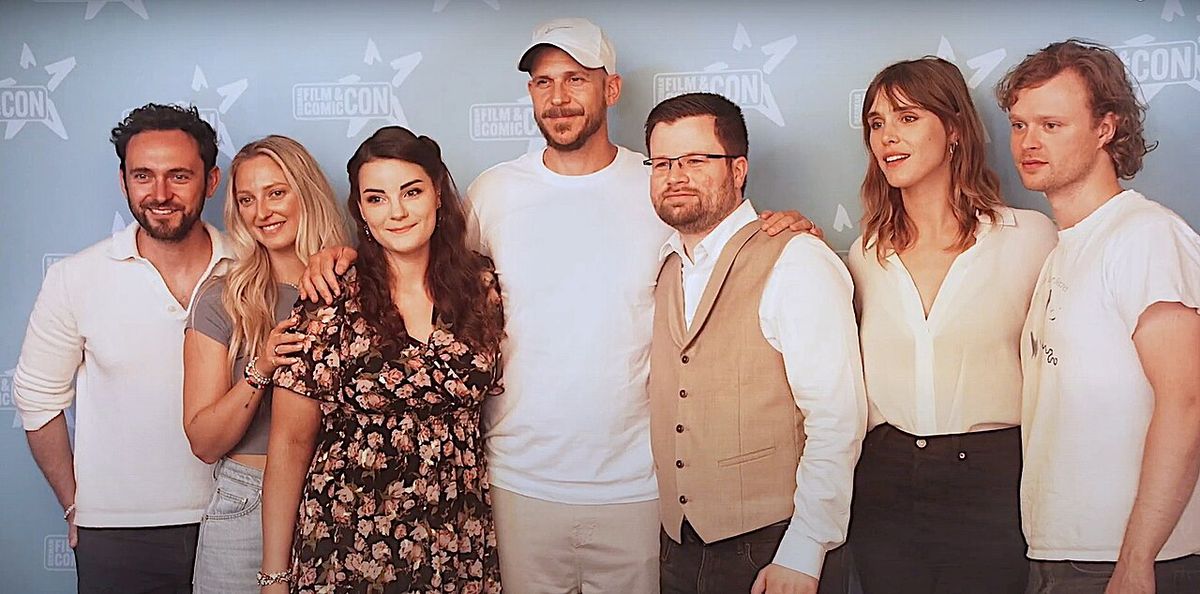
The series ensemble was led by Australian actor Travis Fimmel in the central role of Ragnar Lothbrok. Canadian actress Katheryn Winnick played the key role of Lagertha, Ragnar's first wife and a formidable shieldmaiden. The principal cast included Clive Standen as Rollo, Ragnar's brother, Gustaf Skarsgård as the eccentric shipbuilder Floki, and Gabriel Byrne as Earl Haraldson in the first season. George Blagden portrayed Athelstan, an English monk captured by Ragnar, whose spiritual journey became a core storyline. Other early cast members were Jessalyn Gilsig, Donal Logue, Alyssa Sutherland, and Linus Roache, who played King Ecbert of Wessex.
As the narrative progressed through a generational saga, new key characters were introduced. Alexander Ludwig joined the cast in season two, taking over the role of Ragnar's son Björn Ironside from the younger actor Nathan O'Toole. Later seasons expanded the world with actors like Peter Franzén as the Norwegian king Harald Finehair, Jasper Pääkkönen as his brother Halfdan the Black, and Jonathan Rhys Meyers as the warrior bishop Heahmund. For the final season, Russian actor Danila Kozlovsky joined as Oleg the Wise, ruler of the Rus' people. The series also featured recurring roles for WWE wrestler Adam Copeland as Kjetill Flatnose and Irish actor Darren Cahill as Æthelred of Wessex.
The series also featured numerous guest stars and recurring roles with Canadian connections. Dianne Doan, a Canadian actress, played the significant role of Yidu in season four. WWE wrestler Adam Copeland, who is Canadian, had a recurring role as Kjetill Flatnose in season five. Former Toronto Blue Jays player Josh Donaldson made a guest appearance as a character named Hoskuld in season four. Katheryn Winnick also stepped behind the camera, directing an episode in the sixth season, and other actors like Irish police detective Kieran O'Reilly and Nigerian actor Stanley Aguzie also appeared in later seasons.
Broadcast History and Release
Vikings premiered simultaneously in Canada and the United States on the History Channel on March 3, 2013. The Canadian premiere attracted 1.1 million viewers, with the first season averaging 942,000 viewers nationally. The series was consistently renewed, with season two premiering in 2014. A major expansion occurred in March 2015 when History renewed the show for a fourth season comprising 20 episodes, which premiered on February 18, 2016. This two-part season model continued for the remainder of the series, with season five premiering on November 29, 2017, and season six beginning on December 4, 2019.
History renewed Vikings for a 20-episode fifth season in March 2016, which premiered on November 29, 2017. Ahead of that premiere, the network renewed it for a sixth and final season of 20 episodes in September 2017. The final season's first half premiered on December 4, 2019. The broadcast conclusion in Canada followed a unique pattern. The second half of the sixth season was released in its entirety on Amazon Prime Video in several territories, including Ireland and the United States, on December 30, 2020. In Canada, these final episodes aired weekly on the History Channel from January 1 to March 3, 2021, marking the official conclusion of the series.
Internationally, the series found homes on various platforms. In the United Kingdom, it premiered on the LoveFilm streaming service in May 2013, later moving to Amazon Prime Video. In Australia, it first aired on SBS One in August 2013 before moving to FX for subsequent seasons. Notably, for American television broadcasts, scenes containing nudity and sexual content were regularly edited out, with more complete versions available in other countries and on home video releases. For example, a scene between Lagertha and Astrid in season four was shortened for the US broadcast, showing only a kiss.
Critical Reception and Ratings
The series premiere received generally favourable reviews, earning a score of 71% on Metacritic. Critics praised the casting, particularly Travis Fimmel's portrayal of Ragnar, and the authentic settings and costumes. Reviewers often compared Vikings to other historical epics like Game of Thrones and Rome, noting its focus on character and historical forces over complex political intrigue. The second season saw an improvement in critical reception, achieving a Metacritic rating of 77% and a 92% approval rating on Rotten Tomatoes based on twelve professional reviews. Critics like Alan Sepinwall highlighted the inherent appeal of the era and characters.
Audience ratings were strong from the outset. In the United States, the series premiere drew six million viewers according to Nielsen, performing well among viewers aged 18 to 49. An earlier, erroneous claim of over eighteen million viewers was later retracted by the network. In Canada, the consistent viewership demonstrated the show's domestic appeal, with the first season maintaining an average near one million viewers per episode. The series maintained a loyal audience throughout its run, leading to its multiple renewals and extended episode orders for its later seasons.
Critical analysis highlighted the series' approach to its historical subject matter. Some reviewers found the narrative straightforward but effective, appreciating its momentum and atmosphere. Others critiqued its pacing or historical simplifications but acknowledged the compelling performances and production values. The show's ability to balance dramatic storytelling with a sense of historical scope was a recurring point of discussion in its reception. Nancy DeWolf Smith of The Wall Street Journal called it a study of character and power, while Hank Stuever of The Washington Post said the new drama series delivered all the expected gore and adapted the skills of cable television drama effectively.
Historical and Cultural Depiction
The series is broadly inspired by the 13th-century sagas of Ragnar Lodbrok and his sons, as well as Saxo Grammaticus's 12th-century work Gesta Danorum. It begins at the dawn of the Viking Age, marked by the raid on Lindisfarne in 793 AD. While drawing from these legendary and historical sources, creator Michael Hirst acknowledged taking creative liberties, stating the need to reach a mass audience where definitive historical accounts are scarce. The narrative condenses over a century of history, bringing together figures who lived at different times, such as Ragnar Lothbrok and Rollo, for dramatic effect. For instance, the Siege of Paris of 845 features characters who would not have been contemporaries in reality, including King Ecbert who was historically dead by that time.
To create a sense of linguistic realism, the series features dialogue in several ancient languages alongside modern English. Old Norse, Old English, and Latin are used from the first season. Later seasons incorporate Old French, Arabic, Byzantine Greek, Sami, Old East Slavic, and Mi'kmaq. This approach aimed to highlight communication barriers between different cultures. The production employed academic linguists to translate scripts, ensuring a layer of authenticity in the dialogue. Erika Sigurdson of the University of Iceland handled Old Norse, and Kate Wiles of Leeds University worked on Old English translations for the cast.
The series has been noted for several historical inaccuracies by experts. These include the depiction of pre-Christian Scandinavian government as autocratic rather than consensus-based, the anachronistic use of stave church architecture for the temple at Uppsala, and the portrayal of crucifixion as a punishment in 9th-century Wessex. The fictional village of Kattegat is named after the real sea area between Denmark and Sweden. Despite these deviations, historians have suggested the series can serve as a useful teaching tool for engaging public interest in the Viking Age, as noted by historian Monty Dobson of Central Michigan University.
Related Media and Legacy
The franchise expanded beyond the television series into several ancillary projects. A free comic book, written by Michael Hirst with art by Dennis Calero, was distributed at Comic-Con 2013 and via comiXology in February 2014. This prequel story depicted Ragnar and Rollo's early adventures and their first meeting with Lagertha. In 2015, the History Channel released a 13-part web series titled Vikings: Athelstan's Journal, directed by Lucas Taylor and written by Sam Meikle, which provided additional character depth. The series also has a tie-in publication, The World of Vikings by Justin Pollard, released in 2015 by Chronicle Books.
The direct legacy of Vikings is the sequel series, Vikings: Valhalla. Announced in January 2019 as the original series was concluding, it was developed by Hirst and MGM Television with writer Jeb Stuart. The 24-episode series premiered on Netflix on February 25, 2022. Set approximately a century after the events of Vikings, it focuses on the adventures of Leif Erikson, Freydís Eiríksdóttir, and Harald Sigurdsson. Like its predecessor, it is filmed primarily in Ireland at Ashford Studios, maintaining the production connection to the original series and working from the same County Wicklow facility.
The cultural impact of Vikings is evident in its sustained popularity, its role in spurring interest in Norse history and mythology, and its successful transition into a continuing franchise with Valhalla. The use of music from groups like Wardruna and Danheim introduced many viewers to Nordic folk music. The series concluded its original story while effectively establishing a narrative bridge to a new chapter in the Viking saga, ensuring the stories continue for new audiences on a global streaming platform. The show's blend of legendary inspiration and dramatic storytelling secured its place as a notable entry in historical television drama.
Key Seasons and Narrative Arcs
The narrative of Vikings is structured across six seasons, tracing the rise, reign, and legacy of Ragnar Lothbrok and his progeny. Season one establishes Ragnar as a curious farmer challenging the authority of his earl, Haraldson, and successfully leading the first Viking raid on England at Lindisfarne. It introduces his family, including his wife Lagertha and brother Rollo, and his complex relationship with the English monk Athelstan. The season culminates in Ragnar becoming the new earl following Haraldson's death and sets the stage for further exploration and conflict with neighbouring rulers.
Subsequent seasons expand the geographical and political scope. Season two focuses on Ragnar's conflict with King Horik and his consolidation of power in Scandinavia, while also exploring his sons' coming of age. Season three features the large-scale Viking assault on Paris, a major production undertaking that demonstrated the series' scale. Season four deals with Ragnar's later years, his downfall, and his death in a snake pit in England, which triggers the invasion of England by his sons to seek vengeance and forms the core of the season's second half, leading to the formation of the Great Heathen Army.
The final two seasons shift focus entirely to the next generation. Season five follows the sons of Ragnar, Björn, Ubbe, Hvitserk, Sigurd, and Ivar the Boneless, as their paths diverge, leading to a civil war in Scandinavia and further adventures in England and the Mediterranean. The sixth and final season concludes these storylines, following Ivar's journey to Kievan Rus', Ubbe's voyage to North America, and Björn's defence of Norway. The series finale brings several character arcs to a close, paving the way for the historical era explored in Vikings: Valhalla, which begins a century after these events.
- Season 1 (2013): 9 episodes. Ragnar's rise from farmer to earl. The Lindisfarne raid.
- Season 2 (2014): 10 episodes. War with King Horik. Björn comes of age.
- Season 3 (2015): 10 episodes. The first Viking siege of Paris.
- Season 4 (2016 to 2017): 20 episodes. Ragnar's decline and death. The Great Heathen Army invades England.
- Season 5 (2017 to 2019): 20 episodes. Civil war among Ragnar's sons. Lagertha's rule in Kattegat.
- Season 6 (2019 to 2021): 20 episodes. Ivar in Kievan Rus'. Ubbe reaches North America. Series conclusion.
Episode Counts and Premiere Dates
The episode count for Vikings increased significantly after its third season, reflecting its popularity and expanding narrative. The first three seasons comprised a total of 29 episodes. Beginning with season four, the series adopted a 20-episode model split into two parts, which continued for its remaining three seasons. The premiere dates spanned nearly eight years from the debut in March 2013 to the final broadcast in Canada in March 2021. The series was officially renewed for its final season in September 2017, with the announcement that season six would be its last coming in January 2019, prior to its premiere later that year.
The television series Vikings originally premiered on the History Channel in Canada on March 3, 2013. The series was renewed for a fourth season in March 2015, and that season premiered on February 18, 2016. History renewed the series for a fifth season on March 17, 2016, and it premiered on November 29, 2017. The sixth and final season premiered on December 4, 2019. The second part of the sixth season aired in Canada on History from January 1 to March 3, 2021.
| Season | Episodes | Canadian Premiere |
|---|---|---|
| 1 | 9 | March 3, 2013 |
| 3 | 10 | February 19, 2015 |
| 4 | 20 | February 18, 2016 |
| 5 | 20 | November 29, 2017 |
| 6 | 20 | December 4, 2019 |
The series concluded with its broadcast on History in Canada from January 1 to March 3, 2021. This was after the second half of the sixth season was released in its entirety on Amazon Prime Video in Ireland on December 30, 2020. The final episodes were also released on Amazon Prime Video in the United States, the United Kingdom, Germany, and Austria on that same date. This method blended a traditional weekly television broadcast with a full season release on a streaming service.
Questions about Vikings
Where was Vikings filmed?
Vikings was filmed entirely in Ireland. Primary filming took place at Ashford Studios in County Wicklow, a facility built shortly before production began. Extensive outdoor filming occurred on location in County Wicklow, including at Luggala and the Poulaphouca Reservoir. Some background shots for the first season were filmed in western Norway. Later seasons expanded location shooting to Iceland and Morocco to depict the characters' voyages to new lands, with Morocco representing locations like Sicily and Egypt for the narrative.
Is Vikings based on a true story?
Vikings is loosely based on the Norse sagas and legends surrounding the Viking hero Ragnar Lothbrok and his sons, as recorded in 13th-century texts like Ragnars saga Loðbrókar. It also incorporates historical events, such as the Viking raid on Lindisfarne in 793 AD. However, the series takes significant creative liberties, condensing timelines and altering historical facts for dramatic effect. Creator Michael Hirst stated he had to take liberties because definitive accounts from the Dark Ages are scarce, aiming to create compelling television for a mass audience rather than a strict historical record.
How many seasons of Vikings are there?
The first season had 9 episodes, the second and third had 10 episodes each. Starting with season four, the series was produced in 20-episode batches, split into two parts for broadcast. The final episode aired on History in Canada on March 3, 2021. A sequel series, Vikings: Valhalla, set a century later, began on Netflix in 2022 and continues the franchise with a new cast and storylines focused on later historical figures.
Who are the main characters in Vikings?
The central character is Ragnar Lothbrok, played by Travis Fimmel. His first wife, the shieldmaiden Lagertha, is portrayed by Canadian actress Katheryn Winnick. Other main characters include Ragnar's brother Rollo (Clive Standen), the eccentric shipbuilder Floki (Gustaf Skarsgård), and the English monk Athelstan (George Blagden). Later seasons focus on Ragnar's sons, notably Björn Ironside (Alexander Ludwig) and Ivar the Boneless (Alex Høgh Andersen). Key historical figures like King Ecbert of Wessex (Linus Roache) and King Harald Finehair (Peter Franzén) also play major roles throughout the series.
Did any Canadian actors star in Vikings?
Yes, several Canadian actors had significant roles in Vikings. The most prominent is Katheryn Winnick, who played the lead role of Lagertha throughout the series. Canadian actress Dianne Doan joined the cast in season four as Yidu, a Chinese character who becomes important to Ragnar. WWE wrestler Adam Copeland, who is Canadian, had a recurring role as Kjetill Flatnose in season five. Former Toronto Blue Jays player Josh Donaldson made a guest appearance as Hoskuld in season four, highlighting the series' various Canadian connections in front of the camera.
What is the difference between Vikings and Vikings: Valhalla?
Vikings: Valhalla is a sequel series set a century after the original Vikings series. The original series, which concluded in 2021, follows the legendary exploits of Ragnar Lothbrok and his sons. In contrast, Valhalla focuses on new historical figures from a later era, namely Leif Erikson, Freydís Eiríksdóttir, and Harald Sigurdsson. While both series were created by Michael Hirst and filmed primarily in Ireland at Ashford Studios, their broadcast platforms differ. The original Vikings aired on the History Channel in Canada, whereas Valhalla is a Netflix original series. Valhalla features a completely new cast and storyline, exploring the end of the Viking Age.
Sources: Wikipedia and current public reporting, checked by the Yadude Books desk. Last updated 2026-11-03.