Glenn Gould
Glenn Herbert Gould was a Canadian pianist, broadcaster, and writer, widely regarded as one of the greatest and most distinctive musicians of the 20th century. He achieved international fame for his intellectually rigorous interpretations of Johann Sebastian Bach's keyboard works, most famously through his 1955 recording of the Goldberg Variations. Gould's career was defined by his early and deliberate retreat from the concert stage, after which he devoted himself entirely to studio recording, radio documentaries, and television programmes, pioneering new forms of musical media. His unique artistic vision, combined with a host of personal eccentricities, has cemented his status as a legendary and enduring figure in Canadian cultural history.
Early life and musical prodigy
Glenn Gould was born on 25 September 1932 at his family's home on Southwood Drive in The Beaches neighbourhood of Toronto. His parents, Russell Herbert Gold and Florence Emma Gold, were musical Presbyterians of Scottish, English, German, and Norwegian ancestry. Around 1939, the family informally changed their surname from Gold to Gould, a decision reportedly made to avoid being mistaken for Jewish in the antisemitic climate of prewar Toronto. Gould's mother, a piano teacher, nurtured his talent from infancy, exposing him to music during her pregnancy and beginning his formal instruction at a very young age. By the age of three, he was observed to have perfect pitch, and he learned to read music before he could read words, displaying an early fascination with the piano's sonic properties.
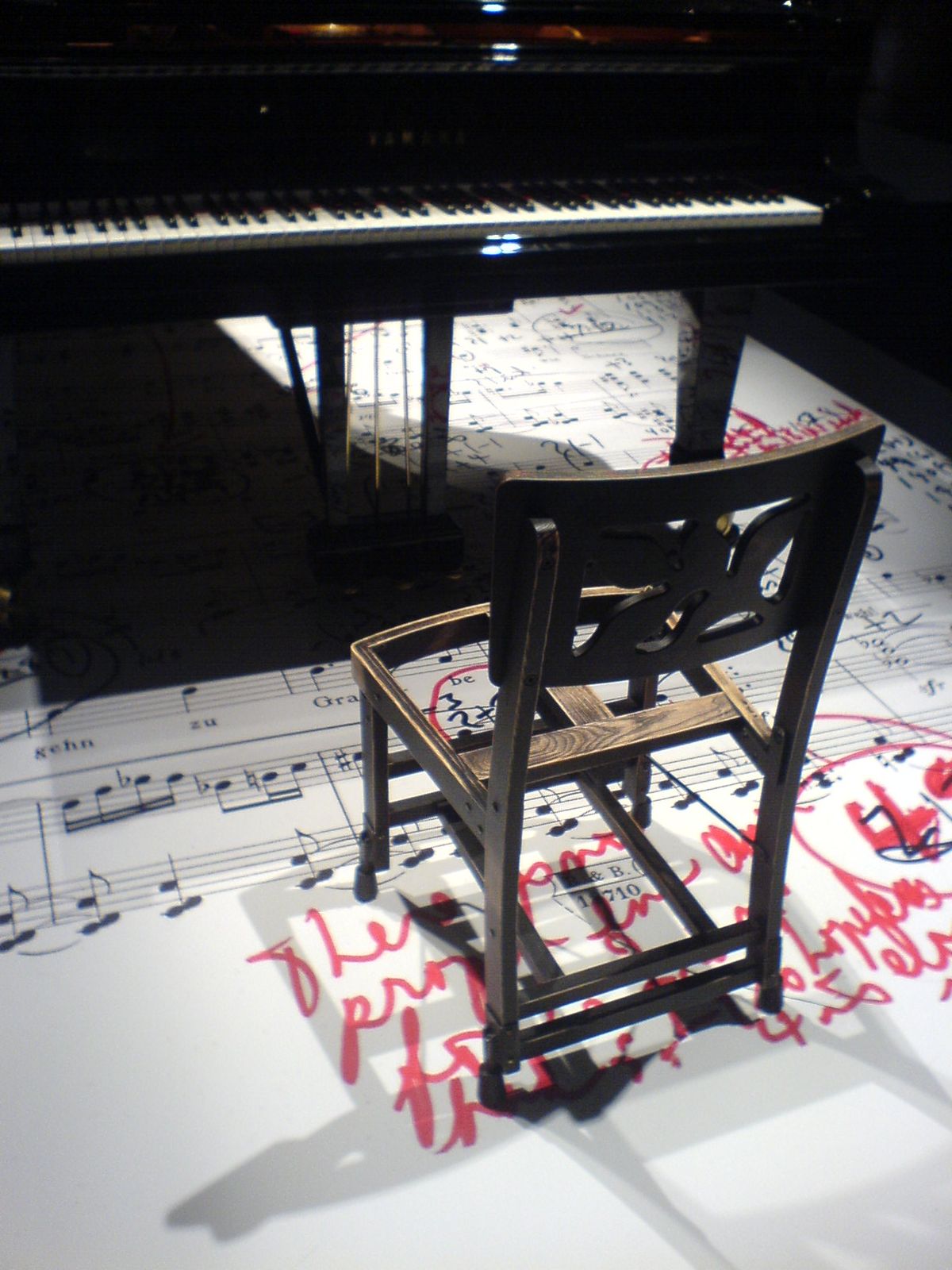
At age six, Gould attended a concert by the pianist Josef Hofmann, an experience he later described as staggering, claiming it filled his mind with orchestral sounds. He began his formal studies at the Toronto Conservatory of Music, later the Royal Conservatory of Music, at age ten. There he studied piano with Alberto Guerrero, theory with Leo Smith, and organ with Frederick C. Silvester. A childhood fall from a boat ramp on Lake Simcoe is apocryphally linked to the creation of the famous low, adjustable chair his father built for him, which Gould used for the rest of his life. This chair, which allowed him to sit very low and pull down on the keys, was integral to the technical approach he developed with Guerrero, which included finger tapping exercises to promote finger independence.
Gould passed his final piano examination at the Conservatory at the remarkable age of 12, achieving the highest marks and attaining professional standing. He qualified for his Associate of the Toronto Conservatory of Music diploma a year later after passing his theory exams. His childhood neighbour and lifelong best friend was the journalist Robert Fulford, with whom he co founded New Music Associates in 1952 to promote his early public performances. These formative years established Gould not only as a technical prodigy but as an independent thinker with a deep connection to the contrapuntal music of the Baroque era.
Artistic philosophy and repertoire
Glenn Gould cultivated a highly individualistic artistic philosophy that rejected much of the standard Romantic piano literature. He dismissed works by composers like Chopin, Liszt, and Rachmaninoff as belonging to a 'hedonistic' tradition of showmanship, which he felt had degraded public concert life into a 'blood sport'. Instead, his musical world centred on the contrapuntal complexity of Johann Sebastian Bach, whom he considered the pinnacle of musical intellect and spirituality. He also held a deep affinity for late Beethoven and certain modernist and pre Baroque composers, championing Orlando Gibbons as his favourite composer. Gould believed the piano was fundamentally a contrapuntal instrument, and his entire interpretive approach was designed to achieve crystalline clarity and separation of musical lines.
His technical proficiency allowed him to execute extremely fast tempi while maintaining note by note articulation, a skill honed through his unique physical approach to the instrument. Gould often claimed he rarely practised on the piano itself, preferring to study scores by reading, a technique learned from Guerrero. He was renowned for his ability to memorize vast amounts of music instantly, reportedly able to play almost any piece from memory on challenge. Key influences on his development included the recordings of pianist Rosalyn Tureck, whose Bach playing he described as 'upright, with a sense of repose', and the teachings of Artur Schnabel. For Gould, the recording studio, not the concert hall, was the ideal medium, as it allowed for total artistic control and the creation of a definitive interpretation through the editing of multiple takes.
Core elements of Gould's artistic identity:- Primary repertoire: The keyboard works of J.S. Bach and late Beethoven.
- Championed composers: Orlando Gibbons, Paul Hindemith, Arnold Schoenberg.
- Rejected repertoire: Most Romantic era showpieces (Chopin, Liszt, Schumann).
- Technical characteristic: Extreme clarity of contrapuntal lines at fast tempi.
- Preferred medium: The controlled environment of the recording studio.
- Key influence: Rosalyn Tureck's recordings of Bach.
Concert career and landmark recordings
Gould's public performance career, though brilliant, was relatively brief. He first played in public at age five at a church service in Uxbridge, Ontario. His official debut with an orchestra came at age 13, performing a movement of Beethoven's Fourth Piano Concerto with the Toronto Symphony Orchestra in 1945. His American debut in January 1955 at Washington's Phillips Collection was met with critical acclaim, with a reviewer suggesting it would be the year's finest recital. This was quickly followed by a major New York Town Hall recital that cemented his growing reputation.
His concert tours took him across Europe and, in 1957, to the Soviet Union, where he became the first North American to perform since World War II. His programmes there boldly included the then suppressed serial music of Schoenberg and Berg alongside Bach and Beethoven. Gould collaborated with many of the era's great conductors, including Herbert von Karajan in Berlin and Leopold Stokowski in New York. A particularly famous and controversial concert occurred on 6 April 1962 with the New York Philharmonic under Leonard Bernstein, where Bernstein prefaced their performance of Brahms's First Piano Concerto with a public disclaimer about Gould's unusually slow tempo for the first movement.
Despite such successes, Gould grew increasingly disillusioned with live performance, viewing the concert ritual as an anachronism that fostered non empathetic listening. On 10 April 1964, at the age of 31, he gave his final public concert at the Wilshire Ebell Theater in Los Angeles. His programme included Beethoven's Sonata No. 30, selections from Bach's The Art of Fugue, and Hindemith's Third Piano Sonata. In total, Gould gave fewer than 200 public concerts, a remarkably small number for a pianist of his stature, with fewer than 40 held outside Canada. He thereafter devoted himself exclusively to recording, broadcasting, and writing.
| Year | Key Performance or Recording | Significance |
|---|---|---|
| 1955 | American debut in Washington, D.C. | Launched his U.S. career |
| 1955 | Recording of Bach's Goldberg Variations | International breakthrough album |
| 1957 | Tour of the Soviet Union | First North American performer post WWII |
| 1962 | Brahms Concerto No. 1 with Bernstein | Notorious for conductor's pre concert disclaimer |
| 1964 | Final public concert in Los Angeles | Retired from the stage at age 31 |
The studio artist and broadcaster
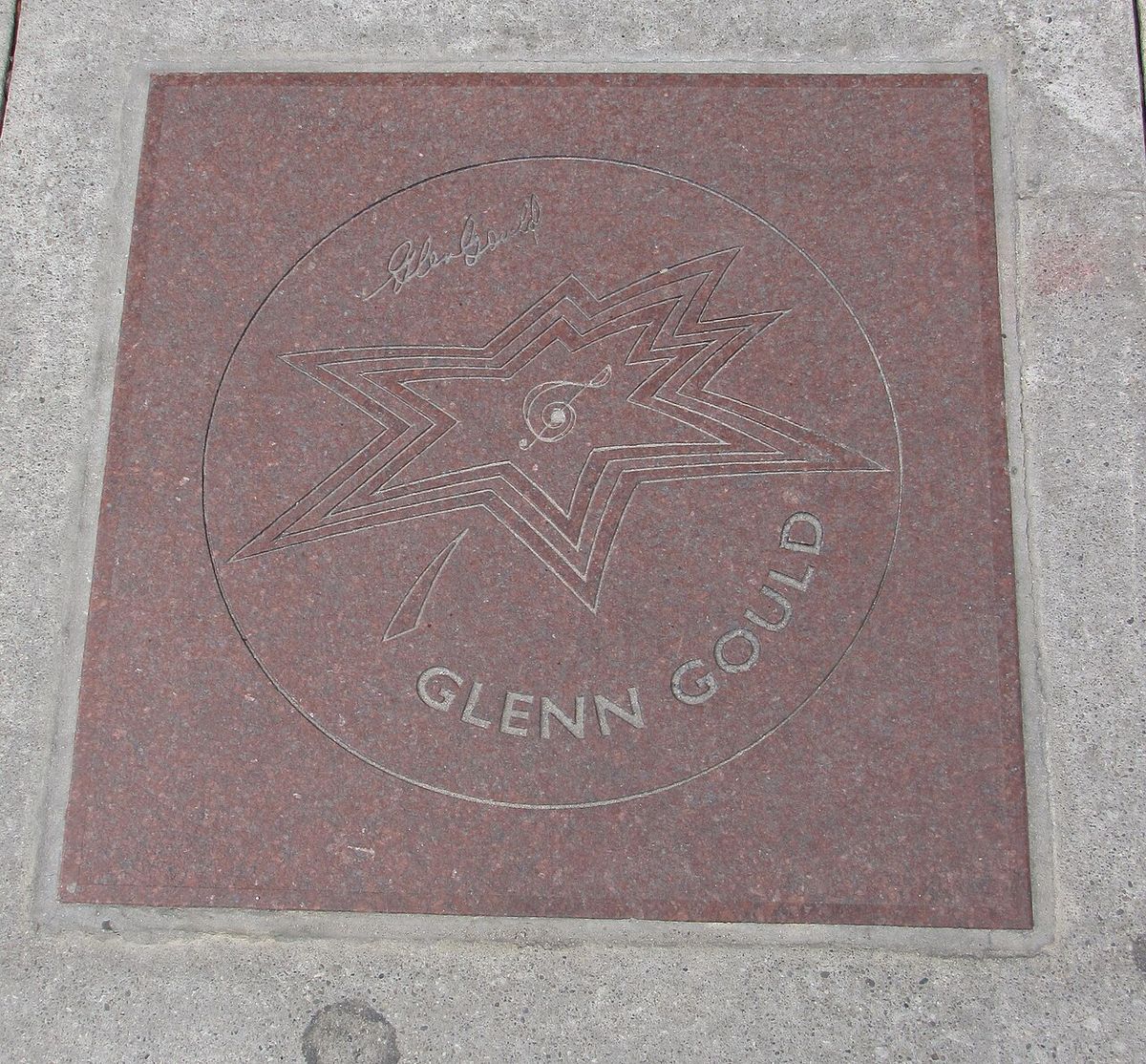
After leaving the stage, Glenn Gould entered what he called a 'love affair with the microphone', embracing the recording studio as his primary artistic vehicle. He believed that tape editing allowed him to assemble the perfect performance from multiple takes, realizing the musical score more fully than any single live interpretation could. This control extended to every detail of his environment. He demanded the studio temperature be precisely regulated to an extremely warm setting and had his preferred piano adjusted to have a shallower, more responsive action. Gould was a prolific recording artist for Columbia Masterworks, building a vast discography that, while anchored in Bach, encompassed composers from Byrd and Gibbons to Schoenberg and Strauss.
Parallel to his recording work, Gould became an innovative and influential broadcaster. For the Canadian Broadcasting Corporation, he created sophisticated television programmes about classical music where he performed, lectured, and engaged in scripted interviews. These works blended spoken word, ambient sound, and music in a new way. Gould was also a frequent contributor to music journals, writing essays on theory and interpretation that reflected his sharp, often contrarian intellect.
Major non performance projects:- Television programmes: Numerous scripted CBC shows exploring music and ideas.
- Writings: Prolific essays and liner notes for music journals and recordings.
- 1981 Goldberg Variations: A much slower, meditative reinterpretation of his signature work.
Personal eccentricities and habits
Glenn Gould was as famous for his idiosyncratic behaviour as for his music, with a set of habits that became integral to his legend. He was known for humming, singing, and groaning audibly while playing, a subconscious carryover from his mother's teaching to 'sing everything that he played'. Sound engineers struggled to eliminate this vocalising from his recordings, and it is plainly audible on many releases. His physical mannerisms at the keyboard were theatrical, involving elaborate gesticulations and a uniquely low sitting position made possible by his custom built chair. He was so attached to this worn, wooden chair, built by his father, that he took it to every recording session and concert. It is now preserved at Library and Archives Canada.
Gould exhibited a pronounced need for control over his environment and a deep aversion to cold. He wore heavy clothing, including coats, hats, and mittens, in all weather, leading to an incident where he was mistakenly arrested as a vagrant while sitting on a park bench in Florida. He disliked being touched and largely avoided social gatherings, preferring communication by telephone and letter. A notable example of his physical sensitivity occurred in 1959 when a Steinway technician greeted him with a slap on the back. Gould complained of pain and fatigue and explored litigation against the company. His reputation for last minute cancellations was so well known that Leonard Bernstein began their 1962 concert by reassuring the audience, 'Don't be frightened, Mr. Gould is here.' These eccentricities, while often puzzling, were inseparable from the intense focus and singular vision that defined his art.
Later years, death, and cultural legacy
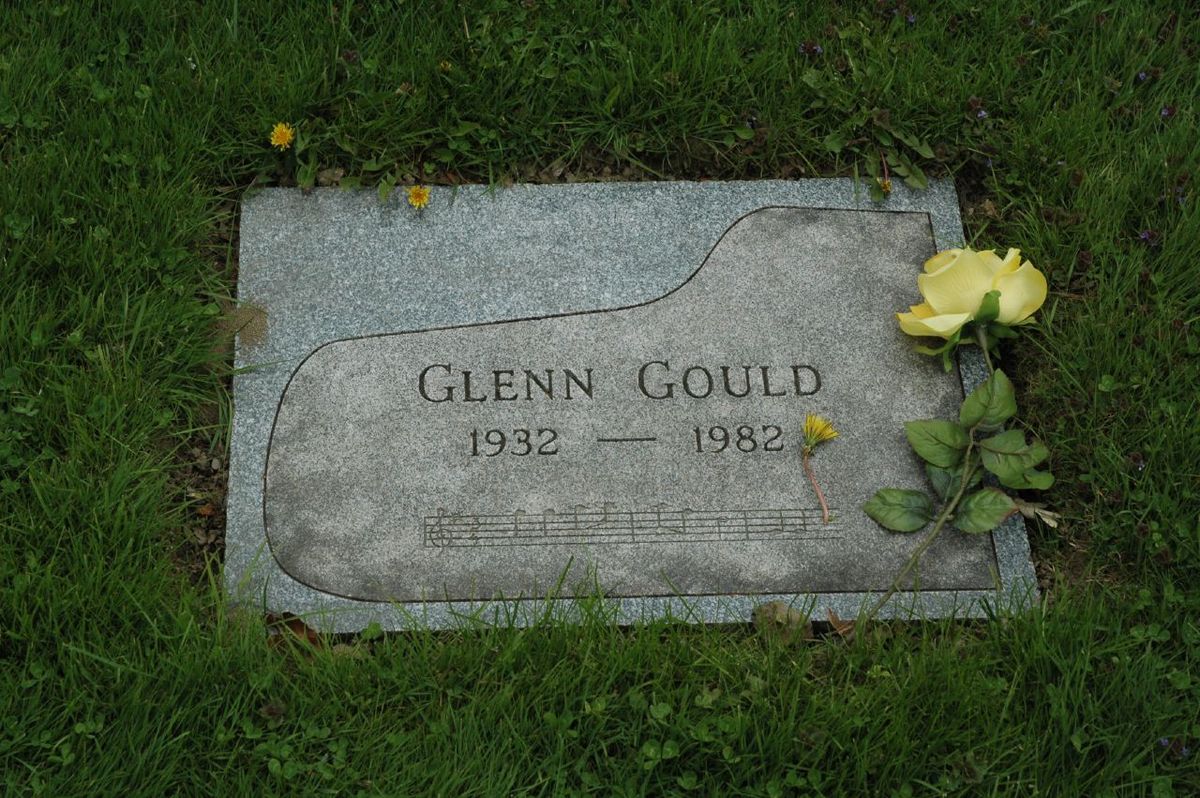
In his final years, Gould remained intensely active in the studio, revisiting core repertoire with the wisdom of experience. His 1981 rerecording of the Goldberg Variations, made 26 years after his debut, presented a very different, much slower and more introspective interpretation, serving as a monumental bookend to his career. Gould's passing shocked the musical world and cemented his status as a cultural figure who had radically redefined the relationship between the musician, technology, and the audience. His legacy is complex and continues to grow. He is remembered as one of the most original and intellectually compelling interpreters of Bach, and his early advocacy for the studio as an artistic instrument was forward thinking. The Solitude Trilogy remains a landmark in radio documentary. His life and mind have been the subject of numerous films, most notably the innovative biopic *Thirty Two Short Films About Glenn Gould* (1993) and the documentary *Genius Within: The Inner Life of Glenn Gould* (2009). In Canada, he is celebrated as a national treasure whose unique voice and uncompromising artistic integrity left a permanent mark.
Questions about Glenn Gould
What was so special about Glenn Gould's chair?
The low, adjustable wooden chair was built by Gould's father shortly after a childhood back injury. Gould used it for his entire professional life, taking it to every concert and recording session. Sitting approximately 14 inches off the ground, it allowed him to pull down on the piano keys rather than strike them from above, which was central to his technical approach for achieving clarity and control, especially in contrapuntal Bach. The chair became so well known that its worn out original is now displayed in a glass case at Library and Archives Canada.
What is Glenn Gould's most famous recording?
Gould's most famous recording is his 1955 debut album of Johann Sebastian Bach's Goldberg Variations for Columbia Records. This recording launched his international career and became one of the best selling classical albums of its era, renowned for its speed, clarity, and intellectual vitality. He revisited the work in 1981 with a much slower, more meditative interpretation, creating a strong diptych that frames his artistic journey. The 1955 recording remains a landmark in the history of recorded music.
Why is Glenn Gould considered a Canadian icon?
Glenn Gould is a Canadian icon due to his international stature as a musical genius who remained deeply connected to his Canadian roots. His innovative work for the CBC, including the Solitude Trilogy, engaged directly with Canadian subjects. His decision to live and work primarily in Toronto, his early championing of Canadian artists, and his unique, uncompromising artistic vision have made him a symbol of Canadian intellectual and cultural achievement. His legacy is preserved through films, extensive archives, and his enduring influence on how music is recorded and perceived globally.
Why did Glenn Gould stop performing concerts?
Glenn Gould stopped performing concerts because he came to believe the institution of the public concert was an anachronism and a 'force of evil'. He argued that public performance devolved into a sort of competition, with a non empathetic audience mostly attendant to the possibility of the performer erring. He felt such performances produced unexceptional interpretations due to the limitations of live music. On 10 April 1964, at age 31, he gave his last concert performance in Los Angeles. He performed fewer than 200 concerts in total, and for the rest of his life he eschewed live performance to focus entirely on recording, writing, and broadcasting, where he could exercise complete artistic control.
Did Glenn Gould only play Bach?
No, Glenn Gould did not only play Bach. While he was renowned as a supreme interpreter of Johann Sebastian Bach and regarded the piano as a 'contrapuntal instrument' centred in the Baroque, his repertoire was wide. He recorded works by Classical composers like Mozart and Beethoven, and modernist composers including Arnold Schoenberg and Paul Hindemith. He also recorded pre Baroque composers such as Orlando Gibbons, whom he called his favourite composer. Gould actively rejected most of the Romantic piano literature from composers like Chopin and Liszt, which he associated with a 'hedonistic' approach and gratuitous virtuosity he disliked.
What are the Solitude Trilogy radio documentaries?
The Solitude Trilogy is a series of three musique concrète radio documentaries Gould produced for the CBC. These documentaries are about isolated areas of Canada and represent a significant part of his work as a broadcaster. They artfully blend overlapping spoken word interviews, ambient sound, and musical passages. Gould was also a prolific writer for music journals and produced television programmes about classical music where he performed and interacted with interviewers in a scripted manner. This trilogy shows his innovative work beyond the piano, exploring themes of isolation through a unique audio documentary format.
Sources and further reading
- Glenn Gould (Wikipedia)
- Glenn Gould (thecanadianencyclopedia.ca)
- The Artist, Glenn Gould Foundation (glenngould.ca)
- Glenn Gould (crosseyedpianist.com)
Checked by the Yadude Books desk. Last updated 2026-11-03.