Gordon Lightfoot
Gordon Meredith Lightfoot Jr. was a Canadian singer-songwriter whose poetic lyrics and distinctive baritone voice made him a defining figure in folk and popular music. Achieving international fame in the 1970s, he penned timeless hits like If You Could Read My Mind, Sundown, and the epic ballad The Wreck of the Edmund Fitzgerald. Widely regarded as one of Canada's greatest musical storytellers, his songs about the Canadian landscape, history, and human experience became part of the national fabric. Lightfoot's career spanned over six decades, earning him numerous accolades and the enduring respect of peers and audiences worldwide.
Early life and musical beginnings
Gordon Lightfoot was born in Orillia, Ontario, on November 17, 1938, to Jessie Vick Trill Lightfoot and Gordon Lightfoot Sr., who ran a dry cleaning business. His mother recognized his musical talent early, encouraging him to perform publicly from grade four onward. As a youth, he sang as a boy soprano in the choir of St. Paul's United Church under choirmaster Ray Williams, who taught him to sing with emotional confidence. Lightfoot performed on local Orillia radio, in operettas, and at Kiwanis music festivals, making his first appearance at Toronto's Massey Hall at age twelve after winning a vocal competition. He taught himself folk guitar, piano, and drums during his teenage years, performing in the Muskoka resort area, and was influenced by 19th-century songwriter Stephen Foster. In 1958, he moved to Los Angeles to study jazz composition and orchestration at the Westlake College of Music for two years.
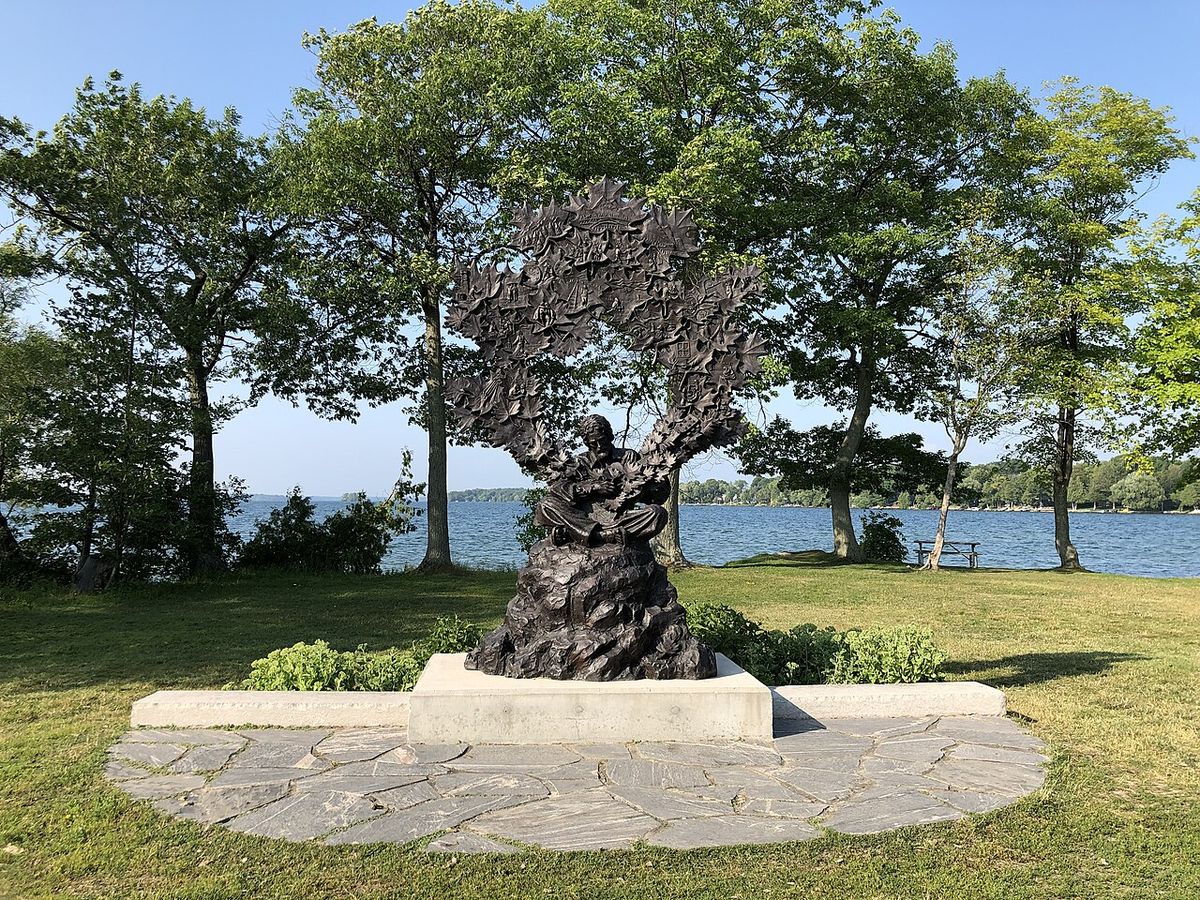
Career breakthrough and 1960s success
After returning to Toronto in 1960, Lightfoot performed with groups like the Singin' Swingin' Eight on CBC's Country Hoedown and became a staple of the city's folk coffeehouse scene. His 1962 single (Remember Me) I'm the One reached number three on Toronto's CHUM radio, establishing him as a local hitmaker. A year spent in Europe hosting a BBC country music series in 1963 broadened his horizons before he returned to Canada. His reputation as a songwriter grew when Ian and Sylvia Tyson recorded his Early Mornin' Rain and For Lovin' Me in 1964, followed by covers from Peter, Paul and Mary, Elvis Presley, and Bob Dylan. Signing with manager Albert Grossman and United Artists Records in 1965, he released his debut album Lightfoot! in 1966, featuring now-classic songs like Ribbon of Darkness and Steel Rail Blues.
This period confirmed his status as a homegrown Canadian star who did not need to relocate to the United States for success. A major milestone was his commission by the CBC to write Canadian Railroad Trilogy for a special broadcast on January 1, 1967, celebrating Canada's Centennial. He recorded four more albums for United Artists between 1966 and 1969, including The Way I Feel and Did She Mention My Name?, the latter featuring the controversial song Black Day in July about the Detroit riot. His biggest chart hit of the decade was a cover of Bob Dylan's Just Like Tom Thumb's Blues, which reached number three in Canada in December 1965. By the end of the 1960s, Lightfoot had started national and international tours, building a strong live reputation. He also recorded sessions in Nashville at Forest Hills Music Studio, known as Bradley's Barn, during this time.
Peak popularity in the 1970s
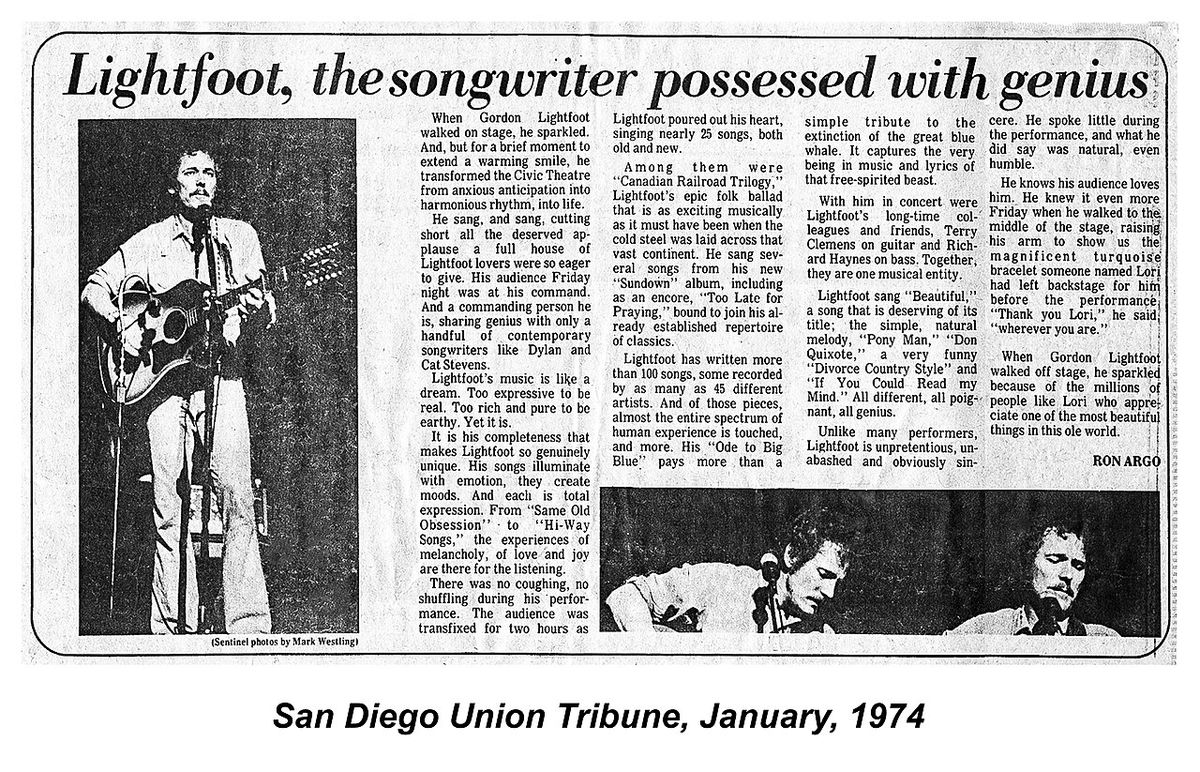
The 1970s marked the height of Gordon Lightfoot's commercial success and artistic output. After moving to Warner Bros. Records, his 1970 album Sit Down Young Stranger was reissued as If You Could Read My Mind following the massive success of its title track, which sold over a million copies and reached number five on the US album chart. This began a prolific seven-year period where he released a series of acclaimed albums that blended folk narratives with pop sensibility. Key albums from this era include Summer Side of Life (1971), Don Quixote (1972), and the commercially triumphant Sundown (1974). The title track Sundown became his only number one single on the US Billboard Hot 100 in June 1974, followed closely into the top ten by Carefree Highway.
In 1972, Lightfoot was diagnosed with Bell's palsy, which temporarily paralyzed part of his face and curtailed his touring, but he continued to produce major hits. His 1975 album Cold on the Shoulder featured the hit Rainy Day People. The tragic sinking of the freighter SS Edmund Fitzgerald on Lake Superior in November 1975 inspired his 1976 ballad The Wreck of the Edmund Fitzgerald, which reached number two in the US and number one in Canada. He maintained a connection to the tragedy, attending 25th anniversary memorial services and corresponding with victims' families. His final major hit of the decade was The Circle Is Small in 1978. Throughout the 1970s, his songwriting covered diverse themes from literary allusion to environmental concern, with songs like Ode to Big Blue about whaling and Protocol about war.
Notable 1970s Albums- Summer Side of Life (1971)
- Don Quixote (1972)
- Old Dan's Records (1972)
- Sundown (1974)
- Cold on the Shoulder (1975)
- Summertime Dream (1976)
- Endless Wire (1978)
Later career and health challenges
Lightfoot's recording pace slowed but remained steady from the 1980s onward, with six original studio albums released over the next two decades. These included Dream Street Rose (1980), Shadows (1982), and Salute (1983), the latter recorded after he overcame a long-standing struggle with alcohol. His last US top 50 single was Baby Step Back in 1982. The 1986 album East of Midnight yielded the adult contemporary hit Anything for Love. In a notable legal episode, he sued composer Michael Masser in 1987, alleging the melody for The Greatest Love of All was copied from If You Could Read My Mind. The case was settled out of court with a public apology from Masser. Lightfoot performed with Ian Tyson at the opening ceremonies of the 1988 Winter Olympics in Calgary. He concluded the decade with Gord's Gold Volume II in 1988, which featured new recordings of earlier songs.
The 1990s saw a return to his acoustic roots with Waiting for You (1993) and A Painter Passing Through (1998). He maintained a rigorous touring schedule of 50 to 75 concerts per year. A severe health crisis occurred in September 2002 when he suffered a ruptured abdominal aortic aneurysm before a concert in Orillia. Airlifted to McMaster University Medical Centre in Hamilton, he endured a six-week coma, a tracheotomy, and four surgeries, cancelling all remaining tour dates. After a long recovery and follow-up surgery in 2003, he signed with Linus Entertainment and released Harmony in 2004, an album largely completed before his illness. This resilience demonstrated his dedication to his craft well into the 2000s. In 2003, the tribute album Beautiful: A Tribute to Gordon Lightfoot was released, featuring artists like The Tragically Hip and Bruce Cockburn.
Artistic style and influences
Gordon Lightfoot's music is rooted in the folk tradition, characterized by narrative storytelling, detailed guitar work, and a warm, resonant baritone voice. His early influences included the folk music of Pete Seeger, Bob Gibson, and the Canadian duo Ian & Sylvia Tyson, whose recordings of his songs were important for his career. The 19th-century parlor songs of Stephen Foster also shaped his melodic sensibility. Lightfoot's lyrics often drew from Canadian geography and history, as heard in Canadian Railroad Trilogy and The Wreck of the Edmund Fitzgerald, creating a distinctly national soundscape. His subjects ranged from personal introspection and romance to social commentary and tales of the working world, such as in the song Alberta Bound.
Musically, his work evolved from the straightforward folk of the 1960s to a richer, more produced folk-pop sound in the 1970s, incorporating elements of country and adult contemporary. Despite changes in production, his acoustic guitar remained a central instrument. His ability to craft memorable melodies that supported detailed narratives set him apart in the singer-songwriter movement. Fellow musicians frequently praised his songwriting. Bob Dylan expressed admiration for his entire catalogue, and Robbie Robertson called him a national treasure. Lightfoot's songs have been covered by an exceptionally wide range of artists, showing their universal appeal and sturdy construction. His business manager, Al Mair, founded Attic Records in 1974, which became a major Canadian independent label.
Honours, awards, and legacy
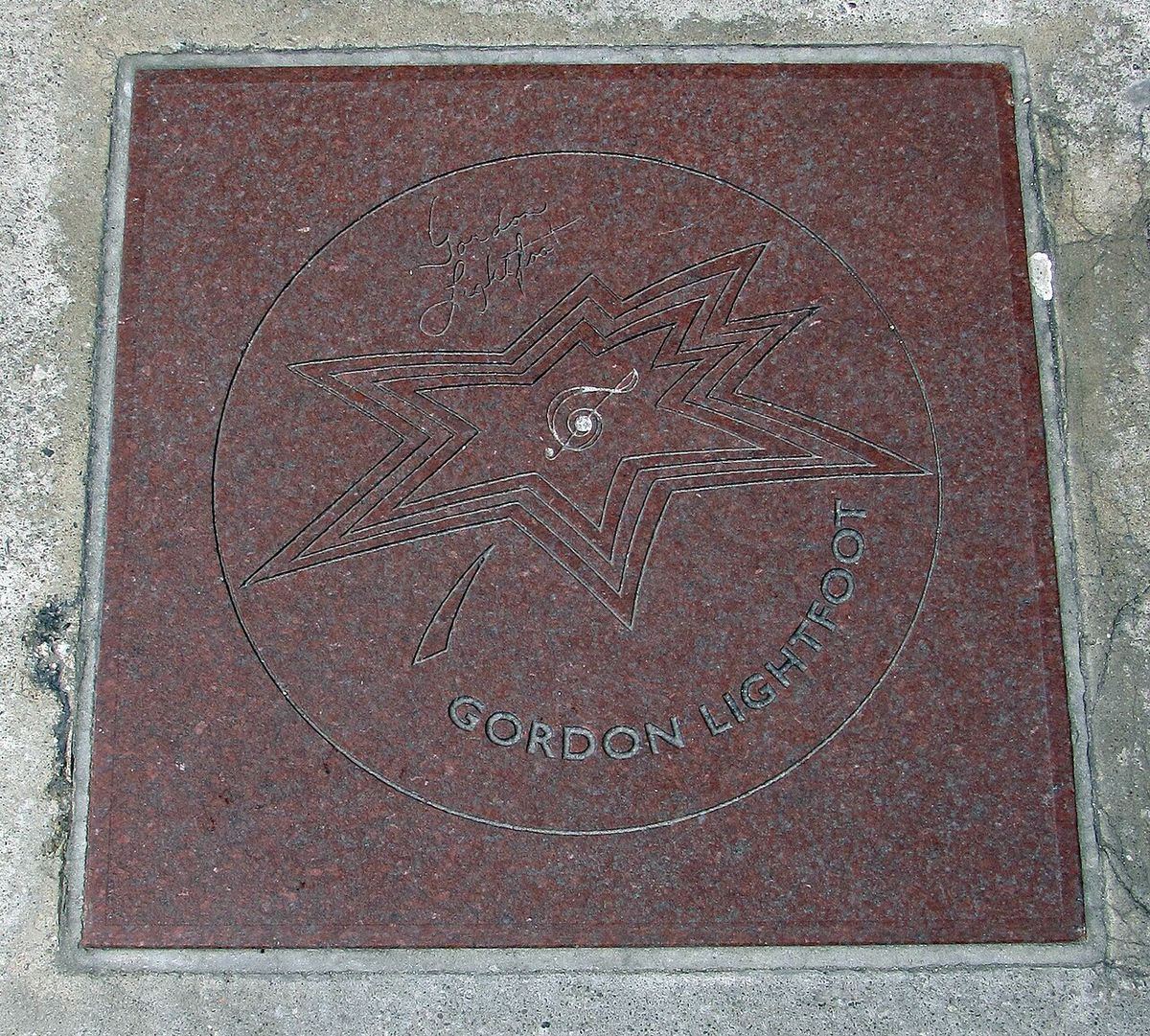
Gordon Lightfoot received extensive recognition throughout his career, cementing his status as a Canadian cultural icon. He was inducted into the Canadian Music Hall of Fame in 1986 and the Canadian Country Music Hall of Fame in 2001. In 1970, he was made an Officer of the Order of Canada and was promoted to Companion, the order's highest rank, in 2003. His contributions were further honoured with a star on Canada's Walk of Fame and induction into the Songwriters Hall of Fame.
His legacy is defined by a significant influence on both Canadian music and the international folk scene. Lightfoot demonstrated that a Canadian artist could achieve global success while remaining rooted in his home country, inspiring generations of musicians. His songs have become standards, taught in schools and performed at national events. The tribute album Beautiful: A Tribute to Gordon Lightfoot, released in 2003, featured interpretations by artists like The Cowboy Junkies and Jesse Winchester, highlighting the respect of his peers. His marathon series of concerts at Massey Hall, totaling over 170 performances, represents an enduring connection with his audience. Biographer Nicholas Jennings wrote that his name is synonymous with timeless songs about trains and shipwrecks, rivers and highways, lovers and loneliness.
Selected Major Honours- Companion of the Order of Canada (2003)
- Induction into Canadian Music Hall of Fame (1986)
- Canadian Country Music Hall of Fame (2001)
- Songwriters Hall of Fame
- Star on Canada's Walk of Fame
Discography and chart performance
Gordon Lightfoot released 20 original studio albums over his career, along with several live albums and compilations. His commercial peak in the 1970s produced a string of albums that achieved Gold and Platinum status in Canada and the United States. His singles chart success was significant, with five songs reaching number one on either the US Billboard Adult Contemporary or Canadian RPM charts. The following table highlights the chart performance of his major hit singles in the United States and Canada during the 1970s.
| Song | Year | US Billboard Hot 100 Peak | Canadian RPM Peak |
|---|---|---|---|
| If You Could Read My Mind | 1970 | 5 | 1 |
| Sundown | 1974 | 1 | 1 |
| Carefree Highway | 1974 | 10 | 3 |
| The Wreck of the Edmund Fitzgerald | 1976 | 2 | 1 |
Beyond singles, his album sales were consistently strong, with Gord's Gold (1975) becoming a perennial bestseller. Later compilations like Songbook (1999), a four CD box set, and Gord's Gold Volume II (1988) collected his work for new generations. His final studio album, Harmony (2004), charted in Canada, demonstrating his lasting audience connection. The enduring popularity of his music is reflected in steady streaming and radio airplay, with his albums frequently reissued in remastered formats. His 1969 live album Sunday Concert and the 2001 DVD of a Reno concert were also part of his recorded output.
Live performances and touring
Gordon Lightfoot was a dedicated and prolific live performer, building a reputation for lengthy concert tours that connected him directly with audiences. His first Canadian national tour took place in 1967, and he expanded his reach to include Europe and Australia through the mid-1970s. He performed at prestigious venues like New York's Town Hall and on television programs such as The Tonight Show Starring Johnny Carson and The Midnight Special. His appearances at the Newport Folk Festival in 1965 and the Mariposa Folk Festival in Ontario were important early career moments. Lightfoot maintained a heavy touring schedule well into the 1990s, typically playing between 50 and 75 concerts each year across North America.
His most legendary concert association was with Massey Hall in Toronto, where he performed over 170 times throughout his career, beginning with his childhood appearance. These multi-night stands at Massey Hall became an annual tradition for many fans. In 2000, he taped a live concert in Reno, Nevada, which was broadcast on CBC and PBS and released as his first concert video on DVD. Even after his severe health crisis in 2002, he returned to performing, demonstrating the central role live music played in his life. His performance at the opening ceremonies of the 1988 Winter Olympics in Calgary, alongside Ian Tyson, was a highlight of his later touring years, affirming his status as a national musical representative.
Songwriting and notable covers
Lightfoot's skill as a songwriter was the foundation of his career, with his compositions achieving success both through his own recordings and through covers by other artists. In the mid-1960s, before his own major hits, songs like For Lovin' Me, Early Morning Rain, and Ribbon of Darkness were recorded by prominent acts. Marty Robbins took Ribbon of Darkness to number one on the US country chart in 1965. Other established artists who found chart success with Lightfoot's material included Judy Collins with Early Morning Rain, Peter, Paul and Mary, and the Kingston Trio. This period established him in the United States more as a songwriter than a performer initially.
The range of artists who interpreted his work is vast, crossing genres and generations. Elvis Presley, Bob Dylan, The Grateful Dead, George Hamilton IV, and the Johnny Mann Singers all recorded his songs. In the 2003 tribute album Beautiful, Canadian artists like The Tragically Hip, Bruce Cockburn, and The Cowboy Junkies offered their versions. Lightfoot also recorded songs by others, including Bob Dylan's Just Like Tom Thumb's Blues and Me and Bobby McGee, and Ian Tyson's Red Velvet. His own writing process was detailed in the booklet accompanying the 1999 Songbook box set, which included rare and unreleased tracks from across four decades.
Early Songs Successfully Covered by Other Artists- For Lovin' Me (recorded by Ian & Sylvia, Peter, Paul and Mary)
- Early Morning Rain (recorded by Ian & Sylvia, Peter, Paul and Mary, Judy Collins, Elvis Presley)
- Steel Rail Blues
- Home From The Forest
- Ribbon of Darkness (US country number one for Marty Robbins)
- I Can't Make It Anymore (recorded by Richie Havens, Spyder Turner)
Questions about Gordon Lightfoot
What was Gordon Lightfoot's biggest hit?
Gordon Lightfoot's biggest hit in the United States was Sundown, which reached number one on the Billboard Hot 100 chart in June 1974. It was his only single to top that chart. In Canada, he had several number one hits, with The Wreck of the Edmund Fitzgerald also reaching the top spot in 1976. His song If You Could Read My Mind was another massive success, selling over a million copies and topping the Canadian charts in 1970, becoming a signature song that defined his career.
What inspired 'The Wreck of the Edmund Fitzgerald'?
The song was inspired by the real-life sinking of the Great Lakes freighter SS Edmund Fitzgerald on Lake Superior on November 10, 1975, which claimed the lives of all 29 crew members. Lightfoot read about the tragedy in a Newsweek magazine article and used the facts reported there as the basis for his lyrics. He meticulously crafted the ballad to tell the story of the ship's final voyage and the storm that caused its loss. Lightfoot later attended memorial services for the anniversary of the sinking and maintained contact with families of the deceased crew.
Did Gordon Lightfoot write songs for other artists?
Yes, many artists recorded Gordon Lightfoot's songs, which helped establish his early reputation as a songwriter before his own recording success. In the mid-1960s, Ian and Sylvia recorded Early Mornin' Rain and For Lovin' Me, and Peter, Paul and Mary also covered both songs. Marty Robbins had a number one US country hit with Ribbon of Darkness in 1965. Other notable artists who covered his work include Elvis Presley, Bob Dylan, Judy Collins, and The Grateful Dead, bringing his compositions to wide and diverse audiences.
What health issues did Gordon Lightfoot face?
Lightfoot faced two significant health challenges. In 1972, he was diagnosed with Bell's palsy, a condition that caused temporary paralysis on one side of his face, affecting his touring schedule. A more severe crisis occurred in September 2002 when he suffered a ruptured abdominal aortic aneurysm. This required emergency surgery, led to a six-week coma, a tracheotomy, and multiple operations, forcing the cancellation of his tour dates. After a long recovery, he returned to recording and performing, releasing the album Harmony in 2004.
What is Gordon Lightfoot's connection to Massey Hall?
Massey Hall in Toronto held a special significance for Gordon Lightfoot throughout his life. He first performed there at age twelve after winning a vocal competition for boy sopranos. Over his career, he performed at the historic venue more than 170 times, establishing a legendary concert series that became an annual tradition for many fans. These marathon runs of shows, often selling out multiple nights, demonstrated his deep connection to his home province and his status as a Canadian concert institution.
Sources and further reading
- Gordon Lightfoot (Wikipedia)
- The Voice of Canada: A Look at Gordon Lightfoot's Life and ... (junoawards.ca)
- Gordon Lightfoot, Legendary Folk Musician, Dies at 84 (smithsonianmag.com)
- Gordon Lightfoot: News, Songs, Biography, Music CDs/LPs ... (gordonlightfoot.com)
Checked by the Yadude Books desk. Last updated 2026-10-23.