The Guess Who
The Guess Who is a legendary Canadian rock band formed in Winnipeg, Manitoba, in 1958. They are widely celebrated as pioneers who broke through internationally, becoming the first Canadian band to achieve a number one single on the American Billboard Hot 100 with their 1970 hit "American Woman. The band's greatest success spanned from 1969 to 1972, producing a string of classic rock staples including "These Eyes," "No Time," and "Share the Land. After a lengthy legal dispute over the band's name, primary songwriters Burton Cummings and Randy Bachman regained control in 2024 and reunited for a major North American tour in 2026.
Early Foundations and Name Change
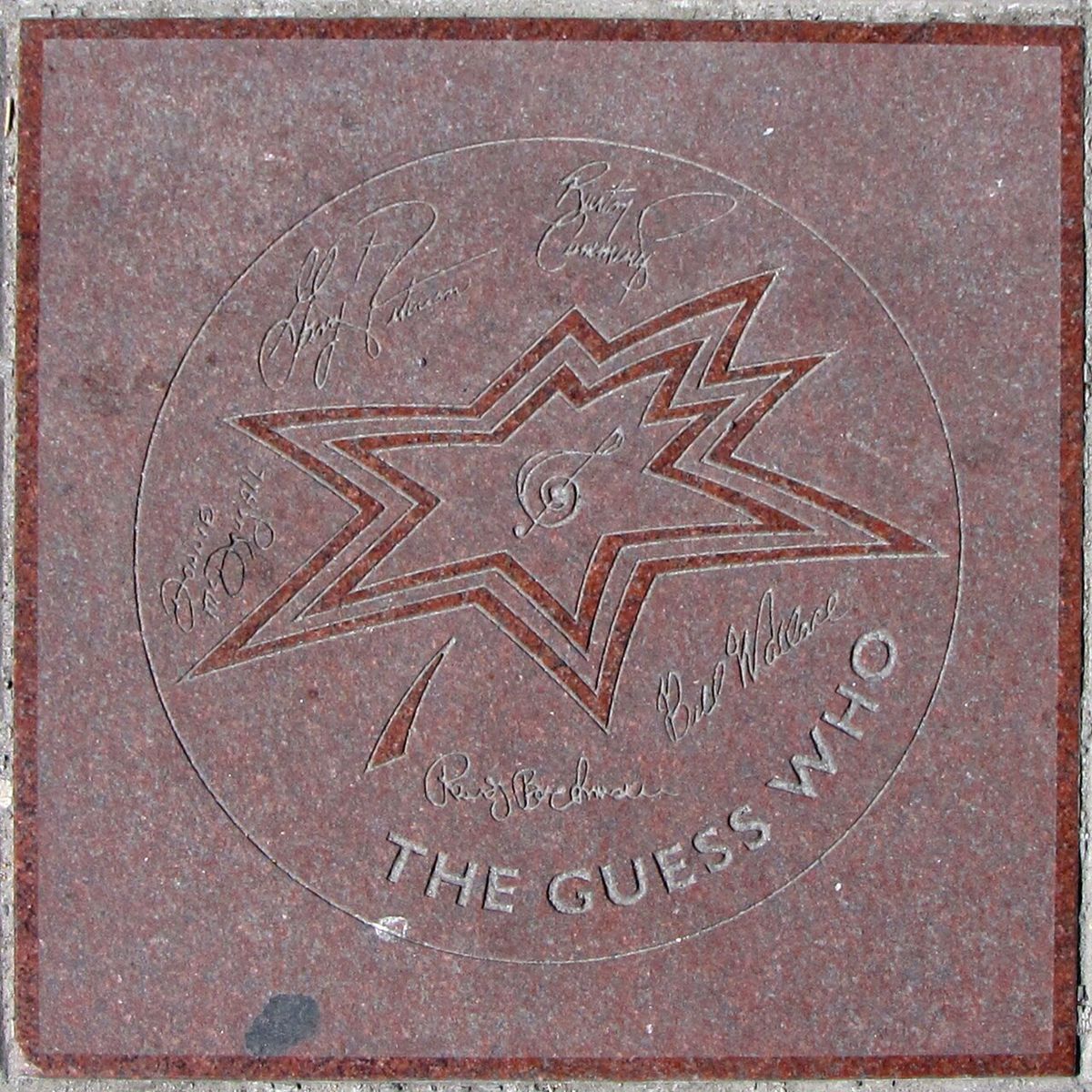
The band's origins trace back to 1958 with singer and guitarist Chad Allan forming a local Winnipeg group called Al and the Silvertones. After several lineup changes, the group stabilized by 1962 as Chad Allan and the Reflections, featuring keyboardist Bob Ashley alongside future Guess Who mainstays Randy Bachman on guitar, Jim Kale on bass, and Garry Peterson on drums. They released their first single, "Tribute To Buddy Holly," in 1962 on Canadian-American Records before signing with Quality Records, where they released several singles in 1963 and 1964 that gained regional notice around Winnipeg. In January 1965, now renamed Chad Allan and the Expressions, they released the garage rock album Shakin' All Over. The title track, a cover of a Johnny Kidd & the Pirates song, became their first major hit, reaching number one in Canada, number 22 in the United States, and number 27 in Australia. As a publicity stunt, Quality Records initially credited the single to Guess Who?, a name that disc jockeys continued to use, forcing the band to adopt it permanently. Their second album, Hey Ho (What You Do to Me!), released in late 1965, was credited to Chad Allan and the Expressions but prominently displayed the Guess Who? name on its cover, and the question mark would be dropped in subsequent years.
The Cummings and Bachman Era Begins
Keyboardist Bob Ashley left the band in January 1966 due to the demands of touring, and his replacement proved crucial to the band's future direction. Eighteen-year-old Burton Cummings, formerly of the Winnipeg group the Deverons, joined on vocals and keyboards, initially sharing lead vocal duties with Chad Allan as the band formally renamed itself the Guess Who?. Within a few months, Allan departed to return to college and later became a media personality with the CBC, leaving Cummings as the sole frontman. Guitarist Bruce Decker, a former bandmate of Cummings, joined briefly and was pictured on the cover of the first album under the Guess Who name, It's Time, released in 1966, though he did not play on the recording. The album featured Cummings, Bachman, Kale, and Peterson, with some pre-recorded contributions from Allan included. The band achieved moderate Canadian success with singles like "His Girl," which entered the UK charts in 1967. A financially disastrous promotional trip to the United Kingdom left them heavily in debt, as they were unable to book shows or obtain work visas. Stability returned when they were hired as the house band for the CBC television program Let's Go, hosted by Chad Allan, and the CBC radio show The Swingers, which gave them greater exposure and financial security for two years. This exposure led to a meeting with producer and sales executive Jack Richardson after he saw them on television, resulting in a collaborative advertising project for Coca-Cola titled A Wild Pair with the band the Staccatos.
Breakthrough and Peak Success
Under Jack Richardson's production and management by Don Hunter, the Guess Who's sound matured into a sophisticated pop-rock style with soul and jazz influences after signing to Richardson's Nimbus 9 label with distribution by RCA. Their 1969 album Wheatfield Soul was a breakthrough in both Canada and the United States, propelled by the million-selling gold single "These Eyes," which reached the American top ten. Wheatfield Soul helped open the American market for Canadian music, as within a year multiple Canadian acts charted in the US where British and American acts had previously dominated. The follow-up, Canned Wheat, released in September 1969, featured the double-sided hit singles "Laughing" and "Undun." The band then incorporated harder rock elements for their next album. American Woman, released in January 1970, became their first album to top the Canadian chart and reach the American top ten. The title track, co-written by Bachman and Cummings, reached number one in both countries, making the Guess Who the first Canadian band to top the Billboard Hot 100 since its 1958 inception. The album also spawned the major hits "No Time" and "No Sugar Tonight/New Mother Nature," which also charted highly in both nations.
The band's success continued with a series of hit albums and singles through the early 1970s. They released the albums So Long, Bannatyne in 1971 and Rockin' in 1972. Their commercial fortunes and chart performance then declined in the United States after 1971. However, they remained very successful in their native Canada during this period.
- "Share the Land" (1970): The album and its title track were major hits following Bachman's departure, recorded by the expanded lineup with guitarists Kurt Winter and Greg Leskiw.
- "The Best of The Guess Who" (1971): A compilation of hits from Wheatfield Soul through Share the Land that charted successfully in both countries.
- "So Long, Bannatyne" (1971): Showed more progressive and experimental elements as the band aimed for album rock radio.
- "Rockin'" (1972): Continued the band's experimental direction before Leskiw's sudden departure during a US tour.
- "Live at the Paramount" (1972): A concert album recorded in Seattle in May 1972 with new guitarist Donnie McDougall, including previously unrecorded songs.
- "Clap for the Wolfman" (1974): A novelty tribute to disc jockey Wolfman Jack, who lent his voice to the recording, that returned the band to the American top ten.
During this period, the band's lineup underwent significant changes. Founding bassist Jim Kale was dismissed from the band in 1972. He was replaced by Bill Wallace, who had played with Kurt Winter in their early Winnipeg band Brother. Later, guitarists Kurt Winter and Donnie McDougall were dismissed from the band in June 1974. They were replaced by a single guitarist, Domenic Troiano.
Lineup Changes and Disbandment
Randy Bachman left the Guess Who in May 1970 after the massive success of the American Woman album, playing a final show with American guitarist Bobby Sabellico filling in temporarily beforehand. His departure was due to deteriorating personal relations with frontman Burton Cummings and lifestyle conflicts stemming from his recent conversion to Mormonism, which caused dissatisfaction with the band's rock 'n' roll lifestyle. He was replaced by two Winnipeg guitarists, Kurt Winter from the band Brother and Greg Leskiw from Wild Rice, with Winter bringing songs from his previous band and becoming a primary songwriter. This expanded lineup quickly recorded the successful Share the Land album. In July 1970, this lineup was invited to perform at the White House for President Richard Nixon's family, though band manager Don Hunter later created an urban legend that they were asked not to play "American Woman," which Cummings clarified in 2020 was never true. In 1972, Greg Leskiw left abruptly during a US tour and was replaced on short notice by guitarist and singer Donnie McDougall, a veteran of the Winnipeg and Vancouver scenes who had most recently played with Mother Tucker's Yellow Duck. Shortly after, founding bassist Jim Kale was dismissed and replaced by Bill Wallace, who had previously played with Winter in the band Brother. This lineup released three albums: Artificial Paradise in early 1973, #10 in late 1973, and Road Food in early 1974. In June 1974, Winter and McDougall were dismissed and replaced by a single guitarist, Toronto's Domenic Troiano, the first non-Winnipeg member, who had founded the band Bush and played with James Gang. The final Guess Who lineup of Cummings, Troiano, Wallace, and Peterson released two jazz-influenced albums, Flavours in late 1974 and Power in the Music in mid-1975. Cummings' dissatisfaction with this musical direction led to the band's official breakup in October 1975.
Post-Breakup Activities and Classic Reunions
After the breakup, members pursued various solo careers, with Cummings starting a lengthy solo career, Troiano enjoying a solo career until his death in 2005, and Peterson working as a night clerk and insurance salesman before eventually playing in backup bands for Cummings from 1979 to 1983 and later for Bachman-Turner Overdrive from 1984 to 1986. Members of the classic era reunited several times, beginning with a CBC television special in November 1979 featuring Cummings, Bachman, Peterson, and bassist Bill Wallace. A short 1983 tour of notable Canadian venues resulted in the live album Together Again!, released as The Best of The Guess Who, Live! in the United States. Major reunion performances included a May 1997 fundraiser for Winnipeg flood relief organized by actor Tom Jackson, and the closing ceremonies of the 1999 Pan American Games at Winnipeg Stadium on August 8, 1999, for which the band reportedly received $250,000. The most significant reunion was a lengthy tour from 2000 to 2003 featuring Cummings, Bachman, Peterson, McDougall, and Wallace, which included the halftime show at the 2000 Grey Cup. On July 30, 2003, this lineup performed before an estimated audience of 450,000 at the Molson Canadian Rocks for Toronto benefit concert, which was the largest outdoor ticketed event in Canadian history at the time. Since 2003, Bachman and Cummings have collaborated occasionally under the name Bachman-Cummings outside of the Guess Who moniker.
Legal Disputes Over the Band Name
Parallel to the official reunions, a separate and protracted legal conflict unfolded over the Guess Who name. Former bassist Jim Kale, who had left the band in 1972, approached Cummings in 1978 for permission to use the name for a single CBC-promoted reunion concert. While granted permission for that event, Kale continued using the name for a new touring lineup that included former members Donnie McDougall and Kurt Winter and released two albums under the Guess Who name in 1978 and 1981. In 1987, Kale discovered the name had never been trademarked and filed registration applications with the United States trademark office without informing other original members. Using his trademark, Kale leased the rights back to the group for the 2000 to 2003 "Running Back Through Canada" tour, earning a 20 percent share despite not performing. From 2006 to 2024, Kale was joined by drummer Gary Peterson in a partnership that continued to lead a group under The Guess Who name, often hiring musicians with no historic connection to the band, and there were instances when the band performed without any original members present. Cummings and Bachman were highly critical, calling it "the fake Guess Who" or "Kale's Klones," while Kale referred to his iteration as "a band of trained monkeys." In early 2023, Bachman and Cummings sent cease-and-desist letters and then launched a false advertising lawsuit in October 2023 seeking $20 million in damages, claiming the band used the Guess Who name and photos of the original members to mislead the public. A federal judge denied Kale and Peterson's motion to dismiss the suit in April 2024. That same month, Cummings terminated his license agreement with BMI, removing his songwriting catalogue from blanket licenses, which meant venues hosting Kale's band could be liable for damages if those songs were performed. This action prevented the group from performing most of the band's biggest hits, leading to canceled concerts and the shuttering of their website in July 2024, effectively ending their operation and leading to a settlement that returned control of the Guess Who name to Cummings and Bachman in 2024.
The 2026 Reunion and Tour
Following the 2024 legal settlement, Burton Cummings and Randy Bachman announced a major reunion tour for 2026, their first as the Guess Who in 23 years. Dubbed the "Takin' It Back Tour," it celebrated their reclamation of the band's name and legacy, making good on a promise the pair made in late 2025. The tour kicked off in Canada on May 26, 2026, in Moncton, before moving to the United States starting June 25, with special guest Don Felder, former guitarist of the Eagles, joining for many dates. The setlists featured Guess Who classics alongside material from Cummings' solo career and Bachman's work with Bachman-Turner Overdrive, while Felder played sets of his Eagles-related and solo material. In promotional statements, Cummings expressed that he and Bachman were thrilled their songs had endured and that their goal was to honour the music, while Bachman noted his excitement to reunite and perform their decades of incredible songs. The tour represented a full-circle moment for the duo and their foundational role in Canadian rock history, with dates spanning major amphitheatres and arenas across North America throughout the summer of 2026.
| Date | City | Venue |
|---|---|---|
| May 26, 2026 | Moncton, NB | Tour Kick-off |
| June 25, 2026 | Shakopee, MN | Mystic Lake Amphitheater |
| June 27, 2026 | Cincinnati, OH | Riverbend Music Center |
| June 28, 2026 | Cuyahoga Falls, OH | Blossom Music Center |
| June 30, 2026 | Chicago, IL | Huntington Bank Pavilion at Northerly Island |
| July 1, 2026 | Grand Rapids, MI | Acrisure Amphitheater |
| July 3, 2026 | Clarkston, MI | Pine Knob Music Theatre |
| July 5, 2026 | Holmdel, NJ | PNC Bank Arts Center |
| July 7, 2026 | Syracuse, NY | Empower Federal Credit Union Amphitheater at Lakeview |
| July 8, 2026 | Gilford, NH | BankNH Pavilion |
| July 10, 2026 | Wantagh, NY | Northwell at Jones Beach Theater |
| July 11, 2026 | Atlantic City, NJ | Hard Rock Hotel & Casino Atlantic City |
| July 14, 2026 | Saratoga Springs, NY | Albany Med Health System at SPAC |
| July 16, 2026 | Uncasville, CT | Mohegan Sun Arena |
| July 17, 2026 | Boston, MA | Leader Bank Pavilion |
| July 19, 2026 | Ottawa, ON | Ottawa Bluesfest |
| August 6, 2026 | Atlanta, GA | Synovus Bank Amphitheater at Chastain Park |
| August 8, 2026 | Houston, TX | Smart Financial Centre at Sugar Land |
| August 9, 2026 | Fort Worth, TX | Dickies Arena |
| August 12, 2026 | Denver, CO | Fiddler’s Green Amphitheatre |
| August 14, 2026 | Salt Lake City, UT | Maverik Center |
| August 15, 2026 | Las Vegas, NV | Fontainebleau Las Vegas |
| August 17, 2026 | Phoenix, AZ | Arizona Financial Theatre |
| August 19, 2026 | Los Angeles, CA | Greek Theatre |
| August 22, 2026 | Seattle, WA | Climate Pledge Arena |
| August 23, 2026 | Vancouver, BC | Pacific National Exhibition |
| August 25, 2026 | Victoria, BC | Save-On-Foods Memorial Centre |
Commercial Achievements and Influence
Their 1970 album American Woman reached number one on the Canadian albums chart and number nine on the American Billboard album chart, while five other albums reached the top ten in Canada. The band charted fourteen Top 40 singles in the United States, including "American Woman," "These Eyes," "No Time," "No Sugar Tonight/New Mother Nature," "Laughing," "Undun," "Share the Land," and "Clap for the Wolfman. In Canada, they placed more than thirty singles on the charts. Their music broke significant barriers, with "American Woman" making them the first Canadian band to top the US Billboard Hot 100 since its 1958 inception, a feat that paved the way for other Canadian acts. Often dubbed "the Canadian Beatles" for their widespread popularity and songwriting prowess, their influence is heard in countless rock acts that followed. In 2026, Cummings and Bachman were announced as nominees for the Songwriters Hall of Fame, reflecting the lasting recognition of their work. The band's catalogue, particularly songs from the Cummings-Bachman partnership, remains a staple of classic rock radio and continues to define an era of Canadian cultural export on the global stage.
Questions about The Guess Who
What are The Guess Who's most famous songs?
Their biggest hit is "American Woman," which reached number one in both Canada and the United States in 1970. Other major hits include "These Eyes," a million-selling gold record, "No Time," "No Sugar Tonight/New Mother Nature," "Laughing," "Undun," and "Share the Land. Later hits like "Clap for the Wolfman" also charted highly. These songs have endured as staples on classic rock radio and were central to their 2026 reunion tour setlists.
Why did Randy Bachman leave The Guess Who?
Randy Bachman left The Guess Who in May 1970 after the massive success of the American Woman album. His departure was due to a combination of deteriorating personal relations with frontman Burton Cummings and lifestyle conflicts. Bachman had recently converted to Mormonism and found himself at odds with the rock 'n' roll lifestyle of the band. He recorded an instrumental solo album, Axe, with drummer Garry Peterson before his departure. He was replaced by two guitarists, Kurt Winter and Greg Leskiw, and later formed the highly successful band Bachman-Turner Overdrive, which remains active.
What was the legal dispute about The Guess Who name?
The legal dispute centred on control of the Guess Who trademark. Former bassist Jim Kale, who left the band in 1972, registered the name in the United States in 1987 without the knowledge of other original members. He and drummer Garry Peterson then toured for decades with a version of the band, often without any original members, releasing albums that did not chart. Primary songwriters Burton Cummings and Randy Bachman sued in 2023 for false advertising, seeking $20 million. In 2024, after Cummings blocked the use of his songs by withdrawing from BMI's blanket licenses, a settlement returned control of the name to Cummings and Bachman, enabling their 2026 reunion tour.
Did The Guess Who reunite for a tour in 2026?
Yes, Burton Cummings and Randy Bachman reunited for a major North American tour as The Guess Who in 2026, their first tour under that name in 23 years. Called the "Takin' It Back Tour," it celebrated their legal reclamation of the band's name and began on May 26, 2026, in Moncton, Canada. The tour included numerous US dates starting June 25, with special guest Don Felder, former guitarist of the Eagles. The setlist featured their classic hits alongside material from Cummings' solo career and Bachman's work with Bachman-Turner Overdrive.
How many albums did The Guess Who release?
The Guess Who released eleven studio albums during their initial run from 1965 to 1975, all of which charted in both Canada and the United States. Their most successful album was 1970's American Woman, which reached number one in Canada and number nine on the US Billboard chart. They also released several live albums and compilations, including the popular The Best of The Guess Who in 1971. The band's prolific output during their peak resulted in over thirty charting singles in Canada and fourteen Top 40 hits in the United States.
Who were the original members of The Guess Who?
After Ashley left in 1966, he was replaced by Burton Cummings, who became the lead singer and keyboardist. This lineup formed the foundation of the band during their most successful period from 1969 to 1972. They released eleven studio albums that all charted in Canada and the United States. The band officially disbanded in 1975, though various reunions occurred later.
Sources and further reading
- The Guess Who (Wikipedia)
- The Guess Who | 2026 Summer Night Concerts (pne.ca)
- 2026 U.S. Tour from The Guess Who ft. Burton Cummings ... (rockcellarmagazine.com)
- The Guess Who, Takin' It Back Tour, Victoria August 2026 (sofmc.com)
Checked by the Yadude Books desk. Last updated 2026-10-26.