Thousands protest outside Kennedy Center amid fears Trump could demolish historic venue
A massive demonstration formed around Washington's Kennedy Center as arts advocates fear President Trump may follow through on threats to close and tear down the cultural landmark, with protesters forming human chains and staging artistic displays to defend the institution.
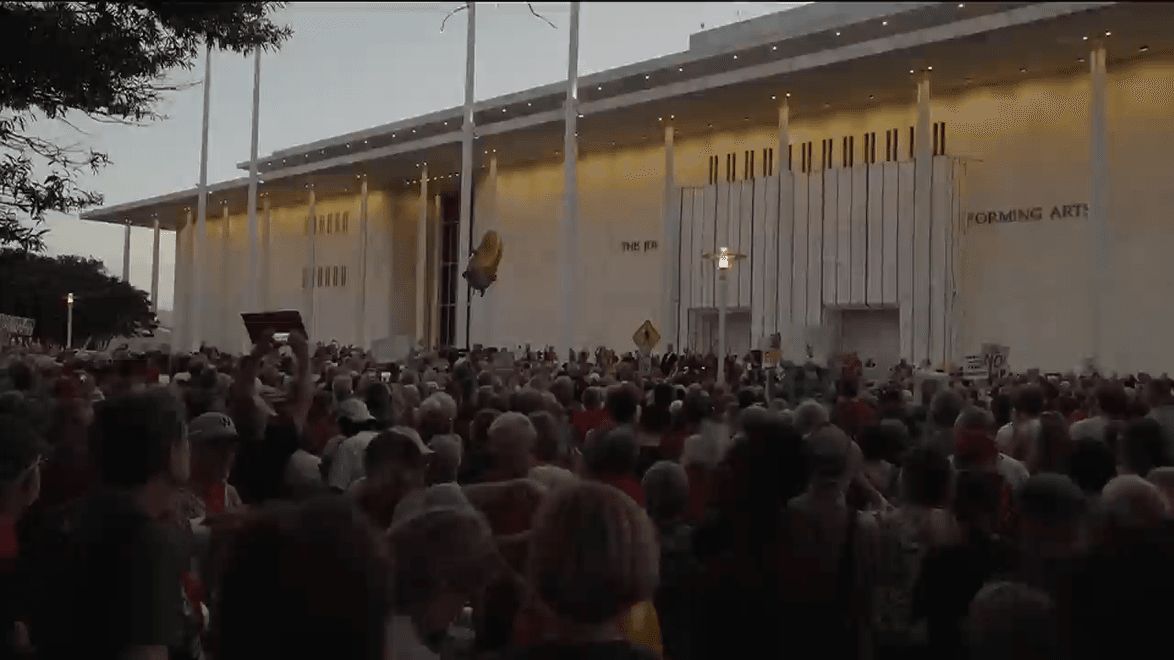
Thousands of demonstrators encircled the John F. Kennedy Center for the Performing Arts in Washington on Friday evening in an impassioned display of opposition to President Donald Trump's potential plans to shutter and potentially demolish one of America's most treasured cultural institutions. The protest, organized by the advocacy group Hands Off the Arts, transformed the Potomac River waterfront into a sea of signs and human chains as participants voiced their determination to protect what many consider the crown jewel of American performing arts venues.
A grassroots movement takes hold
The protest began as crowds emerged from the Foggy Bottom subway station, swelling to such numbers that they overwhelmed surrounding streets and brought traffic to a standstill. The scale of participation in the "Hands Around the Kennedy Center" event underscored the depth of public concern about the future of this architectural landmark. Chris Raleigh, co-founder of Hands Off the Arts, framed the demonstration as both a warning and a challenge to the administration. His reference to the sudden demolition of the White House East Wing in 2025 served as a sobering reminder of the administration's willingness to act unilaterally regarding historic structures.
Raleigh articulated the protesters' central anxiety - that despite court orders requiring advance notice, the administration might attempt swift action against the Kennedy Center. His remark about drawing an unexpected line in the sand captured the protesters' sense that this moment represents a critical juncture in defending cultural institutions from political interference.
READ MORE: B.C. Conservative Leader Kerry-Lynne Findlay Resigns Amid Deepening Party Crisis
Legal and governance challenges
The protest unfolded against a backdrop of intense legal battles over the Kennedy Center's governance and future. The Trump-aligned board's decision to close the center indefinitely for repairs came within hours of U.S. District Judge Christopher Cooper's ruling blocking their attempt to rename the building after the president. This sequence of events revealed the administration's determination to push forward with its agenda despite judicial oversight. Judge Cooper's subsequent order mandating a 30-day notice period for any structural changes created a temporary safeguard, but protesters remained wary given the administration's history of challenging legal constraints.
These developments represent the latest phase in a years-long conflict dating back to 2025, when Trump began reshaping the center's leadership by appointing political allies to its governing board. The administration's previous unsuccessful attempt to attach Trump's name to the venue, later ruled illegal, established a pattern of treating the Kennedy Center as a political trophy rather than an independent cultural institution.
The heart of American arts
Beyond the legal and political dimensions, protesters emphasized the Kennedy Center's irreplaceable role in nurturing American artistic talent and providing world-class cultural programming. Local artist Bud Wilkinson's chalkboard installation, where attendees replaced hundreds of Trump's names with hand-drawn hearts, became a powerful visual metaphor for the protest's spirit. His assertion that the conflict transcends naming rights and touches on fundamental issues of artistic freedom resonated throughout the crowd.
The personal testimony of Alina Baciu, whose daughter attended the Duke Ellington School of the Arts, illustrated the tangible consequences already being felt by young artists. The loss of access to professional-grade costumes from the Washington National Opera and performance opportunities on the Millennium Stage represents just the beginning of what many fear could be a broader erosion of arts education resources. Baciu's emotional statement about the pain caused by "this craziness" gave voice to the human cost behind the political conflict.
A broader pattern emerges
The Kennedy Center controversy fits within a larger pattern of the Trump administration's approach to cultural landmarks and public spaces. Federal courts have been inundated with cases challenging various administration projects, including a proposed triumphal arch and takeovers of other public facilities like East Potomac Golf Links and the U.S. Institute of Peace. This pattern suggests a systematic effort to reshape Washington's physical and cultural landscape according to the administration's preferences, often at the expense of established institutions.
President Trump's remarks from the Oval Office revealed the administration's ambivalence about the Kennedy Center's future. His claim of being able to "save it easily" while questioning the value of maintaining a "money-losing" institution without proper recognition exposed the transactional approach to cultural stewardship that has alarmed arts advocates. The president's suggestion that the Trump administration deserved credit for any potential rescue operation further demonstrated his focus on personal legacy over institutional preservation.
Community resistance takes shape
The depth of community commitment to preserving the Kennedy Center became evident through the powerful testimony of longtime volunteer Laura Steinberg. Her comparison of the protest to the iconic Tiananmen Square "Tank Man" image and her vow to stand before any wrecking ball reflected the intensity of feeling among the center's supporters. Steinberg's observation about the mobilizing effect of the East Wing demolition highlighted how unexpected executive actions can galvanize public opposition and create unlikely activists.
The stakes for American culture
This conflict transcends the fate of a single performing arts center. It represents a fundamental clash between competing visions of national identity and the role of government in cultural preservation. The administration's pattern of pursuing personal legacy projects while disregarding established arts institutions suggests a preference for symbolic gestures over substantive support for the arts ecosystem.
A test of institutional resilience
As legal battles continue, the massive public turnout at the Kennedy Center demonstrates how cultural institutions can become focal points for broader political concerns. The center's predicament tests the resilience of checks and balances when faced with an administration willing to challenge longstanding norms of governance and preservation. For the arts community and beyond, this moment represents both an immediate crisis and a symbolic struggle over who controls the narrative of American culture.
The protest's creative energy, from the human chains to the chalkboard hearts, suggests that the arts community is prepared to fight for its values using the very tools the Kennedy Center has long nurtured. Whether this demonstration marks a turning point or merely the beginning of a longer struggle remains to be seen, but the passion on display makes clear that the Kennedy Center's fate matters far beyond its physical walls.