Carney rebuffs Musk's call for Quebec separation as Alberta vote looms
The prime minister responded to Elon Musk's social media posts endorsing separatism for Quebec, Alberta and Saskatchewan.
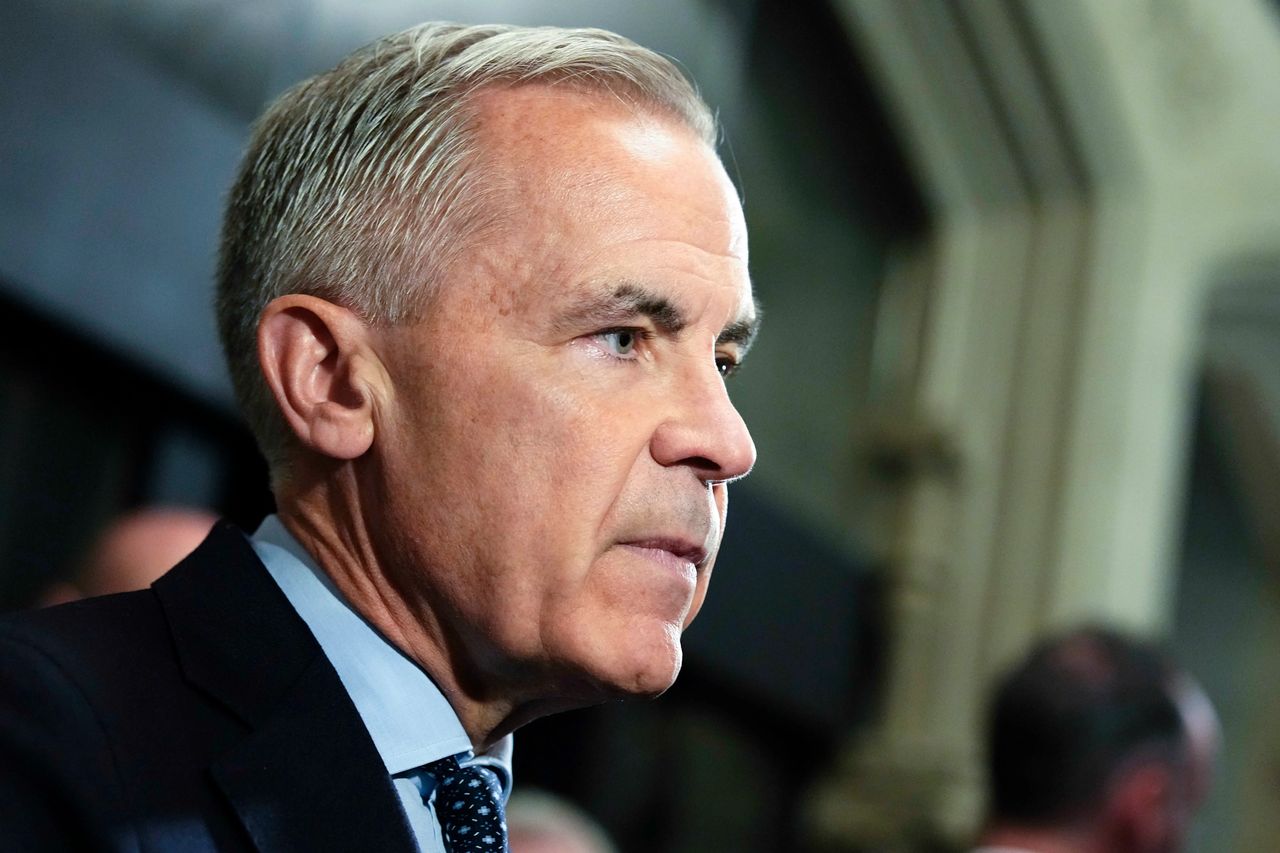
SHERBROOKE — Prime Minister Mark Carney said Thursday that Canada's future "will be decided by Canadians" and not by foreign tech firms, responding to Elon Musk's call for Quebec to separate.
Speaking at a news conference in Sherbrooke, Que., Carney said Canadians can live their lives "free from interference from foreign governments and large tech firms that think they can tell us what to do."
"The future of Canada will be decided by Canadians and the priorities of Canadians, the priorities of the people of Quebec," he said in reply to questions from a reporter about Musk's comments.
READ MORE: Carney vows to use all powers against U.S. steelmaker over Stelco layoffs
READ MORE: Alberta mail-in referendum voting process faces scrutiny amid misinformation claims
He added those priorities include affordability, social justice, the fight against homelessness, as well as building "a strong Quebec within a strong Canada."
He made the comments on the sidelines of an announcement by the federal government to invest $2 billion in a new national heat pump rebate program.
Musk's posts prompt swift reactions
On Wednesday, Musk responded to a post on his X platform about the goal of Quebec's premier-designate, Paul St. Pierre Plamondon, for the province to become sovereign "one day."
"Good. Quebec should separate," responded Musk, a former U.S. government official who once led the Department of Government Efficiency in the Donald Trump administration.
"They would be better off. Alberta and Saskatchewan should separate too," Musk added.
Saskatchewan Premier Scott Moe replied to Musk's post with a terse rebuttal: "No."
Carney was in Quebec three days after Quebecers elected a Parti Québécois minority government on Monday.
PQ Leader Paul St-Pierre Plamondon has promised a referendum on Quebec sovereignty as early as 2029.
Provincial dynamics and federal projects
Carney said in French on Thursday that he and St-Pierre Plamondon had a "cordial" first conversation this week that touched on "great investments here in Quebec," immigration and other matters.
He has sought to use his ambitious economic agenda as an olive branch to the province and its new government, vowing Quebec will benefit from cooperative federalism.
But the PQ has opposed the Carney government's plans for the Alto project, a proposed high-speed rail link between Quebec and Ontario, raising questions about its viability.
Carney talked up the Alto project on Thursday when asked about its future prospects.
He said in French it will create tens of thousands of jobs in the province and that he will work with the new provincial government to advance the project.
Before the Oct. 5 election, St-Pierre Plamondon said he would not hold a referendum on separation while U.S. President Donald Trump remains in office.
The PQ's minority status risks complicating the process for St-Pierre Plamondon, as minority governments historically don't last very long.
Alberta's upcoming referendum and commercial rivalry
Alberta holds its own separation referendum in less than two weeks on Oct. 19.
Speaking in Edmonton on Thursday, Alberta Premier Danielle Smith argued that separatist sentiment in her province has weakened because she and Carney have addressed the "very real issues that were frustrating Albertans."
"The federal government has changed. Their approach to us has changed and they're willing to work together on addressing those issues," she said.
Carney recently announced a major $2.3-billion contract with Telesat for low-Earth orbit satellite connectivity for the military.
That service has aspirations to become a direct commercial challenger to Musk's Starlink, which dominates the global market for low-Earth orbit satellite internet service.
In his remarks, Carney also advocated for Canada to stay united, saying Canadians want a "strong Quebec within a strong Canada."
"A strong Canada that means more independent, more sovereign, more prosperous, obviously, but also so we can live our lives as we choose in Quebec, in Canada, that respects our languages, our culture, our way of life," he added.
Alberta's referendum is scheduled for Oct. 19.
With files from The Canadian Press, BNN Bloomberg and CityNews