Venezuela's Acting President Delcy Rodríguez Pledges Elections in Pivotal UN Address Amid Political Transition
Acting Venezuelan President Delcy Rodríguez committed to holding future elections during her first UN General Assembly speech, marking a diplomatic turning point after Nicolás Maduro's capture. The address balanced domestic recovery promises with strategic U.S. engagement following devastating earthquakes and political upheaval.
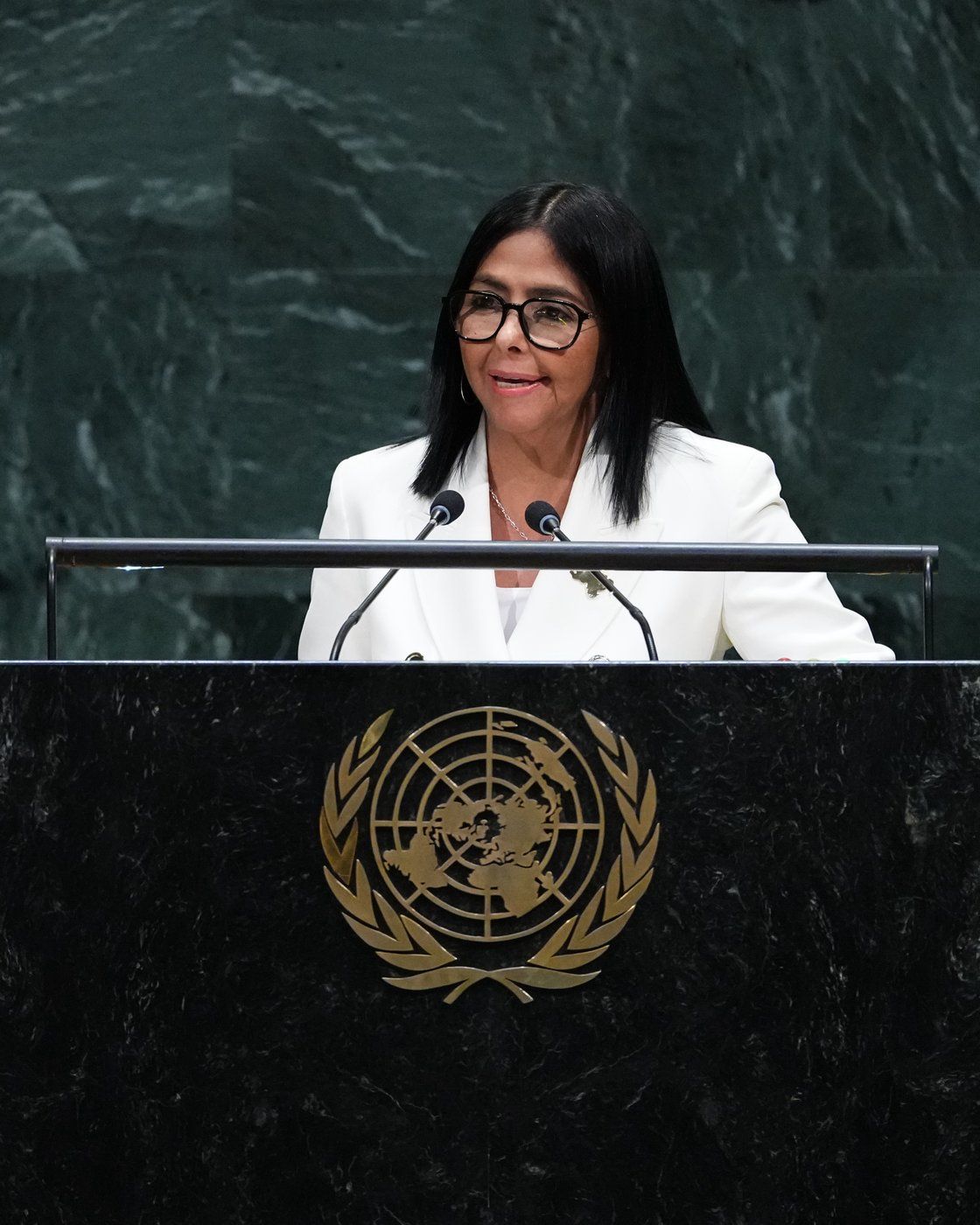
In a carefully calibrated debut at the United Nations General Assembly, Venezuela's acting president Delcy Rodríguez outlined her vision for the nation's political future while handling the complex aftermath of her predecessor's dramatic removal. Her Wednesday address marked Venezuela's tentative return to international diplomacy after years of isolation, blending election promises with appeals for economic cooperation amid ongoing challenges.
Conditional Commitment to Democratic Processes
Rodríguez framed her electoral pledge with deliberate qualifications that reflected Venezuela's fragile transitional period.
"Elections will be held in Venezuela,"she declared to assembled world leaders, while carefully noting that the timing would be determined internally by Venezuelan institutions. The acting president emphasized this process would involve "political dialogue with opposition sectors" to establish "equal conditions for all." This nuanced language sought to acknowledge international demands for democratic reforms while preserving Venezuela's sovereignty over its transition timeline.
The cautious approach stems from Venezuela's extraordinary political circumstances following the January U.S. military operation that captured former president Nicolás Maduro. Rodríguez, as Maduro's former vice president, now leads a nation undergoing profound transformation while grappling with economic collapse and infrastructure damage from recent natural disasters. Her UN appearance came exactly as Maduro remains detained in New York awaiting trial on drug trafficking charges, creating a striking geopolitical juxtaposition.
READ MORE: Trump to Meet with NYC Mayor Mamdani During UN Visit, Continuing Complex Political Relationship
Strategic Diplomatic Engagement
Rodríguez's participation in the General Assembly signaled a significant thaw in Venezuela-U.S. relations after years of escalating tensions. She underscored the historic nature of recent diplomatic contacts, noting that no Venezuelan and American presidents had met bilaterally since 2009 before her Tuesday discussion with Donald Trump. Their New York meeting focused on substantive issues including energy cooperation and security partnerships, building on the Trump administration's April decision to lift sanctions against Rodríguez's government.
This diplomatic shift followed a significant bilateral agreement granting U.S. interests access to Venezuela's vast oil reserves, potentially valued in the hundreds of billions of dollars. Rodríguez framed the energy deal as part of broader economic modernization efforts, stating
"Today, Venezuela is being reborn."Her public acknowledgment of Trump's willingness to reopen relations, despite Washington's direct role in Maduro's removal, demonstrated a pragmatic approach to securing Venezuela's economic recovery through international partnerships.
Confronting Dual National Crises
The acting president addressed Venezuela's overlapping humanitarian disasters with sobering candor during her UN remarks. Beyond political turmoil, she detailed the catastrophic impact of twin earthquakes (measuring 7.2 and 7.5 magnitude) that struck north-central regions on June 24, killing over 6,500 people with many still unaccounted for. Rodríguez described a nation recovering from multiple "setbacks" where "interests alien to the common good" had previously dominated national affairs, an apparent reference to the alleged corruption and mismanagement of the Maduro era.
Her assessment of Venezuela's challenges included a rare admission of prolonged difficulties ahead:
"I cannot promise an easy path...the country's recovery will take time."This marked a departure from previous government rhetoric that often downplayed crises. Rodríguez prioritized national psychological healing alongside physical reconstruction, vowing to rebuild Venezuela's "national soul" through unity after profound "pain," acknowledging the emotional toll exacted by years of political and economic turmoil compounded by natural disaster.
Balancing Sovereignty with International Cooperation
Political analysts noted Rodríguez's careful rhetorical balance throughout her maiden UN address. The speech alternated between messages for domestic audiences and overtures to the international community, particularly the United States. While firmly asserting Venezuelan sovereignty (
"without any kind of interference"), she simultaneously identified multiple areas for potential collaboration including energy development, mining sector investment, and joint efforts against transnational crime.
This dual focus reflects the transitional government's practical challenges in stabilizing Venezuela. U.S. recognition provides crucial legitimacy for Rodríguez's administration, but Venezuelan citizens demand tangible improvements after years of economic collapse and political repression. Her promise to lead toward "full democracy" represents an attempt to satisfy both international partners and a weary domestic population that has endured hyperinflation, food shortages, and crumbling public services.
Historical Context and Symbolism
Rodríguez's UN debut carried profound symbolic weight as Venezuela's first leadership appearance since Maduro's 2018 visit to the same forum. The historical irony was particularly striking given that the acting president now governs from Caracas while her predecessor awaits trial just miles from UN headquarters. This dramatic reversal underscores Venezuela's extraordinary political transformation in less than a year.
The geopolitical landscape has shifted significantly since Maduro's ouster, with Washington demonstrating growing interest in Venezuela as a stable energy partner following the recent oil agreement. Regional observers suggest mutual economic interests may now override previous ideological tensions between the two nations, provided Rodríguez's government demonstrates measurable progress toward democratic reforms and humanitarian relief for its citizens.
Challenges Ahead
Rodríguez's UN performance represents Venezuela's most significant step toward international rehabilitation since Maduro's removal, but formidable obstacles remain. The election pledge, while politically significant, lacks specific timelines or concrete details about electoral reforms. Successful implementation requires converting diplomatic overtures into measurable improvements for Venezuelans still grappling with multiple crises.
The emerging U.S.-Venezuela rapprochement presents a complex foreign policy scenario for both nations. For the Trump administration, it tests whether shared economic interests can sustain cooperation with a government that still includes many former Maduro allies. For Rodríguez, the challenge involves balancing external expectations against Venezuela's domestic realities, where immediate humanitarian needs may compete with long-term institutional rebuilding.
As Rodríguez concluded her historic address, she projected cautious optimism about Venezuela's future:
"We will walk united as a single nation that, after the pain, chose hope."This emotional appeal captured the nation's transitional moment, a country seeking redemption from years of crisis through uncertain but determined steps toward political and economic renewal. The coming months will reveal whether this vision can translate into tangible progress for Venezuela's long-suffering population.