Trump announces U.S.-Denmark deal to expand military presence in Greenland
President Donald Trump has secured an agreement with Denmark to bolster U.S. military operations in Greenland while maintaining Danish sovereignty over the Arctic territory.
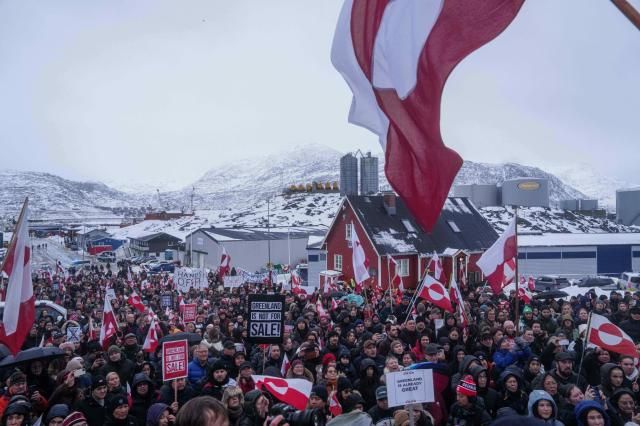
President Donald Trump announced Friday that the United States has reached a landmark agreement with Denmark to significantly expand its military presence in Greenland, concluding months of delicate negotiations over the strategic Arctic territory. The deal represents a compromise that satisfies U.S. security demands while preserving Denmark's sovereignty over Greenland, according to official statements from Washington and Copenhagen.
Details of the security agreement
The comprehensive pact grants the United States what Trump described in a social media post as "permanent control over security, and all other needs, in Greenland, completely addressing ALL of our many U.S. concerns." A senior State Department official, speaking anonymously because they were not authorized to discuss the matter publicly, provided additional specifics about the agreement's provisions. The deal formally prohibits any non-NATO country from establishing military bases in Greenland and creates new restrictions on foreign investments from adversarial nations. Most notably, it explicitly blocks China and Russia from gaining any military foothold on the island.
Secretary of State Marco Rubio issued an enthusiastic statement framing the agreement as a major strategic victory, calling it both a "historic deal" and a "huge win" for American national security interests. Rubio emphasized that "Greenland will forever be part of the strategic defense area of North America and exclude any adversary from it and the surrounding area." His comments underscored the administration's view that this agreement permanently resolves longstanding security concerns about Greenland's role in continental defense.
READ MORE: Thousands protest outside Kennedy Center amid fears Trump could demolish historic venue
Path to the agreement
The breakthrough follows nearly a year of complex diplomatic negotiations that began after Trump publicly floated the idea of the United States acquiring Greenland from Denmark in 2019. That proposal, which Trump refused to rule out pursuing through military force despite Denmark's status as a NATO ally, created immediate tensions between the two nations. Danish and Greenlandic leaders repeatedly stated the island was not for sale and condemned what they saw as threats to their sovereignty.
Behind the scenes, officials from all three governments engaged in months of quiet diplomacy to find a mutually acceptable solution. Danish Prime Minister Mette Frederiksen's office confirmed that the final agreement will be formally signed during next week's United Nations General Assembly meetings in New York. However, the deal still requires ratification by both the Danish parliament and Greenland's local government before taking full effect. Frederiksen stressed in her official statement that the pact "recognizes the sovereignty and territorial integrity" of both Denmark and Greenland while upholding their peoples' right "to self-determination."
Greenland's geopolitical significance
Greenland's immense strategic value stems from its unique geographic position. The massive island, with more than two-thirds of its territory lying north of the Arctic Circle, has played a crucial role in North American defense strategy since World War II. During that conflict, U.S. forces occupied Greenland to prevent Nazi Germany from gaining control and to protect vital North Atlantic shipping lanes.
The United States has maintained a continuous military presence in Greenland since the early Cold War, most notably through the Pituffik Space Base in the island's northwest. This critical installation, established under the 1951 Defense of Greenland Treaty between the U.S. and Denmark, currently supports missile warning systems, missile defense operations, and space surveillance activities for both NATO and American forces. Greenlandic Prime Minister Jens-Frederik Nielsen welcomed the new agreement as beneficial for all parties involved, noting it properly "recognizes Greenland's interests" while addressing U.S. security needs.
International response and implications
Trump's initial aggressive posture on Greenland created significant diplomatic friction within NATO and strained relations with European allies. Imran Bayoumi, an associate director at the Atlantic Council's Scowcroft Center for Strategy and Security, observed that "Americans really underestimate how damaging it was for the image of the United States in Europe." Bayoumi noted that European partners viewed Trump's threats as a fundamental challenge to their sovereignty that would require substantial diplomatic effort to overcome.
The U.S. push for greater control over Greenland also met with strong opposition from Russia and other global powers concerned about shifting Arctic power dynamics. Danish and Greenlandic officials had grown increasingly alarmed by reports of U.S. intelligence activities on the island and Trump's repeated, unfounded claims about Chinese and Russian military forces operating near Greenland's coastline.
Political context and next steps
The agreement provides the Trump administration with a tangible foreign policy achievement as midterm elections approach, though it comes amid ongoing controversies surrounding U.S. military engagements in Venezuela and conflict with Iran. These other international crises have complicated Trump's campaign promises to avoid foreign entanglements and created challenges for Republican candidates seeking to maintain congressional majorities.
In his announcement, Trump adopted a notably more diplomatic tone than during earlier phases of the Greenland discussions, expressing optimism about future cooperation. "We look forward to working with the wonderful people of Denmark and Greenland toward a magnificent future with respect to this large, and highly strategic, parcel of land," the president wrote. "We will be very protective of it!" This rhetorical shift suggests recognition that the initial heavy-handed approach had damaged important alliances.
Broader strategic implications
This agreement represents a significant evolution in U.S. Arctic strategy at a time when climate change is rapidly transforming the region's geopolitical landscape. Melting ice has opened new shipping routes and made previously inaccessible natural resources more viable for extraction, intensifying competition among global powers. By securing expanded military access through formal diplomatic channels rather than unilateral action, the Trump administration has achieved its security objectives while repairing some of the damage caused by its earlier confrontational approach.
The deal also reflects growing recognition within the U.S. government that countering Russian and Chinese influence in the Arctic requires cooperation with regional partners rather than purely unilateral measures. While the immediate crisis over Greenland's status has been resolved, the long-term consequences for NATO unity and Arctic governance remain uncertain as climate change continues to reshape the region's strategic importance and great power competition intensifies.