Two hospitalized after T-bone collision near Yorkdale Mall
A two-vehicle crash at a busy Toronto intersection sent two people to hospital with non-life-threatening injuries Sunday evening, marking another incident in the city's ongoing challenges with intersection safety.
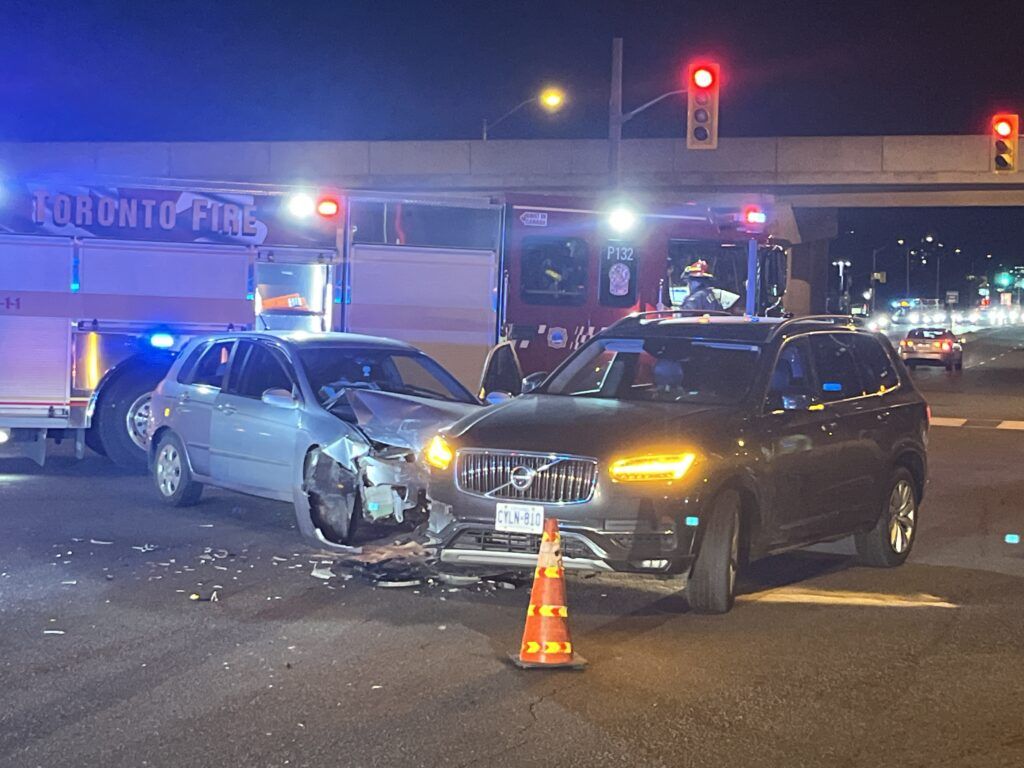
Emergency crews responded to a serious collision near one of Toronto's busiest shopping areas Sunday night after two vehicles collided at the intersection of Dufferin Street and Yorkdale Road, adjacent to Yorkdale Shopping Centre. The crash occurred just before 8:45 p.m., a time when the area typically sees heavy traffic from weekend shoppers and commuters. This incident adds to a growing list of intersection collisions across Toronto that have raised concerns about road safety in high-traffic commercial districts.
Crash dynamics and immediate aftermath
According to CityNews Toronto reports, the collision involved what appears to be a classic T-bone impact, where one vehicle struck the side of another at the intersection. This type of collision often results from right-of-way violations or failure to stop at traffic signals. Witness accounts and initial police reports indicate the impact occurred in the middle of the intersection, suggesting at least one vehicle was in motion when the collision happened. The force required to cause such damage typically involves at least one vehicle traveling at moderate speed, though official speed estimates await completion of the police investigation.
Toronto Paramedic Services confirmed three individuals required medical assessment at the scene. Two patients were transported to hospital with injuries classified as non-life-threatening, which in medical terms typically includes conditions like fractures, soft tissue damage, or mild traumatic brain injuries that require professional evaluation but don't immediately endanger life. The third individual assessed at the scene did not require hospital transport, suggesting minor injuries that could be treated with basic first aid. Hospital privacy regulations prevent disclosure of specific medical details without patient consent.
READ MORE: North York Collision Sends One to Hospital Amid Busy Day for Toronto Emergency Services
Emergency response coordination
The collision prompted a multi-agency response typical for serious traffic incidents in Toronto. Police units secured the scene to protect evidence and redirect traffic, while fire crews stabilized the vehicles and ensured no fuel leaks or other hazards existed. Paramedics triaged patients according to standardized trauma protocols, prioritizing those requiring hospital care. The efficiency of this coordinated response reflects Toronto's well-developed emergency procedures for traffic collisions, honed through regular training and real-world experience with similar incidents throughout the city.
Authorities temporarily closed the intersection to facilitate emergency operations and preliminary investigation, causing significant traffic disruptions during a peak shopping period. The closure lasted several hours as crews documented the scene, removed damaged vehicles, and cleared debris. Such closures represent a necessary inconvenience that allows for proper evidence collection while ensuring public safety during cleanup operations.
Ongoing police investigation
Toronto Police Service collision investigators have begun the meticulous process of determining fault and potential contributing factors. The investigation will examine multiple technical aspects including vehicle event data recorders (when available), traffic signal timing sequences, and physical evidence like skid marks and vehicle resting positions. Investigators will also review any available surveillance footage from nearby businesses or municipal traffic cameras, though the usefulness of such footage depends on camera angles and resolution.
The investigation timeline remains uncertain, as thorough collision reconstructions often take weeks to complete. Police have not indicated whether any charges are pending, as such determinations await completion of the technical analysis. Standard procedure involves interviewing witnesses, examining vehicle mechanical conditions, and reconstructing the events leading to impact. The complexity increases when dealing with busy intersections where multiple vehicles and pedestrian movements must be accounted for in the analysis.
Intersection safety analysis
The collision site at Dufferin Street and Yorkdale Road represents a typical high-volume urban intersection adjacent to a major shopping destination. Yorkdale Shopping Centre attracts thousands of visitors daily, with peak traffic occurring on weekends when the mall remains open until evening. This creates a challenging environment where commuters, shoppers, and pedestrians interact in close proximity, increasing the potential for conflicts and collisions.
While specific collision statistics for this intersection were not immediately available, citywide data shows side-impact collisions account for a significant portion of injury-causing crashes at signalized intersections. Transportation engineers consider several factors when evaluating intersection safety, including sight lines, signal timing, turning movements, and pedestrian volumes. The frequency of collisions at a given location often triggers safety reviews that may lead to design modifications or enhanced enforcement.
Medical outcomes and trauma care
The two hospitalized patients were transported to trauma centers following standard protocols for collision victims. Toronto's hospital network maintains specialized trauma teams trained to handle the complex injuries that often result from vehicular impacts. While the non-life-threatening designation suggests positive prognoses, some collision-related injuries may require extended treatment or rehabilitation depending on their nature and severity.
The decision not to transport the third individual reflects paramedics' clinical judgment that any injuries could be managed without emergency department care. In such cases, patients might receive instructions for follow-up with primary care physicians or walk-in clinics if symptoms persist or worsen. This triage approach helps ensure hospital resources remain available for the most critical cases while still providing appropriate care recommendations for less severe injuries.
Community safety implications
This collision highlights persistent challenges in urban traffic management as cities balance mobility needs with safety concerns. Toronto's Vision Zero initiative, which aims to eliminate traffic fatalities and serious injuries, specifically targets high-risk intersections through engineering, education, and enforcement strategies. Recent years have seen implementation of safety measures like leading pedestrian intervals, improved lighting, and redesigned turning lanes at problematic locations throughout the city.
The incident also underscores the importance of defensive driving techniques in busy commercial areas. Drivers should maintain heightened awareness near major shopping centers, anticipating sudden stops, distracted pedestrians, and other vehicles making unexpected maneuvers. Simple precautions like reducing speed when approaching intersections and consciously checking for cross traffic can significantly reduce collision risks.
Long-term prevention strategies
Transportation planners will likely review this collision as part of ongoing safety analyses. Engineers examine collision patterns to identify systemic issues that might be addressed through infrastructure changes. Potential interventions could include signal timing adjustments, improved signage, or even physical redesigns of the intersection geometry. Public input often plays a role in prioritizing such improvements, making community reporting of near-misses and hazardous conditions valuable for prevention efforts.
The incident serves as a reminder that urban traffic safety requires continuous attention from multiple stakeholders including drivers, pedestrians, planners, and enforcement agencies. While no single measure can eliminate all collision risks, the cumulative effect of engineering improvements, public education, and consistent enforcement can create safer road environments for all users. As Toronto continues to grow, maintaining focus on intersection safety remains crucial for preventing similar incidents in the future.