Canadian rocket companies race to launch as SpaceX scales back Falcon 9
Three companies are developing launch vehicles with government support, aiming to end Canada's reliance on foreign rockets by 2028 or 2032.
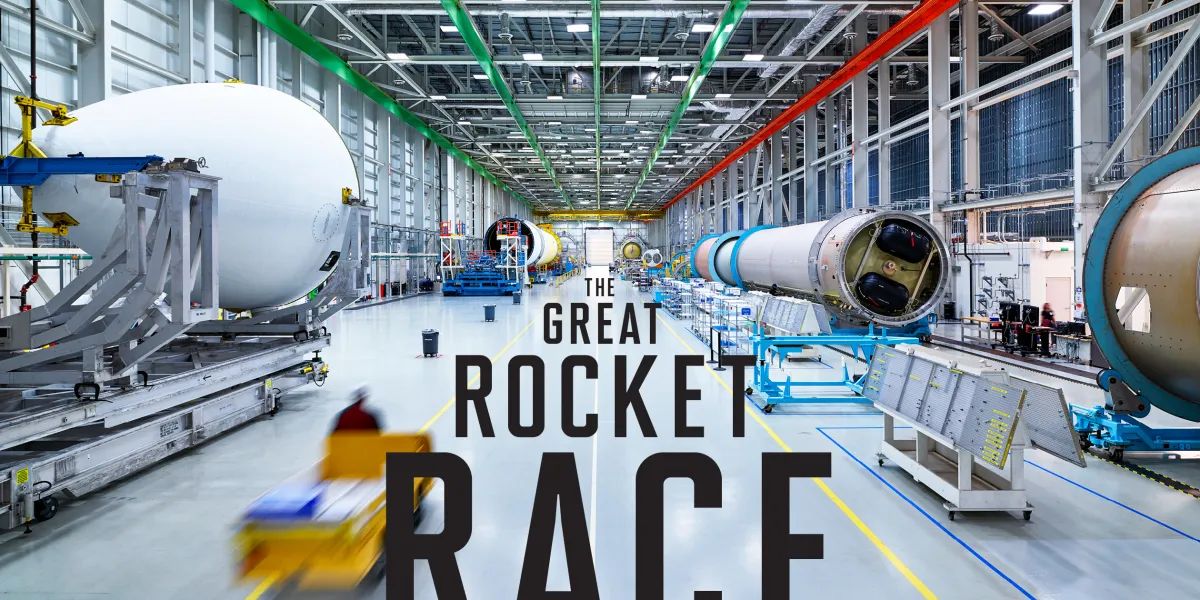
Three Canadian companies are racing to build rockets that can launch satellites from home soil, aiming to end the country's reliance on foreign launch providers like SpaceX.
Canada is the only G7 nation without its own orbital launch capability, forcing customers to use outside services, primarily SpaceX, which launched all 12 Canadian satellites sent up in 2025, according to the publication SpaceQ.
"Canada cannot permit itself to fall behind' in space," said Industry Minister Steven MacKinnon, touting the Space Launch Act introduced in April to authorize launches from Canadian soil.
READ MORE: Canada's pension funds urged to invest more in early-stage tech companies
READ MORE: Generis Group and IC Group ranked among Canada's Top Growing Companies
The federal government has provided $8.3 million each to three companies as part of a contest to achieve light-lift rocket capabilities by 2028.
NordSpace, founded in 2022, is one recipient. Its first suborbital test launch in 2025 failed, but the company says it plans to try again soon.
Reaction Dynamics, which has worked on a unique engine design since 2017, is another. Both NordSpace and Reaction Dynamics aim to reach orbit by 2028.
The third is Canada Rocket Company, founded late last year with a goal of building a medium-lift rocket by 2032.
CEO Hugh Kolias says his firm has attracted $22 million in private investment and is building a $30-million test facility in London, Ont., staffed by engineers from firms like SpaceX and Blue Origin.
The push comes as SpaceX plans to eventually scale back its workhorse Falcon 9 rocket as it transitions to the larger Starship.
SpaceX has reportedly started turning away satellite customers looking to launch on the Falcon 9 past 2028, a concern for smaller players who rely on its rideshare program.
Canadian satellite firm Kepler has launched most of its 33 satellites on Falcon 9. CEO Mina Mitry, an adviser to Canada Rocket Company, says competitors like Rocket Lab will take up some demand, but smaller players could struggle.
"If you're looking to launch one, two, three satellites on an experimental basis, your barrier to entry now has grown significantly," Mitry said. "That's a huge problem for the industry."
Mitry says the Falcon 9 wind-down makes having a Canadian rocket maker more important.
Kolias hopes his company's medium-lift rocket can capture some of the market SpaceX leaves behind.
Marc Boucher, founder of SpaceQ, says Canadian satellites are critical for telecommunications, military threat detection and earth observation like wildfire tracking.
Boucher said the fear is that foreign entities could refuse to launch Canadian technology if Canada does not control its own launches.
He and Kolias say funding has long been an obstacle in Canada.
"We have the skillsets … because Canada produces a lot of good engineers. But where we've been lacking is funding," Boucher said.
NordSpace CEO Rahul Goel, who funded the company with his own money after a decade building another business, is cautiously optimistic about the new government attention.
He is rushing to establish launch capabilities, worried the funding and focus could disappear.
"I've seen how quickly the tides can turn," Goel said.
With files from CBC News