Canadians say grocery benefit too small to ease pressure of rising costs
Some recipients say the quarterly payments are quickly consumed by high food prices and other rising household bills.
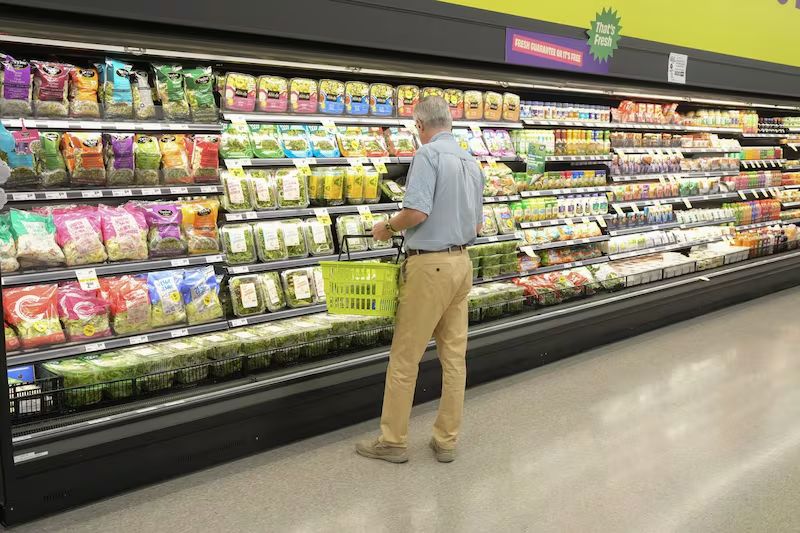
Eligible Canadians have started receiving the second quarterly payment of the Canada Groceries and Essentials Benefit, but many say the money provides little relief from high prices. The program, which replaced the GST/HST credit, sends payments to lower-income individuals and families. Annual amounts can reach $679 for a single person with no children and $1,826 for a household with four or more children. Some recipients told CTVNews.ca the benefit is insufficient, while others said they do not qualify even though they face financial strain.
Allen Mayes, a 73-year-old from Armstrong, B.C., said the maximum annual payment for someone like him covers only a few trips to the store. "This barely helps me at all," Mayes wrote. He lives on CPP and Old Age Security and spends roughly $150 every two weeks on basic groceries. "(The payment is) less than 20 per cent of my basic food for the year. That’s not a drop in the bucket, it’s spit in the ocean," he wrote. To save money, he buys cheap staples like beans, rice and flour and bakes his own bread.
Guy Helwig from Southampton, Ont., said the benefit helps "somewhat" but noted that costs are rising beyond just food. The retired man on a fixed income cited increases in rent, property taxes, utilities, and phone and internet bills. "People are drowning in higher bills!" he wrote. Jodie McAuley, a senior on Vancouver Island, said her payment was far too small to matter. "$127 for groceries for a senior is just sad," McAuley wrote. "If you do the math, that works out to $1.41 a day between payments. A can of soup is more expensive."
READ MORE: Rising diesel prices threaten to push food inflation higher after Thanksgiving
READ MORE: Bank of Canada governor says prolonged high energy prices complicate interest rate decisions
The 72-year-old said she has little food at home and has cut back on eating due to high prices. "I primarily live on canned light tuna and frozen grilled chicken strips," she wrote. Mike Van Damme of Sarnia, Ont., who gets about $1,200 a month from CPP, said people on disability benefits are struggling to afford basics. "I never asked to be born with a genetic defect that affected my heart," Van Damme wrote. "We all talk about affordability, but little is done, and people on disability are tired of never being heard."
Geography compounds the problem for some, such as Arlene Campbell from Patuanak, Sask. She said her northern community lacks large chain grocery stores. "We have to buy from Northern Store, and the price of freight is included in the prices, which (comes at an) extremely higher cost," Campbell wrote. A jug of milk can cost nearly $14 and a box of diapers $64 there, she said. While she appreciates the rebate, Campbell said it's "not much of a benefit."
Not all respondents receive the payment. Cindy Hitch of Winnipeg was laid off in 2025 after her employer's bankruptcy and now lives on employment insurance. She believes the benefit calculation, based on prior income, excludes people in her situation. "I feel the government left us out," Hitch wrote.
With files from BNN Bloomberg