Income tax funds nearly half of federal spending, new tracker shows
A new tax and spending tracker shows personal income tax accounted for 43 cents of every dollar Ottawa spent last fiscal year.
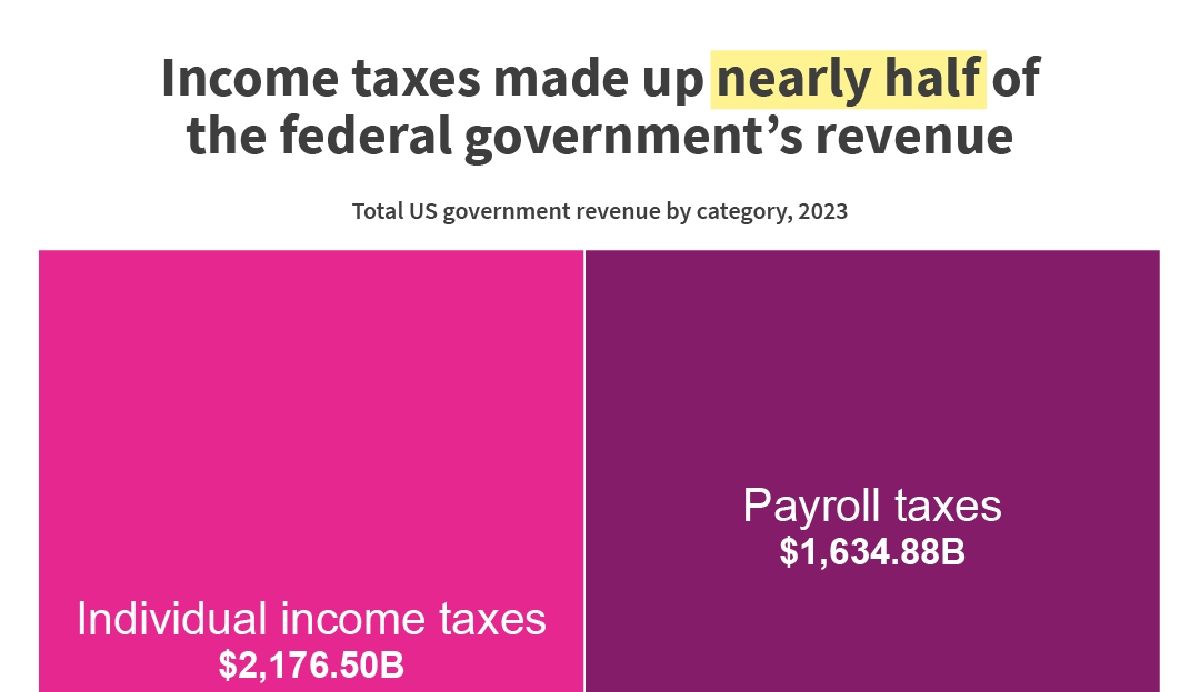
Personal income tax accounted for 43 cents of every dollar the federal government spent in the 2024-25 fiscal year, according to a new tax and spending tracker.
The rest of Ottawa's spending came from sources like corporate taxes, the GST, fees and borrowing, with 6.7 cents of every dollar coming from debt.
Programs for seniors, including Old Age Security, the Guaranteed Income Supplement and the allowance, cost the federal government $82.8 billion in fiscal 2024-25.
READ MORE: CIBC's prime rate holds at 4.45% as mortgage borrowers weigh options
READ MORE: Immunotherapy combo shows durable survival in heavily treated ovarian cancer
That amount is roughly 16 per cent of what Ottawa spent from its own revenue, which is more than the government’s health and social transfers to the provinces combined.
In the same fiscal year, roughly one-tenth of the money Ottawa spent went to cover interest charges on the national debt.
That interest cost was more than federal health transfers to the provinces and territories and well more than it paid on defence.
The tracker focuses on personal income tax and how those dollars get spent.
It notes that the real tax schedule Canadians face has far more steps than the published brackets, built from credits that shrink as income rises, surtaxes and basic amounts that phase out.
For example, an Ontarian who earns $100,000 at a job faces tax of 31.5 cents on the next dollar earned, but hands over 20.5 per cent of their income to income taxes overall.
That is because most of that income is taxed at lower rates or not at all, and only the last $3,300 is taxed at the top rate.
The tracker was created as part of a series on tax reform.
Jason Kirby, an economics reporter with The Globe and Mail, described the findings as "eye-opening."
He wrote that the cost of seniors' programs is expected to keep rising as Canada’s population rapidly ages.
He also noted that the defence cost has risen sharply with Ottawa’s boost to military spending.
Globe and Mail colleagues Erica Alini and Patrick Brethour will be answering reader questions about the tax system at 11 a.m. today.
Readers were invited to submit questions in advance about steps Canada should take to overhaul its tax system and revive growth, or about how the tax system works.
On the day the tracker was highlighted, markets were mixed as investors searched for direction amid persistently high bond yields.
Wall Street futures were muted, while TSX futures were little changed.
The Canadian dollar traded at 70.44 U.S. cents.
Data on Canada’s monthly real GDP for July was also expected, with forecasts for a flat reading month-over-month.
Bank of Canada Deputy Governor Toni Gravelle was scheduled to speak at a fireside chat at the Bloomberg Canadian Finance Conference in New York.
With files from The Globe and Mail