Toronto's PocketHealth expands from image sharing to AI for health care admin
The company's new AI platform aims to automate tasks like referrals and booking appointments for dozens of hospitals.
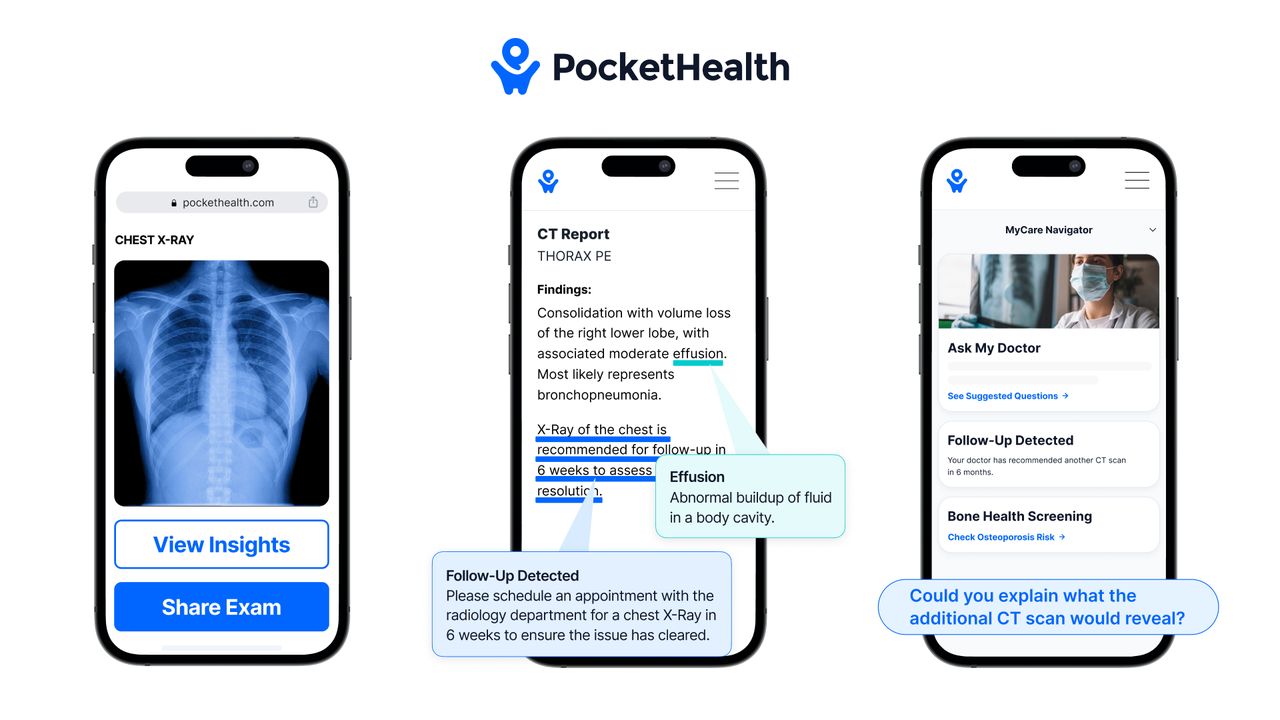
TORONTO — Toronto software company PocketHealth is expanding from helping patients access medical images to using artificial intelligence to automate administrative tasks in hospitals and clinics.
The company launched its agentic AI platform, PocketHealth Conductor, in late 2025, and it is now live at dozens of hospitals and imaging providers in Canada and the United States, PocketHealth says.
"We are in a heavily overburdened health care system," said Rishi Nayyar, the company's chief executive officer.
READ MORE: Toronto biotech startup aims to solve pesticide resistance with modular insecticide
READ MORE: University of Manitoba researchers develop AI 'brain' for autonomous farm machinery
He explained that Conductor uses a network of AI agents to complete non-clinical tasks autonomously, such as processing a physician's referral, calling the patient and booking an appointment live over the phone.
The platform can also read faxed and uploaded documents.
Rishi Nayyar and his brother Harsh, the chief technology officer, founded PocketHealth in 2016 after Harsh received MRI images on a CD following an injury.
The company's original platform now serves more than three million patients across North America at over 900 sites within more than 250 health care organizations.
Its annual revenue is between $10 million and $50 million, growing more than 25 per cent year over year.
Dr. Andrew Pinto, a physician and director of the Upstream Lab research group in Toronto, says Canada's health care system is enormously fragmented, with different record systems that cannot easily share data.
"They are bringing a new perspective to a very old problem and they are showing us what technology can do," Dr. Pinto said of PocketHealth.
He added that Canada needs legislation to mandate interoperability between systems.
Rishi Nayyar said adoption of the new AI technology faces challenges because every clinic has its own way of performing tasks.
"No matter how incredible [AI] is, every health care system, every clinic we deploy in has its own unique way of performing tasks," he said.
He said the technology requires significant configuration, testing and a slow rollout.
Dr. Pinto noted that the health care industry must address equity concerns with AI, including its accuracy and accessibility for people with lower digital literacy.
PocketHealth raised $45 million in Series B financing in March 2024, bringing its total equity funding to $75 million.
The round was led by Round 13 Capital, with new investors Deloitte Ventures and Samsung Next joining, and additional investment from Questa Capital and Radical Ventures.
Rishi Nayyar said the company plans to focus on expanding its AI offerings in Canada and the U.S. rather than entering new international markets.
He hopes the technology will let patients schedule their own exams and better understand procedure preparations, and help new immigrants get care in their first language.
"Agentic AI is still in its infancy," Rishi Nayyar said. "It needs more case studies, more deployment stories. We're not even in inning one."
With files from The Globe and Mail