MLB players vow to strike if owners push salary cap as labour deadline nears
The union says it will not accept a salary cap, a key owner demand as the current labour contract expires on Dec. 1.
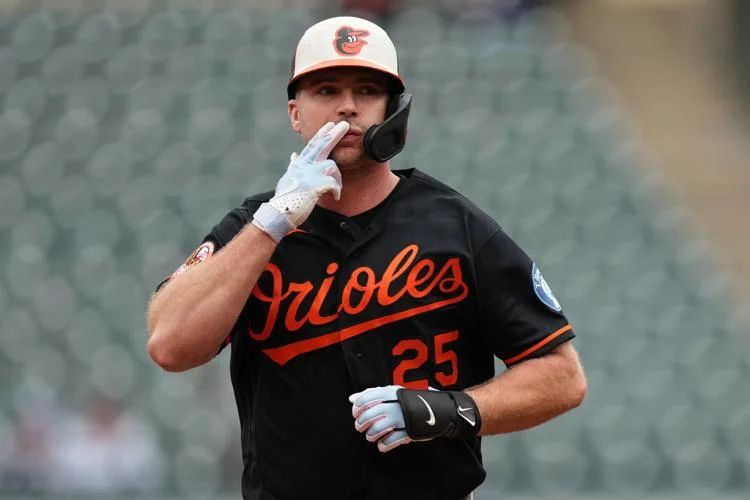
Major League Baseball players say they will not play if owners impose a salary cap, setting the stage for a potential work stoppage when the current labour contract expires on Dec. 1.
"We won't play. I'm going to be frank with you," New York Yankees pitcher Carlos Rodón said. "I'm not worried about it. They should be worried about it. There's a lot of money on us playing baseball."
Management is expected to impose a lockout after the contract expires, which would stop trades and free-agent signings and could threaten the start of spring training in February and opening day in March.
READ MORE: IDBI Bank employees call two-day hunger strike over proposed sale to Canadian firm
READ MORE: Unifor to hold strike vote for 9,000 Stellantis workers in Canada
MLB says a salary cap and floor are needed to alleviate economic disparity, noting that no low-revenue team has won the World Series since the 2015 Kansas City Royals.
"The salary cap and floor proposal levels the playing field, allowing us greater flexibility to address longstanding player priorities while sharing baseball revenue with the players 50/50," MLB spokesman Glen Caplin said.
Players strongly oppose a cap, pointing to the success this season of low-payroll teams like the Milwaukee Brewers and Tampa Bay Rays, who had the best regular-season records in their leagues.
"Despite MLB claiming they need a salary cap because small-market teams supposedly have no hope, we see Milwaukee with the best record in baseball for the second straight year and Tampa with the best record in the AL," union head Bruce Meyer said.
Baseball has not lost regular-season games to a work stoppage since the 1994-95 strike, which was sparked by management's last salary cap proposal and led to the cancellation of the World Series.
Players say they will never accept a cap similar to those in the NFL, NBA and NHL.
"For me the biggest thing is doing right for the generations forward because the generations before me, for the decades before, they've fought for our rights today," Baltimore Orioles first baseman Pete Alonso said. "That's a sacrifice that not just myself but other men around the league are willing to fight for and put up with."
MLB's proposal would cap team spending next year at US$245.3-million and establish a payroll floor of US$171.2-million by 2027.
It would also limit contract lengths and values, outlawing megadeals like outfielder Juan Soto's record US$765-million, 15-year contract with the New York Mets.
The union says MLB's proposed 50-50 revenue split would lead to a massive decrease in money to players because of how revenues are defined and calculated.
An escrow provision could also force players to forfeit money from guaranteed contracts if the players' defined revenue share exceeds 50 per cent.
Players would face significant daily salary losses in a work stoppage.
Alonso would lose US$165,775 per regular-season day missed, Rodón would forfeit US$144,385, and Los Angeles Dodgers star Shohei Ohtani would give up US$374,331 daily.
Players making the proposed US$900,000 minimum would lose US$4,813 daily.
Among the 1,366 players on rosters as of Monday, 893 had less than three years of service time and are not yet eligible for salary arbitration.
Baltimore pitcher Chris Bassitt, a member of the union's eight-man executive subcommittee, said communication within the players' association has transformed this year.
"Our last CBA from a player's side was not internally handled great. I think the structure was very archaic," Bassitt said. "We have made it our mission to kind of get all 30 clubs, 30 reps that genuinely care."
He emphasized the importance of including younger players in the process. "When I came in the league it was, I'm going to say it plainly, but it was like: 'Rookie shut up and sit in the corner and the veterans are going to take care of this.' I don't think that's a possible avenue to go down any more."
The vast majority of the roughly 1,200 players on 40-man rosters when a lockout starts will not have salary arbitration or free agency rights and will have 2027 salaries under US$1-million.
The union's executive subcommittee and 30 team player representatives form the executive council that makes union decisions.
With files from The Globe and Mail