Pope Leo XIV carves unique path as first American pontiff, blending tech savvy with global diplomacy
The Chicago-born pope's distinctive leadership style emerges through tech engagement, migrant advocacy and geopolitical mediation.
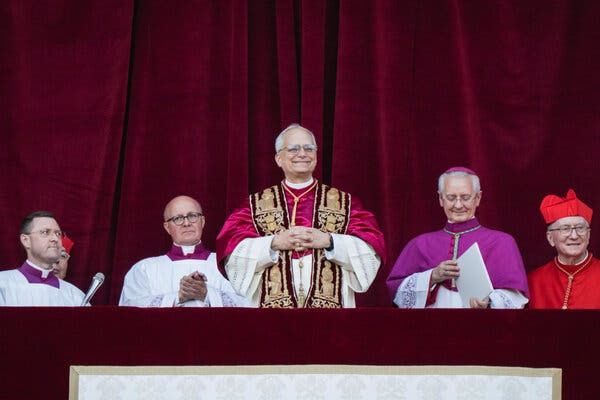
Nearly eighteen months into his papacy, Pope Leo XIV has begun imprinting his distinctive leadership style on the Catholic Church's 1.4 billion followers. The former Robert Francis Prevost of Chicago, elected on May 8, 2025, brings a rare combination of missionary experience, technological awareness and diplomatic pragmatism to the Vatican throne. His unique background as the first American pope has allowed him to approach global challenges with fresh perspectives while maintaining continuity with Catholic tradition.
A pontiff for the digital age
Leo XIV demonstrates an unprecedented comfort with contemporary technology for a spiritual leader of his stature. He routinely wears a smartwatch beneath his traditional cassock, symbolizing his willingness to engage with modern tools while maintaining religious traditions. His engagement with viral social media trends, including mimicking gestures popular among teenagers, shows an effort to bridge generational divides. The encyclical 'Magnifica Humanitas', published in May 2026, represents his most substantial contribution to technological ethics, calling for artificial intelligence development that prioritizes human dignity above corporate or political interests.
Veronique Lecaros, author of "Leo XIV, Portrait of a Peruvian Pope," notes his technical background gives him unique credibility on these issues, stating
"He's a scientist, a mathematician, someone who used to repair cars and computers."This practical knowledge informs his approach to modern challenges and extends the Church's relevance beyond traditional Catholic circles into tech and policy discussions.
READ MORE: Tech giants raise hundreds of billions in debt and equity for AI infrastructure
READ MORE: Tech sector urges Ottawa to expand capital gains tax incentives for startups
From Chicago to Chiclayo
Leo XIV's formative experiences came during two decades as a missionary in Peru, where he eventually served as apostolic administrator of Chiclayo diocese. Born on September 14, 1955 as the youngest of three brothers, his early religious inclinations were evident when he played priest as a child, distributing candy as mock communion wafers to neighborhood children. These early experiences foreshadowed his eventual spiritual path.
After being ordained into the priesthood in 1982, he joined the mendicant Order of Saint Augustine, which he would eventually lead in two consecutive terms from 2001 to 2013. These leadership roles took him worldwide visiting Augustine communities before Pope Francis raised him to cardinal in 2023. His tenure heading the Vatican's Dicastery for Bishops established his reputation as a skilled mediator between conservative and progressive factions within the Church hierarchy.
Diplomatic balancing act
The pope has intensified Vatican diplomatic efforts in his first years, offering the Holy See as mediator between Russia and Ukraine while adopting firmer language regarding Moscow's invasion than his predecessor. His upcoming visit to France from September 25 through 28 follows earlier trips to Africa in April and Spain in June, leveraging his multilingual abilities rooted in his diverse ancestry that includes Spanish, Italian, Quebecois, Monegasque and Creole heritage.
Martin Dumont, secretary-general of the Research Institute for the Study of Religions at the Sorbonne University, observed the pope's gradual emergence as a public figure:
"At first he seemed almost withdrawn, and eventually we saw the character reveal himself."Dumont added that being American helped Leo XIV
"very quickly manage to grasp the codes of modern communication, which wasn't necessarily the case with Francis."
Clashes with political winds
Leo XIV hasn't shied from political confrontation, particularly defending himself against personal attacks from former U.S. President Donald Trump. Charles Mercier, director of studies at the Ecole Pratique des Hautes Etudes in Paris, suggests these tensions actually bolster the pope's image as
"a figure of resistance to the danger of authoritarian populism."
Yet the pope consciously downplays his national identity, telling NBC in July:
"I have great love for America... but I think of myself more as the pope who happens to be American."His advocacy extends beyond political disputes to fundamental humanitarian issues, challenging European leaders to "receive, protect and integrate" migrants and denouncing corruption during speeches to long-serving African leaders.
Grounding in global realities
The pontiff's priorities reflect direct engagement with contemporary crises shaped by his extensive missionary experience. From addressing African corruption to establishing ethical frameworks for emerging technologies, his approach blends doctrinal tradition with pragmatic response to real-world problems. Lecaros emphasized this quality, noting
"he truly engages with the problems of our era, especially those linked to technology."
This orientation stems partly from his two decades living and working outside institutional church structures in Peru, where he forged close ties with local communities. His recent travels continue this hands-on approach to global issues, demonstrating his belief in the importance of first-hand experience in understanding complex social challenges.
Leadership style and personality
Observers describe Leo XIV as soft-spoken, calm and methodical, yet his character has revealed increasing vocalness on key issues. His personal interests in tennis, swimming and the Chicago White Sox reflect an ordinary humanity that connects with people worldwide. Martin Dumont notes that the pope
"wins people over"through this combination of personal warmth and principled leadership.
His background as a bridge-builder in the Roman Curia, where he mediated between progressive and conservative voices, continues to inform his papal leadership style. Described as "the least American of Americans," Leo XIV has managed to maintain a global perspective while bringing certain American sensibilities to the papacy, particularly regarding technological engagement and media communication.
Why Leo XIV matters
As the first American pope, Leo XIV represents both continuity and substantive change for the Catholic Church. His technological literacy positions the institution to engage meaningfully with digital transformation, while his diplomatic efforts expand the Vatican's geopolitical influence during turbulent times. More significantly, his ability to bridge divides - between generations through social media engagement, between church factions through mediation, and between global powers through diplomacy - suggests a papacy uniquely equipped for 21st century challenges.
By grounding doctrine in lived experience from Chicago to Chiclayo, and by addressing contemporary issues from artificial intelligence to migration with both moral clarity and practical understanding, Leo XIV may be redefining what global religious leadership looks like in an age of fragmentation. His papacy combines the missionary's grassroots experience with the diplomat's strategic vision and the technophile's forward-looking perspective - a rare combination that could shape the Catholic Church's direction for decades to come.