David Cronenberg
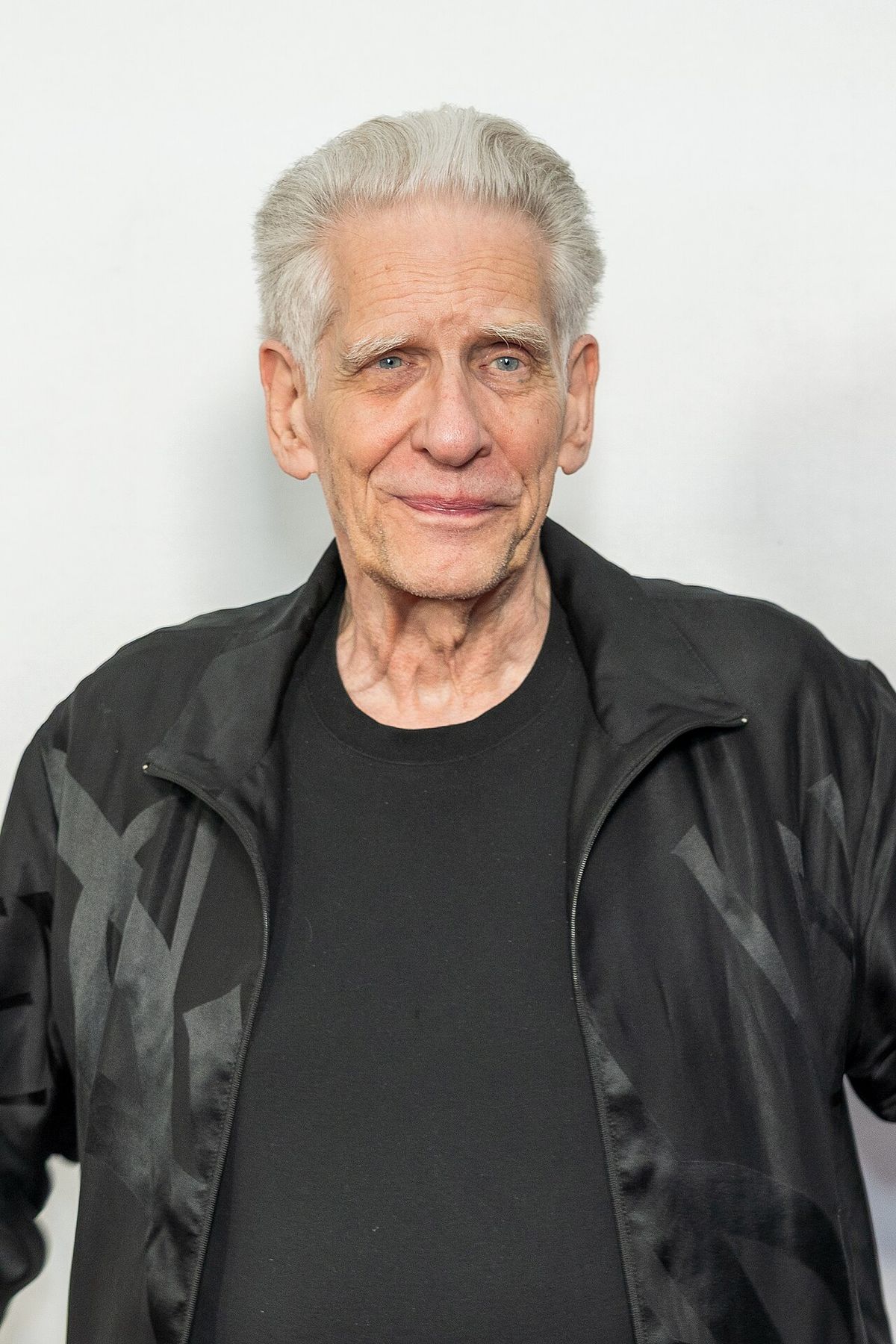
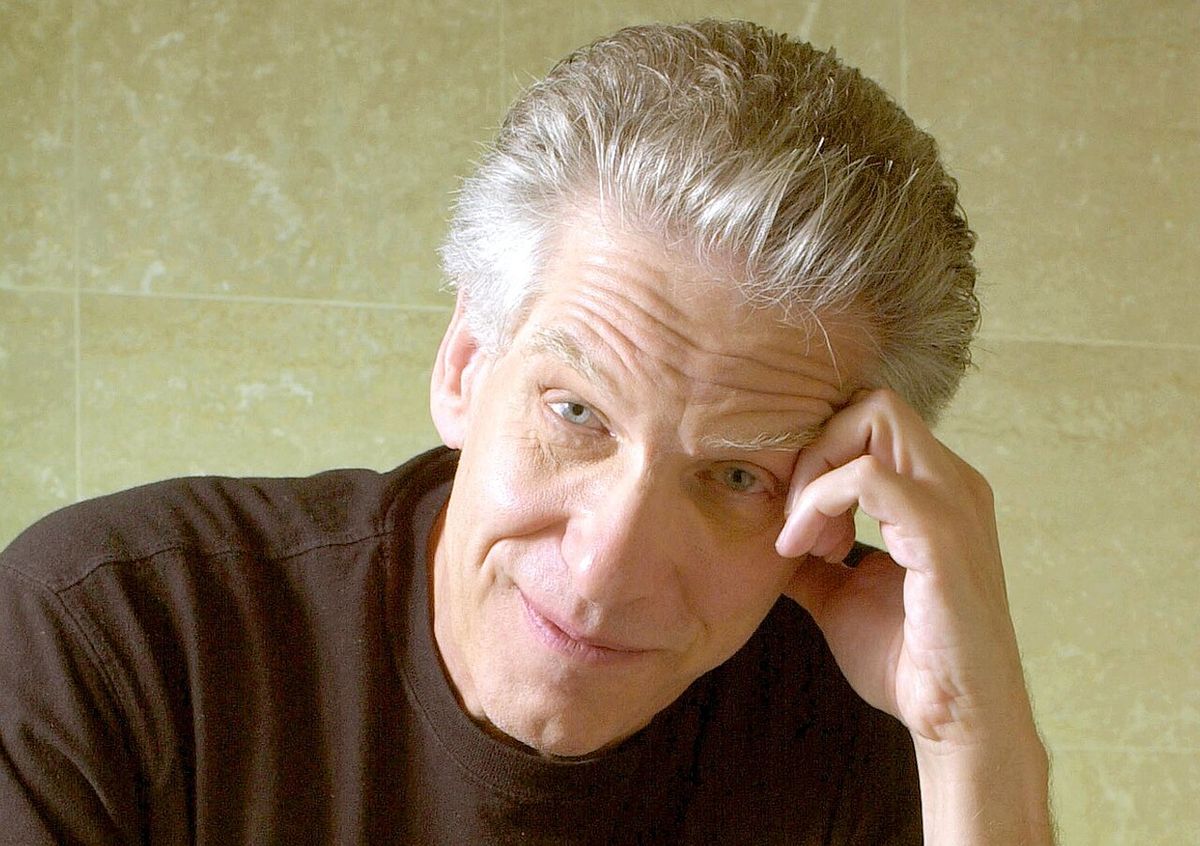
David Paul Cronenberg is a Canadian film director, screenwriter, producer and actor, widely regarded as a principal originator of the body horror genre. Born in Toronto in 1943, his influential career spans over five decades, exploring themes of visceral bodily transformation, technology, and psychological disintegration through films such as Scanners, Videodrome, and The Fly . Cronenberg is a staunchly Canadian filmmaker whose work, often financed by Telefilm Canada, has polarized critics and audiences while earning prestigious accolades, including the Special Jury Prize at the Cannes Film Festival. His recent projects include the 2022 film Crimes of the Future and the 2024 Cannes competition entry The Shrouds, alongside an increasing number of acting roles in television and film.
Early Life and Influences
David Cronenberg was born on March 15, 1943, in Toronto, Ontario, to a middle-class progressive Jewish family. His father, Milton Cronenberg, was a writer and editor, while his mother, Esther, was a musician. The household was filled with books, and his father attempted to introduce him to art films, though young David initially preferred westerns and pirate films featuring actors like Burt Lancaster. A voracious reader, Cronenberg's early literary interests included science fiction magazines such as The Magazine of Fantasy & Science Fiction, where he encountered authors like Ray Bradbury and Isaac Asimov. He also read a wide array of comic books, from Tarzan and Superman to the horror comics published by EC, which he described as scary and bizarre. Cinematic influences that later proved significant ranged from avant-garde works like Un Chien Andalou to Disney's Bambi, which he cited as the first important film he ever saw, finding its emotional moments terrifying and powerful. He attended Harbord Collegiate Institute and North Toronto Collegiate Institute before enrolling at University College, University of Toronto, initially for Honours Science before switching to Honours English Language and Literature, graduating in 1967.
His interest in filmmaking was sparked by seeing classmate David Secter's film Winter Kept Us Warm in 1966. Cronenberg began frequenting camera rental houses to learn the craft and, with a few hundred dollars, made his first short films, Transfer and From the Drain. Alongside Ivan Reitman, Bob Fothergill, and Iain Ewing, he was inspired by Jonas Mekas and helped form the Toronto Film Co-op, laying the groundwork for his entry into the Canadian film industry. This formative period established the eclectic mix of literary, comic book, and cinematic references that would later permeate his distinctive directorial style, blending high and low culture with a focus on the visceral and the psychological.
Career Development and Body Horror Origins (1969 to 1979)
Cronenberg's feature film career began with two experimental art-house features, the black-and-white Stereo (1969) and the colour Crimes of the Future (1970). He then entered a partnership with producer Ivan Reitman. Throughout the 1970s, his work was largely financed by the Canadian government, allowing him to develop his signature body horror style. His first major horror film, Shivers (1975), explored parasitic infection in a Montreal apartment complex, establishing his themes of bodily invasion and societal breakdown. He followed this with Rabid (1977), starring former pornographic actress Marilyn Chambers, which became a breakthrough with international distributors. These early films polarized audiences but garnered a cult following. Demonstrating his range, Cronenberg directed Fast Company (1979), a project reflecting his personal interest in car racing and bike gangs, before returning to horror with The Brood (1979), a film about psychosomatic manifestations of rage that received stronger critical support. This period also marked the beginning of his long-term collaboration with composer Howard Shore, who has scored all of his films since The Brood.
During this decade, Cronenberg established a core group of creative collaborators who would work with him repeatedly. These included his sister, art director Carol Spier, his other sister, costume designer Denise Cronenberg, sound editor Bryan Day, film editor Ronald Sanders, and, from 1979 until 1988, cinematographer Mark Irwin. This collaborative family-like environment on set became a consistent feature of his filmmaking process. The films from this era, though made on modest budgets, defined the body horror genre with their clinical yet grotesque exploration of physical transformation and disease, positioning Cronenberg as a unique and provocative voice in Canadian cinema.
Mainstream Breakthrough and Critical Acclaim (1981 to 1988)
The 1980s marked Cronenberg's breakthrough into wider recognition and critical acclaim. The science-fiction horror film Scanners (1981), featuring psychics with telepathic and telekinetic powers, became a cult classic. He then directed Videodrome (1983), a prescient film about media, reality, and physical mutation starring James Woods, which was distributed by Universal Pictures. Janet Maslin of The New York Times praised its innovativeness. That same year, he directed The Dead Zone (1983), a more conventional but effective adaptation of a Stephen King novel starring Christopher Walken, which was scored by Michael Kamen instead of Howard Shore. His biggest commercial success came with The Fly (1986), a loose remake starring Jeff Goldblum and Geena Davis. The film was a major box office hit, grossing $60 million, and remains one of his most accessible works while retaining his thematic focus on grotesque bodily decay.
This period also saw Cronenberg begin his enduring collaboration with cinematographer Peter Suschitzky, starting with Dead Ringers (1988), a psychological drama about twin gynecologists. Cronenberg was drawn to work with Suschitzky after admiring his work on The Empire Strikes Back. He had several near misses with big-budget Hollywood projects, having been offered the director's chair for Return of the Jedi and declining it, as well as offers for Flashdance, Top Gun, and Beverly Hills Cop. Instead, he remained based in Ontario, filming nearly all of his projects, including major studio vehicles like The Dead Zone and The Fly, in his home province, reinforcing his identity as a Canadian filmmaker working within and often against the Hollywood system.
Literary Adaptations and Genre Expansion (1991 to 2002)
In the 1990s and early 2000s, Cronenberg continued to challenge audiences with ambitious literary adaptations and further explorations of his core themes. He adapted William S. Burroughs's Naked Lunch in 1991, a novel long considered unfilmable. Cronenberg's solution was to blur the lines between reality and drug-induced hallucination, incorporating elements from Burroughs's life. He followed this with Crash (1996), an adaptation of J.G. Ballard's novel about the eroticism of car crashes, which won the Special Jury Prize at the Cannes Film Festival for its originality and audacity. The film sparked significant controversy. Other notable works from this period include M. Butterfly (1993), filmed largely in China, and eXistenZ (1999), a return to body horror through the lens of virtual reality. The lower-budget Spider (2002), a psychological drama filmed in England, required Cronenberg to defer part of his salary.
Concurrently, Cronenberg expanded his work as an actor in other directors' projects. He played a major role as Dr. Decker in Clive Barker's Nightbreed (1990) and appeared in cameo roles in films like Into the Night (1985), Blood and Donuts (1995), and To Die For (1995). He took a lead role in Don McKellar's Last Night (1998) and made a humorous appearance in Jason X (2002). He also began recurring television roles, such as Dr. Brezzel in Season 3 of Alias. In his own films, his appearances were brief, such as a gynecologist in The Fly or an unseen voice in Crash. This period was characterized by artistic risk-taking and fluctuations in commercial reception, solidifying his reputation as a director who followed his own creative vision regardless of mainstream trends.
Resurgence and Later Work (2005-Present)
The mid-2000s heralded a critical and commercial resurgence for Cronenberg, beginning with A History of Violence (2005), one of his highest-budgeted and most accessible films, which was influenced by his need for a more commercially viable project after Spider. This began a fruitful collaboration with actor Viggo Mortensen, who also starred in Eastern Promises (2007), a film about the Russian Mafia filmed primarily in England, A Dangerous Method (2011), about the relationship between Carl Jung and Sigmund Freud, and the 2022 film Crimes of the Future. His film Cosmopolis (2012) competed for the Palme d'Or at Cannes. He also ventured into other media, directing Howard Shore's opera The Fly in 2008 and publishing his first novel, Consumed, in 2014. His 2014 film Maps to the Stars, a satire of Hollywood, was his first to be shot in the United States.
In recent years, Cronenberg has taken on more substantial acting roles, citing it as a way to stay connected to film sets without the immense responsibility of directing. His daughter Caitlin directed him in the short film The Death of David Cronenberg in 2021. His later directorial works include Crimes of the Future (2022), which competed for the Palme d'Or, and The Shrouds, which premiered in competition at Cannes in 2024 and was released theatrically in September 2024. In 2026, he was featured on the song "No One Lasts Forever" on Charli XCX's album.
Films at the Cannes Film Festival
David Cronenberg's work has been a frequent presence at the Cannes Film Festival, with seven of his films selected to compete for the prestigious Palme d'Or. This consistent recognition at one of the world's most important film festivals highlights his international artistic standing. His films presented at Cannes often represent key phases in his career, from the controversial body horror of his earlier work to the more refined psychological dramas of his later period. The festival awarded his film Crash the unique Special Jury Prize in 1996, a recognition of its challenging and audacious nature. His most recent competition entries demonstrate his continued relevance and creative vitality decades into his career. The table below lists his films that have been in official competition for the Palme d'Or.
| Year | Film | Note |
|---|---|---|
| 1996 | Crash | Winner of the Special Jury Prize |
| 1999 | eXistenZ | In competition for the Palme d'Or |
| 2002 | Spider | In competition for the Palme d'Or |
| 2005 | A History of Violence | In competition for the Palme d'Or |
| 2007 | Eastern Promises | In competition for the Palme d'Or |
| 2012 | Cosmopolis | In competition for the Palme d'Or |
| 2014 | Maps to the Stars | In competition for the Palme d'Or |
| 2022 | Crimes of the Future | In competition for the Palme d'Or |
| 2024 | The Shrouds | In competition for the Palme d'Or |
Seven of David Cronenberg's films were selected to compete for the Palme d'Or at the Cannes Film Festival. The most recent of these selections was The Shrouds in 2024. His film Crash won the Special Jury Prize at the 1996 Cannes Film Festival. This award was given for originality, daring, and audacity.
Unrealized Projects and Creative Process
Throughout his career, Cronenberg has developed numerous film projects that never reached production, offering insight into his creative interests and the practical challenges of film financing. One of his earliest concepts was Roger Pagan, Gynecologist, conceived in the early 1970s as a novel about a neurotic impersonator of a medical expert. In the early 1980s, he wrote an original script for Universal titled Six Legs, elements of which were later incorporated into The Fly and Naked Lunch. He also attempted to develop a modern-day adaptation of Mary Shelley's Frankenstein. A long-gestating passion project was Red Cars, about the 1961 Grand Prix, which he eventually published as an artbook in 2005 after being unable to secure film funding.
He was offered and declined several high-profile Hollywood directing jobs, including Witness, Return of the Jedi, Flashdance, Top Gun, and Beverly Hills Cop. In the mid-1980s, he was signed to direct The Hitchhiker's Guide to the Galaxy for Ivan Reitman but chose to make The Fly instead. He worked for nearly a year on a version of Total Recall but had creative differences with producers, and the project was later made by Paul Verhoeven. In the mid-1990s, he was attached to direct an adaptation of American Psycho with a script by Bret Easton Ellis and Brad Pitt as the intended star. Other unrealized projects include a 1993 television series concept called Crimes Against Nature for CBC and a 1998 adaptation of the novel Brother Termite. These unmade films highlight the breadth of his interests, from auto racing and science fiction to satire, and his commitment to his own artistic vision, even when it meant walking away from major studio opportunities.
Frequent Collaborators and Production Style
A consistent feature of David Cronenberg's filmmaking is his long-standing creative partnerships with a core group of artists and technicians. This collaborative family has provided a stable aesthetic and a supportive environment for his often challenging material. His most notable collaboration is with composer Howard Shore, who has scored every Cronenberg film since The Brood in 1979, with the sole exception of The Dead Zone. Shore also composed the music for Cronenberg's production of the opera The Fly in 2008. Cinematographer Peter Suschitzky has been his director of photography for every film since Dead Ringers in 1988, creating the distinctive, clean, and often cold visual style of his later work. Other key collaborators include several family members and long-time associates.
- Carol Spier, his sister, has served as the production designer or art director on most of his films since the late 1970s.
- Denise Cronenberg, his other sister, has been the costume designer on nearly all of his films.
- Film editor Ronald Sanders has edited the majority of his films since The Dead Zone in 1983.
- Sound editor Bryan Day has worked on his sound design for decades.
- Actor Robert A. Silverman has appeared in multiple Cronenberg films, including Scanners (1981) and Naked Lunch (1991).
- Actor Viggo Mortensen has starred in four films: A History of Violence (2005), Eastern Promises (2007), A Dangerous Method (2011), and Crimes of the Future (2022).
David Cronenberg has collaborated with a stable team of creative partners. He has worked with cinematographer Peter Suschitzky on each of his films since Dead Ringers. He has collaborated with composer Howard Shore on all of his films since The Brood, with the exception of The Dead Zone. Cronenberg is a vocal supporter of government-backed film projects and has said that every country needs a system of government grants to have a national cinema in the face of Hollywood. Most of his films have been at least partially financed by Telefilm Canada. Nearly all of his films have been filmed in his home province of Ontario.
Major Acting Roles and Cameos
David Cronenberg has also appeared as an actor in other directors' films. Most of his roles are cameo appearances, as in the films Into the Night, Blood and Donuts, To Die For, and Jason X. He has also played major roles in films such as Nightbreed and Last Night. On television, he has appeared in the recurring roles of Dr. Brezzel in Alias and Kovich in Star Trek: Discovery. He has had main roles as Reverend Verrenger in Alias Grace and Spencer Galloway in Slasher: Flesh & Blood.
- He played a major role as Dr. Philip K. Decker in Clive Barker's Nightbreed (1990).
- He had a lead role as Duncan, a gas company executive, in Don McKellar's Last Night (1998).
- He made a cameo as a coroner in Gus Van Sant's To Die For (1995).
- He appeared as himself in a cameo in the horror sequel Jason X (2002).
- He played the mysterious Agent Kovich in Seasons 3, 4, and 5 of Star Trek: Discovery (2020 to 2022).
- He starred as patriarch Spencer Galloway in the Canadian series Slasher: Flesh & Blood (2021).
David Cronenberg has not had major roles in any of his own films. He did put in a brief appearance as a gynecologist in The Fly. He can also be glimpsed among the sex-crazed hordes in Shivers. He can be heard as an unseen car-pound attendant in Crash. His hands can be glimpsed in eXistenZ. He appeared as a stand-in for James Woods in Videodrome. His role in Slasher: Flesh & Blood was shot under COVID-19 protocols.
Questions about David Cronenberg
What is David Cronenberg best known for?
David Cronenberg is best known as a principal originator of the body horror genre, a style of filmmaking that explores visceral bodily transformation, infection, and the intersection of the psychological and the physical. His most famous films in this vein include Scanners (1981), Videodrome (1983), and The Fly (1986). While he began with horror and science fiction, his later work expanded into dramas, psychological thrillers, and gangster films, such as A History of Violence (2005) and Eastern Promises (2007). He is also recognized for his long-standing collaborations with composer Howard Shore and actor Viggo Mortensen.
How many times has David Cronenberg competed for the Palme d'Or at Cannes?
Seven of David Cronenberg's films have been selected to compete for the Palme d'Or at the Cannes Film Festival. These include Crash (1996), which won the Special Jury Prize, eXistenZ (1999), Spider (2002), A History of Violence (2005), Eastern Promises (2007), Cosmopolis (2012), and Maps to the Stars (2014). His most recent films, Crimes of the Future (2022) and The Shrouds (2024), also premiered in competition at Cannes, bringing his total number of films in official competition to nine. This consistent recognition highlights his enduring status as a major international auteur.
Has David Cronenberg acted in many films and TV shows?
Yes, David Cronenberg has appeared as an actor in numerous films and television series, though most roles are cameos. He has taken major roles in films like Nightbreed (1990) and Last Night (1998), and cameoed in projects such as Into the Night (1985), To Die For (1995), and Jason X (2002). On television, he had recurring roles as Dr. Brezzel in Alias and as Kovich in Star Trek: Discovery. More recently, he played substantial parts like Reverend Verrenger in Alias Grace and Spencer Galloway in Slasher: Flesh & Blood. He has said acting allows him to stay connected to film sets without the immense responsibility of directing.
What are some of David Cronenberg's most famous unrealized film projects?
Cronenberg has had several notable unrealized projects. He was offered and declined to direct major Hollywood films like Return of the Jedi, Flashdance, and Beverly Hills Cop. He worked on a version of Total Recall that was never made due to creative differences. In the 1990s, he was attached to direct an adaptation of American Psycho with Brad Pitt. Other unmade projects include a modern Frankenstein adaptation, a film about auto racing called Red Cars (published as an artbook), and a television series titled Crimes Against Nature for CBC. These projects reflect his wide-ranging interests beyond the horror genre.
Who are David Cronenberg's frequent collaborators?
Cronenberg maintains long-term creative partnerships with a core group of collaborators. Composer Howard Shore has scored all his films since 1979 except The Dead Zone. Cinematographer Peter Suschitzky has shot every film since Dead Ringers in 1988. His family is deeply involved: his sister Carol Spier is the production designer, and his other sister Denise Cronenberg is the costume designer. Film editor Ronald Sanders and sound editor Bryan Day are also key long-time contributors. Actor Viggo Mortensen has starred in four of his films since 2005. This consistent team helps create the distinctive, cohesive aesthetic of his work.
What is David Cronenberg's latest project?
David Cronenberg's most recent directorial project is the film The Shrouds, which premiered in competition at the Cannes Film Festival in 2024 and was released theatrically in September 2024. Prior to that, he directed Crimes of the Future, which also competed at Cannes in 2022. As an actor, he recently had a main role in the Canadian television series Slasher: Flesh & Blood. In 2026, he was featured on the song "No One Lasts Forever" on Charli XCX's album. He continues to be active in both directing and acting, maintaining his presence in the film industry over six decades into his career.
Sources and further reading
- David Cronenberg (Wikipedia)
- David Cronenberg (cinematheque.qc.ca)
- David Cronenberg Discusses His Newest Onscreen Role ... (rue-morgue.com)
Checked by the Yadude Books desk. Last updated 2026-10-29.