Lawrence Krauss
Lawrence Maxwell Krauss is a Canadian-American theoretical physicist, cosmologist, and author known for his work in public science education and his advocacy for secularism. Born in New York City but raised in Toronto, Krauss earned his undergraduate degrees at Carleton University in Ottawa, establishing a foundational Canadian connection. He gained prominence through bestselling books like The Physics of Star Trek and A Universe from Nothing, and as the founder and director of the Origins Project at Arizona State University. His career has been marked by significant scientific contributions, public intellectualism, and later, controversies involving allegations of sexual misconduct and his association with convicted sex offender Jeffrey Epstein.
Early Life and Education
Lawrence Krauss was born on May 27, 1954, in New York City but spent his formative years in Toronto, Ontario, where he was raised in a Jewish household that was not religious, an early influence on his later secular worldview. He attended Carleton University in Ottawa, graduating in 1977 with first-class honours after completing undergraduate degrees in both mathematics and physics, which provided a strong foundation for his future research. His academic performance and early interest in fundamental physics led him to pursue doctoral studies at the Massachusetts Institute of Technology in Cambridge, Massachusetts, where he worked under the supervision of renowned physicists. He completed his Ph.D. in physics in 1982, with his thesis work setting the stage for his future research in theoretical cosmology and particle physics, focusing on the fundamental forces and structure of the universe.
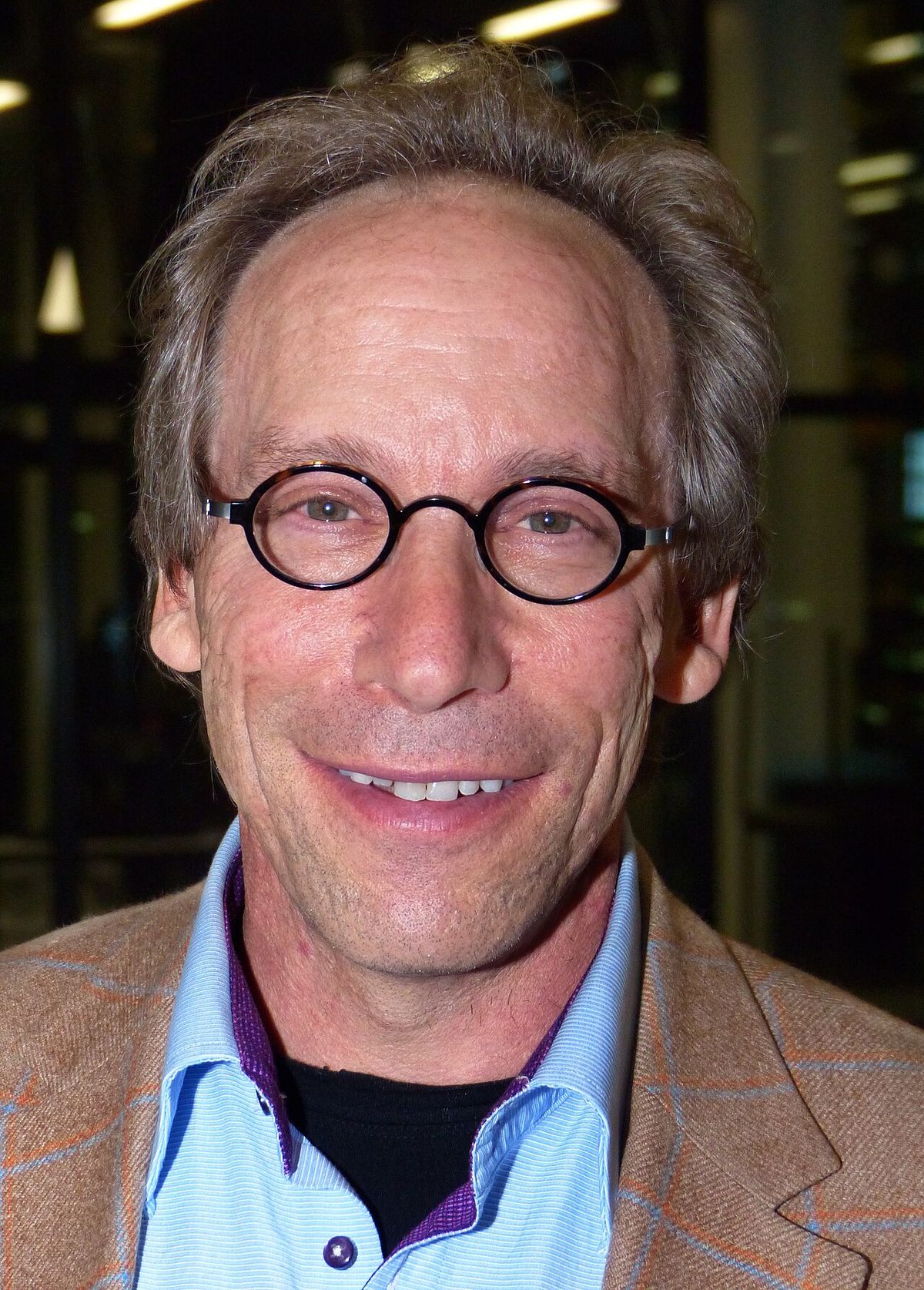
Academic and Research Career
Krauss began his academic career as a member of the Harvard Society of Fellows, a prestigious postdoctoral fellowship for promising scholars, before joining the faculty of Yale University as an assistant professor in 1985. He was promoted to associate professor at Yale in 1988, where he continued his research in theoretical physics and began to establish his reputation in cosmology. In 1993, he moved to Case Western Reserve University in Cleveland, Ohio, where he was named the Ambrose Swasey Professor of Physics and also served as a professor of astronomy and chairman of the physics department, a role he held until 2005. During his tenure at Case Western, he led a significant faculty initiative in March 2006 that resulted in successful votes of no confidence against university president Edward M. Hundert and provost John L. Anderson, with votes of 131-44 and 97-68 respectively, reflecting deep institutional divisions.
In August 2008, Krauss joined Arizona State University as a Foundation Professor with a joint appointment in the School of Earth and Space Exploration and the Department of Physics within the College of Liberal Arts and Sciences. At ASU, he founded and became the inaugural director of the Origins Project, an interdisciplinary initiative created to explore fundamental questions about the origins of the universe, life, and culture through conferences and public events. He helped inaugurate the project with the 2009 Origins Symposium, which attracted eighty participating scientists, including Nobel laureates and leading researchers, and an audience of three thousand people, featuring discussions on cosmology, astrobiology, and complexity. The project's mission was to foster dialogue between scientists, philosophers, and the public on humanity's most deep questions.
Lawrence Krauss works in theoretical physics and cosmology. In 1995 he argued that the energy density of the universe is dominated by the energy of empty space, supporting a nonzero cosmological constant. This prediction was confirmed in 1998 by two observational collaborations, and the 2011 Nobel Prize in Physics was awarded for their discovery. Krauss formulated a model in which the Universe could have come from "nothing", as outlined in his 2012 book A Universe from Nothing. This model relies on arrangements of relativistic quantum fields and agrees with some observations, leading some to call it a plausible hypothesis. However, cosmologist George Ellis has criticized it as philosophical speculation rather than tested science.
Krauss is a critic of string theory, which he discusses in his 2005 book Hiding in the Mirror. In his 2012 book A Universe from Nothing he writes that "we still have no idea if this remarkable theoretical edifice actually has anything to do with the real world". Initially skeptical of the Higgs boson, Krauss researched the implications of the Higgs field on dark energy after its 2012 discovery at CERN. He integrated this discovery into a new preface for the 2013 paperback edition of A Universe from Nothing. In June 2011, he joined the professoriate of the New College of the Humanities, a private college in London. In 2013, he accepted a part-time professorship at the Research School of Astronomy and Astrophysics at the Australian National University.
Public Engagement and Writing
Lawrence Krauss is an advocate for public understanding of science and the author of several bestselling books. He has written editorials for The New York Times, including a piece explaining the science behind and significance of the Higgs particle. Krauss appears in the media both at home and abroad to facilitate public outreach in science. As a result of his 2002 appearance before the state school board of Ohio, his opposition to intelligent design gained national prominence in the United States.
Krauss's bibliography includes over a dozen books aimed at general readers, beginning with The Fifth Essence in 1989, which explored the search for dark matter in the universe. His early work, The Physics of Star Trek (1995), used the popular science fiction franchise to explain real physics principles like warp drive and transporters, while Beyond Star Trek (1998) expanded on similar themes from alien invasions to the end of time. Other significant publications include Hiding in the Mirror (2005), an exploration of extra dimensions and string theory from Plato to modern physics, and Quantum Man: Richard Feynman's Life in Science (2011), a biography focusing on the renowned physicist's contributions. His 2012 book, A Universe from Nothing: Why There Is Something Rather Than Nothing, became a New York Times bestseller within a week of its release and featured an afterword by biologist Richard Dawkins. Its original foreword was intended to be written by Christopher Hitchens, who became too ill to complete it before his death.
In his role as a public intellectual, Krauss served on the science policy committee for Barack Obama's 2008 presidential campaign, advising on matters of scientific research and innovation. He was also elected co-president of the board of sponsors for the Bulletin of the Atomic Scientists in 2008 and served on the board of directors of the Federation of American Scientists, to which he was elected in 2010, roles that positioned him at the intersection of science and global policy. His later works include The Physics of Climate Change (2021) and, in 2024, he edited the essay collection The War on Science, featuring contributions from 39 academics like Richard Dawkins, Jordan Peterson, and Steven Pinker, addressing perceived threats such as DEI programs and cancel culture to academic freedom. Beyond writing, Krauss has appeared in documentary films such as The Unbelievers (2013) and the television series How the Universe Works (2010 to 2018), and since June 21, 2019, he has hosted The Origins Podcast with Lawrence Krauss, with early guests including Ricky Gervais, Noam Chomsky, and Jenny Boylan, exploring science and culture.
Krauss publishes a blog titled Critical Mass. He wrote a July 2012 article in Newsweek indicating how the Higgs particle is related to our understanding of the Big Bang. He also wrote a longer piece in The New York Times explaining the science behind and significance of the particle. Krauss appears in the media both at home and abroad to facilitate public outreach in science.
Secular Advocacy and Activism
An anti-theist, Krauss seeks to reduce the influence of what he regards as superstition and religious dogma in popular culture. He has argued that public policy debates in the United States should have a greater focus on science. Krauss criticized Republican presidential candidate Ben Carson's statements on science, writing that Carson's remarks "suggest he never learned or chooses to ignore basic, well-tested scientific concepts". Krauss takes part in public debates on religion and has participated in many debates with religious apologists, including William Lane Craig and John Lennox. He attended and was a speaker at the Beyond Belief symposia in November 2006 and October 2008.
In his book A Universe from Nothing: Why There is Something Rather than Nothing (2012), Krauss discusses the premise that something cannot come from nothing, which has often been used as an argument for the existence of a prime mover. He has argued in a debate with John Ellis and Don Cupitt that the laws of physics allow for the Universe to be created from nothing. He stated, "What would be the characteristics of a universe that was created from nothing, just with the laws of physics and without any supernatural shenanigans? The characteristics of the universe would be precisely those of the ones we live in." Krauss is featured in the 2013 documentary The Unbelievers, in which he and Richard Dawkins travel across the globe speaking publicly about the importance of science and reason as opposed to religion and superstition.
In an interview with The Atlantic, Krauss states that he has never claimed that "questions about origins are over". According to Krauss, "I don't ever claim to resolve that infinite regress of why-why-why-why-why. As far as I'm concerned it's turtles all the way down". He is an advocate for public understanding of science. His activism is characterized by a commitment to empirical evidence and scientific literacy.
Honours and Recognition
In an interview with Krauss in the Scientific American, science writer Claudia Dreifus called Krauss "one of the few top physicists who is also known as a public intellectual." Krauss is one of very few to have received awards from all three major American physics societies: the American Physical Society, the American Association of Physics Teachers, and the American Institute of Physics. His specific honours include the American Association for the Advancement of Science's Award for the Public Understanding of Science and Technology in 2000. In 2001, he received the Julius Edgar Lilienfeld Prize from the American Physical Society and the Andrew Gemant Award from the American Institute of Physics. In 2012, he was awarded the National Science Board's Public Service Medal for his contributions to public education in science and engineering in the United States. His early career was also marked by winning the Gravity Research Foundation First Prize Award in the 1984 essay competition.
- Gravity Research Foundation First Prize Award (1984)
- American Association for the Advancement of Science's Award for the Public Understanding of Science and Technology (2000)
- Julius Edgar Lilienfeld Prize, American Physical Society (2001)
- Andrew Gemant Award, American Institute of Physics (2001)
- National Science Board Public Service Medal (2012)
Controversies and Allegations
Krauss's career has been significantly affected by two major areas of controversy: allegations of sexual misconduct and his association with Jeffrey Epstein, both of which led to professional repercussions and public scrutiny. In February 2018, BuzzFeed News published an article detailing multiple allegations against Krauss from his time at Case Western Reserve University and beyond, which included claims of offensive comments, groping, and non-consensual sexual advances from several women. Krauss called the article slanderous and factually incorrect, though he issued a public apology to anyone he had made feel intimidated or uncomfortable, while maintaining the article distorted facts and ignored counter-evidence. Case Western Reserve University had previously restricted his campus access in response to a student complaint, although by the time sanctions began he had already left for ASU, indicating the university took action based on internal reports.
ASU began an internal investigation regarding an accusation that Krauss grabbed a woman's breast while at a convention in Australia. Investigators interviewed two eyewitnesses, and two other witnesses who immediately spoke with the unnamed woman. The woman told investigators that "she did not feel victimized, felt it was a clumsy interpersonal interaction and thought she had handled it in the moment." ASU found that the preponderance of evidence suggested that Krauss had violated the university's policy against sexual harassment by grabbing a woman's breast without her permission. As a result, Krauss was not renewed as director of the Origins Project and the university moved its staff to a project run by planetary scientist Lindy Elkins-Tanton, formally ending the Origins project.
In response to the university determination, Krauss produced a 51-page appeal document responding to the allegations, including a counter-claim that a photo claimed to be of Krauss grabbing a woman's breast was actually showing his hand moving away from the woman. Following the ASU investigation, Krauss was placed on paid administrative leave starting in March 2018 and was recommended for dismissal by the dean of the department. He later retired from ASU at the end of the 2018 to 2019 academic year. Several organizations also canceled scheduled talks by Krauss. Krauss resigned from the position of chair of the Bulletin of the Atomic Scientists Board of Sponsors when informed that its other members felt his presence was distracting "from the ability of the Bulletin to effectively carry out [its] work".
Separately, Krauss's longstanding relationship with financier and convicted sex offender Jeffrey Epstein drew intense scrutiny and was detailed in documents released through 2025 and 2026, revealing extensive communications. In 2006, Krauss helped organize a physics conference on St. Thomas in the U.S. Virgin Islands funded by an Epstein foundation, which included a dinner on Epstein's private island and involved inviting roughly 20 prominent physicists like Stephen Hawking, Kip Thorne, and Frank Wilczek. From 2010 to 2017, Krauss's Origins Project received $250,000 from an Epstein foundation called 'Enhanced Education', providing significant funding for its activities during his directorship. Krauss publicly defended Epstein after his 2008 guilty plea for procuring a minor for prostitution, telling an interviewer in 2011 that based on empirical evidence of seeing women ages 19 to 23 around him, he would believe Epstein over other people and did not feel tarnished by their relationship.
Documents released by the House Committee on Oversight and Government Reform in November 2025 showed Epstein had exchanged more than 60 emails with Krauss, indicating a sustained personal and professional correspondence over many years. In a 2011 email, Krauss wrote to Epstein, 'Beyond anything else, you are my friend. I hope we can both always remember that, no matter what,' expressing a personal bond despite Epstein's criminal conviction. In a 2017 email, Krauss asked Epstein for advice in responding to allegations of sexual misconduct, seeking counsel from the convicted sex offender on handling his own controversy. In a 2018 exchange, Krauss responded to Epstein's joke about a 'men of the world conference' by suggesting invitees include Kevin Spacey, Bill Clinton, Al Franken, and Woody Allen, each of whom had been publicly accused of sexual wrongdoing, a comment that attracted criticism for its insensitivity.
In February 2026, the Department of Justice released further documents indicating that Epstein emailed Krauss in an attempt to get him to introduce him to podcaster Joe Rogan. Krauss reached out to Rogan but he refused to meet Epstein. Harvard Professor Steven Pinker said that Krauss was one of several colleagues who invited him to "salons and coffee klatsches" that included Epstein. In August 2025, The New York Times published reports of letters given to Epstein for his 63rd birthday, including one from Krauss. Krauss stated that he did not recall the letter but attended several gatherings at Epstein's home.
Later Projects and Current Role
In January 2019, Krauss became President of the Origins Project Foundation, a non-profit corporation intended to host public panel discussions on science, culture, and social issues. He is President of The Origins Project Foundation, Inc., a new organization founded in 2019. On June 21, 2019, a new video podcast, The Origins Podcast with Lawrence Krauss, launched with Krauss as host. The first episodes included dialogues with Ricky Gervais, Noam Chomsky, and Jenny Boylan.
His editorial work continued with the 2024 publication of The War on Science, a collection of essays from 39 academics criticizing concepts like DEI programs, wokeness, and cancel culture as perceived threats to academic freedom and scientific progress, which he edited. This book, published through the conservative Christian imprint Post Hill Press, represents his third publication with that press following The Physics of Climate Change (2021) and The Edge of Knowledge (2023), indicating a publishing partnership. Krauss wrote both the introductory overview and the epilogue for the 2024 volume, framing the essays from contributors like Nicholas Christakis, Peter Boghossian, and Elizabeth Weiss, and articulating his concerns about ideological influences on science. He remains an active author, with other recent works including The Known Unknowns (2023) from Head of Zeus/Apollo, and maintains his blog Critical Mass and public speaking engagements, sustaining his profile as a commentator on science and society.
Selected Bibliography and Scientific Publications
Krauss has authored or co-authored more than three hundred scientific studies and review articles on cosmology and theoretical physics. In 1995 he argued in favour of the energy-density of the universe being dominated by the energy of empty space, quoting many other scientists who supported the existence of a nonzero cosmological constant. His books for a general audience include The Physics of Star Trek (1995) and A Universe from Nothing (2012). He also wrote a 2008 Scientific American article titled 'The End of Cosmology'.
| Year | Title | Publisher | Notes |
|---|---|---|---|
| 1989 | The Fifth Essence | Basic Books | Early work on cosmology and the search for dark matter. |
| 1994 | Fear of Physics: A Guide for the Perplexed | Basic Books | Introduction to physics concepts for a general audience. |
| 1995 | The Physics of Star Trek | Basic Books | Bestseller using sci-fi to explain real physics principles like warp drive. |
| 1998 | Beyond Star Trek | HarperCollins | Follow-up exploring broader physics themes from alien invasions to the end of time. |
| 2001 | Atom: An Odyssey from the Big Bang to Life on Earth | Little, Brown and Company | History of the atom and cosmic evolution from the Big Bang to life. |
| 2005 | Hiding in the Mirror | Viking Press | Critique of string theory and the history of extra dimensions from Plato onward. |
| 2011 | Quantum Man: Richard Feynman's Life in Science | Atlas & Company | Biography focusing on physicist Richard Feynman's scientific contributions. |
| 2012 | A Universe from Nothing | Atria Books | NYT Bestseller on cosmic origins. Afterword by Richard Dawkins, discusses quantum origins. |
| 2017 | The Greatest Story Ever Told, So Far | Atria Books | Exploration of modern physics discoveries from relativity to the Higgs boson. |
| 2021 | The Physics of Climate Change | Post Hill Press | Analysis of climate science from a physics perspective, discussing energy balance and models. |
| 2024 | The War on Science (Editor) | Post Hill Press | Essay collection with 39 contributors on threats to academic freedom and scientific progress. |
Krauss has contributed chapters to other works, such as the 2009 volume The Religion and Science Debate: Why Does It Continue? published by Yale Press. He writes regular articles for publications like Scientific American. His publication record demonstrates a commitment to both specialized research and public communication. He is an advocate for public understanding of science.
Questions about Lawrence Krauss
What happened with the allegations against Lawrence Krauss at Arizona State University?
Following a 2018 BuzzFeed News report, Arizona State University investigated an allegation that Krauss grabbed a woman's breast without consent at a conference in Australia. The university's investigation concluded that the preponderance of evidence suggested he violated its sexual harassment policy. As a result, in July 2018, ASU did not renew his position as director of the Origins Project. Krauss was placed on paid administrative leave and later retired from ASU at the end of the 2018 to 2019 academic year.
What was Lawrence Krauss's connection to Jeffrey Epstein?
Krauss had a long association with Jeffrey Epstein. He helped organize a 2006 physics conference funded by an Epstein foundation and his Origins Project received $250,000 from Epstein between 2010 and 2017. He defended Epstein after his 2008 conviction and maintained email correspondence with him for years. Documents released in 2025 and 2026 revealed over 60 emails, including one where Krauss called Epstein a friend and another where he suggested invitees for a joked-about conference included men accused of sexual misconduct.
Where did Lawrence Krauss go to university in Canada?
Lawrence Krauss received his undergraduate education at Carleton University in Ottawa, Canada. He graduated in 1977 with first class honours, earning bachelor's degrees in both mathematics and physics. This foundational education in Canada preceded his doctoral studies at the Massachusetts Institute of Technology, where he completed his Ph.D. in physics in 1982. His academic journey began in Toronto, where he spent his childhood, before moving to Carleton University for his higher education.
What is Lawrence Krauss most famous for?
Lawrence Krauss is most famous as a Canadian American theoretical physicist, cosmologist, and public intellectual. He is renowned for authoring bestselling books like The Physics of Star Trek and A Universe from Nothing, which discusses how the universe could have come from nothing. He is a prominent advocate for science and an antitheist who frequently debates religion. He founded and directed Arizona State University's Origins Project, an initiative created to explore fundamental questions about the universe and our origins.
What is Lawrence Krauss doing now?
Currently, Lawrence Krauss is the President of The Origins Project Foundation, Inc., a non profit organization he founded in 2019. He hosts The Origins Podcast with Lawrence Krauss, which launched in June 2019 and features dialogues with various public figures. He also publishes a blog titled Critical Mass. Following his retirement from Arizona State University in May 2019, he continues his work as an author and public commentator on science and culture.
Sources and further reading
- Lawrence Krauss (Wikipedia)
- Lawrence M. Krauss, author, Audible (audible.ca)
- Lawrence M. Krauss | Official Website (lawrencemkrauss.com)
- Stories by Lawrence M. Krauss (scientificamerican.com)
Checked by the Yadude Books desk. Last updated 2026-10-31.