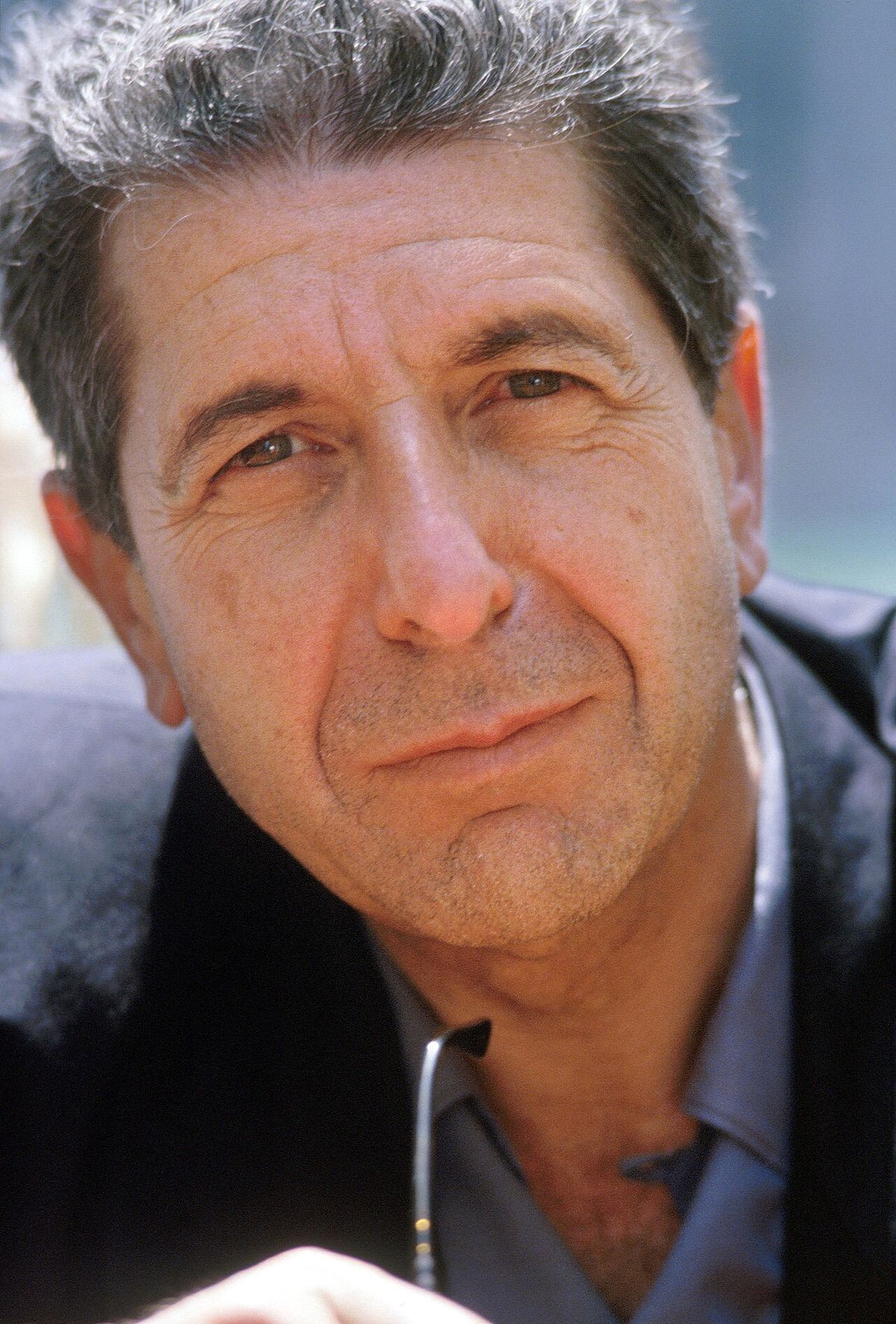
Malcolm Gladwell
Malcolm Gladwell is a British-Canadian journalist, author and public speaker whose work explores the counterintuitive insights of social science research. A staff writer for The New Yorker since 1996, he is the author of eight bestselling books, including The Tipping Point and Outliers, which have shaped public discourse on success, decision-making and social change. His influence extends to the podcasting world as the host of Revisionist History and co-founder of Pushkin Industries. For his contributions to Canadian society, Gladwell was appointed to the Order of Canada in 2011, cementing his status as a prominent intellectual figure whose ideas resonate with a wide Canadian audience.
Early Life and Formative Years in Canada
Malcolm Timothy Gladwell was born in Fareham, Hampshire, England on September 3, 1963. His mother, Joyce Gladwell (née Nation), is a Jamaican psychotherapist, and his father, Graham Gladwell, was a mathematics professor from Kent, England. Research by historian Henry Louis Gates Jr. revealed that one of Gladwell's maternal ancestors was a Jamaican free woman of colour who was a slaveowner, and his great-great-great-grandmother was of Igbo ethnicity from Nigeria. When Gladwell was six, his family moved from Southampton to Elmira, a Mennonite community in Ontario, Canada. He grew up in rural Southwestern Ontario, attended a Mennonite church, and his parents and two brothers became part of that local community. His father, a professor at the University of Waterloo, allowed an 11-year-old Malcolm to wander the university offices, which developed his interest in reading and libraries. Gladwell has identified his mother as his role model as a writer. In the spring of 1982, he interned with the National Journalism Center in Washington, D.C., before graduating with a bachelor's degree in history from the University of Toronto's Trinity College in 1984.
Gladwell was a nationally ranked middle-distance runner during his youth in Ontario. He was an Ontario High School Athletic Association (OFSAA) champion and among Canada's fastest teenagers at 1500 metres. He ran 4 minutes and 14 seconds at age 13 and improved to 4 minutes and 5 seconds by age 14. At the University of Toronto, he ran the 1500 metres in 3 minutes and 55 seconds, and he continued running competitively into his fifties, recording a time of 4 minutes and 54 seconds at age 51.

Journalistic Career and Path to The New Yorker
After university, Gladwell pursued a career in advertising but was rejected by every agency to which he applied. He accepted a journalism position at the conservative magazine The American Spectator and moved to Indiana. He subsequently wrote for Insight on the News, a magazine owned by Sun Myung Moon's Unification Church. In 1987, Gladwell began covering business and science for The Washington Post, where he worked for nine years. He later described this period as his own application of the 10,000-hour rule, stating it took him exactly ten years to progress from being a 'basket case' at the beginning to feeling like an expert. His time at the Post included covering the AIDS epidemic, which influenced his later thinking about social epidemics.
Gladwell started at The New Yorker in 1996 with the intention to mine academic research for insights and inspiration. His first assignment was to write about fashion, but he chose to profile a man who manufactured T-shirts, arguing it was more interesting to explain how to make a T-shirt for eight dollars than to write about a dress costing one hundred thousand dollars. His popularity surged with two 1996 articles for the magazine: 'The Tipping Point' and 'The Coolhunt'. These pieces formed the basis for his first book, for which he received a one million dollar advance. He has remained a staff writer at The New Yorker and also served as a contributing editor for the sports journalism website Grantland.
Major Books and Central Ideas
Gladwell's writing process involves collecting interesting stories and interesting research, looking for cases where they overlap. His first book, The Tipping Point: How Little Things Can Make a Big Difference (2000), was inspired by the sudden drop in crime in New York City and sought to explain social phenomena through epidemiological lenses. The term 'tipping point' describes the moment in an epidemic when a virus reaches critical mass. The book heavily featured the 'broken windows theory' of policing, which Gladwell later admitted he was 'too in love with' and had overstated in importance. The Sunday Times listed it as one of the 12 most influential books since World War II.
Blink: The Power of Thinking Without Thinking (2005) examines how the human unconscious interprets cues and how past experiences enable rapid decision-making. Examples in the book include the authentication of the Getty kouros statue and psychologist John Gottman's research on predicting divorce. Gladwell has said his own curly hair was an inspiration for the book, as its length led to increased police stops, including one incident where three officers apprehended him in Manhattan because his hair matched the profile of a rapist. His third book, Outliers: The Story of Success (2008), investigates how environment, cultural legacy, and opportunity combine with personal drive to enable success. The book originated from Gladwell's curiosity about why so many powerful New York corporate lawyers shared similar biographies, and it challenges crude understandings of success by examining figures like Bill Gates.
- The Tipping Point (2000): Sold more than two million copies in the United States and popularized sociological concepts of trend transmission.
- Blink (2005): Sold as well as The Tipping Point. By November 2008 the two books had sold a combined 4.5 million copies.
- Outliers (2008): A number one New York Times bestseller for 11 consecutive weeks.
- What the Dog Saw (2009): A collection of Gladwell's favourite articles from The New Yorker since 1996.
- David and Goliath (2013): Inspired by a 2009 New Yorker article titled 'How David Beats Goliath'. Examines underdogs versus favourites.
- Talking to Strangers (2019): Analyses cases like Bernie Madoff's deceptions and the death of Sandra Bland to explore misunderstandings.
- The Bomber Mafia (2021): A historical study of precision bombing in the Second World War.
Critical Reception and Public Influence
Gladwell's books have received significant commercial success and critical recognition. The Tipping Point was named one of the best books of the decade by The A.V. Club, The Guardian, and The Times, and was Barnes & Noble's fifth-best-selling non-fiction book of the decade. Blink was on Fast Company's list of the best business books of 2005, was number five on Amazon customers' favourite books of 2005, and was in the top 50 of Amazon's favourite books of the decade. Outliers was Time magazine's number ten non-fiction book of 2008 and was on the San Francisco Chronicle's list of the 50 best non-fiction books of 2008. The Daily Telegraph called The Tipping Point 'a wonderfully offbeat study of that little-understood phenomenon, the social epidemic'. The Economist described Outliers as 'a compelling read with an important message'.
His ideas have had measurable cultural impact. In 2012, CBS's 60 Minutes attributed the trend of American parents 'redshirting' their five-year-olds by delaying kindergarten entry to a section in Outliers. Sociology professor Shayne Lee referenced the book in a CNN editorial about Martin Luther King Jr., discussing the strategic timing of King's ascent from a 'Gladwellian perspective'. Gladwell himself credits psychologists Richard Nisbett and Lee Ross for inventing the 'Gladwellian genre'. Concurrently, Gladwell has faced pointed criticism. The New Republic called the final chapter of Outliers 'impervious to all forms of critical thinking'. Critics like Steven Pinker have accused him of 'cherry-picked anecdotes, post-hoc sophistry and false dichotomies', and coined the 'Igon Value Problem' to highlight Gladwell's occasional misunderstanding of technical terms like 'eigenvalue'. The Register accused him of having an 'aversion for fact' and dressing up simple truths with flowery language.
| Book | Publication Year | Key Concept | Commercial/Critical Note |
|---|---|---|---|
| The Tipping Point | 2000 | Social epidemics, tipping points | Received a $1M advance. 2M+ US copies sold. |
| Blink | 2005 | Thin-slicing, rapid cognition | #5 on Amazon customers' favourites of 2005. |
| Outliers | 2008 | 10,000-hour rule, cultural legacy | #1 NYT bestseller for 11 weeks. Influenced 'redshirting' trend. |
| David and Goliath | 2013 | Underdog advantage | Bestseller with mixed reviews. |
| Talking to Strangers | 2019 | Miscommunication, default to truth | Analyses the cases of Amanda Knox, Jerry Sandusky, Sylvia Plath. |
| The Bomber Mafia | 2021 | Military history, precision bombing | Focused on a 'dream, a temptation, and the longest night of WWII'. |
| Revenge of the Tipping Point | 2024 | Dark side of social contagion | 25-year sequel to the first book. Examines COVID and opioids. |
Podcasting and Pushkin Industries
Gladwell is the host of the podcast Revisionist History, which launched in 2016. Initially produced through Panoply Media, the podcast is now produced through his own company. It has aired seven seasons, each consisting of 10 episodes that re-examine a person, event, or idea and question the received wisdom about it. Gladwell was recruited to create a podcast by Jacob Weisberg, then editor-in-chief of The Slate Group. In September 2018, Gladwell announced he was co-founding a podcast company with Weisberg, which was later named Pushkin Industries. Gladwell told the Los Angeles Times that audio offered a unique capacity for capturing 'a certain kind of whimsy and emotionality'.
He also co-hosts the music interview podcast Broken Record with Bruce Headlam and producer Rick Rubin. The podcast had two seasons, one in 2018 to 2019 and another in 2020, for a total of 49 episodes. In January 2025, Gladwell launched a new podcast titled The Unusual Suspects with creator Kenya Barris. The podcast features interviews with influential figures like former Fortune 500 CEO Ursula Burns and hip hop artist Dr. Dre, focusing on their individual paths to success.
Personal Life and Canadian Connections
Gladwell is a Christian who attended Above Bar Church in Southampton as a child and Gale Presbyterian in Elmira after moving to Canada. He wandered from his faith after moving to New York but rediscovered it while writing David and Goliath and through an encounter with Wilma Derksen, whose child was killed. His family remains part of the Mennonite community in Southwestern Ontario. In the epilogue of Outliers, Gladwell describes many lucky circumstances that came to his family over several generations, contributing to his own path. He was appointed to the Order of Canada in 2011, a significant recognition of his contributions to Canadian intellectual life.
Gladwell has also been a prominent public speaker. In 2005, he commanded a forty-five thousand dollar speaking fee, and by 2008 he was giving about thirty speeches a year, most for tens of thousands of dollars. In 2011, he participated in a three-city speaking tour for Bank of America titled 'Bank of America Small Business Speaker Series: A Conversation with Malcolm Gladwell', which drew criticism from commentators like Clara Jeffery of Mother Jones, who said it had 'terrible ethical optics'. Gladwell responded that it was no different from any other speaking gig and that he was unaware the bank was 'bragging about his speaking engagements'. He has also provided blurbs for 'scores of book covers', leading The New York Times to question if he was spreading his endorsements too thinly, a point Gladwell acknowledged by referencing 'the tragedy of the commons'.
Questions about Malcolm Gladwell
What is Malcolm Gladwell's most famous book?
Malcolm Gladwell's most famous book is The Tipping Point, published in 2000. It introduced the concept of social epidemics to a mass audience and was named one of the best books of the decade by publications including The Guardian and The A.V. Club. The book sold more than two million copies in the United States alone and popularized sociological ideas like the 'broken windows theory'. Its 2024 sequel, Revenge of the Tipping Point, marks the 25-year anniversary of the original work and applies its concepts to modern crises.
What is Malcolm Gladwell's 10,000-hour rule?
The 10,000-hour rule is a concept Gladwell presented in his 2008 book Outliers. It proposes that achieving world-class expertise in a complex field requires approximately ten thousand hours of deliberate practice. Gladwell used examples like The Beatles' performing marathon in Hamburg and Bill Gates's early, extensive access to a computer to illustrate the rule. He framed his own nine years at The Washington Post as part of his own ten-year, ten-thousand-hour journey to journalistic mastery. The rule emphasizes sustained effort and unique opportunity over innate talent as key drivers of exceptional success.
What podcasts does Malcolm Gladwell host?
Malcolm Gladwell hosts the long-running podcast Revisionist History, which began in 2016 and has produced seven 10-episode seasons re-examining past events. He co-hosts the music interview podcast Broken Record with Rick Rubin and Bruce Headlam, which ran for 49 episodes across two seasons. In January 2025, he launched a new interview series called The Unusual Suspects with Kenya Barris, featuring conversations with successful figures from various fields. Gladwell co-founded the podcast production company Pushkin Industries in 2018 to produce these and other audio projects.
Is Malcolm Gladwell Canadian?
Yes, Malcolm Gladwell is a British-Canadian author and journalist. He moved to Elmira, Ontario, with his family at age six and was raised in Canada. He graduated with a history degree from the University of Toronto in 1984. In 2011, he was appointed to the Order of Canada, a high honour recognizing his contributions to Canadian society. While he has lived and worked extensively in the United States as a staff writer for The New Yorker, his formative years, education, and family roots are firmly connected to Ontario.
What criticism has Malcolm Gladwell faced?
Gladwell's work has been criticized for oversimplifying complex academic research and relying heavily on anecdotal evidence rather than rigorous data. Scholars like Steven Pinker have accused him of 'cherry-picked anecdotes' and post-hoc reasoning, noting the 'Igon Value Problem' where he misrepresents technical terms. Some reviewers argue his insights can be obvious or his conclusions inadequately supported. His commercial speaking engagements, including a 2011 series for Bank of America, drew scrutiny regarding the ethical optics of a journalist partnering with a corporate brand. Publications like The New Republic have been particularly critical of his methodology.
What was Malcolm Gladwell's career before writing books?
Before becoming a bestselling author, Malcolm Gladwell worked as a journalist for a decade. After university, he wrote for conservative publications like The American Spectator and Insight on the News. From 1987 to 1996, he was a business and science reporter for The Washington Post, where he covered the AIDS epidemic. In 1996, he joined The New Yorker as a staff writer, a position he still holds. His breakthrough came with two 1996 articles for the magazine that formed the basis for his first book, The Tipping Point, which he published in 2000 after receiving a one million dollar advance.
Sources and further reading
- Malcolm Gladwell (Wikipedia)
- Malcolm Gladwell, Home | Malcolm Gladwell (gladwellbooks.com)
- Malcolm Gladwell | New York Times Bestselling Author ... (gladwell.com)
- Malcolm Gladwell (thecanadianencyclopedia.ca)
Checked by the Yadude Books desk. Last updated 2026-10-19.