Margaret Atwood
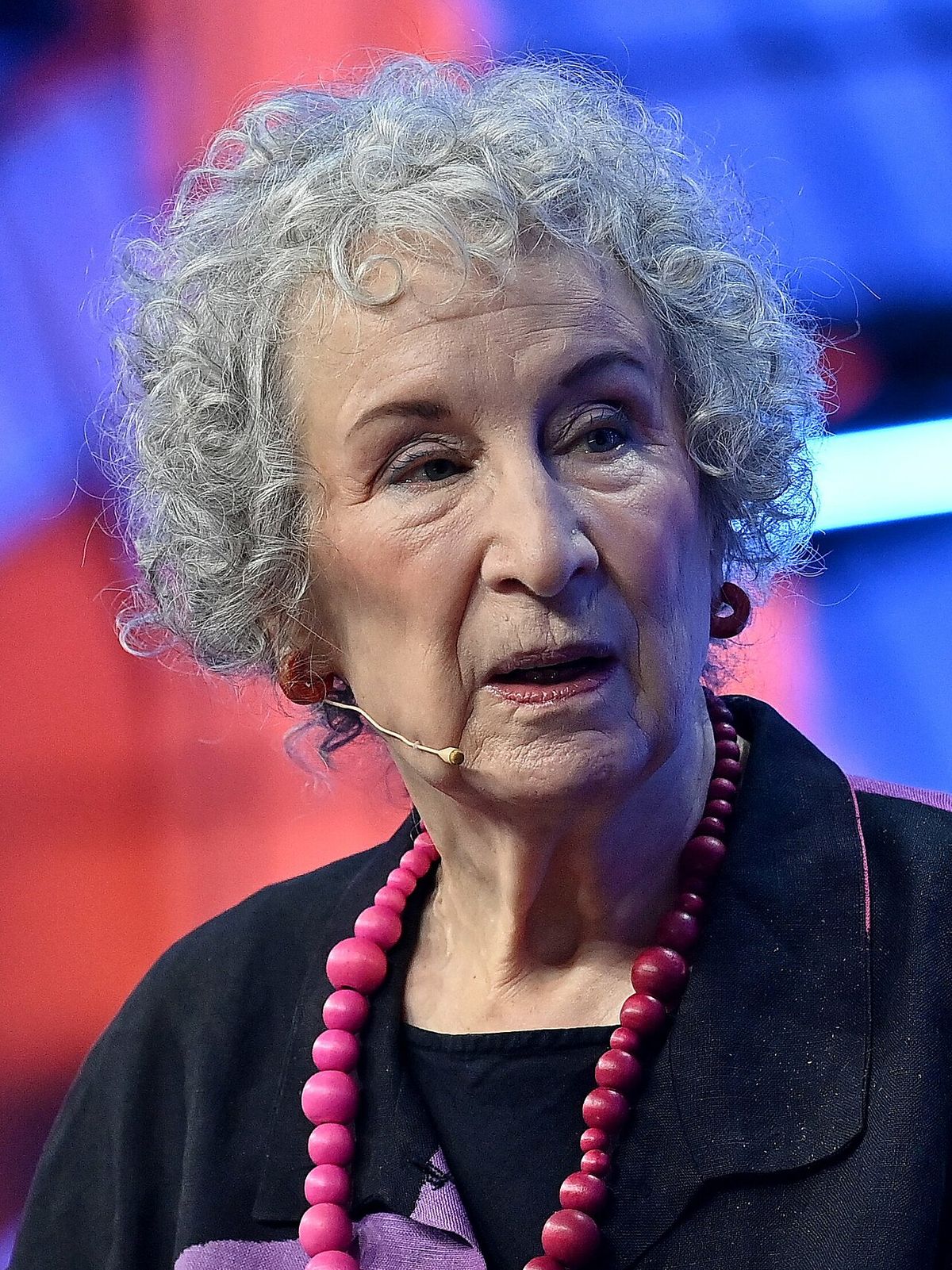
Margaret Eleanor Atwood is a Canadian novelist, poet, literary critic, and inventor whose extensive body of work has shaped national and international literature. Born in Ottawa in 1939, she has authored numerous novels, poetry collections, and works of non-fiction, with her dystopian novel The Handmaid's Tale being her most widely recognized book. Atwood's writing explores themes of Canadian identity, gender politics, power, and environmental crises, and her contributions have been recognized with honours including two Booker Prizes and the Order of Canada. Her role as a founder of literary institutions like the Writers' Trust of Canada demonstrates her commitment to supporting Canadian writers.
Early life and education
Margaret Atwood was born on November 18, 1939, in Ottawa, Ontario, the second child of Carl Edmund Atwood, an entomologist, and Margaret Dorothy Killam, a former dietitian and nutritionist. Her father's research in forest entomology meant the family spent much of her childhood in the backwoods of northern Quebec and travelling between Ottawa, Sault Ste. Marie, and Toronto. She did not attend school full-time until she was 12 years old, during which period she became a voracious reader of literature, Dell pocketbook mysteries, Grimms' Fairy Tales, Canadian animal stories, and comic books. Atwood also participated in the Brownie program of the Girl Guides of Canada, experiences she later wrote about in some of her publications.
She attended Leaside High School in Leaside, Toronto, graduating in 1957, and had begun writing plays and poems at the age of six. Atwood decided she wanted to write professionally when she was 16 years old. In 1957, she began studying at Victoria College in the University of Toronto, where she published poems and articles in the college literary journal Acta Victoriana and participated in the sophomore theatrical tradition of The Bob Revue. Her professors during this time included the poet Jay Macpherson and the influential critic Northrop Frye. She graduated in 1961 with a Bachelor of Arts in English, with honours, and minors in philosophy and French.
In 1961, Atwood began graduate studies at Radcliffe College of Harvard University with a Woodrow Wilson fellowship. She obtained a master's degree (MA) from Radcliffe in 1962. She then pursued doctoral studies for two years. Her doctoral work focused on The English Metaphysical Romance, but she did not finish her dissertation.
Literary career and major works by decade
Margaret Atwood's career is marked by continuous publication across multiple genres, with each decade producing defining works. Her first book of poetry, Double Persephone, was published as a pamphlet by Hawkshead Press in 1961 and won the E. J. Pratt Medal. While writing, she held teaching positions at the University of British Columbia from 1964 to 1965 and at Sir George Williams University in Montreal from 1967 to 1968. Her 1966 poetry collection The Circle Game won the Governor General's Award, and her first novel, The Edible Woman, a social satire of North American consumerism, was published in 1969.
During the 1970s, Atwood taught at York University and was a writer in residence at the University of Toronto. She published six collections of poetry, including The Journals of Susanna Moodie (1970) and Power Politics (1971). She also published three novels: Surfacing (1972), Lady Oracle (1976), and Life Before Man (1979), the latter a finalist for the Governor General's Award. Her first non-fiction monograph, Survival: A Thematic Guide to Canadian Literature (1972), became a standard text in Canadian studies. In 1977, she published her first short story collection, Dancing Girls, which won the St. Lawrence Award for Fiction and the award of The Periodical Distributors of Canada for Short Fiction.
The 1980s saw Atwood's literary reputation reach an international level. She published the novels Bodily Harm (1981), The Handmaid's Tale (1985), and Cat's Eye (1988). The Handmaid's Tale won the Arthur C. Clarke Award and the 1985 Governor General's Award, and was a finalist for the 1986 Booker Prize. Cat's Eye was a finalist for both the 1988 Governor General's Award and the 1989 Booker Prize. During this decade, she also held several teaching and writer-in-residence positions, including at New York University in 1986 and Macquarie University in Australia in 1987.
In the 1990s, Atwood published The Robber Bride (1993), a finalist for the Governor General's Award and shortlisted for the James Tiptree Jr. Award, and Alias Grace (1996), which won the Giller Prize and was a finalist for the Booker Prize and Governor General's Award. The 2000s began with her winning the Booker Prize for The Blind Assassin in 2000. She then published the MaddAddam Trilogy, starting with Oryx and Crake in 2003, followed by The Year of the Flood (2009) and MaddAddam (2013). She also published the novella The Penelopiad in 2005 and the non-fiction work Payback: Debt and the Shadow Side of Wealth in 2008.
Her later works include the graphic novel series Angel Catbird, which she began writing in 2016. She published the novel Hag-Seed in 2016 as part of the Hogarth Shakespeare Series. In 2019, she published The Testaments, a sequel to The Handmaid's Tale, which was the joint winner of the 2019 Booker Prize. In 2020, she published the poetry collection Dearly. In 2026, she published Book of Lives: A Memoir of Sorts, which received mixed reviews.
Selected honours and awards by work:- The Circle Game (1966): Governor General's Award for Poetry.
- The Handmaid's Tale (1985): Governor General's Award for Fiction, Arthur C. Clarke Award.
- Alias Grace (1996): Giller Prize.
- The Blind Assassin (2000): Booker Prize, Hammett Prize.
- The Testaments (2019): Booker Prize (joint winner).
- Numerous additional nominations for the Governor General's Award, Booker Prize, and Orange Prize.
Themes, criticism, and cultural contributions
A central and recurring theme in Atwood's work is the theorization of Canadian identity, most explicitly laid out in her 1972 critical work Survival: A Thematic Guide to Canadian Literature. In it, she postulates that Canadian literature is characterized by the symbol of survival and the use of 'victim positions' in a relationship with a victor, which may be other humans, nature, or the wilderness. This theory bears the influence of Northrop Frye's concept of garrison mentality. Atwood explores these ideas in fictional works like Surfacing and The Journals of Susanna Moodie, and through the technique of historiographic metafiction in novels such as Alias Grace and The Blind Assassin, where she interrogates the processes of creating historical narrative.
Gender and power are persistent subjects in Atwood's writing, though she has frequently expressed a nuanced position on the feminist label. After publishing The Edible Woman, she stated she considered it social realism rather than feminism. In a 2017 clarification, she noted her discomfort stems from the varying definitions of the word, stating she would want to know what a person means by feminism before answering. Despite this, feminist literary critics consistently analyze the sexual politics, use of myth, and portrayal of gendered relationships in her work. Her novels, including The Robber Bride and The Handmaid's Tale, scrutinize the social construction of gender and female agency within patriarchal systems.
Atwood has made substantial institutional contributions to Canadian literature. She is a founding trustee of the Griffin Poetry Prize and a founder of the Writers' Trust of Canada, a non-profit organization that seeks to encourage Canada's writing community. Her role in these organizations reflects a commitment to nurturing literary culture beyond her own writing. Her works have also been the subject of significant biographical and critical attention, with filmmaker Michael Rubbo's 1984 documentary Margaret Atwood: Once in August detailing his frustration in uncovering autobiographical evidence and inspiration in her fiction.
Inventions, adaptations, and special projects
Beyond her literary output, Margaret Atwood is an inventor and entrepreneur. In early 2004, while on a book tour in Denver for Oryx and Crake, she conceived the idea for a remote robotic writing technology to allow authors to sign books without being physically present. This became the LongPen. She founded the company Unotchit Inc. to develop and market the technology, and by 2011, the company shifted its market focus into business and legal transactions. In 2013, the company was renamed Syngrafii Inc., and as of 2021, it is a cloud-based provider of electronic signature technology, with Atwood still serving as a director and holding related patents.
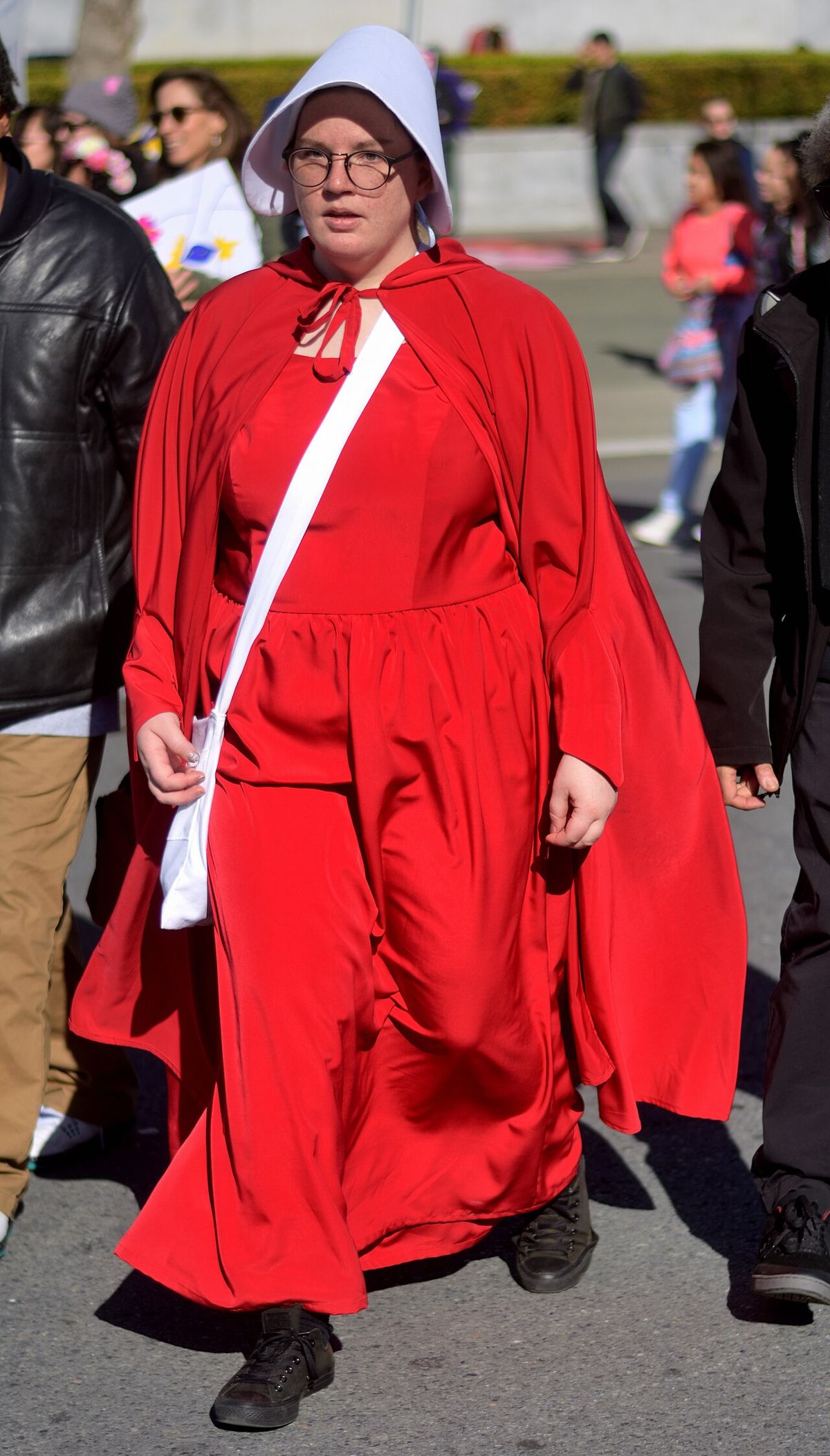
Atwood's works have been widely adapted for film and television. Notable adaptations include the 1990 film and the 2017 television series of The Handmaid's Tale, the 2017 miniseries of Alias Grace, and the 2007 television film of The Robber Bride. Other adaptations include the films of Surfacing (1981) and The Edible Woman (1994). She has also contributed to other artistic forms, writing the libretto for the chamber opera Pauline, which premiered in Vancouver in 2014 with music by Tobin Stokes and was commissioned by the City Opera of Vancouver.
She has participated in unique literary projects, most notably the Future Library. In 2015, she became the first author to contribute, depositing a manuscript titled Scribbler Moon that will remain sealed and unread until its publication in 2114. In 2016, she co-created the graphic novel series Angel Catbird with illustrator Johnnie Christmas, featuring a protagonist mutated to have cat and bird characteristics. She has described her speculative fiction as being based on existing technologies and scientific possibilities taken a few steps further, a principle she applied to the Angel Catbird series as well.
Selected adaptations and projects:- The Handmaid's Tale: 1990 film, television series (2017-).
- Alias Grace: 2017 television miniseries.
- The Robber Bride: 2007 television film.
- Pauline: Chamber opera libretto, premiered 2014.
- Future Library: Contributor of Scribbler Moon (2015) for publication in 2114.
- Angel Catbird: Graphic novel series launched in 2016.
Academic posts and teaching
Throughout her career, Margaret Atwood has held numerous academic and teaching positions at universities across Canada and internationally. Her first teaching role was as a lecturer in English at the University of British Columbia in Vancouver from 1964 to 1965. She then served as an Instructor in English at Sir George Williams University in Montreal from 1967 to 1968, followed by a position at the University of Alberta in Edmonton from 1969 to 1970. In the early 1970s, she taught at York University in Toronto from 1971 to 1972 and was a writer in residence at the University of Toronto during the 1972/1973 academic year.
During the 1980s, she continued to teach, serving as the MFA Honorary Chair at the University of Alabama in Tuscaloosa in 1985. She was the Berg Professor of English at New York University in 1986. She was Writer-in-Residence at Macquarie University in Australia in 1987. She was also Writer-in-Residence at Trinity University in San Antonio, Texas, in 1989. She has noted that success for her meant no longer having to teach at university. She is a Senior Fellow of Massey College, Toronto.
Publishing statistics and bibliography overview
Margaret Atwood's published output is vast and spans multiple genres. Since 1961, she has published 18 books of poetry, 18 novels, 11 books of nonfiction, nine collections of short fiction, eight children's books, and two graphic novels, in addition to a number of small press editions of both poetry and fiction. This prolific production demonstrates her mastery of different literary forms and her sustained engagement with writing over more than sixty years. Her work has been translated into numerous languages and continues to be studied and read worldwide, with her books frequently appearing on bestseller lists and academic syllabi.
The following table provides a summary of her major novel publications by decade. Her first novel, The Edible Woman, was published in 1969. Her best-known work is the 1985 dystopian novel The Handmaid's Tale. She published the historical fiction novel Alias Grace in 1996. She published the speculative fiction novel Oryx and Crake in 2003. She published the sequel to The Handmaid's Tale, The Testaments, in 2019.
| Decade | Novels Published | Notable Examples |
|---|---|---|
| 1960s | 1 | The Edible Woman (1969) |
| 1970s | 3 | Surfacing (1972), Lady Oracle (1976), Life Before Man (1979) |
| 1980s | 3 | Bodily Harm (1981), The Handmaid's Tale (1985), Cat's Eye (1988) |
| 1990s | 2 | The Robber Bride (1993), Alias Grace (1996) |
| 2000s | 4 | The Blind Assassin (2000), Oryx and Crake (2003), The Penelopiad (2005), The Year of the Flood (2009) |
| 2020s | 1 (as of 2026) | Book of Lives: A Memoir of Sorts (2026) |
Questions about Margaret Atwood
What is Margaret Atwood's most famous book?
Margaret Atwood's most famous book is the dystopian novel The Handmaid's Tale, published in 1985. The book won the Arthur C. Clarke Award and the Governor General's Award, and was a finalist for the Booker Prize. Its depiction of a theocratic regime called Gilead, where women are subjugated as reproductive handmaids, has made it a widely studied and referenced work. The 2017 television adaptation renewed global interest in the story, and Atwood published a sequel, The Testaments, in 2019.
How many Booker Prizes has Margaret Atwood won?
Margaret Atwood has won the Booker Prize on two occasions. Her first win was in 2000 for her novel The Blind Assassin, a complex narrative that intertwines a novel-within-a-novel with a family saga. Her second Booker Prize was awarded in 2019 as a joint winner for The Testaments, the sequel to The Handmaid's Tale. She shares the 2019 prize with author Bernardine Evaristo. Atwood has also been a finalist for the prize for The Handmaid's Tale, Cat's Eye, and Alias Grace.
What did Margaret Atwood invent?
Margaret Atwood invented the LongPen, a remote robotic writing technology. She conceived the idea in 2004 to facilitate remote book signings, allowing an author to write in ink anywhere in the world using a tablet PC and an internet connection. She founded the company Unotchit Inc., later renamed Syngrafii Inc., to develop and market the technology. The company's focus expanded to business and legal applications for remote document signing, and as of 2021, Atwood remains a director of Syngrafii and holds patents related to the LongPen.
Is Margaret Atwood a feminist writer?
Themes of gender and power are central to much of Margaret Atwood's work, but she has often expressed a cautious or qualified relationship with the label 'feminist'. After publishing her first novel, The Edible Woman, she stated she considered it social realism. In a 2017 interview, she clarified that her discomfort stems from the many different meanings people attach to the word feminism. Despite her personal stance, her novels, including The Handmaid's Tale and The Robber Bride, are frequently analyzed through feminist literary criticism for their exploration of women's roles and patriarchal structures.
What is the MaddAddam Trilogy about?
The MaddAddam Trilogy is a series of speculative fiction novels comprising Oryx and Crake (2003), The Year of the Flood (2009), and MaddAddam (2013). The trilogy presents a vision of a future world devastated by corporate-controlled genetic engineering, man-made plagues, and environmental collapse. The story explores themes of bioengineering, pharmaceutical dominance, and the consequences of unchecked scientific and corporate power. Atwood has noted that the technologies depicted are based on existing science or theoretical possibilities, classifying the work as speculative fiction.
What is Margaret Atwood's connection to the Future Library project?
Margaret Atwood is the first author to contribute to the Future Library project, a public art project in Norway that will publish submitted manuscripts in the year 2114. In 2015, she ceremonially handed over her manuscript, titled Scribbler Moon, to the project. The manuscript will be held in a specially designed room in the Deichman Bjørvika library in Oslo, unread by the public, for one hundred years. Atwood has likened the project to a fairy tale, describing the texts as slumbering like Sleeping Beauty until they awaken for future readers.
Sources and further reading
- Margaret Atwood (Wikipedia)
- Margaret Atwood - (margaretatwood.ca)
- Margaret Atwood (poetryfoundation.org)
- Margaret Atwood: books, biography, latest update (amazon.com)
Checked by the Yadude Books desk. Last updated 2026-10-20.