The Penelopiad
The Penelopiad is a novella by celebrated Canadian author Margaret Atwood, published in 2005. It retells the myth of Odysseus's return from the Trojan War from the perspective of his wife, Penelope, and a chorus of her twelve executed maids. The work was a flagship title in the international Canongate Myth Series, which commissioned contemporary authors to reinterpret ancient myths. A critical and commercial success in Canada, the book was adapted into a notable stage production co-produced by Canada's National Arts Centre and Britain's Royal Shakespeare Company. Through its innovative structure and feminist critique, The Penelopiad challenges classical narratives and examines themes of justice, power, and silenced voices.
Background and Conception
The novella originated from a proposal by publisher Jamie Byng of Canongate Books, who invited Margaret Atwood to contribute to a new international publishing venture called the Canongate Myth Series. The project aimed to have contemporary authors rewrite classic myths for a modern audience, with simultaneous global publication in multiple languages. Atwood, then 64 and based in Toronto, agreed to participate to support the young publisher. She initially attempted drafts based on Norse and Native American myths but found herself struggling with the material. After considering withdrawing from the project, Atwood turned her thoughts to Homer's Odyssey, a text she had first read as a teenager. She was particularly disturbed by the imagery of Penelope's twelve maids being hanged in the story's conclusion, a plot point she felt had been largely neglected in scholarly and literary examinations. Atwood saw an opportunity to address this gap and explore the untold perspectives of Penelope and her maids during Odysseus's long absence.
Plot Summary and Character Perspectives
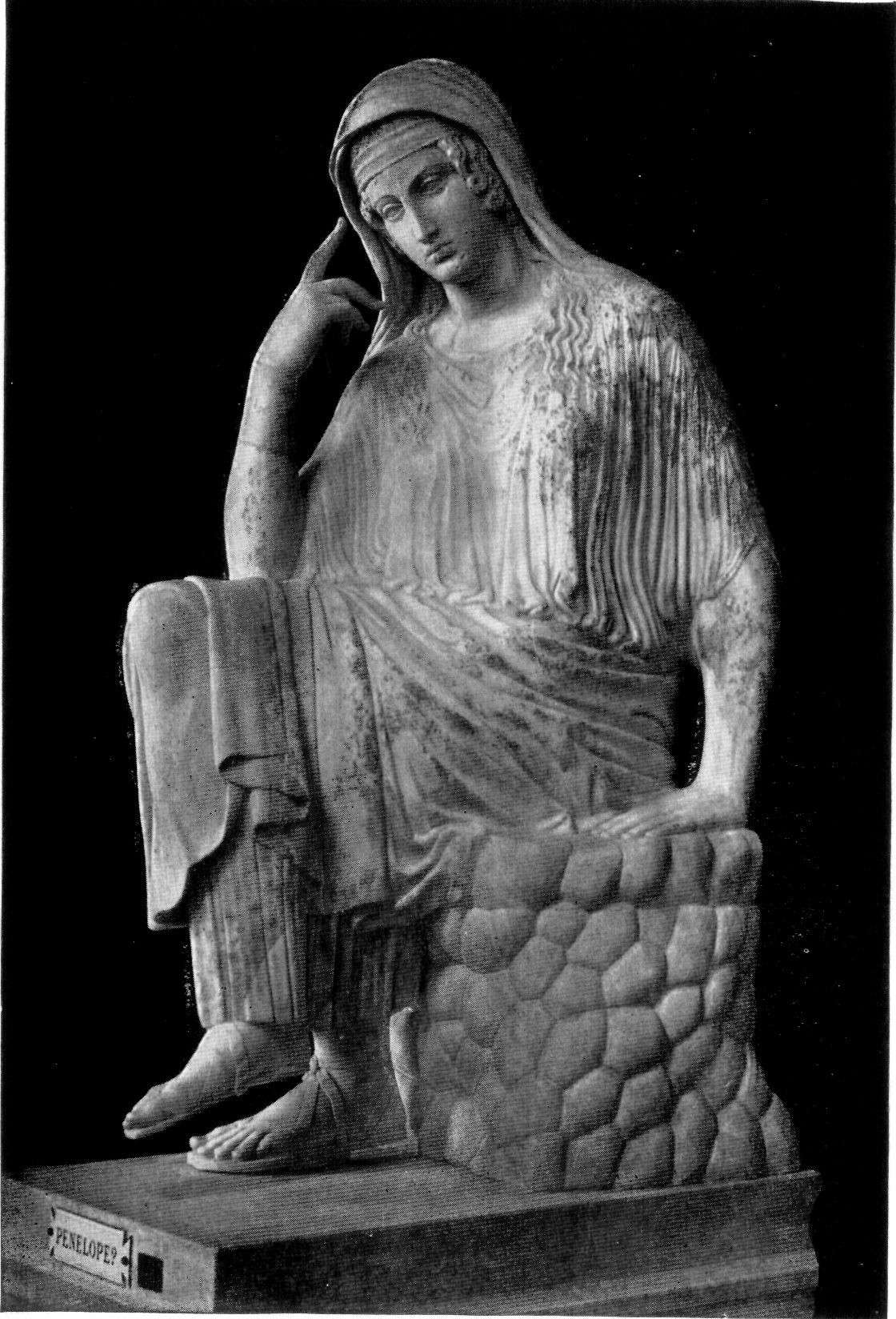
The narrative is framed as a monologue from Penelope in the afterlife, reflecting on her life from the 21st-century version of Hades. She recounts her childhood in Sparta with a father who tried to murder her and a neglectful mother, her marriage to Odysseus who rigged the contest to win her hand, and her rule over Ithaca. After the birth of their son Telemachus, Odysseus departs for the Trojan War, leaving Penelope to manage the kingdom alone for twenty years. As suitors convinced of Odysseus's death converge on Ithaca, Penelope stalls them by weaving a shroud for her father-in-law by day and secretly unravelling it by night with the help of twelve trusted maids. These maids also act as spies among the suitors, some of whom rape and abuse them. When Odysseus returns in disguise, Penelope recognizes him immediately but instructs the maids to keep his secret. Telemachus carries out the hanging while Penelope sleeps. In Hades, Penelope tells her story to correct historical misconceptions, including rumours she slept with the suitor Amphinomus or gave birth to Pan. The maids form a chorus that interrupts her narrative to present their own version of events, lamenting their enslaved childhoods, blaming Penelope and the nurse Eurycleia for their deaths, and haunting both Penelope and Odysseus for their injustice.
Structure and Narrative Style
The Penelopiad is structured in 29 chapters, mirroring the form of a classical Greek drama with alternating voices. Penelope narrates 18 chapters in a first-person perspective characterized by simple, wry, and often melancholic prose. Her tone is casual and street-wise, employing Atwood's signature dry humour and a metafictional awareness as she contrasts her lived experience with the heroic myths propagated by Homer and others. The remaining 11 chapters are delivered by a Greek chorus composed of the twelve executed maids. The chorus chapters are notable for their stylistic diversity, with each employing a different genre to express the maids' viewpoints. This formal experimentation highlights the maids' struggle to find an authoritative voice within a literary and social hierarchy that systematically silences them. The novella also includes introductory notes and acknowledgments, framing the work within both the mythological tradition and Atwood's creative process.
The Chorus of maids uses a distinct narrative style in each of their eleven chapters. The genres they employ include a jump-rope rhyme, a lament, an idyll, a ballad, a lecture, a court trial, and several types of songs. They also use a folk song, a sea shanty, a drama, an anthropology lecture, and a love song. Their chapters begin with a jump-rope rhyme and end in a 17-line iambic dimeter poem. This range from child's play to academic discourse illustrates their search for a form through which their testimony can be heard.
- A jump-rope rhyme
- A lament
- An idyll
- A folk song
- A sea shanty
- A ballad
- A drama
- An anthropology lecture
- A court trial
- A love song
- A 17-line iambic dimeter poem
This range from child's play to academic discourse illustrates their search for a form through which their testimony can be heard, ending with the formal constraint of the final poem. One reviewer noted that Penelope is portrayed as an intelligent woman who knows better than to exhibit her intelligence. She is described as a metafictional narrator who contrasts past events from her perspective with the elaborations of Odysseus and recorded myths. Her story uses simple and deliberately naive prose with a casual and street-wise tone.
Major Themes: Perspective, Feminism, and Justice
The novella's central concern is the power of perspective in shaping history and justice. Atwood deconstructs the heroic narrative of the Odyssey, presenting Odysseus as a cunning liar who turned a bar fight with a one-eyed bartender into a tale of battling a cannibalistic cyclops. Penelope is portrayed as a pragmatic survivor rather than a passive ideal, who admits she was merely trying to survive. The maids' chorus forcefully presents the perspective of the enslaved and abused, directly challenging the myth's justification of their murder. This exploration reveals how truth often resides between competing, biased narratives. A strong feminist critique runs through the work, examining the double standards applied to men and women, as well as to different social classes. Odysseus's infidelities with Circe are celebrated as adventures, while the maids' coerced relations with the suitors are deemed treasonous. Penelope herself participates in this class-based injustice, using the maids as spies and offering them little protection even after some are raped. The antagonistic relationship between Penelope and her cousin Helen of Troy further complicates notions of universal sisterhood, focusing instead on competition and blame among women in a patriarchal system.
The concept of narrative justice is paramount. Penelope seeks to correct the historical record by telling her story, imposing her own biased judgment on Helen in retaliation for Helen's glorified legacy. The maids, in turn, seek justice against Penelope, Odysseus, and Telemachus through their persistent haunting and choral testimony. Their use of marginalized literary forms demonstrates how judicial processes and historical records are controlled by social inequalities. The maids' anthropology lecture satirizes Robert Graves's theories of matriarchal lunar cults, using academic discourse to frame their execution as a symbolic patriarchal overthrow. The lecture concludes with a line from Claude Lévi-Strauss's Elementary Structures of Kinship: "Consider us pure symbol. We're no more real than money." Ultimately, the novella argues that justice is defined by those in power, and that achieving a balanced account requires listening to the most silenced voices. Atwood shows that the concepts of justice and penalties are established by who has the power to say who is punished and whose ideas count.
Literary Influences and Atwood's Previous Work
Atwood's approach is informed by archetypal literary criticism, particularly the theories of Northrop Frye and his Anatomy of Criticism, which view contemporary literature as a reinvention of timeless patterns and myths. For her research, Atwood consulted Robert Graves's The Greek Myths and used the E. V. Rieu and D. C. H. Rieu translation of the Odyssey. Graves's own belief, following Samuel Butler, that the Odyssey was written by a woman influenced the maids' anthropological lecture. Atwood had previously engaged with Greek mythology in her body of work, establishing a pattern of feminist revision. Her 1993 novel The Robber Bride transposes the conflict of the Iliad to modern Toronto, featuring character dynamics similar to those between Penelope and Helen. Her earlier poem "Circe: Mud Poems" from 1976 casts doubt on Penelope's honourable image, while "Helen of Troy Does Countertop Dancing" from the 1996 collection Morning in the Burned House reimagines Helen as a contemporary erotic dancer. These works demonstrate Atwood's longstanding interest in re-examining classical female figures from a critical, modern viewpoint.
Margaret Atwood's previous works incorporating Greek myth include her novel The Robber Bride and the short story "The Elysium Lifestyle Mansions". She also used Greek myth in the poems "Circe: Mud Poems" and "Helen of Troy Does Countertop Dancing". Her novel The Robber Bride roughly parallels the Iliad but is set in Toronto. The short story re-tells a myth with Apollo and the Sibyl from the Sibyl's modern perspective.
- The novel The Robber Bride (1993), which roughly parallels the Iliad and features animosity between characters similar to that between Penelope and Helen.
- The short story "The Elysium Lifestyle Mansions" from Ovid Metamorphosed, retelling a myth of Apollo and the Sibyl from the Sibyl's modern perspective.
- The poem "Circe: Mud Poems" (1976), which questions Penelope's virtuous image.
- The poem "Helen of Troy Does Countertop Dancing" (1996), which places the mythic figure in a contemporary setting of erotic performance.
This consistent engagement provided a foundation for the comprehensive mythological revision undertaken in The Penelopiad. Atwood seems to have been unaware of A. D. Hope's earlier intense moral questioning of the story of Odysseus hanging the maids. In Hope's 1960s poem "The End of the Journey" Penelope and Odysseus wake to a scene of horror with the dead maids. This shows a separate literary precedent for her moral inquiry into the maids' execution.
Publication and Global Reach
The Penelopiad was launched worldwide on 21 October 2005 as part of the first set of books in the Canongate Myth Series. The other launch titles were A Short History of Myth by Karen Armstrong and, for most markets, Weight by Jeanette Winterson. The ambitious publication strategy involved 33 publishers releasing the book simultaneously in 28 different languages. Key publishers included Knopf in Canada, Canongate Books in the United Kingdom, Grove/Atlantic Inc. in the United States, and Text Publishing in Australia and New Zealand. In the Francophone market, Éditions du Boréal published the Canadian French translation, while Groupe Flammarion handled the edition in France. A trade paperback edition followed in 2006. An unabridged audiobook narrated by Laural Merlington and published by Brilliance Audio was released concurrently with the hardcover, running approximately three hours. The audiobook received positive reviews, though critics noted the unnamed actresses voicing the maids' chorus sometimes overshadowed Merlington's performance. This global launch was a significant publishing event, demonstrating the commercial and literary appeal of mythic retellings.
Critical Reception and Awards
The book was a notable bestseller in the Canadian market, where the hardcover edition reached number one on Maclean's fiction list and number two on The Globe and Mail's list. In the United States, it did not chart on the New York Times Best Seller list but was selected as an "Editors' Choice." It received several award nominations, reflecting its literary recognition. Critical opinions were divided. Many reviewers praised Atwood's wit, intelligence, and the novella's clever structure. Robert Wiersema noted it showed Atwood as "fierce and ambitious, clever and thoughtful," while the National Post called it "a brilliant tour de force." Other critics were less favourable. Elizabeth Hand in The Washington Post found the maids' chorus had "the air of a failed Monty Python sketch," and some scholars compared it to "over-the-top W. S. Gilbert." Scholar Mary Beard praised the book as "brilliant" but dismissed the anthropology lecture chapter as "complete rubbish." Christopher Tayler and David Flusfeder in The Daily Telegraph called the book enjoyable and intelligent, with Flusfeder stating it featured "Atwood at her finest."
The novella received recognition through award nominations. The book was nominated for the 2006 Mythopoeic Fantasy Award.
These nominations highlight the book's impact across different literary award spheres. The book's translation into 28 languages and release by 33 global publishers also points to its international appeal. In the Canadian market, the hardcover peaked at number one in Maclean's and number two in The Globe and Mail.
- Nominated for the 2006 Mythopoeic Fantasy Award for Adult Literature.
- Long-listed for the 2007 International Dublin Literary Award.
- Its French translation was nominated for the 2006 Governor General's Literary Award for English-to-French translation.
Theatrical Adaptation and Performances
Following a successful dramatic reading directed by Phyllida Lloyd at St James's Church, Piccadilly on 26 October 2005, Atwood adapted her novella into a stage script. The theatrical production was a major international co-production between the National Arts Centre (NAC) in Ottawa, under Artistic Director Peter Hinton, and the Royal Shakespeare Company (RSC) in Britain, under Artistic Director Michael Boyd. Significant funding was provided by a group of nine Canadian women donors known as the "Penelope Circle," each contributing $50,000. The play premiered in the summer of 2007 with an all-female cast, directed by Josette Bushell-Mingo, performing at the RSC's Swan Theatre in Stratford-upon-Avon and later at the NAC in Ottawa. A separate Canadian production, directed by Kelly Thornton, opened at Toronto's Nightwood Theatre in January 2012, starring Megan Follows as Penelope. This production was revived for a second run in January and February 2013, bringing the story to Canadian audiences in a distinct staging.
Major productions of the theatrical adaptation include a version co-produced by the Canadian National Arts Centre and the British Royal Shakespeare Company. The play was performed at the Swan Theatre in Stratford-upon-Avon and the National Arts Centre in Ottawa during the summer and fall of 2007. In January 2012, the show opened in Toronto at Nightwood Theatre. This production was reprised in January and February 2013.
- 2007: Co-production by the National Arts Centre and Royal Shakespeare Company, directed by Josette Bushell-Mingo, performed in Stratford-upon-Avon and Ottawa.
- January 2012: Production by Toronto's Nightwood Theatre, directed by Kelly Thornton, starring Megan Follows.
- January-February 2013: Revival of the Nightwood Theatre production in Toronto.
These stagings brought the novella's critique to life for contemporary theatre audiences. The 2007 production was performed by an all-female cast led by director Josette Bushell-Mingo. The 2012 Toronto production also had an all-female cast led by director Kelly Thornton and starred Megan Follows as Penelope. The involvement of major national institutions like the NAC and the RSC signalled the work's significance as a cross-cultural theatrical project.
Commercial Performance and Market Data
The Penelopiad achieved different levels of commercial success in North American markets. In Canada, its performance was strong, reflecting Margaret Atwood's stature and the domestic interest in her work. The book's peak positions on national bestseller lists demonstrate its reach. In contrast, its performance in the larger American market was more modest, though it still garnered critical attention from major publications. The following table compares its performance on key bestseller lists.
| Market | Publication/List | Peak Position |
|---|---|---|
| Canada | Maclean's Bestseller List | Number 1 |
| Canada | The Globe and Mail Fiction List | Number 2 |
| United States | New York Times Best Seller List | Did not place |
Despite not charting on the New York Times Best Seller list, the book was listed as an "Editors' Choice" by the newspaper. In the American market the book did not place on that list. In the Canadian market, it peaked on the best seller lists at number one in Maclean's and number two in The Globe and Mail. The book's translation into 28 languages and release by 33 global publishers points to its wider international appeal beyond North American sales charts.
Questions about The Penelopiad
What is the main plot of Margaret Atwood's *The Penelopiad*?
The novella retells the story of Homer's *Odyssey* from the perspective of Penelope, Odysseus's wife. Narrating from the afterlife in Hades, Penelope recounts her life, her clever stalling of the suitors during Odysseus's twenty-year absence, and the aftermath of his return, including the execution of her twelve maids. The maids themselves form a Greek chorus that interrupts Penelope's narrative to give their own account of abuse and unjust murder. The plot focuses on correcting the historical record and exploring the silenced experiences of the women in the classic myth.
Why did Margaret Atwood write *The Penelopiad*?
Publisher Jamie Byng of Canongate Books solicited Margaret Atwood to write a novella re-telling a classic myth as part of the Canongate Myth Series. Atwood agreed to participate in the project. She had first read the Odyssey as a teenager and remembered finding the hanging of Penelope's twelve maids disturbing. Atwood believed the roles of Penelope and her maids during Odysseus's absence had been a largely neglected scholarly topic and that she could help address it with this project.
How was *The Penelopiad* received in Canada?
The book was a critical and commercial success in Canada. It reached number one on *Maclean's* national bestseller list and number two on *The Globe and Mail*'s fiction list. Its theatrical adaptation was a significant cultural event, co-produced by the National Arts Centre in Ottawa and later staged by Toronto's Nightwood Theatre. The work solidified Atwood's status as a leading literary voice and contributed to conversations about feminist reinterpretations of classic stories in Canada.
What is unique about the structure of *The Penelopiad*?
The novella is structured similarly to a classical Greek drama. The storytelling alternates between Penelope's narrative and the choral commentary of the twelve maids. Penelope narrates 18 chapters with the Chorus contributing 11 chapters dispersed throughout the book. The Chorus uses a new narrative style in each of their chapters, including a jump-rope rhyme, a lament, an idyll, a sea shanty, a ballad, a drama, an anthropology lecture, a court trial, and a love song.
Was *The Penelopiad* adapted for the stage?
Yes, Atwood adapted the novella into a play. It was co-produced by Canada's National Arts Centre and Britain's Royal Shakespeare Company, premiering in 2007 at the Swan Theatre in Stratford-upon-Avon and later performing in Ottawa. The production featured an all-female cast. A separate Canadian production directed by Kelly Thornton opened at Toronto's Nightwood Theatre in January 2012, starring Megan Follows as Penelope, and was reprised in 2013.
What awards was *The Penelopiad* nominated for?
The novella received several award nominations. It was nominated for the 2006 Mythopoeic Fantasy Award for Adult Literature and was long-listed for the 2007 International Dublin Literary Award. The French translation of the book was a nominee for the 2006 Governor General's Literary Award in the category of English-to-French translation. While it did not win these major awards, the nominations reflect its critical recognition and literary merit.
Sources and further reading
- The Penelopiad (Wikipedia)
- Atwood & Penelope: A Short Biography (blogs.dickinson.edu)
- BOOK REVIEW: The Penelopiad by Margaret Atwood (kateforsyth.com.au)
- The Penelopiad (yorktheatreroyal.co.uk)
- Margaret Atwood, The Penelopiad (complete-review.com)
Checked by the Yadude Books desk. Last updated 2026-10-30.