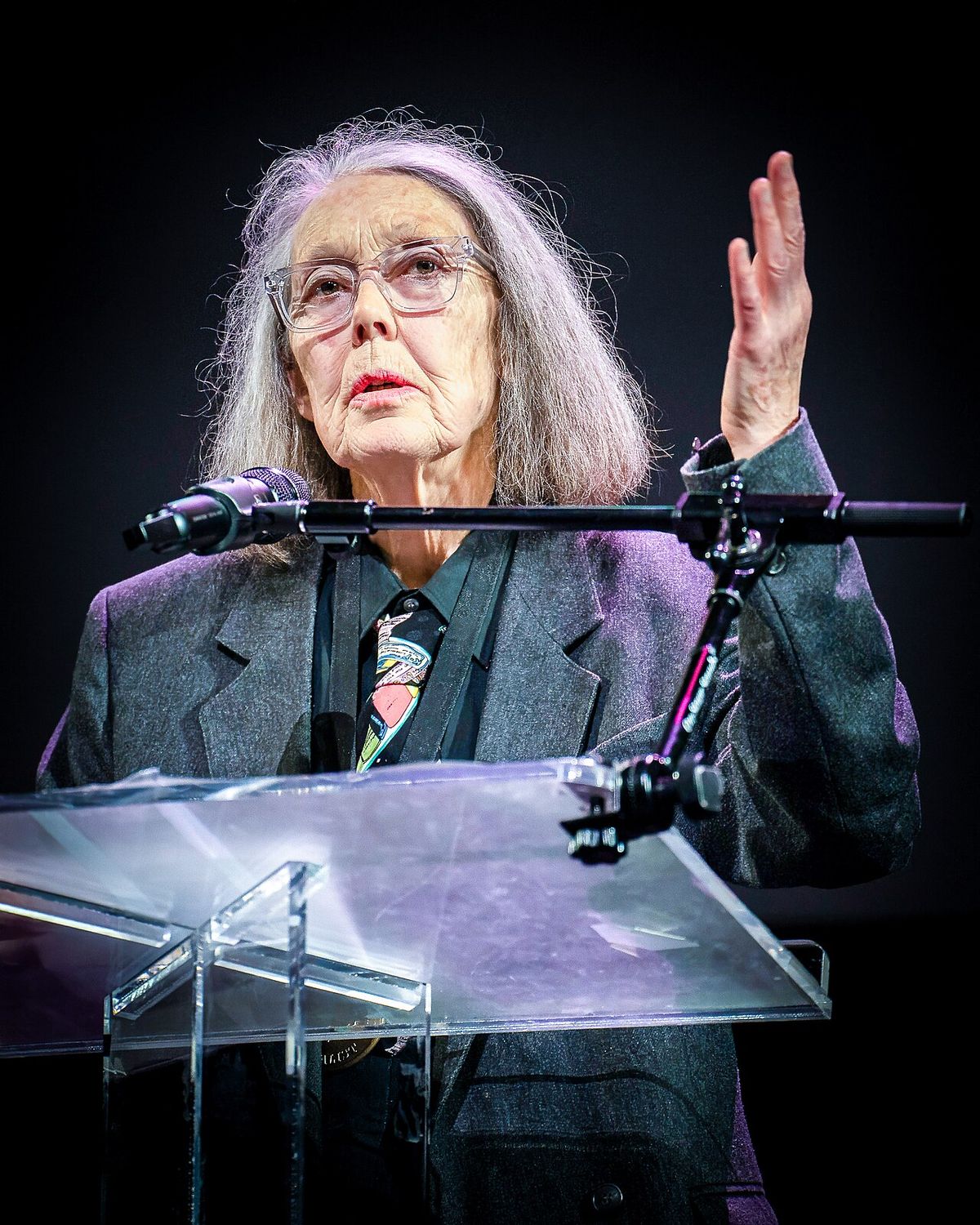
Robert Munsch
Robert Norman Munsch CM is an American-born Canadian children's author whose interactive and exaggerated storytelling has engaged generations of young readers. Born in Pittsburgh, Pennsylvania, in 1945, he moved to Canada in 1975 and became a fixture in Canadian culture, known for books like Love You Forever and The Paper Bag Princess . His books have sold over 90 million copies in North America alone and have been translated into more than 50 languages. Munsch's method of crafting stories directly with children and his effect on Canadian literacy have earned him the Order of Canada, a Juno Award, and a star on Canada's Walk of Fame.
Early Life and Path to Storytelling
Robert Munsch was born on June 11, 1945, in Pittsburgh, Pennsylvania, and grew up in a large family with eight siblings. He pursued higher education at Fordham University, graduating in 1969 with a Bachelor of Arts in history, and then at Boston University, where he earned a Master of Arts in anthropology in 1971. His initial career path led him to study to become a Jesuit priest in Westchester County, New York, but after volunteering at an orphanage as part of his training, he decided his true calling was working directly with children. This realization prompted him to study early childhood education at Tufts University, graduating in 1973, and to take a job at a daycare centre in Boston's Jamaica Plain neighbourhood. It was there, while changing a diaper, that he met his future wife, Ann, and discovered he could hold children's attention by telling them improvised stories during nap time, a skill that would define his career.
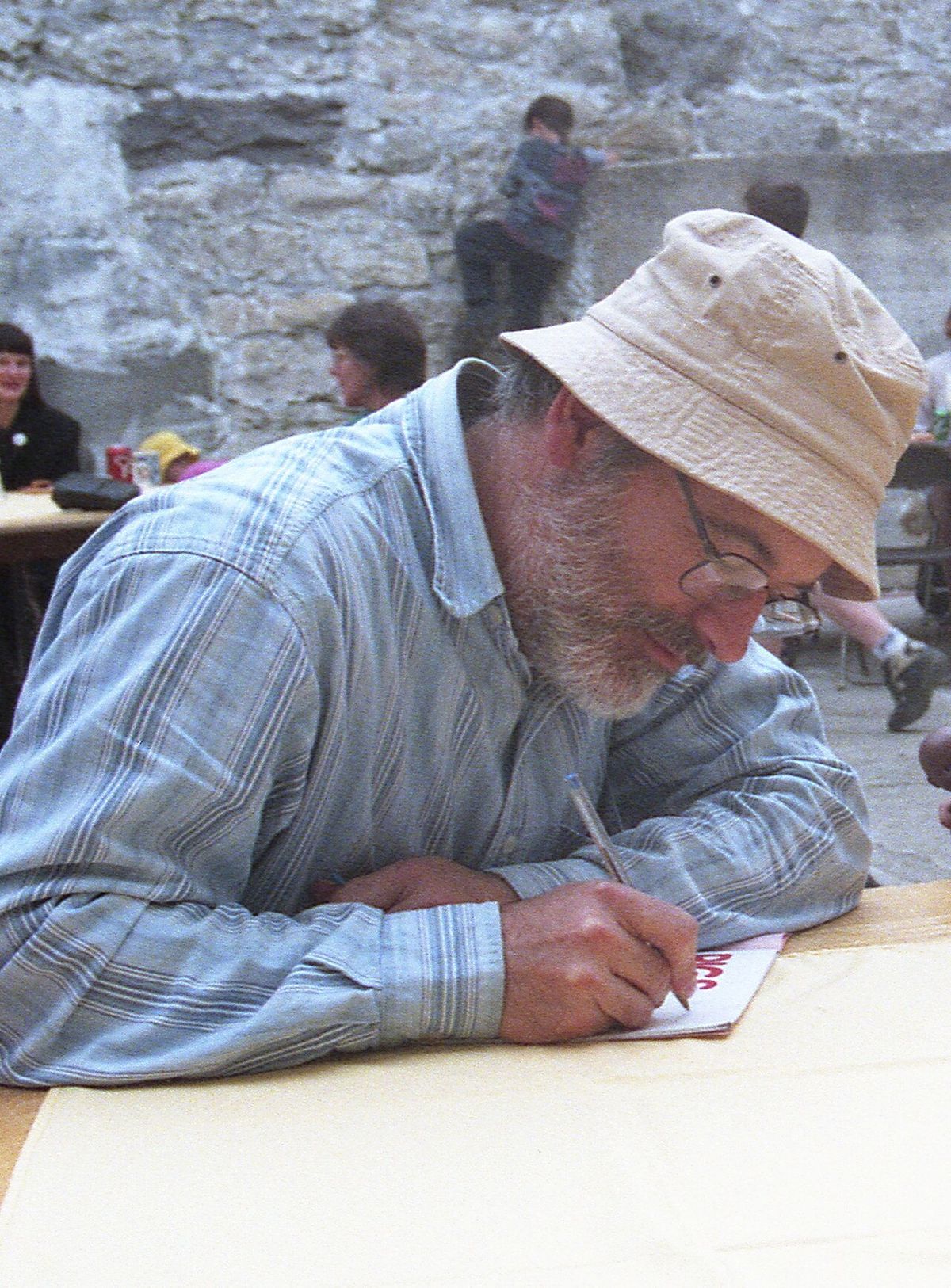
Career in Canada and Storytelling Method
Munsch moved to Canada in 1975 to work in the Family Studies department at the University of Guelph in Ontario. Colleagues at the university encouraged him to publish the many stories he created for the children he worked with, launching his prolific writing career. Munsch's unique creative process is fundamentally interactive and performative. He considers himself primarily a storyteller who sometimes writes things down, developing his narratives in front of live audiences of children. He would improvise tales, often based on events from the children's own lives, and then refine them through repeated tellings, gauging reactions and incorporating feedback. The characters in his published stories are typically based on the real children to whom he first told the tale, including his own three adopted children. This method resulted in a body of work that is distinctly child-centred, devoid of overt adult morals and focused purely on entertainment from a child's perspective, a point he emphasized in a 2021 CBC radio interview.
His storytelling performances became known for their exuberance, featuring exaggerated expressions and a wide range of character voices. He frequently performed at children's festivals and made unannounced visits to elementary schools across the country. In 1991, a selection of his stories was adapted into the animated television series A Bunch of Munsch, which was produced in Montreal and aired on pay TV channels. Munsch's dedication to his young audience extended beyond performances, as he was renowned for personally responding to the thousands of letters he received from children each year, with Scholastic estimating he received about 10,000 letters annually. He often replied with a single letter to a whole class, sometimes including an unpublished story that used the students' real names, and he always responded to children who wrote to him individually.
Major Works and Publishing Phenomenon
Munsch's catalogue includes nearly 100 published books, but a few titles stand out as cultural landmarks. Love You Forever, a story about the enduring love between a parent and child, is his most successful work. By 2001, it had sold 6.97 million paperback copies in the United States alone, not including 1.049 million hardcover copies, and its total sales have since surpassed 30 million copies worldwide. The book gained further pop culture prominence through mentions on television shows like Friends in the episode 'The One With the Cake' and by Oprah Winfrey on Late Night with David Letterman. Another well-known title is The Paper Bag Princess, a feminist reimagining of a fairy tale where the princess rescues herself. It has sold over seven million copies and is widely considered a modern children's classic, often used in classrooms to discuss gender roles.
Munsch's overall sales in North America exceed 90 million copies. His work's popularity is also shown by his consistent ranking as the most stolen author from the Toronto Public Library system. His stories have been translated into more than 50 languages, making his characters and humour accessible to children around the globe. The publishing plan for his extensive archive ensures his voice will continue to be heard. As of December 2025, Munsch revealed he has approximately 50 unpublished stories in various stages of completion in a filing cabinet. His stated wish is for about one book per year to be edited, illustrated, and released posthumously, ensuring a new generation of readers will discover Robert Munsch stories for years to come, with his 2026 title The Big Blue Book of Munsch being part of this ongoing output.
- Mortimer (1985), A classic bedtime-stalling tale published by Annick Press.
- Thomas' Snowsuit (1985), A humorous battle over winter clothing.
- Stephanie's Ponytail (1996), A story about individuality and trends.
- Purple, Green and Yellow (1992), A tale of indelible markers.
Personal Life and Health Challenges
Munsch has been married to his wife, Ann, since the early 1970s, a marriage that has lasted over 53 years. The couple experienced personal loss when two pregnancies ended in stillbirths, and they were unable to have biological children. They subsequently adopted three children. Munsch has been open about his lifelong struggles with obsessive-compulsive disorder and bipolar disorder. His health challenges intensified in the 2000s. He suffered a stroke in August 2008 that temporarily affected his speech, and in 2009 he publicly announced he was in recovery for alcoholism and a cocaine addiction that began in 2005, stating he was four months sober at the time of the announcement. In October 2021, Munsch was diagnosed with dementia and Parkinson's disease, conditions that have significantly impacted his daily life, causing mobility issues, falls, and difficulty with memory and word recall, as he described in a 2025 CBC interview where he noted he could not walk more than two blocks.
In September 2025, Munsch received approval for medical assistance in dying (MAID), having applied five years prior following his 2021 diagnosis. His daughter clarified that the approval was not an indication his death was imminent. In interviews in late 2025 and early 2026, which he referred to as his 'last hurrah,' Munsch discussed his declining health with candour but also expressed a desire for his readers to know he would be okay. He and his wife have stated they view MAID as a valid and legitimate personal choice, with Ann Munsch noting she was not surprised by his decision and that it was 'like Bob to face life head-on.' Despite the progression of his illnesses, Munsch has focused on securing his literary legacy, donating his personal archives, including fan letters and original story notes, to the Guelph Public Library, an institution that played a significant role in his family's life as he took his children there weekly.
Awards, Honours, and Cultural Legacy
Robert Munsch's contributions to Canadian culture and children's literature have been recognized with numerous awards and honours. His work has resonated so deeply that two public elementary schools in Ontario bear his name: Robert Munsch Public School in Whitby and Robert Munsch Public School in Mount Albert. In 1999, he was appointed a Member of the Order of Canada for his services to literature. His star on Canada's Walk of Fame in Toronto was unveiled on King Street in 2013, following his induction ceremony on September 12, 2009. The University of Guelph awarded him an honorary doctorate in 2000. Earlier in his career, Munsch won a Juno Award in 1985 for Best Children's Album for Murmel, Murmel, Munsch: More Outrageous Stories, and was named Author of the Year by the Canadian Booksellers' Association in 1992.
Munsch's legacy is cemented not only by these formal recognitions but by his direct connection with millions of readers. His method of creating stories with and for children validated their experiences and imaginations. His openness about his mental health and personal struggles has also provided a model for honest conversation, as he has encouraged parents to have brave discussions with their children about such topics. The planned posthumous publication of his remaining stories ensures that his voice, which has become a fixture of Canadian childhood, will continue for decades. His archives in Guelph will serve as a permanent resource for understanding his creative process and his relationship with his audience, which he nurtured through an 'extended epistolary experiment' of responding to child fans.
- Juno Award (1985), For Murmel, Murmel, Munsch: More Outrageous Stories.
- Canadian Booksellers' Association Author of the Year (1992).
- Member of the Order of Canada (1999).
- Honorary Doctorate, University of Guelph (2000).
- Star on Canada's Walk of Fame (induction 2009, star revealed 2013).
- Two Ontario public schools named in his honour.
- Personal archives donated to Guelph Public Library.
Literacy Impact and Posthumous Plans
Robert Munsch's career represents a significant force in promoting literacy and reading for pleasure among Canadian children. His approach, which treated children as collaborators and serious audiences, directly countered trends of declining reading enjoyment noted in reports like the Scholastic Kids and Family Reading Report. Munsch stated clearly that his stories had 'no adult morals' and were 'just for kids to like,' positioning reading as an act of joy rather than instruction. This philosophy, combined with his massive commercial success, helped embed his books as staples in homes, schools, and libraries across the country. His status as the most stolen author from the Toronto Public Library, while a dubious honour, points to the high demand and personal attachment readers felt toward his work.
The management of his literary estate and unpublished work is a carefully considered extension of his life's work. With about 50 stories remaining unpublished as of December 2025, the plan is for a sustained, posthumous release schedule. Munsch expressed his wish for about one book per year to be edited and illustrated after his death, a process that will extend his publication record for decades. This plan ensures a continuous connection with future readers and provides a unique model for an author's enduring presence. The donation of his complete archives to the Guelph Public Library in 2025 secures his papers for public and scholarly access, preserving the letters from children, original story notes, and drafts that reveal how his stories were built from direct interaction with his audience.
Selected Book Sales and Adaptations
The commercial success and cultural reach of Robert Munsch's work can be seen in the sales figures of his most popular titles and their adaptation into other media. His stories have found life beyond the printed page, most notably in the 1991 animated television series. The sustained sales of his backlist, along with the planned release of new material, demonstrate an ongoing commercial and cultural presence. The following table highlights key sales milestones and media adaptations for several of his landmark books.
| Title | Approximate Sales | Notable Adaptation or Milestone |
|---|---|---|
| Love You Forever | Over 30 million copies | Featured on Friends. Mentioned by Oprah Winfrey. 6.97 million paperbacks sold by 2001. |
| The Paper Bag Princess | Over 7 million copies | Widely taught as a feminist children's text. Considered a literary classic. |
| Mortimer | Millions of copies | Part of the A Bunch of Munsch TV series (1991). |
| Thomas' Snowsuit | Millions of copies | Part of the A Bunch of Munsch TV series (1991). |
| Overall North American sales | Over 90 million copies | Translated into over 50 languages. Most stolen author from Toronto Public Library. |
| Unpublished archive (2025) | Approx. 50 stories | Planned for posthumous release at a rate of about one book per year. |
Questions about Robert Munsch
How many books has Robert Munsch written?
Robert Munsch has written almost 100 published books. His works include classics like The Paper Bag Princess, Mortimer, and Mud Puddle. As of late 2025, he also has approximately 50 unpublished stories in his archive, stored in a filing cabinet in various stages of completion. His stated plan is for about one of these unpublished works to be edited, illustrated, and released each year following his death, ensuring his literary output will continue to grow posthumously for many years, with titles like The Big Blue Book of Munsch appearing in 2026.
Why did Robert Munsch move to Canada?
Robert Munsch moved to Canada from the United States in 1975 to accept a job at the University of Guelph in Ontario. He was hired to work in the university's Family Studies department. This move proved important for his career, as colleagues at the university encouraged him to publish the many stories he invented for the children he worked with. He has lived in Canada ever since, becoming a naturalized citizen and one of the country's most recognized cultural figures, later donating his personal archives to the Guelph Public Library.
What health conditions does Robert Munsch have?
Robert Munsch has been diagnosed with dementia and Parkinson's disease, as announced in October 2021. These conditions have caused significant challenges, including mobility issues, frequent falls, and difficulty with memory and word recall, as he described in a 2025 interview. He has also been open about his lifelong management of obsessive-compulsive disorder and bipolar disorder. In 2008, he suffered a stroke that temporarily affected his speech, and in 2009 he entered recovery for alcoholism and cocaine addiction that began in 2005.
How does Robert Munsch create his stories?
Robert Munsch creates his stories through a highly interactive and performative process. He develops narratives by improvising them in front of live audiences of children, often drawing inspiration from events in their lives. He then refines the stories through repeated tellings, closely observing the children's reactions. The characters are usually based on the real children present at the story's creation. He considers himself a storyteller first, who later writes the tales down, and he famously responds to thousands of letters from children each year, sometimes including unpublished stories with their names, further fuelling his connection with his audience.
What is Robert Munsch's most famous book?
Robert Munsch's most famous and bestselling book is Love You Forever. It has sold over 30 million copies worldwide and was listed fourth on the 2001 Publishers Weekly All-Time Bestselling Children's Books list for paperbacks. The book achieved significant cultural prominence, being featured on an episode of the television show Friends and mentioned by Oprah Winfrey as her favourite children's book on Late Night with David Letterman. Another of his famous works, The Paper Bag Princess, has sold over seven million copies and is considered a feminist themed literary classic. Munsch's books have sold millions of copies globally, with his work translated into more than 50 languages.
What is Robert Munsch's plan for medical assistance in dying (MAID)?
Robert Munsch received approval for medical assistance in dying (MAID) in September 2025 after applying five years prior, following his diagnosis of dementia and Parkinson's disease in 2021. His daughter clarified that this approval does not mean his death is imminent. Munsch and his wife, Ann, view MAID as a valid and legitimate personal choice for end of life decisions, with Ann stating the decision was characteristic of him facing life directly. Munsch has explained that his conditions have taken a toll, causing him to fall down, forget words, and limiting his mobility. He has planned for the posthumous release of approximately 50 unpublished stories, with the intent for about one book to be edited and illustrated per year after his death.
Sources and further reading
- Robert Munsch (Wikipedia)
- Robert Munsch plans for 50 books to be published after ... (cbc.ca)
- The Official Website of Robert Munsch (robertmunsch.com)
- Robert Munsch says he more books to be released after ... (nationalpost.com)
- Robert Munsch is Preparing for the Eventual End of his Story ... (zoomer.com)
Checked by the Yadude Books desk. Last updated 2026-10-30.