Selma Diamond
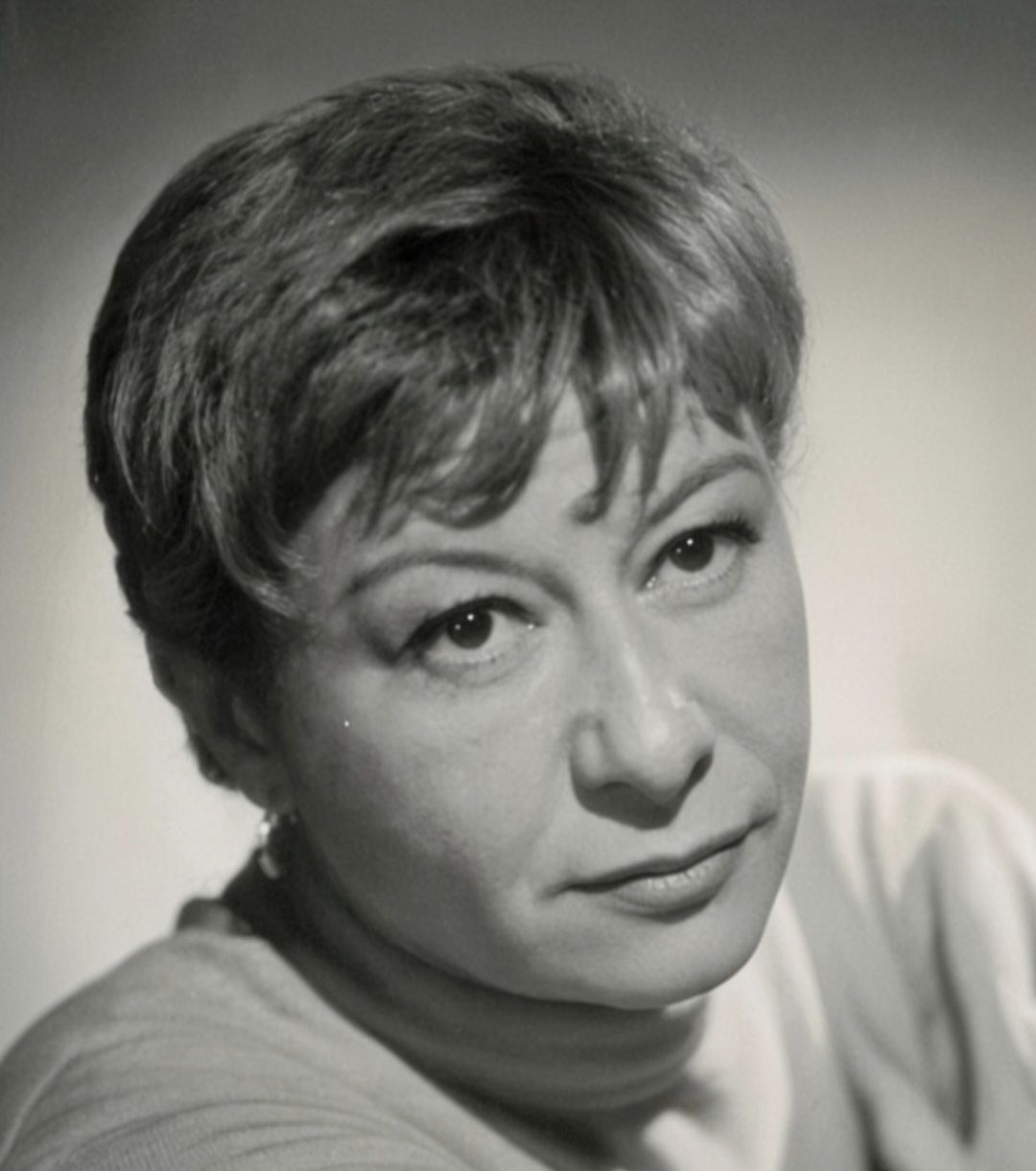
Selma Diamond was a Canadian-born American comedienne, actress and pioneering comedy writer for radio and television. Born in London, Ontario, in 1920, she became a foundational figure in American comedy, known for her distinctive raspy voice and sharp wit. Her career spanned from writing for major radio shows in the 1940s to television classics like Your Show of Shows and a memorable acting role as bailiff Selma Hacker on Night Court . Diamond's work and persona directly inspired the character of Sally Rogers on The Dick Van Dyke Show, cementing her legacy in television history.
Early Life and Education
Selma Diamond was born on August 5, 1920, in London, Ontario, Canada, to a tailor and his wife. Her grandmother was noted as a suffragette, indicating a family background of strong, independent women. When Diamond was a young girl, the family relocated to the borough of Brooklyn in New York City, where she spent her formative years. Diamond completed her high school education in Brooklyn and subsequently pursued higher education at New York University, from which she graduated. Her early professional forays involved selling cartoons and humorous essays to The New Yorker magazine, establishing the foundation for her career in comedy writing and cartooning.
Radio Writing Career
Diamond's writing career began in earnest in radio during the 1940s, a medium where she quickly established herself as a versatile talent. Her first credited radio work was in 1943 for the program Blue Ribbon Town starring Groucho Marx, a collaboration that lasted 65 weeks and developed into a lasting friendship. She quickly became a sought-after writer for several popular radio shows of the era, contributing material to a wide range of programs. Diamond wrote for The Camel Caravan featuring Jimmy Durante and Garry Moore, The Drene Show with Rudy Vallee, Duffy's Tavern, and The Kenny Baker Show. She also wrote for the radio adaptation of The Adventures of Ozzie and Harriet for a 20-week period before leaving that show in 1950. That same year, she joined the writing staff of the prestigious 90-minute weekly program The Big Show, hosted by Tallulah Bankhead, after being hired by head writer Goodman Ace, who had previously hired her for work on Danny Kaye's 1940s radio show.
Transition to Television Writing
Selma Diamond successfully transitioned to television as a key writer during the medium's golden age of comedy, bringing her radio-honed skills to the new visual format. She was hired as one of the writers for Sid Caesar and Imogene Coca's landmark program Your Show of Shows. She continued her collaboration with Caesar on the subsequent series Caesar's Hour, for which she received an Emmy nomination, marking a high point in her writing career. Diamond also reunited with writer Goodman Ace to write for Perry Como's Kraft Music Hall television series, where she was part of a five-person writing team. During her time on the Como show, she was notably the only woman among the staff, a situation about which she famously remarked, "They feel handicapped, not me," and also said, "It's like being Red China. I'm there. They just don't recognize me." Her forceful personality and pioneering role in male-dominated writers' rooms left a significant impression on her colleagues. Fellow writer and performer Carl Reiner confirmed that Diamond was the direct inspiration for the character of comedy writer Sally Rogers, played by Rose Marie, on the classic sitcom The Dick Van Dyke Show.
Diamond's other television writing credits included work on The Milton Berle Show in 1953, demonstrating her ability to work with major comedic stars of the time. Beyond scriptwriting, she developed a public persona through frequent guest appearances on popular talk shows, becoming a familiar face and voice to audiences. She was a regular guest on The Jack Paar Show and later on The Tonight Show Starring Johnny Carson, where her wit and distinctive voice made her a standout. These regular appearances made her a recognizable figure to the American public, whom she said in a 1965 interview greeted her by her first name as if she were a singular celebrity. She likened this recognition to that afforded to figures like Picasso, Garbo, and even the drain cleaner Drano, illustrating her unique place in popular culture.
Acting Career in Film and Theatre
While known primarily as a writer, Selma Diamond also cultivated a parallel career as a character actress in film, television, and theatre, often leveraging her distinctive raspy voice and sharp presence. Her acting debut was in a summer touring production of Bye, Bye Birdie, which provided her with live performance experience. She performed in other summer stock productions, including Come Blow Your Horn and Barefoot in the Park, honing her craft on stage. Diamond began appearing in films during the 1960s and 1970s, often in small but memorable roles that capitalized on her unique vocal quality and comedic timing.
Selma Diamond's film work, while not extensive, included appearances in notable films. She worked with director Stanley Kramer on the comedy It's a Mad, Mad, Mad, Mad World, providing the unseen telephone voice. She also appeared in films such as Bang the Drum Slowly, My Favorite Year, and All of Me. These roles demonstrated her versatility as a performer beyond her work in writing.
Television Acting and Final Role
Selma Diamond's television acting career provided a steady stream of roles that made her face as familiar as her voice to audiences across North America. Her most famous and celebrated acting role came near the end of her life when she was cast as the sardonic, chainsaw-voiced bailiff Selma Hacker on the first two seasons of the NBC sitcom Night Court from 1984 to 1985. This performance earned Diamond her second Emmy nomination, for Outstanding Supporting Actress in a Comedy Series, and solidified her place in television history. The role was a perfect vehicle for her persona, and her death from lung cancer in 1985 was written into the show's storyline, marking a poignant end to her career and her contribution to the series.
Other Creative Works and Publications
Beyond her scriptwriting and acting, Selma Diamond produced other creative works that captured her unique comedic perspective and allowed her to work in different formats. In 1960, she released a comedy album titled Selma Diamond Talks...and Talks and Talks and Talks... on the Carleton label (LPX 5001), which captured her humorous conversational style and sold to her existing talk show audience. A decade later, in 1970, she authored a book of humour titled Nose Jobs for Peace, which was published by Prentice-Hall with the ISBN 9780136238270. Earlier in her career, in 1951 and 1952, she collaborated with cartoonist Gill Fox, writing for his "Jeanie" comic strip that ran daily in the New York Herald Tribune, connecting back to her roots in cartooning. These projects demonstrated her ability to generate comedy across multiple media, from recorded audio to print, and ensured her creative output was not limited to performance-based work.
Personal Life, Death and Legacy
Selma Diamond never married and had no known immediate family members later in life, with her professional community serving as her primary network. She was a private individual whose public legacy was defined entirely by her professional work and her pioneering status as a female writer in a male-dominated field. Diamond died of lung cancer on May 13, 1985, at Cedars-Sinai Medical Center in Los Angeles, California, as confirmed by her obituary in The New York Times. She was 64 years old at the time of her death, and her passing was noted in major publications like The New York Times and remembered by the Jewish Women's Archive. Her remains were interred at Hillside Memorial Park in Culver City, California, where she was laid to rest.
Filmography and Major Credits
Selma Diamond's career spanned radio, television, and film over several decades. Her early work included writing for radio shows such as Blue Ribbon Town with Groucho Marx and The Adventures of Ozzie and Harriet. She transitioned to television, writing for programs like Your Show of Shows and Caesar's Hour, which earned her an Emmy nomination. Her final and most popular television role was as bailiff Selma Hacker on the sitcom Night Court in 1984 and 1985.
| Year | Title | Role / Contribution | Medium |
|---|---|---|---|
| 1943 | Blue Ribbon Town | Writer | Radio |
| 1950 to 1952 | The Big Show | Writer | Radio |
| 1951 to 1952 | "Jeanie" Comic Strip | Writer (with Gill Fox) | Newspaper |
| 1950s | Your Show of Shows | Writer | Television |
| 1950s | Caesar's Hour | Writer (Emmy Nomination) | Television |
| 1953 | The Milton Berle Show | Writer | Television |
| 1960 | Kraft Music Hall (Perry Como) | Writer | Television |
| 1982 | My Favorite Year | Wardrobe Mistress | Film |
| 1984 | All of Me | Margo | Film |
| 1984 to 1985 | Night Court | Selma Hacker (Emmy Nomination) | Television |
Questions about Selma Diamond
What other creative projects did Selma Diamond work on?
Selma Diamond published cartoons and humor essays in The New Yorker early in her career. In 1960, she released a comedy album titled Selma Diamond Talks...and Talks and Talks and Talks. In 1970, she authored the humour book Nose Jobs for Peace. She also wrote for the "Jeanie" comic strip in the New York Herald Tribune.
Where was Selma Diamond born?
Selma Diamond was born in London, Ontario, Canada on August 5, 1920. She was the daughter of a tailor and his wife, and her grandmother was a suffragette. When Diamond was a young girl, her family moved to Brooklyn, New York. She attended high school in Brooklyn and later graduated from New York University.
What was Selma Diamond's most famous acting role?
Selma Diamond's most famous acting role was as bailiff Selma Hacker on the NBC television comedy series Night Court during its first two seasons in 1984 and 1985. This role earned her a second Emmy nomination. She was known for her feisty portrayal and her distinctive, raspy voice. Diamond performed this role until her death in 1985. Her character became a beloved part of the show's early success.
How did Selma Diamond contribute to The Dick Van Dyke Show?
Selma Diamond was the main inspiration for the character Sally Rogers on The Dick Van Dyke Show. Carl Reiner, the show's creator, stated he had Diamond in mind when creating the character. This was based on her experiences as a pioneering female comedy writer. Diamond herself commented on the challenges of being the only woman in a writers' room. Her forceful personality and career path directly influenced the fictional Sally Rogers.
What was Selma Diamond's first major writing job in radio?
Selma Diamond's first radio writing credit was in 1943 for the show Blue Ribbon Town starring Groucho Marx. This initial job led to a 65 week tenure writing for Marx's program and developed into a lasting friendship. Her early radio work established her career in comedy writing. She subsequently wrote for other major radio shows like The Camel Caravan with Jimmy Durante and Garry Moore. This period was foundational for her move into television.
Which television shows did Selma Diamond write for Sid Caesar?
Selma Diamond wrote for Sid Caesar's pioneering television programs Your Show of Shows and Caesar's Hour. Her work on Caesar's Hour earned her an Emmy nomination. She was part of the legendary writing teams for these influential comedy series. These shows were a pinnacle of her writing career and showed her talent in television. Her experience there also inspired the character Sally Rogers on The Dick Van Dyke Show.
Sources and further reading
- Selma Diamond (Wikipedia)
- Death of Writer and Comedian Selma Diamond (jwa.org)
- Films et séries avec Selma Diamond (tv.apple.com)
- Selma Diamond: Movies, TV, and Bio (primevideo.com)
Checked by the Yadude Books desk. Last updated 2026-10-30.