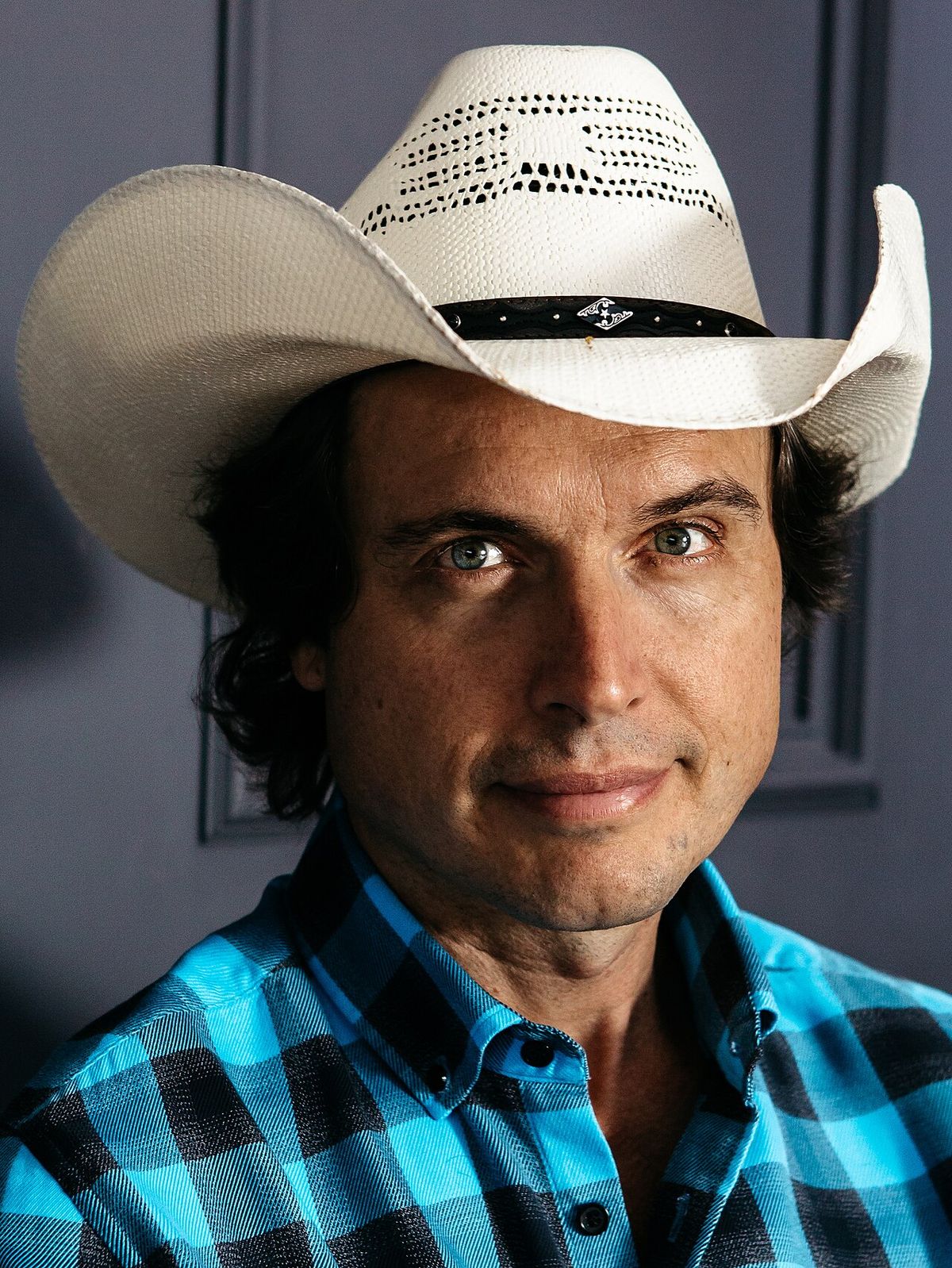
Kevin O'Leary
Kevin O'Leary is a Canadian businessman, investor, and television personality known for his blunt investment style and self-styled persona as Mr. Wonderful. He rose to national prominence as a venture capitalist on the CBC reality series Dragons' Den and later on the American counterpart Shark Tank. His business career, which began with the founding of the educational software company SoftKey, has been marked by significant financial successes and controversies, including the disastrous sale of The Learning Company to Mattel. O'Leary remains a polarizing figure in Canadian business and media, known for his advocacy of dividend investing, his brief political campaign, and his forays into cryptocurrency.
Early life and education
Terrence Thomas Kevin O'Leary was born on July 9, 1954, in Montreal, Quebec. He is the son of Georgette, a small business owner and investor of Lebanese descent, and Terry O'Leary, a salesman of Irish descent. His parents divorced when he was a child, largely due to his father's alcoholism, and his father died when O'Leary was seven years old. Following his father's death, his mother managed the family's clothing business and later married economist George Kanawaty, whose work with the UN's International Labour Organization led the family to live in several countries including Cambodia, Ethiopia, Tunisia, and Cyprus. O'Leary attended Stanstead College and St. George's School, both boarding schools in Quebec. He has credited his mother with fundamental investment lessons, notably her practice of saving and investing one third of her income, a habit he later adopted. O'Leary has dyslexia, which he has argued helped foster unconventional thinking in business. He initially wanted to become a photographer but pursued business on his stepfather's advice. He earned an honours bachelor's degree in environmental studies and psychology from the University of Waterloo in 1977 and an MBA in entrepreneurship from the Ivey Business School at the University of Western Ontario in 1980.
Early career and founding of SoftKey
During his MBA, O'Leary completed an internship and later worked as an assistant brand manager for Nabisco's cat food brand in Toronto, a role he credited for honing his marketing skills. After leaving Nabisco, he co founded Special Event Television (SET) with two MBA classmates. The independent production company created sports programming like The Original Six and Don Cherry's Grapevine but achieved only limited success. O'Leary sold his share of the venture for $25,000, which provided crucial seed capital for his next business. In 1986, O'Leary co founded SoftKey Software Products in a Toronto basement with partners John Freeman and Gary Babcock. After a promised $250,000 investment fell through at the last minute, O'Leary used the SET proceeds and convinced his mother to lend him $10,000 to start the company. SoftKey published and distributed CD based software for personal computers, initially convincing printer manufacturers to bundle its educational software with their hardware to assure distribution.
Growth, acquisitions, and the Mattel disaster
Throughout the late 1980s and 1990s, SoftKey grew by aggressively acquiring rival software companies. It became a major consolidator in the educational software market, purchasing companies like WordStar and Spinnaker Software. In 1995, SoftKey acquired The Learning Company for $606 million and adopted its name, moving its headquarters to Cambridge, Massachusetts. The company continued its acquisition spree, buying former rival Broderbund in 1998 for $416 million. In 1999, toy giant Mattel acquired The Learning Company for US$4.2 billion, a deal that shocked many financial observers. The acquisition proved catastrophic for Mattel almost immediately. Instead of the projected US$50 million profit, Mattel experienced a US$105 million loss from the unit. Mattel's stock plummeted, wiping out US$3 billion in shareholder value in one day, and O'Leary was fired. Shareholders filed a class action lawsuit accusing Mattel executives, O'Leary, and former Learning Company CEO Michael Perik of misleading investors about the company's health and using accounting tricks to hide losses. Mattel settled the lawsuit for $122 million in 2003. An executive brought in to salvage the situation, Bernie Stolar, publicly blamed O'Leary for the failure, calling the company a house of cards with hidden losses and massive product return rates. Despite the fallout, the sale netted O'Leary approximately six million dollars.
Post-Mattel investments and fund management
After leaving Mattel, O'Leary engaged in various investment activities. In 2003, he became a co investor and director at StorageNow Holdings, a Canadian developer of climate controlled storage facilities. The company was acquired in 2007 for $110 million, yielding O'Leary a windfall profit exceeding $4.5 million on an initial $500,000 stake. A wrongful dismissal lawsuit from an operating partner was settled out of court. In 2008, O'Leary co founded O'Leary Funds Inc., a mutual fund management firm focused on global yield investing, where he served as chairman. The fund's assets under management grew from $400 million in 2011 to $1.2 billion in 2012. However, the fund faced criticism for increasing distribution yield by returning capital to shareholders, contrary to O'Leary's public statements. In November 2014, O'Leary Funds agreed to pay penalties to Quebec's Autorité des marchés financiers for technical violations of securities law. The firm was sold to Canoe Financial in October 2015. O'Leary also founded O'Leary Ventures, a private early stage venture capital firm, and launched an exchange traded fund through O'Shares Investments in 2015. His other branded ventures included O'Leary Mortgages, which closed in 2014, O'Leary Fine Wines, and O'Leary Books.
Television career and public persona
O'Leary's television career began in 2006 when he joined the panel of venture capitalists on CBC's Dragons' Den. He cultivated a deliberately blunt and abrasive persona, famously telling an emotional contestant that money does not care and tears do not add value. Executive producer Stuart Coxe encouraged this character, sometimes asking O'Leary to be more evil during early seasons. Dragons' Den became one of the CBC's most watched shows, with about two million viewers per episode, a success Coxe attributed largely to O'Leary's presence. In 2009, he joined the American version, ABC's Shark Tank, after being invited by executive producer Mark Burnett. O'Leary has appeared on Shark Tank ever since, solidifying his public identity as Mr. Wonderful. He also hosted Discovery Channel's Project Earth in 2008 and has been a contributor to business news programming. His feature film debut came in 2025, playing Milton Rockwell in Josh Safdie's Marty Supreme.
Political campaign and investment philosophy
In 2017, O'Leary entered the race for the leadership of the Conservative Party of Canada. He campaigned on economic issues but dropped out in April 2017, one month before the election, citing a lack of support in Quebec which he deemed necessary to win a general election. As a public figure, O'Leary is a vocal advocate for specific investment strategies. He is a value investor who insists on investing only in dividend paying stocks. He advocates for portfolio diversification across sectors, recommending no more than 20 percent concentration in any one industry. A key rule he promotes is having a bond allocation equal to one's age, with the rest in stocks. He also advises keeping five percent of a portfolio in physical gold but avoids gold mining stocks due to their lack of consistent cash flow. O'Leary initially expressed deep skepticism about cryptocurrency, calling bitcoin a useless currency in 2019. However, by 2021 he had allocated a portion of his portfolio to bitcoin and became a strategic investor in WonderFi Technologies. That same year, he became a paid spokesperson for FTX, a role for which he was paid $15 million. Following FTX's bankruptcy in 2022, O'Leary was named in a class action lawsuit and stated he lost $9.7 million in digital assets on the platform.
Project Stratos and recent controversies
In April 2026, O'Leary announced a major joint venture called Project Stratos, a plan to construct a large data centre campus and energy infrastructure in Box Elder County, Utah. The venture is between O'Leary Digital and Utah's Military Installation Development Authority. The project would span roughly 40,000 acres across multiple sites and, at full capacity, is estimated to consume up to 9 gigawatts of electricity, more than double Utah's current total consumption. O'Leary stated the project would operate off grid, generating its own power by tapping into the nearby Ruby natural gas pipeline. The proposal has faced significant opposition from local residents and scientists concerned about its potential energy and water use, emissions, and overall environmental impact. A survey in October 2026 found 76 percent of Utahns opposed further data centre construction in their state. Box Elder County officials approved the project's proposal on May 4, 2026. On May 12, 2026, O'Leary appeared on television and accused two Utah based nonprofit groups opposing the project of being funded by the Chinese government, claims he made without evidence. The accused parties sued O'Leary and FOX News Network for defamation in July 2026. The project was later mocked in a sketch on NBC's Saturday Night Live.
Authorship and personal details
O'Leary is the author of several personal finance and business books, primarily under the Cold Hard Truth series. His titles include Cold Hard Truth: On Business, Money & Life (2011), Cold Hard Truth on Men, Women, and Money (2012), and Cold Hard Truth on Family, Kids and Money (2015). His most recent book is Digital Pivot or Bust In a Post COVID 19 World (2020). In his personal life, O'Leary holds Canadian, Irish, and Emirati citizenship. He is a resident of Miami, Florida. He has one brother, Shane O'Leary, who served as a director at O'Leary Funds. O'Leary has stated he no longer manages outside investment money following the sale of his fund company. He remains a chairman at O'Leary Ventures and is an active speaker on business and entrepreneurship.
Questions about Kevin O'Leary
How did Kevin O'Leary make his money?
Kevin O'Leary made his first major fortune by co founding the educational software company SoftKey in 1986. The company grew through aggressive acquisitions of rivals like WordStar and Spinnaker, eventually buying The Learning Company in 1995 and adopting its name. In 1999, Mattel acquired The Learning Company for US$4.2 billion, netting O'Leary approximately six million dollars despite the deal's later disastrous outcome for Mattel. He later profited significantly from investments like StorageNow Holdings, which yielded over $4.5 million in capital gains. His television career and the founding of O'Leary Funds also contributed to his wealth and profile.
Why did Kevin O'Leary leave Dragons' Den?
Kevin O'Leary was a mainstay on the Canadian version of Dragons' Den from its 2006 debut until 2014. His departure coincided with his expanding role on the American version, Shark Tank, which he joined in 2009 after being invited by executive producer Mark Burnett. The demands of filming both shows and managing his numerous business ventures likely influenced the decision. He remained on Shark Tank, where he continues to appear, maintaining his television presence as an investor while ending his regular role on the CBC program after eight seasons.
What happened with Kevin O'Leary and FTX?
In August 2021, Kevin O'Leary became a paid spokesperson and ambassador for the cryptocurrency exchange FTX, receiving an ownership stake and $15 million in compensation. Following FTX's catastrophic bankruptcy in 2022 due to CEO Sam Bankman Fried's misuse of client funds, O'Leary revealed he lost $9.7 million in digital assets held on the platform. He was subsequently named in a class action lawsuit alongside other celebrity promoters, alleging they helped solicit investments for a fraudulent venture. O'Leary publicly blamed Binance CEO Changpeng Zhao for putting FTX out of business. There is legal precedent for holding promoters accountable under securities law for soliciting investments via social media.
Did Kevin O'Leary run for Prime Minister of Canada?
Kevin O'Leary did not run for Prime Minister but campaigned to become the leader of the Conservative Party of Canada in 2017. A party leadership victory would have made him the Leader of the Official Opposition with a chance to become Prime Minister in a future federal election. However, he withdrew from the race in April 2017, one month before the leadership vote, stating he could not win due to a lack of support in Quebec. O'Leary argued that without significant support in Quebec, a Conservative leader could not win a national election, leading to his decision to drop out.
What is Kevin O'Leary's investment advice?
O'Leary's investment advice is centred on income, safety, and rules based diversification. He is a strict value investor who refuses to invest in any publicly traded stock unless it pays a dividend. He advocates for portfolio diversification across industry sectors, recommending no more than 20 percent be concentrated in any one sector. A key rule he promotes is the age in bonds strategy, where the percentage of bonds in a portfolio equals the investor's age, with the remainder in stocks. He also advises keeping five percent of a portfolio in physical gold but avoids gold mining stocks due to their lack of consistent cash flow.
What is Project Stratos and why is it controversial?
Project Stratos is a large scale data centre and energy infrastructure project announced by Kevin O'Leary in April 2026. It is a joint venture between his firm O'Leary Digital and Utah's Military Installation Development Authority to develop a campus spanning roughly 40,000 acres in Box Elder County. The project is controversial due to its estimated power consumption of up to 9 gigawatts, more than double Utah's current total use, and its plan to generate power off grid using the Ruby natural gas pipeline. Local residents and scientists have raised major concerns about water use, emissions, and environmental impact. O'Leary further inflamed controversy by accusing two opposing nonprofit groups of being funded by the Chinese government without evidence, leading to a defamation lawsuit against him and FOX News.
Sources: Wikipedia and current public reporting, checked by the Yadude Books desk. Last updated 2026-10-18.