Mike Lazaridis
Mike Lazaridis is a Canadian entrepreneur, engineer and philanthropist best known as the co-founder of Research In Motion (RIM), the company that created the BlackBerry wireless handheld device. His work in wireless communications made BlackBerry a global leader in mobile email and helped establish Canada's reputation in the technology sector. Beyond business, Lazaridis has become a major patron of fundamental scientific research in Canada, founding and funding world-class institutes for theoretical physics and quantum computing. His contributions to technology and science have earned him numerous national honours, including Officer of the Order of Canada and election as a Fellow of the Royal Society.
Early Life and Education
Mike Lazaridis was born in Istanbul, Turkey, on March 14, 1961, to Pontic Greek parents Nick and Dorothy Lazaridis, with family origins on the Greek island of Chios. His family immigrated to Canada in 1966 when he was five years old, settling in Windsor, Ontario. At age twelve, he won a prize at the Windsor Public Library for reading every science book in the collection, an early indicator of his focused intellectual curiosity. In 1979, Lazaridis enrolled at the University of Waterloo in an electrical engineering program with a specific option in computer science, a combination that positioned him at the intersection of hardware and software development. His university career was marked by a strong academic focus, but it was a commercial opportunity that redirected his path before graduation.
In 1984, during his final year of studies, Lazaridis responded to a general call for proposals from General Motors for a network computer control display system. His proposal was successful, and GM awarded him a contract to develop the technology. With this commercial commitment secured, Lazaridis made the decision to leave the University of Waterloo just two months before his scheduled graduation. The GM contract, combined with a small government grant and a loan from his parents, provided the initial capital to launch a new business venture. This funding package allowed him and his partners, Mike Barnstijn and Douglas Fregin, to incorporate Research In Motion (RIM) that same year, setting the stage for a major chapter in Canadian technology history.
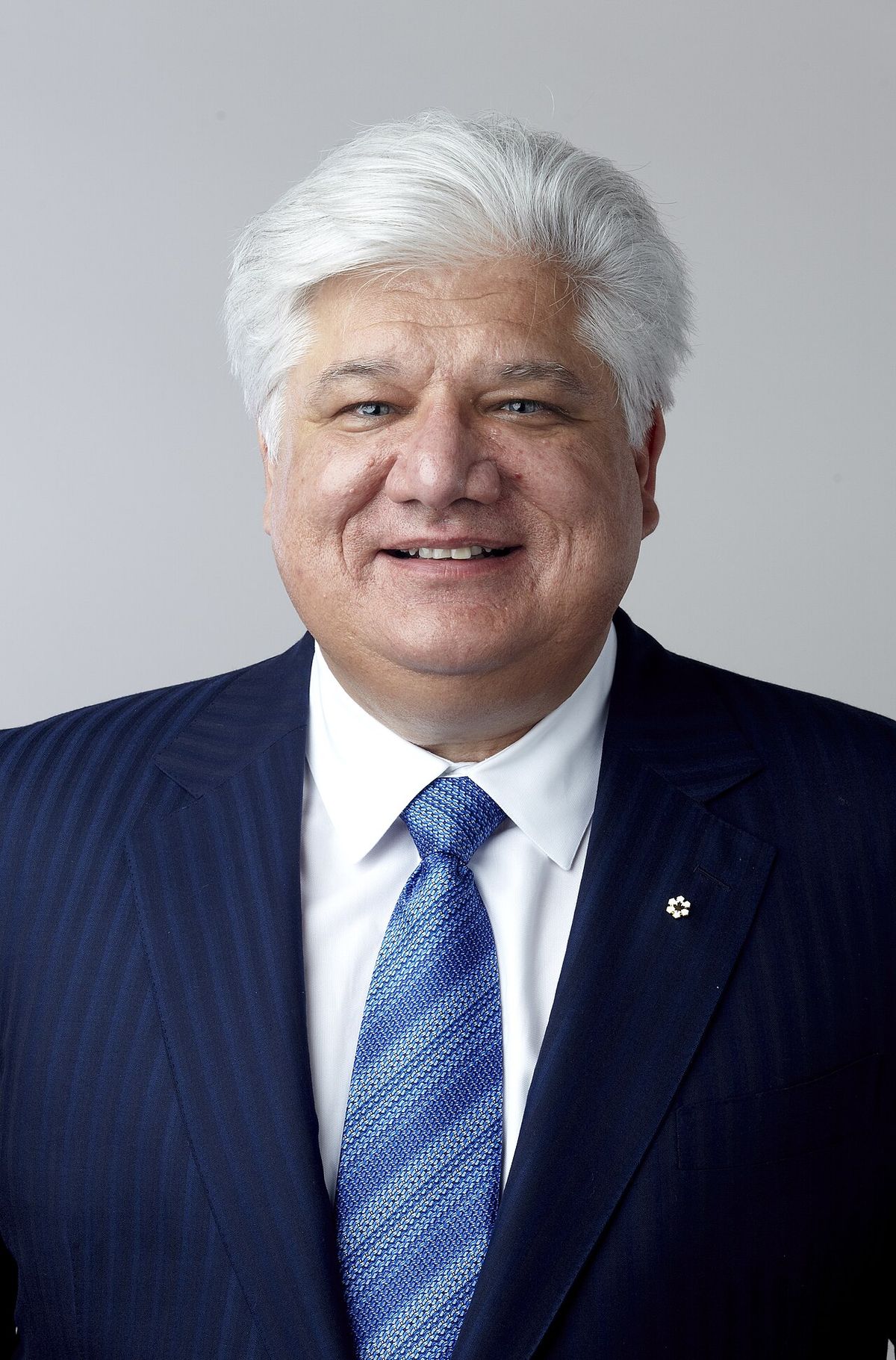
Founding Research In Motion and the BlackBerry
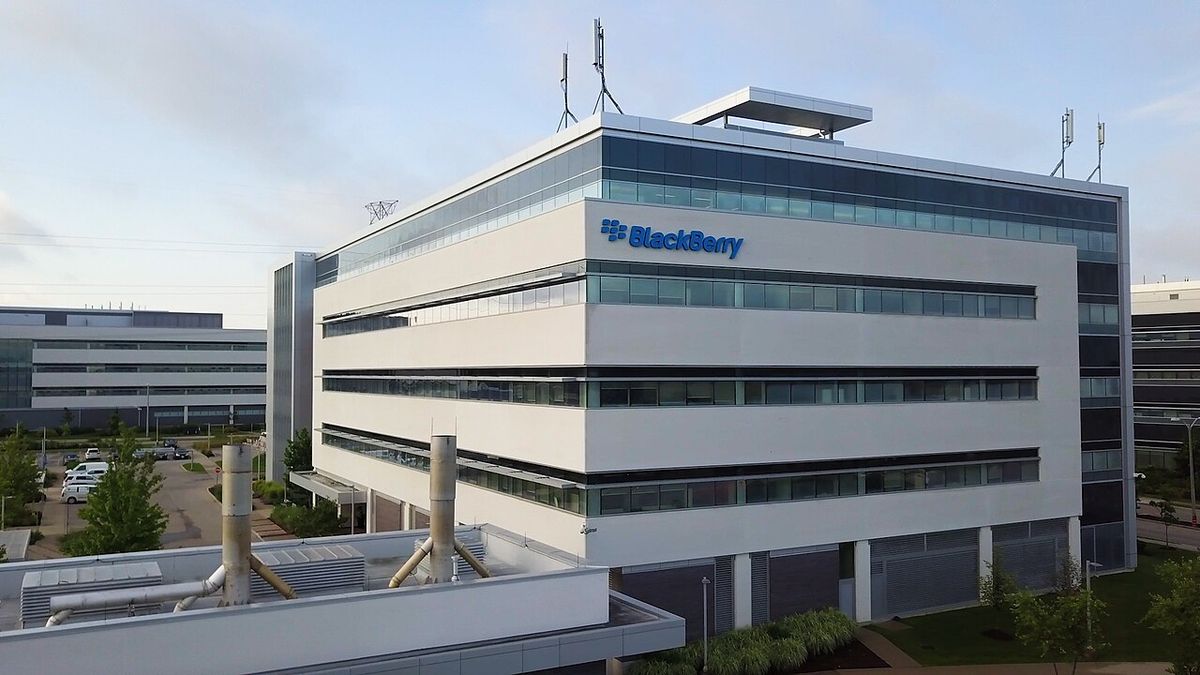
In 1984, leveraging the General Motors contract and other seed funding, Mike Lazaridis co-founded Research In Motion (RIM) with partners Mike Barnstijn and Douglas Fregin. The company, whose assets are now managed as BlackBerry Limited, began not with mobile devices but with specialized barcode technology. RIM developed a high-speed barcode reader for the film industry, a product that proved highly successful and generated significant profits. This invention earned the company and Lazaridis major industry accolades, including an Emmy Award in 1994 and an Academy Award for Technical Achievement in 1999. The revenue from this early success provided the crucial capital for RIM's pivot into its historic field of work.
Lazaridis and his team strategically reinvested the profits from their barcode technology into research on wireless data transmission. This long-term investment culminated in the launch of the first BlackBerry wireless mobile device in 1999, a product that would redefine mobile communication. A more widely recognized version of the device followed in 2002, cementing BlackBerry's status as a leader in secure mobile email. Lazaridis served in multiple leadership roles throughout RIM's ascent, most notably as co-chief executive officer and co-chairman of the board from the company's inception in 1984 until 2012. Following this period, he served as board vice chair and chair of the innovation committee until 2013, overseeing the company's strategic direction during a period of significant market transition.
The creation of the BlackBerry established Canada as a serious player in the global wireless technology market. Under Lazaridis's technical leadership, RIM grew from a small startup in Waterloo, Ontario, into a multinational corporation with a dominant share of the business smartphone market. The device's secure push-email functionality and physical keyboard became its signature features, creating a dedicated user base and a powerful brand. The company's success made Lazaridis a prominent figure in Canadian business and a symbol of homegrown innovation, and his leadership spanned the company's entire rise from its founding through its peak market influence.
Leadership in Scientific Research and Philanthropy
Parallel to his business career, Mike Lazaridis emerged as one of Canada's most significant private supporters of fundamental scientific research. In 1999, he committed one-third of his personal fortune at the time, a sum of $100 million, to establish a new centre for theoretical physics. This institution became the Perimeter Institute for Theoretical Physics in Waterloo, Ontario. Lazaridis formed the institute's initial board and recruited its first director, Howard Burton, setting it on a path to become a world-renowned research hub. His commitment to advancing frontier science continued in 2002 with the founding of the Institute for Quantum Computing (IQC) at the University of Waterloo, which he also funded with a subsequent $100 million donation made with his wife, Ophelia, over the institute's lifetime.
Lazaridis's role in these institutes extended far beyond providing cheques. He provided the founding vision and active governance. He served as the board chair for the Perimeter Institute, guiding its growth from a concept into an internationally recognized centre for theoretical physics. At the University of Waterloo, his influence was formalized in June 2003 when he was named the university's eighth chancellor, a leadership position he held for several years. His philanthropic vision extended beyond the hard sciences into business education and the arts, demonstrating a broad commitment to strengthening Canadian institutions across multiple sectors of society.
Key Philanthropic and Academic Leadership Initiatives:- 1999: Donated $100 million, a third of his fortune, to found the Perimeter Institute for Theoretical Physics, forming its board and recruiting its first director.
- 2002: Provided the vision and funding, a further $100 million with his wife Ophelia, to establish the Institute for Quantum Computing at the University of Waterloo under founding executive director Raymond Laflamme.
- 2003: Appointed as the eighth chancellor of the University of Waterloo, serving in this ceremonial and advisory head-of-university role.
- 2015: Donated $20 million to Wilfrid Laurier University, leading its business school to be renamed the Lazaridis School of Business & Economics, a technology-focused management institute.
- 2018: Donated $10 million with his wife Ophelia to the Stratford Festival for the reconstruction of the Tom Patterson Theatre, supporting Canadian cultural infrastructure.
The scale and focus of Lazaridis's philanthropy are unusual, channelling personal wealth not into buildings named after himself but into long-term, curiosity-driven scientific research with no immediate commercial application. His donations to the Perimeter Institute and the IQC were among the largest private gifts to fundamental science in Canadian history. This approach has been credited with helping to attract top-tier scientific talent to Canada and establishing the Waterloo region as a cluster for cutting-edge physics and quantum information science. The 2014 Royal Society fellowship citation specifically noted that the Perimeter Institute had become an internationally recognized destination for theoretical physics and that the IQC was widely regarded as the leading centre of quantum information science worldwide.
Post-BlackBerry Ventures and Quantum Valley Investments
After stepping back from day-to-day leadership at BlackBerry, Lazaridis returned to his roots in deep technology and long-term investment. In March 2013, he co-founded Quantum Valley Investments with his original RIM partner, Douglas Fregin. The firm's explicit mission, as stated at its founding, is to provide financial and intellectual capital for the further development and commercialization of breakthroughs in Quantum Information Science. This venture represents a direct extension of Lazaridis's longstanding support for quantum research through the Institute for Quantum Computing. Quantum Valley Investments focuses on translating theoretical advancements from Canadian laboratories into market-ready technologies, aiming to foster a new high-tech industrial cluster in the Waterloo region known as the 'Quantum Valley'.
The establishment of Quantum Valley Investments signalled Lazaridis's continued belief in the economic potential of quantum technologies. By creating a dedicated investment vehicle, he sought to bridge the gap between academic discovery and economic application, a challenge often cited in the Canadian innovation landscape. This move consolidated his life's work across three interconnected domains: pioneering wireless communication with BlackBerry, funding foundational research through Perimeter and IQC, and now facilitating the commercialization of next-generation quantum technologies. The firm operates as a logical next step, aiming to capture the value of the scientific ecosystem he helped build over two decades.
Quantum Valley Investments targets the field of quantum information science, which includes quantum computing, quantum communication, and quantum sensing. The firm's strategy involves identifying promising research from institutions like the Institute for Quantum Computing and providing the resources needed to develop prototypes and viable products. This model is designed to keep intellectual property and resulting companies within Canada, aiming to replicate the kind of technology-led economic growth that RIM once generated for the Waterloo region but in the new domain of quantum technology. The firm's name itself reflects the ambition to create a geographic centre of excellence and commercial activity in this advanced field.
Awards, Honours and Recognition
Mike Lazaridis has received extensive recognition for his contributions to technology, business, and science. His early technical work earned prestigious entertainment industry awards, including an Emmy Award in 1994 and an Academy Award for Technical Achievement in 1999 for the film barcode reader. The academic community honoured him with honorary doctoral degrees from the University of Waterloo in 2000 and from McMaster University in 2005. He was also named among the University of Waterloo's top 50 alumni during its 50th anniversary celebrations in 2007, receiving a UW 50th Anniversary Alumni Award.
National honours have consistently acknowledged his impact on Canada. He was listed on Maclean's magazine Honour Roll as a distinguished Canadian in 2000 and was named Canada's Nation Builder of the Year for 2002 by readers of The Globe and Mail. In 2002, he also shared the Ernest C. Manning Awards Foundation Innovation Award with RIM colleague Gary Mousseau. In 2006, he was invested as an Officer of the Order of Canada, having been awarded the title in 2005, and is also a member of the Order of Ontario. A pinnacle of recognition came in 2014 with his election as a Fellow of the Royal Society (FRS), one of the world's oldest and most esteemed scientific academies.
The Royal Society citation for his fellowship detailed the scope of his achievements. It described him as the father of the smartphone and a visionary in the global wireless community. The citation specifically noted his role as the founder of RIM and creator of the BlackBerry, and highlighted that he made the primary donations establishing the Perimeter Institute for Theoretical Physics, the Institute for Quantum Computing, and the related Lazaridis Quantum-Nano Centre. It stated that Perimeter had become an internationally recognized destination for theoretical physics and that IQC was widely regarded as the leading centre of quantum information science worldwide, concluding that together these institutes had made a major international impact. This fellowship is a rare honour for someone whose primary career was in business and philanthropy rather than active scientific research, reflecting the deep respect his scientific patronage has earned.
Selected Honours and Awards:- 1994: Emmy Award for technical achievement for the development of a high-speed barcode reader used in film editing.
- 1999: Academy Award (Oscar) for Technical Achievement for the same barcode reader invention.
- 2000: Honorary Doctor of Engineering degree from the University of Waterloo.
- 2000: Listed on Maclean's Honour Roll as a distinguished Canadian.
- 2002: Named Canada's Nation Builder of the Year by The Globe and Mail readers.
- 2002: Ernest C. Manning Innovation Award (shared with RIM's Gary Mousseau).
- 2005: Honorary Doctoral degree from McMaster University.
- 2005/2006: Awarded and invested as an Officer of the Order of Canada. Also a Member of the Order of Ontario.
- 2007: UW 50th Anniversary Alumni Award, recognizing him as one of fifty top alumni.
- 2014: Elected a Fellow of the Royal Society (FRS).
Portrayal in Media and Cultural Impact
The story of Research In Motion and the creation of the BlackBerry has entered Canadian cultural lore, culminating in a major cinematic portrayal. In the 2023 film BlackBerry, which dramatizes the rise and challenges of the company, Mike Lazaridis is portrayed by Canadian actor Jay Baruchel. The film explores the complex dynamics between Lazaridis's engineering vision and the business pressures faced by the company. This portrayal introduces Lazaridis's story and his role in a seminal piece of Canadian tech history to a broader public audience. The existence of such a film points to the significant cultural footprint of the BlackBerry device and its founders within the national narrative of innovation, success, and challenge in the technology sector.
The film joins other media, including books and documentaries, that examine the BlackBerry phenomenon. Howard Burton, the first director of the Perimeter Institute founded by Lazaridis, authored a book titled First Principles: The Crazy Business of Doing Serious Science in 2009, which provides an insider's perspective on building a world-class scientific institute, a project directly funded by Lazaridis's philanthropy. Lazaridis's own speeches, such as a plenary address at the 2012 AAAS Annual Conference in Vancouver and an earlier acceptance speech for an honour, have been documented and shared, contributing to the public record of his thoughts on innovation and science. His life and work continue to be a subject of interest for those studying Canadian entrepreneurship and the intersection of technology business with scientific philanthropy.
Questions about Mike Lazaridis
What is Mike Lazaridis best known for?
Mike Lazaridis is best known as the co-founder of Research In Motion (RIM), the company that created the BlackBerry wireless handheld device. He is credited as a key visionary and engineer behind the technology that made BlackBerry a global leader in mobile email. Beyond business, he is renowned for his major philanthropic investments in scientific research, having founded and funded the Perimeter Institute for Theoretical Physics and the Institute for Quantum Computing at the University of Waterloo. His work across these fields has made him a prominent figure in Canadian technology and science.
Why did Mike Lazaridis leave the University of Waterloo?
Mike Lazaridis left the University of Waterloo in 1984, just two months before his scheduled graduation, to pursue a commercial opportunity. He had responded to a call for proposals from General Motors and won a contract to develop a network computer control display system. Securing this contract provided the initial capital and a clear business pathway, leading him to drop out and co-found Research In Motion (RIM) with his partners Mike Barnstijn and Douglas Fregin. The decision was driven by the immediate prospect of building a company based on his technical proposal.
What scientific institutes did Mike Lazaridis found?
Mike Lazaridis provided the vision and primary funding to establish two world-class scientific research institutes in Waterloo, Ontario. In 1999, he donated $100 million to found the Perimeter Institute for Theoretical Physics, forming its board and recruiting its first director. In 2002, he and his wife Ophelia provided funding and vision to establish the Institute for Quantum Computing at the University of Waterloo, with an additional $100 million commitment over its lifetime under founding director Raymond Laflamme. Both institutes are internationally recognized leaders in their respective fields.
What awards has Mike Lazaridis won?
Mike Lazaridis has won awards across technology, business, and science. His early barcode reader invention earned an Emmy Award (1994) and an Academy Award for Technical Achievement (1999). He received honorary doctorates from the University of Waterloo (2000) and McMaster University (2005). Nationally, he was named Canada's Nation Builder of the Year (2002), won the Ernest C. Manning Innovation Award (2002), was invested as an Officer of the Order of Canada (2006), and was elected a Fellow of the Royal Society (2014), one of science's highest honours. He was also listed on Maclean's Honour Roll in 2000.
What did Mike Lazaridis do after leaving BlackBerry?
After stepping back from BlackBerry leadership, Mike Lazaridis co-founded a new venture capital firm called Quantum Valley Investments in March 2013 with his original RIM co-founder Douglas Fregin. The firm's purpose is to fund the development and commercialization of breakthroughs in quantum information science. This work directly builds upon his earlier philanthropic investments in quantum computing research at the University of Waterloo. The firm aims to translate academic research from the ecosystem he helped build into commercial technologies and companies in Canada.
How has Mike Lazaridis contributed to education in Canada?
Beyond founding research institutes, Mike Lazaridis has contributed significantly to Canadian education through major donations and leadership. He served as chancellor of the University of Waterloo from 2003. In 2015, he donated $20 million to Wilfrid Laurier University, leading its business school to be renamed the Lazaridis School of Business & Economics, which houses a technology-focused management institute. His philanthropic support has helped shape educational institutions focused on technology, science, and business in Ontario, complementing his investments in pure research.
Sources and further reading
- Mike Lazaridis (Wikipedia)
- Mike Lazaridis | Windsor Public Library (windsorpubliclibrary.com)
- Laurier names School of Business & Economics after ... (newswire.ca)
- Mike Lazaridis (thecanadianencyclopedia.ca)
- Mike Lazaridis (pirsa.org)
Checked by the Yadude Books desk. Last updated 2026-10-18.