Alan Ashby
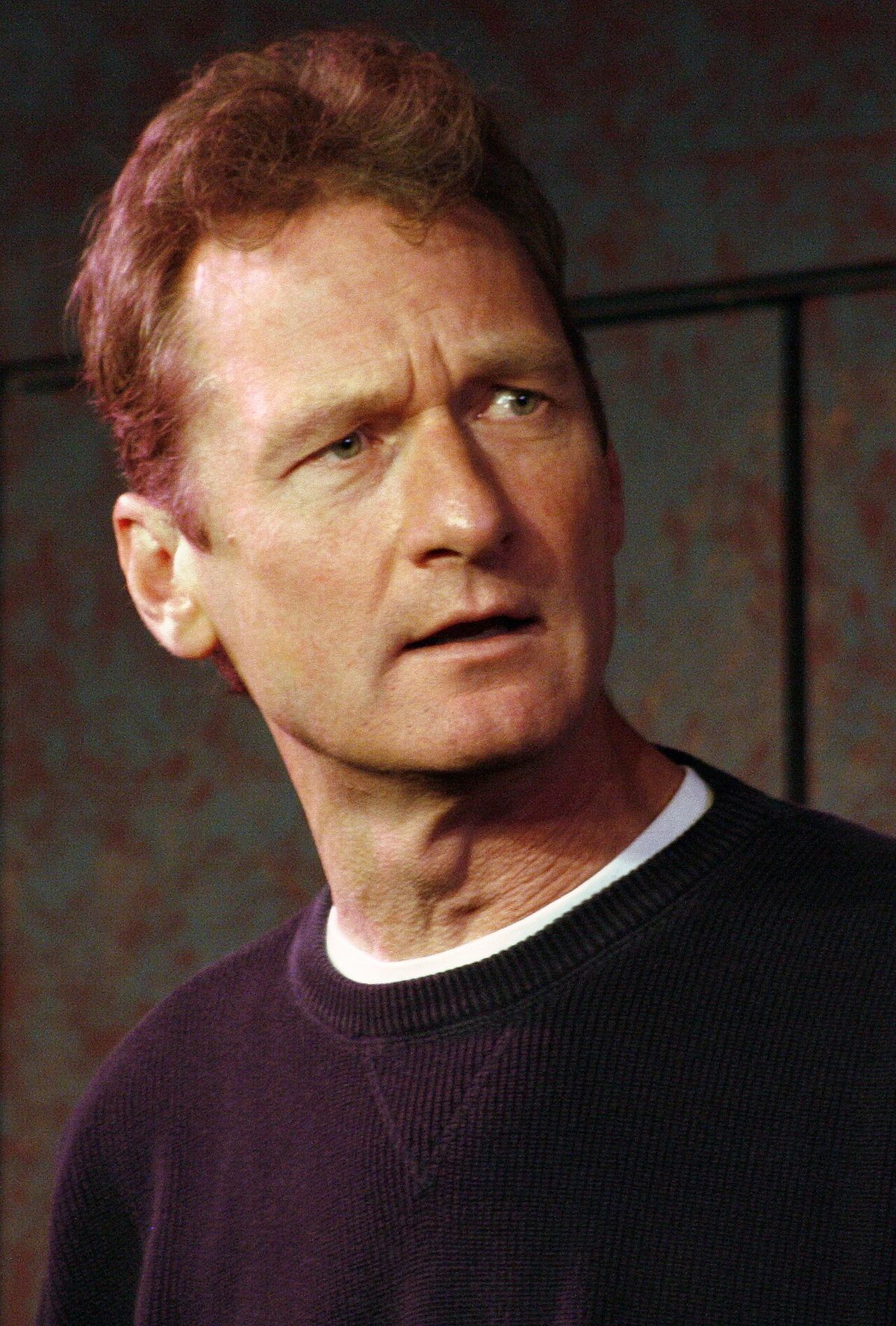
Alan Dean Ashby (born July 8, 1951) is an American former professional baseball catcher in Major League Baseball and former broadcaster. He is best known for his 11-season tenure with the Houston Astros, having also played for the Cleveland Indians and Toronto Blue Jays between 1973 and 1989. Ashby holds the distinction of catching three no-hitters for Houston, a club record, and he hit the first postseason home run in Astros history, a walk-off winner in Game 1 of the 1981 National League Division Series. Following his playing career, Ashby became a prominent colour commentator, most notably for the Astros and Toronto Blue Jays radio and television broadcasts, and he was elected to the Astros Hall of Fame in 2026.
Early life and baseball beginnings
Alan Ashby grew up in San Pedro, California, as a devoted fan of the Los Angeles Dodgers and was in attendance at Dodger Stadium in 1965 to witness Sandy Koufax's perfect game. A natural left-handed hitter, Ashby was inspired by the Dodgers' all-switch-hitting infield of Wes Parker, Maury Wills, Junior Gilliam, and Jim Lefebvre, which motivated him to train himself to hit from both sides of the plate. He did not consider catching as a position until his senior year at San Pedro High School, when watching Cincinnati Reds star Johnny Bench convinced him his arm strength was suited for the role. The Cleveland Indians selected Ashby in the third round of the 1969 MLB draft, beginning a professional journey that included four full seasons in the minor leagues before his major league call-up in the summer of 1973.
Major League playing career
Alan Ashby made his major league debut with the Cleveland Indians on July 3, 1973, entering as a defensive replacement in the ninth inning of a 5-4 loss to the Detroit Tigers and catching a scoreless inning from pitcher Jerry Johnson. The following day, he was in the starting lineup and recorded his first career hit and RBI off Tigers pitcher Mike Strahler, going 1-for-4 in a 5-2 Cleveland victory. He hit his first major league home run on September 29, 1973, a two-run shot off Baltimore Orioles pitcher Mike Cuellar, finishing his rookie year with a .172 average in 11 games. His role expanded in 1975 when he shared catching duties with John Ellis, appearing in 90 games and hitting .224 with 5 home runs and 32 RBI, and he improved to a .239 average with 4 homers and 32 RBI in 89 games while sharing time with Ray Fosse in 1976. After the 1976 season, the Indians traded Ashby and Doug Howard to the Toronto Blue Jays on November 5, 1976, for pitcher Al Fitzmorris.
With the Blue Jays in 1977, Ashby became the primary catcher, appearing in 124 games and batting .210 with 2 home runs and 29 RBI. He demonstrated strong defensive skills, throwing out 59 would-be base stealers, the second-highest total in the American League, with a caught-stealing percentage of 48 percent that ranked fourth. His offensive production improved in 1978, as he batted .261 with nine home runs and 29 RBI in 81 games while sharing time with Rick Cerone. On November 27, 1978, the Blue Jays traded Ashby to the Houston Astros for pitchers J.J. Cannon, Pedro Hernandez, and Mark Lemongello, a deal later characterized by sports columnist Bob Elliott as the worst trade in Blue Jays history.
Ashby's tenure with the Houston Astros, which lasted from 1979 to 1989, defined his career. He caught his first career no-hitter in his second game with the team on April 7, 1979, as Ken Forsch held the Atlanta Braves hitless in a 6-0 victory. Ashby emerged as a reliable contributor during the Astros' competitive period in the 1980s, improving his average to .256 with 3 homers and 48 RBI in 116 games in 1980 and helping the team reach the National League Championship Series that year, where he appeared in two games. He was behind the plate for Nolan Ryan's fifth career no-hitter on September 26, 1981, and that same postseason, Ashby hit a historic walk-off, two-run home run off Dave Stewart in the bottom of the ninth inning of Game 1 of the National League Division Series, marking the first postseason home run in Astros history and a 3-1 victory. No Astro would hit another walk-off postseason homer for 23 years.
On September 27, 1982, he became the first Astro to hit two home runs in a game from both sides of the plate, connecting against San Diego Padres pitchers John Montefusco and Chris Welsh in a 7-3 win. His 12 home runs that season were the second-most on the team, one behind Phil Garner, and he played in 100 games while batting .257. His defensive leadership was important in 1986, as he helped guide a pitching staff that led the National League in strikeouts and posted the league's second-best team earned run average. On September 25 of that year, he caught his third career no-hitter, a gem by Mike Scott that clinched the NL West title against the San Francisco Giants and tied a National League record for a catcher. In the subsequent NL Championship Series, Ashby hit a game-winning, two-run homer from the right side against the New York Mets' Sid Fernandez in Game 4, a 3-0 win that tied the series, giving him the unique distinction of being the first National League player, and only catcher, to hit game-winning postseason home runs from both sides of the plate.
His best offensive season came in 1987 at age 36, when he posted career highs with 125 games played, a .288 average, 14 home runs, and 63 RBI. That same season, he also led National League catchers with a .993 fielding percentage. His playing time decreased to 73 games in 1988, where he hit .238 with 7 home runs and 33 RBI. In 1989, Ashby appeared in just 22 games, hitting .164 with no home runs and 3 RBI. He played his last major league game on May 9, 1989, at age 37, and the Astros released him two days later on May 11, 1989. His career with Houston included 900 games behind the plate, a franchise record until 2005, and he accumulated 69 home runs and 388 RBI for the club.
Career statistics and records
He finished with a .320 on-base percentage and a .986 career fielding percentage, and he ended his career having led National League catchers three times in range factor, a measure of defensive plays per game. Defensively, he caught 107 shutouts, ranking him 23rd all-time among major league catchers at his retirement, and he led National League catchers in fielding percentage once in 1987. His most significant franchise records with the Houston Astros include catching three no-hitters, a mark that stood alone for decades, and he also held the club record for most games caught (900) until 2005. His key career achievements, which highlight his defensive prowess and clutch hitting, include:
- First postseason home run in Houston Astros history (1981 NLDS Game 1).
- First Astros player to hit two homers in a game from both sides of the plate (September 27, 1982).
- First National League player to hit game-winning postseason homers from both sides of the plate (1981 & 1986).
- Selected as the starting catcher on the Astros' All-Time 25-Man Roster (2012).
- Caught 59 base stealers in 1977, second in the American League.
- Hit a career-high 14 home runs and 63 RBI in 1987 at age 36.
- Caught three no-hitters (Ken Forsch, 1979. Nolan Ryan, 1981. Mike Scott, 1986).
Post-playing career in broadcasting and managing
After retiring, Ashby quickly transitioned to broadcasting in Houston, serving as sports director and anchor for KHTV Channel 39 from 1990 to 1992 following a 1990 stint telecasting HSE Southwestern Conference Baseball. He hosted the Houston Rockets Show and the Houston Cougars Football's John Jenkins Show, and later co-hosted a televised business magazine called Inside Houston in 1994 and 1995. Concurrently, he returned to the field as a manager in the independent Texas-Louisiana League with the Rio Grande Valley WhiteWings in 1994 and 1995, then managed the Astros' Class-A affiliate, the Kissimmee Cobras of the Florida State League, in 1996. He served on the major league coaching staff as the Houston Astros' bullpen coach in 1997 before fully committing to a broadcasting career the following year.
In 1998, Ashby began working as the colour commentator for Astros radio broadcasts. He served in that capacity until the 2006 season when the Astros let him go. In 2007, Ashby signed a three-year contract to become the colour commentator and secondary play-by-play man on the Toronto Blue Jays radio broadcasts, working with Jerry Howarth. He subsequently signed for another five-year term. From 2011, Ashby also served on occasion as the Blue Jays' play-by-play and colour commentator on their Sportsnet telecasts.
Ashby returned to Houston in 2013, resigning from his Toronto position to join the Astros' television broadcast team alongside Bill Brown, replacing Jim Deshaies. He worked on the regional sports networks CSN Houston and later Root Sports Southwest after CSN Houston filed for bankruptcy in 2014, providing colour commentary and occasional play-by-play alongside Brown and later Geoff Blum. Following Bill Brown's retirement announcement after the 2016 season, the Astros elected not to renew Ashby's contract, ending his broadcast tenure with the club and leading to the hiring of Todd Kalas for the 2017 season. Throughout his media career, Ashby earned recognition, advancing to the second round of voting for the Ford C. Frick Award in 2012, which placed him among the top 41 candidates for the Baseball Hall of Fame's broadcaster honour.
Honours and legacy
Alan Ashby's contributions to baseball have been recognized through several significant honours over the decades. He was inducted into the Texas Sports Hall of Fame in 2000, an early acknowledgment of his impact in the state. In 2012, during the Astros' 50th anniversary season, he was selected by fan vote as the starting catcher on the franchise's All-Time 25-Man Roster, a direct reflection of his popularity and defensive reputation with the team's fans. The highest honour from the club came with the announcement of his election to the Houston Astros Hall of Fame, with induction scheduled for 2026, cementing his place in franchise history. His legacy is built on a combination of reliable defence, timely hitting, and a deep connection with the Astros franchise during its rise to contention in the 1980s, as he was a part of three Astros postseason teams (1980, 1981, 1986) and his two postseason home runs were both game-winners. His work as a broadcaster for two major league franchises over more than two decades further cemented his status as a knowledgeable and respected baseball figure for fans in both Canada and the United States.
Questions about Alan Ashby
What records does Alan Ashby hold with the Houston Astros?
Ashby holds several notable records in Houston Astros history. He caught three no-hitters for the club, a franchise record for a catcher, involving pitchers Ken Forsch (1979), Nolan Ryan (1981), and Mike Scott (1986). He held the Astros record for most games caught, with 900, until 2005. Ashby also hit the first postseason home run in Astros history, a walk-off winner in Game 1 of the 1981 National League Division Series off Dave Stewart. He was the first Astros player to hit two home runs in a single game from both sides of the plate, accomplishing the feat in 1982 against the San Diego Padres.
What was Alan Ashby's role with the Toronto Blue Jays after his playing career?
Following his playing career, Alan Ashby served as a broadcaster for the Toronto Blue Jays from 2007 to 2012. He was hired as the colour commentator and secondary play-by-play announcer for the team's radio broadcasts on Sportsnet, working alongside longtime voice Jerry Howarth. Ashby signed an initial three-year contract and later extended it for another five years, providing analysis for Blue Jays games for six seasons. From 2011 onward, he also occasionally served as a play-by-play and colour commentator for Blue Jays television broadcasts on Sportsnet before leaving to rejoin the Houston Astros broadcast team in January 2013.
How many no-hitters did Alan Ashby catch?
Alan Ashby caught three official no-hitters during his major league career, all while with the Houston Astros. He caught his first on April 7, 1979, pitched by Ken Forsch against the Atlanta Braves in a 6-0 victory. His second was caught on September 26, 1981, a historic no-hitter thrown by Nolan Ryan against the Los Angeles Dodgers, which was the fifth of Ryan's career. The third came on September 25, 1986, when Mike Scott no-hit the San Francisco Giants to clinch the National League West division title for Houston, tying a National League record for a catcher with three no-hitters caught.
What teams did Alan Ashby play for in MLB?
Alan Ashby played for the Cleveland Indians, Toronto Blue Jays, and Houston Astros during his Major League Baseball career. He made his MLB debut with the Cleveland Indians on July 3, 1973, and played for them until being traded to the Toronto Blue Jays in November 1976. After two seasons in Toronto, he was traded to the Houston Astros in November 1978, where he spent the remainder of his playing career from 1979 until his release in May 1989. With the Astros, he played 900 games behind the plate, which was a franchise record until 2005, and he helped the team reach the postseason three times.
When is Alan Ashby being inducted into the Astros Hall of Fame?
Alan Ashby was announced for induction into the Houston Astros team Hall of Fame in 2026. This honour recognizes his significant contributions to the franchise both as a player and later as a broadcaster. During his playing career with the Astros, he was the primary catcher for three postseason teams and caught three no-hitters, a franchise record. He also hit the first postseason home run in Astros history, a walk off shot in 1981. After his playing days, he served as a colour commentator for Astros television broadcasts from 2013 until 2016.
What broadcasting awards did Alan Ashby contend for?
Alan Ashby was a candidate for the Ford C. Frick Award, which is the Baseball Hall of Fame's award for broadcasters. In 2012, he was voted through to Round 2 of the 2013 Ford C. Frick Award ballot, placing him among the top 41 candidates for that honour. This recognition came during a long broadcasting career that followed his retirement from playing. After working in local Houston television and managing in the minor leagues, he served as a radio colour commentator for the Astros from 1998 to 2006. He later worked for the Toronto Blue Jays radio broadcasts from 2007 to 2012 before returning to Houston for a television role from 2013 to 2016.
Sources and further reading
- Alan Ashby (Wikipedia)
- Alan Ashby Stats, Height, Weight, Position, Rookie Status & ... (baseball-reference.com)
- Alan Ashby, Society for American Baseball Research (sabr.org)
Checked by the Yadude Books desk. Last updated 2026-11-06.