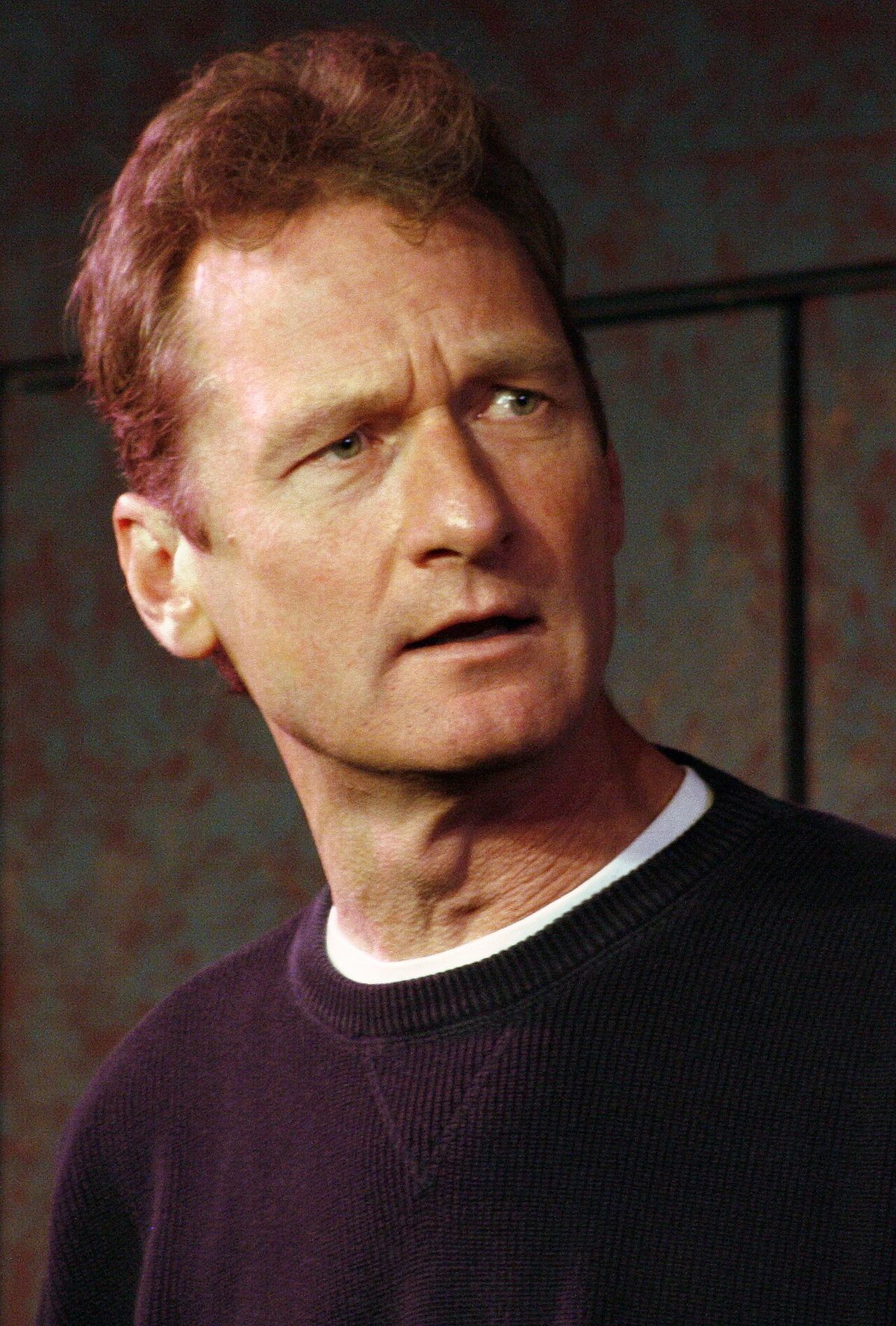
David Rakoff
David Benjamin Rakoff was a Canadian-American essayist, humourist, and radio personality, celebrated for his wry, self-deprecating wit and keen observations on modern life. Born in Montreal and raised in Toronto, he spent his professional career in New York City, becoming a beloved regular contributor to the public radio program This American Life . Rakoff authored three bestselling collections of essays, each blending humour with melancholy, and won prestigious awards including the Lambda Literary Award and the Thurber Prize for American Humor. His work, which often explored themes of fraudulence, privilege, and pessimism, resonated deeply with audiences in Canada and the United States, cementing his reputation as a distinctive voice in contemporary humour writing.
Early life and education
David Benjamin Rakoff was born on November 27, 1964, in Montreal, Quebec, the youngest of three children in a Jewish family. His father, Vivian Rakoff, was a psychiatrist, and his mother, Gina Shochat-Rakoff, practised psychotherapy. His older brother is comedian Simon Rakoff, and his sister, Ruth Rakoff, authored the cancer memoir When My World Was Very Small. The family had a history of displacement, with Rakoff's grandparents fleeing Latvia and Lithuania for South Africa at the turn of the 20th century. For political reasons, the Rakoffs left South Africa in 1961, settling in Montreal for seven years before relocating to Toronto in 1967 when David was three years old. He attended Forest Hill Collegiate Institute in Toronto, graduating in 1982 before moving to New York City to attend Columbia University. At Columbia, Rakoff majored in East Asian Studies, spent his third year at the School of Oriental and African Studies in London, and studied dance, graduating in 1986. After university, he worked for four months in Japan as a translator for a fine arts publisher before his early career plans were interrupted at age 22 when he was diagnosed with Hodgkin's disease, a form of lymphatic cancer he called 'a touch of cancer.' This led to 18 months of treatment back in Toronto involving chemotherapy, radiation, and surgery, after which he later served on the board of directors of North Carolina's John C. Campbell Folk School.
Career beginnings and entry into writing
Before establishing himself as a writer, David Rakoff worked for 13 years in the New York publishing industry, holding positions as a publishing assistant, publicist, and literary agent for three years. He then worked for nine years as an editor and communications manager at HarperCollins, writing freelance on the side starting when he was 25 years old. He was able to transition to full-time writing in 1998, the same year he began his long association with This American Life. His entry into public recognition came through a formative friendship with humourist David Sedaris and radio producer Ira Glass, to whom Rakoff said he owed his entire career. Rakoff wrote to Sedaris in 1992 after hearing his radio essay 'Santaland Diaries,' and the two became friends, collaborating on theatre projects including Rakoff directing a play by David and Amy Sedaris and later acting in their works. Through Sedaris, Rakoff met Ira Glass, who was then a junior reporter for NPR's Morning Edition and was beginning This American Life. At Sedaris's urging, Rakoff submitted his piece 'Christmas Freud,' an account of impersonating Sigmund Freud at Barneys department store, which became his first contribution to the show. Concurrently, Rakoff wrote Q and A interviews entitled 'The Way We Live Now' for The New York Times Magazine from 1999 to 2002, and his journalism appeared in numerous other outlets including Condé Nast Traveler, GQ, Outside Magazine, Salon, and Slate.
Literary works and major themes
David Rakoff published three critically acclaimed collections of autobiographical essays, each illustrated with his own drawings and characterized by a blend of sharp humour, introspection, and a recurring examination of personal and societal anxieties. The central themes across his work include feelings of fraudulence, the absurdities of privilege, and a philosophical defence of pessimism, with Rakoff's prose celebrated for its wit and precision though occasionally facing criticism for stylistic choices. His essays often originated as pieces for This American Life or various magazines before being expanded and refined for book publication, and he was a frequent contributor to a wide range of publications throughout his career. The material in his books was significantly lengthened and rewritten from its original forms, and he also contributed essays to numerous anthologies, including State by State: A Panoramic Portrait of America (2008), The Best American Travel Writing 2007, and The Best American Nonrequired Reading 2006, as well as fiction to anthologies like Men on men 5: best new gay fiction.
Published Collections- Fraud (Doubleday, 2001): His debut collection, exploring themes of impostor syndrome and loneliness, won the Lambda Literary Award for Humor in 2002. Rakoff stated the central drama was about being a fraud, though he admitted it was really about loneliness and staying thin, and he considered other titles like 'Smart mouth' and 'The jig is up.'
- Don't Get Too Comfortable (Doubleday, 2005): Subtitled 'The Indignities of Coach Class, The Torments of Low Thread Count, The Never-Ending Quest for Artisanal Olive Oil, and Other First World Problems,' this book critiques American excess and won his second Lambda Literary Award for Humor in 2006. Rakoff said its moral was that there should be 'a little more guilt out there' and more acknowledgement of privilege.
- Half Empty (2010): A meditation on pessimism and melancholy, this collection won the 2011 Thurber Prize for American Humor. Rakoff described it as being about 'all the other less than pleasant to feel emotions that because they are less than pleasant to feel have been more or less stricken from the public discourse but in fact have their uses and even a certain beauty to them.'
Following his death in 2012, a novel in verse titled Love, Dishonor, Marry, Die, Cherish, Perish was published posthumously by Doubleday in July 2013. Shortly before his death, he recorded it as an audiobook with the help of Ira Glass in the studio of This American Life. This posthumous publication completed his final project. The work represents a stylistic evolution in his writing career.
Radio contributions and public persona
David Rakoff was a defining voice on the public radio program This American Life, where he was a regular contributor from its inception, performing pieces each week on a chosen topic, usually in the first person. His radio essays, delivered in a conversational style, covered a wide range of topics from his job impersonating Sigmund Freud in a department store window to more reflective pieces on travel and personal history. Rakoff appreciated the creative freedom the show afforded him, allowing him to break the conventional bounds of just being a journalist, and most of his performances were recorded in the studio, though some were performed live, including in the 2008 show This American Life: Live!. He was the first person to host an entire episode of the program in place of Ira Glass, for the episode 'Like It Or Not,' a distinction later shared only with Nancy Updike, and he was featured on the live broadcast 'Invisible Made Visible' from the Skirball Theater at NYU on May 10, 2012. Rakoff also maintained a strong connection to Canadian audiences through regular appearances on CBC Radio programs such as Talking Books hosted by Ian Brown and later on WireTap, returning his voice to Canadian airwaves. The August 17, 2012, episode of This American Life, titled 'Our Friend David,' was dedicated entirely to his work on the show, serving as a tribute following his death and highlighting his enduring impact on the program and its listeners.
Acting and screen work
Although writing became his primary vocation, David Rakoff had early aspirations in acting, which he described as a refuge for a misfit, and he pursued it alongside his literary career, performing in university theatre and later while working full-time. He stated he liked acting because it involved other people, unlike solitary writing, but his self-assessment of his ability was that he was 'a deeply uncompelling camera presence,' and he noted his parts were often cut from films. Rakoff often lamented the stereotypical roles offered to him, which he humorously categorized as 'Fudgy McPacker' (a stereotypically gay character) or 'Jewy McHebrew' (a bookish Jewish type), adding that being gay and Jewish limited his acting roles in a way it did not limit his writing subjects. He found more creative freedom in stage work, notably appearing in several off-Broadway plays written by David and Amy Sedaris, collectively known as The Talent Family, including the Obie award-winning One Woman Shoe (1995), where a Newsday critic said he 'exuded quirky appeal' and The New York Times called him 'hilarious.'
Select Film and Television Appearances| Year | Title | Role/Note |
|---|---|---|
| 1995 | A Cloud in Trousers (short) | Played Vladimir Mayakovsky |
| 1996 | The Watermelon Woman | Appeared as a librarian |
| 1996 | The First Wives' Club | Scenes deleted from final cut |
| 2005 | Capote | Brief appearance as the back of his head as Ben Baron |
| 2005 | Strangers with Candy | Non-speaking role as Boswell |
| 2009 | The New Tenants (short) | Played Frank. Also adapted the screenplay |
| 1996 to 2000 | Cosby (TV) | Appeared as Todd |
| , | As the World Turns (TV) | Played modelling agent Rich Tuchman |
His most significant screenwriting credit was for adapting the screenplay for The New Tenants, which won the 2010 Oscar for best live action short film. The director Joachim Back described Rakoff's role as having helped with the dialogue and having collaborated a lot on the dialogue. Rakoff also appears in the film, playing Frank, half of a gay couple. He appeared as himself in the documentary Florent: Queen of the Meat Market from 2009.
Awards and critical reception
Throughout his career, David Rakoff received significant acclaim and several major literary awards that recognized his unique contribution to humour and essay writing. His work was praised for its intellectual depth, comedic timing, and emotional resonance, though it occasionally received mixed critiques on specific elements of style or structure from various publications. The Lambda Literary Awards, which honour excellence in LGBTQ literature, twice awarded him in the Humor category, affirming his status as a vital gay writer whose work explored LGBT lives. The Thurber Prize, one of the highest honours in American humour writing, further cemented his literary standing following the publication of Half Empty. His books were consistent bestsellers, and his radio contributions made him a household voice for listeners of public broadcasting in both the United States and Canada, building a dedicated audience.
Major Awards and Critical Responses- Lambda Literary Award for Humor (2002) for Fraud. The book was praised by Publishers Weekly for Rakoff's 'rapier wit' and 'slice-of-life insights,' though Greil Marcus found his stories less funny than his radio performances and a New York Times reviewer compared his theme to Sophocles and Freud.
- Lambda Literary Award for Humor (2006) for Don't Get Too Comfortable. The New York Times noted it mercilessly portrayed greed and vanity, while a Washington Post reviewer criticized his prose for occasionally misusing the word 'like,' and Jennifer 8. Lee in the Times said it was a collection of magazine pieces rather than a coherent manifesto.
- Thurber Prize for American Humor (2011) for Half Empty. This award recognized his exploration of pessimism, which Rakoff argued had its uses and a certain beauty, marking the peak of recognition for his particular brand of humour.
Beyond his books, Rakoff contributed essays to numerous anthologies of non fiction published by other writers. His role in adapting and appearing in the Oscar winning short film The New Tenants added to his artistic legacy. His posthumous novel in verse demonstrated his continued stylistic evolution. These works across different media completed a body of work that remains influential.
Personal life and death
David Rakoff was open about his identities as a gay man and a Jew, which informed much of his writing and his commentary on the limitations of acting roles, and he described himself as a 'mega Jewish writer' and a 'gay writer.' He maintained close relationships with his siblings and his parents throughout his life, writing that he and his siblings were close as children. Rakoff served on the board of directors of the John C. Campbell Folk School in North Carolina, reflecting an interest in folk arts and community, and he lived and worked primarily in New York City but frequently referenced his Canadian upbringing in his work. David Rakoff died on August 9, 2012, and following his death, his final work, the novel in verse Love, Dishonor, Marry, Die, Cherish, Perish, was published in 2013. The radio community paid extensive tribute to him, most notably with the dedicated episode of This American Life, and his recordings and writings continue to be celebrated by fans and colleagues alike.
Questions about David Rakoff
What was David Rakoff's connection to Canada?
David Rakoff was born in Montreal, Quebec, and was raised in Toronto, Ontario, where he attended Forest Hill Collegiate Institute. He identified as a Canadian writer alongside his identity as a New York writer and a gay writer. Throughout his career, he maintained ties to Canadian media, making regular appearances on CBC Radio programs like Talking Books hosted by Ian Brown and later on WireTap. His Canadian upbringing and Jewish family background, including his parents' emigration from South Africa to Montreal, were frequent touchstones in his essays.
How did David Rakoff get his start on This American Life?
Rakoff's entry into This American Life was facilitated by his friendship with humourist David Sedaris and producer Ira Glass, whom he credited for his entire career. After becoming friends with Sedaris through a letter in 1992, Rakoff was introduced to Glass, who was then launching the new radio program. At Sedaris's urging, Rakoff submitted his piece 'Christmas Freud,' an account of impersonating Sigmund Freud at Barneys department store during the holidays. This became his first contribution to the show at its inception, launching a long-standing partnership where he became a regular and beloved contributor, even hosting an episode in place of Ira Glass.
Did David Rakoff do any acting or screenwriting?
Yes, Rakoff pursued acting alongside his writing career, performing in off-Broadway plays, films, and television. He had a notable role in the Oscar-winning short film The New Tenants (2009), for which he also adapted the screenplay from an original work by Anders Thomas Jensen. He appeared in films like Capote (2005) and The Watermelon Woman (1996), and on television in Cosby and As the World Turns. He often performed in plays written by David and Amy Sedaris, such as One Woman Shoe and The Book of Liz, where critics praised his performances.
What was David Rakoff's final book?
David Rakoff's final book was Love, Dishonor, Marry, Die, Cherish, Perish: A Novel, a novel written entirely in verse. It was published posthumously by Doubleday on July 16, 2013, nearly a year after his death. Shortly before he died, Rakoff recorded the audiobook version with the assistance of Ira Glass in the studios of This American Life. The book represents a stylistic departure from his essay collections and is his only published novel.
What were the central themes in David Rakoff's writing?
Rakoff's writing consistently explored themes of personal fraudulence and impostor syndrome, the absurdities of privilege and consumer culture, and a philosophical defence of pessimism and melancholy. His debut book, Fraud, centred on feelings of being a fraud, while Don't Get Too Comfortable critiqued first-world excess and argued for more acknowledgement of privilege. His final essay collection, Half Empty, was a meditation on the utility and beauty of negative emotions. His work blended self-deprecating humour with poignant observation, often derived from his own experiences as a gay, Jewish Canadian-American.
What awards did David Rakoff win for his books?
David Rakoff won a Lambda Literary Award for both Fraud in 2001 and Don't Get Too Comfortable in 2005, both times in the Humor category. His third book, Half Empty, won the 2011 Thurber Prize for American Humor. These awards recognized his excellence as an essayist and humorist. The Lambda Literary Awards specifically honour LGBT writers who explore LGBT lives in their work. The Thurber Prize is a prestigious American award for literary humour. Rakoff's collections were bestselling and included his own illustrations, contributing to his acclaim in the literary world.
Sources and further reading
- David Rakoff (Wikipedia)
- 472: Our Friend David (thisamericanlife.org)
- David Rakoff (penguinrandomhouse.com)
Checked by the Yadude Books desk. Last updated 2026-11-03.