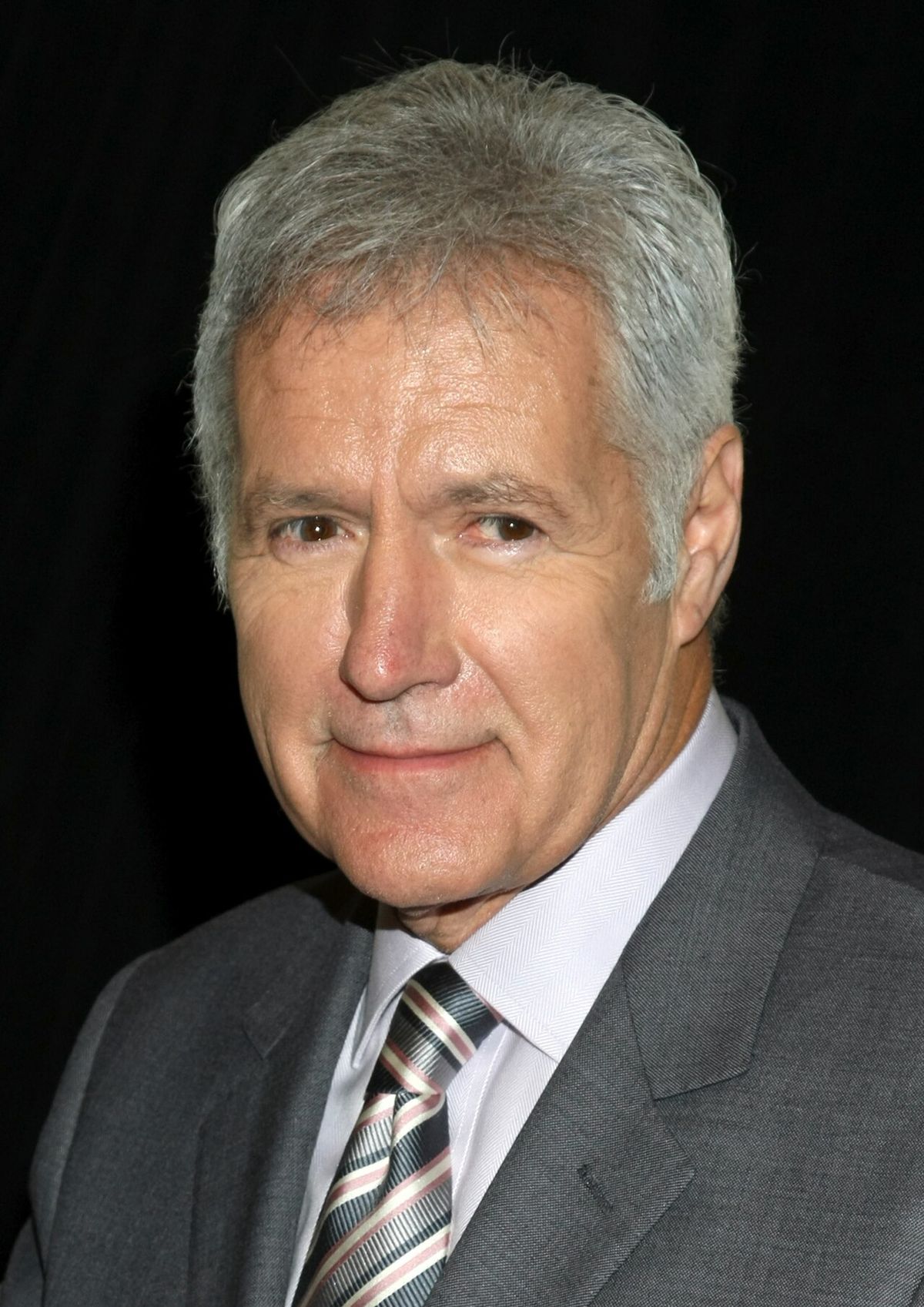
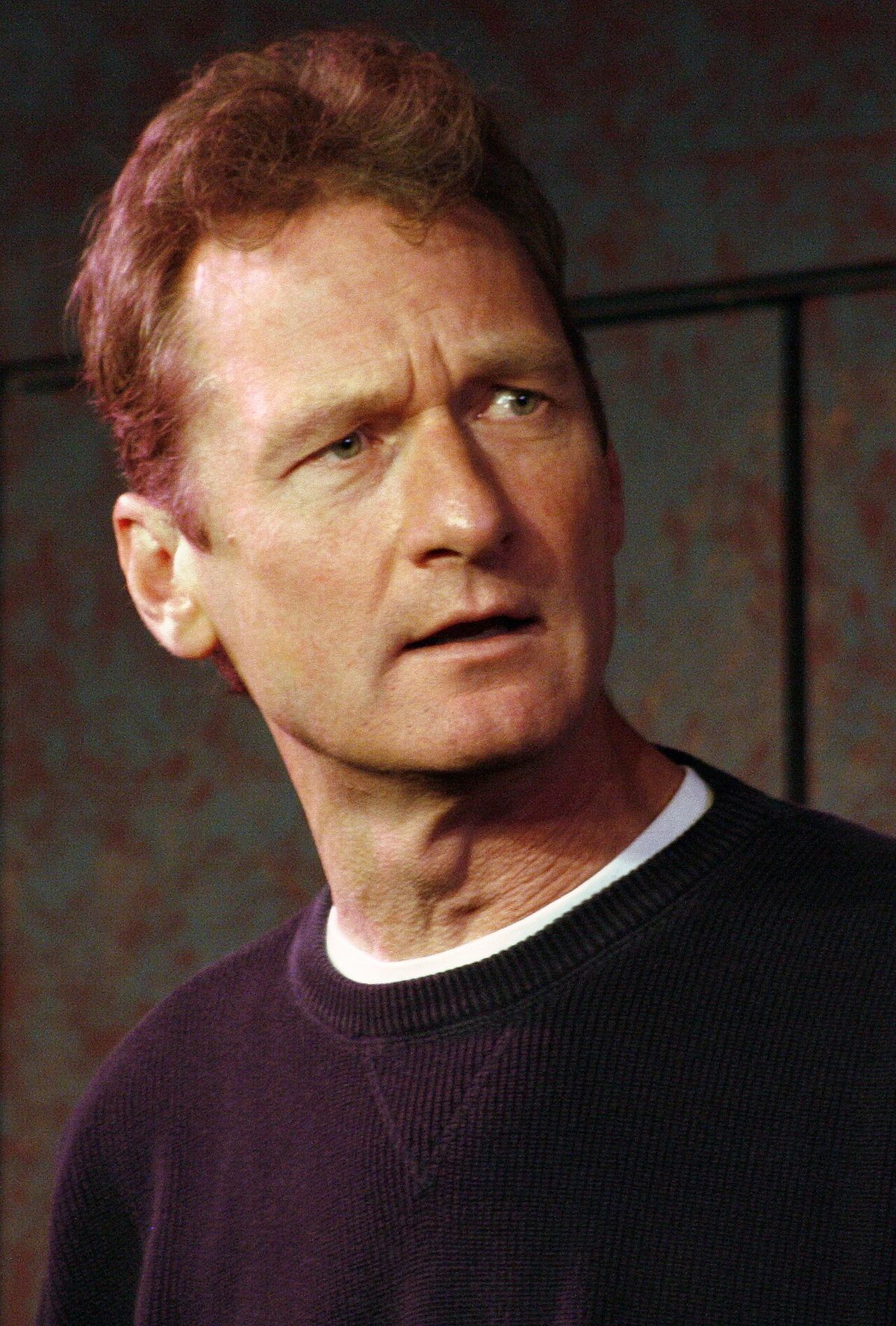
Gerry Cheevers
Gerald Michael "Gerry" Cheevers, born December 7, 1940, is a Canadian former professional ice hockey goaltender and a member of the Hockey Hall of Fame, inducted in 1985. He is best known for his two Stanley Cup championships with the Boston Bruins in 1970 and 1972, having won over 300 games across the NHL and WHA. Cheevers is also famous for his pioneering, stitch-marked goaltender mask, which became a widely recognized symbol in the sport and started the tradition of decorated masks. His post-playing career included a five-year tenure as head coach of the Bruins from 1980 to 1985 and later work as a television commentator for the Hartford Whalers and Bruins, cementing his status as a significant figure in Canadian hockey history.
Early Career and Minor League Success
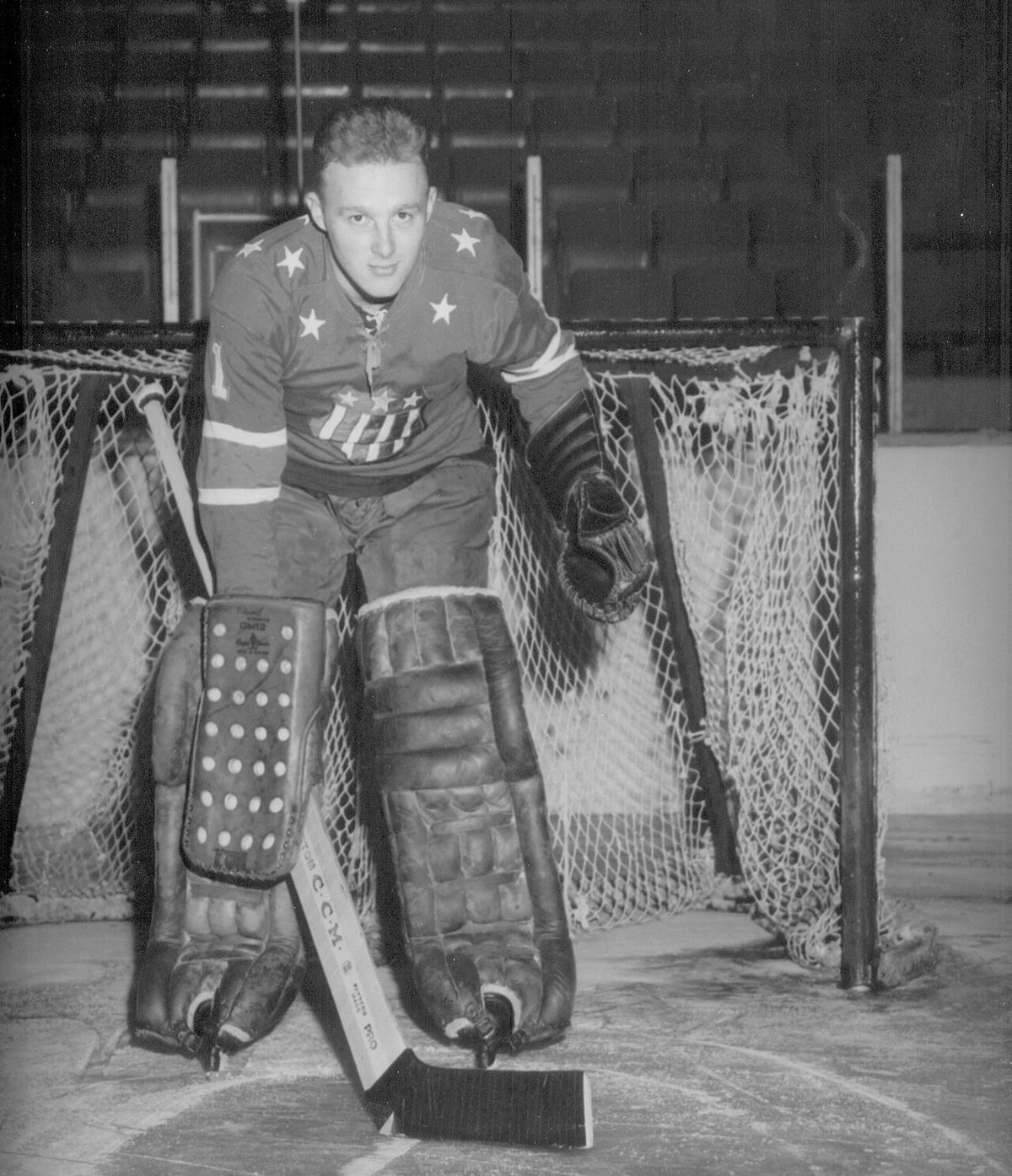
Gerry Cheevers began his hockey career in his hometown of St. Catharines before joining the Toronto St. Michael's Majors of the Ontario Hockey Association at age 16 in 1956. After limited action in his first few seasons, he became the starting goaltender for the 1959-60 season, posting an 18-13-5 record with a 3.08 goals-against average to win the Dave Pinkney Trophy. Notably, Cheevers played part of that championship season as a forward, demonstrating his versatility on the ice. His professional career began in the 1961-62 season within the Toronto Maple Leafs organization, where he was shuttled between multiple farm teams, including the Sault Thunderbirds, Pittsburgh Hornets, and Rochester Americans.
Cheevers made his NHL debut for the Maple Leafs on December 2, 1961, making 35 saves in a 6-4 victory over the Chicago Black Hawks. He spent the next several seasons primarily in the minors, establishing himself as a workhorse goaltender for the Rochester Americans of the American Hockey League. In the 1963-64 season, he started 66 games, compiling a 38-25-2 record. His final minor league season in 1964-65 was historic, as he became the last goaltender in AHL history to play every minute of every game for his team. That year, he set a league record with 48 wins, posted a 2.69 GAA, earned five shutouts, won the Harry "Hap" Holmes Memorial Award, and backstopped Rochester to the Calder Cup championship.
Stanley Cup Championships with Boston
The Boston Bruins drafted Cheevers in 1965 after Maple Leafs general manager Punch Imlach attempted to hide him on the draft list by listing him as a forward. After splitting time between Boston and their CPHL farm team in Oklahoma City for two seasons, Cheevers became the Bruins' number one goaltender following the 1967 NHL expansion. His first full season as starter in 1967-68 saw him post a 23-17-5 record and help Boston return to the playoffs for the first time in eight years. It was during this period that he began regularly wearing a face mask, a practice that would lead to his legendary design. Cheevers' breakout season came in 1969-70 when he started the year with a shutout streak of over 151 minutes and finished with a 24-8-8 record, a 2.72 GAA, and a .919 save percentage.
In the 1970 playoffs, Cheevers was nearly flawless, going 12-1 to lead the Bruins to their first Stanley Cup in 29 years. He set an NHL record by going undefeated in 32 consecutive games, a mark that still stands. He finished the regular season with a career-best 2.50 GAA and a .920 save percentage. In the playoffs, he split duties with Eddie Johnston and recorded two shutouts, including one in the clinching Game 6 victory over the New York Rangers to secure Boston's second championship in three years. During his first stint in Boston, Cheevers earned a reputation as a clutch performer in critical games.
World Hockey Association Stint
In a major hockey move, Gerry Cheevers signed with the Cleveland Crusaders of the new World Hockey Association on July 27, 1972, after a contract dispute with the Bruins. He made an immediate impact, recording the first shutout in WHA history on October 11, 1972, against the Quebec Nordiques. In that inaugural 1972-73 season, Cheevers dominated the league, leading all goaltenders in goals-against average (2.84), shutouts (5), and save percentage (.912). His performance earned him the Ben Hatskin Trophy as the league's best goaltender, a spot on the First All-Star Team, and a second-place finish in MVP voting. He played over three full seasons with the Crusaders, establishing himself as one of the WHA's premier netminders.
Cheevers continued his excellence in the WHA, leading the league in shutouts again in both the 1973-74 and 1974-75 seasons with five and four, respectively. He was named a Second Team All-Star in both those years and represented the WHA in the 1974 Summit Series against the Soviet Union, playing in seven of Team Canada's eight games. He played in every WHA All-Star Game during his tenure. His time in Cleveland ended midway through the 1975-76 season due to a financial dispute with management, prompting his return to the NHL. Despite playing only half of the league's existence, Cheevers finished his WHA career ranked second all-time in both career goals-against average and shutouts.
Return to Boston and Retirement
Gerry Cheevers rejoined the Boston Bruins on February 3, 1976, and marked his return to the NHL on February 8 with a 7-0 shutout victory over the Detroit Red Wings. He finished the 1975-76 season with an 8-2-5 record. In the 1976-77 season, sharing the net with Gilles Gilbert, Cheevers posted a 30-10-5 record and backstopped the Bruins all the way to the Stanley Cup Final, where they were swept by the Montreal Canadiens. His role fluctuated in subsequent seasons, alternating between starter and backup, but he remained a playoff performer. In the 1977-78 playoffs, he reclaimed the starting job and appeared in 12 games as Boston again reached the Final, losing in six games.
Cheevers' final seasons were marked by notable achievements and a characteristically competitive edge. He started the 1978-79 season with a 16-game unbeaten streak. In December 1979, he was selected to play for the NHL All-Stars in the Challenge Cup against the Soviet Union. During the 1979-80 season, he deliberately set the single-season NHL record for penalty minutes by a goaltender (62) by shooting the puck into the stands in a game's final minute. That same season, he and Gilles Gilbert were runners-up for the Vezina Trophy. Cheevers played his final NHL game in the 1980 playoffs, appearing in all ten of Boston's postseason games before announcing his retirement on July 7, 1980. His final career totals included 230 NHL wins, 419 games played, 26 shutouts, and a 2.89 goals-against average.
Playing Style and Legacy
Gerry Cheevers was renowned for an unorthodox, aggressive, and highly effective goaltending style. He was not a traditional stand-up goalie but instead perfected a reactive, 'flopping' technique, often making saves from his knees or side. This style was honed in Rochester under coach Rudy Migay, who made him practice without a stick to better learn how to use his body and pads. Cheevers was fearless in challenging shooters, frequently leaving his crease to cut down angles, and he acted as a 'third defenseman,' not hesitating to use his stick against opponents who encroached on his territory. He was also known for his puck-handling, once famously skating the puck from his crease to centre ice.
Teammates and opponents alike praised his competitive spirit and ability to perform under pressure. Former Bruins general manager Milt Schmidt called him a 'big-money player,' while his coach in Rochester, Joe Crozier, described him as 'the most exciting goalie you'll ever see.' Former teammate Reggie Leach stated that Cheevers was the hardest goaltender for him to score against, noting his unpredictable style. Cheevers held the Bruins' franchise record for most playoff wins by a goaltender (53) for over four decades until it was broken by Tuukka Rask in 2021. He was inducted into the Hockey Hall of Fame in 1985 and later into the World Hockey Association Hall of Fame in 2010 as an inaugural member, a fact that highlights his success in both major leagues.
The Stitch-Marked Mask
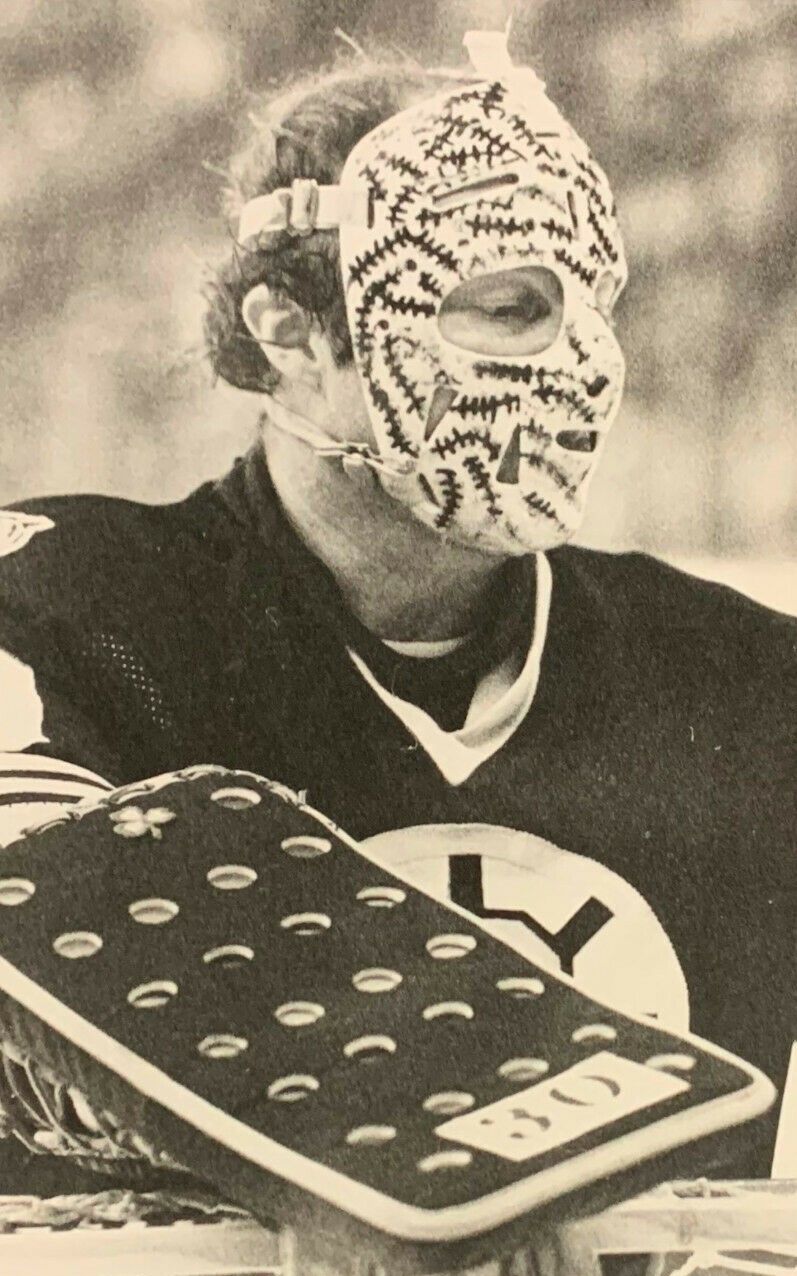
Gerry Cheevers created one of the most recognizable symbols in hockey history with his custom-painted mask. The tradition began when a puck struck him in the face during a practice. Cheevers went to the dressing room, where Bruins coach Harry Sinden found him unhurt and having a beer and cigarette. Ordered back to the ice, assistant trainer John 'Frosty' Forristall drew a stitch mark on his mask as a joke. Thereafter, every time Cheevers was hit in the mask by a puck, a new stitch was added. Cheevers claimed this tradition saved him from needing over 150 real stitches throughout his career. His mask is widely credited with starting the trend of goaltenders using their masks as a canvas for personal expression.
The mask's cultural impact extended far beyond the rink. In 2008, The Hockey News rated it the greatest goalie mask of all time by a wide margin. The design also influenced rock music. Andy Biersack, lead singer of Black Veil Brides, cited the mask as his inspiration for playing goalie as a youth and painted stitches on his face for concerts in homage. The original mask is now a family heirloom, displayed on the wall of his grandson's bedroom, and it remains a defining image of his career.
Coaching and Broadcasting Career
Immediately following his retirement as a player in 1980, Gerry Cheevers was named head coach of the Boston Bruins. His first season behind the bench ended with a shocking first-round playoff sweep by the Minnesota North Stars. Management retained him, and the decision paid off as he led the team to a second-place division finish and a playoff berth the following year. Cheevers' coaching pinnacle came in the 1982-83 season when he guided the Bruins to the best record in the NHL, amassing 110 points. His transition from player to coach for the same franchise was a rare feat in professional sports.
After his coaching tenure, Cheevers moved into broadcasting. He worked as a colour commentator for television broadcasts of both the Hartford Whalers and the Boston Bruins. His insightful analysis and firsthand experience provided fans with a deep understanding of the game from a goaltender's and coach's perspective. This second career in media allowed him to remain a visible and respected voice in hockey long after his days on the ice and behind the bench were over.
Publications and Written Works
Gerry Cheevers authored two books that provide insight into his career and personality. His first book, Goaltender, was published in 1971 and chronicled his experiences during the 1970-71 NHL season, culminating in the Bruins' unexpected first-round playoff loss to the Montreal Canadiens. The book offered a candid look at the life of a professional athlete during a championship era. Four decades later, in 2011, Cheevers collaborated with author Marc Zappulla to publish his autobiography, titled Unmasked. This later work provided a comprehensive retrospective on his entire hockey journey, from his junior days and Stanley Cup triumphs to his time in the WHA and his coaching career, sharing stories and perspectives accumulated over a lifetime in the sport.
Career Statistics and Highlights
Gerry Cheevers' professional statistics reflect a successful career across two major leagues. In the NHL, primarily with Boston, he recorded 230 wins, a 2.89 goals-against average, and 26 shutouts over 419 regular-season games. His playoff record was particularly strong, with 53 wins contributing to two Stanley Cup championships. His combined professional win total exceeds 300 victories. Despite his individual success, he is one of the few Hall of Fame goaltenders never to have been named to an NHL All-Star Team or to have won the Vezina Trophy, which reflects that his legacy is built on team success, memorable style, and key performances. His career is marked by several enduring records and honours.
- Held the Boston Bruins franchise record for most playoff wins by a goaltender (53) until 2021.
- Inducted into the Hockey Hall of Fame in 1985.
- Inducted into the World Hockey Association Hall of Fame in 2010.
- Winner of the Ben Hatskin Trophy as WHA's best goaltender (1973).
- WHA First All-Star Team (1973) and Second All-Star Team (1974, 1975).
- Winner of the Harry "Hap" Holmes Memorial Award (AHL best GAA) in 1965.
- Winner of the Dave Pinkney Trophy (OHA best GAA) in 1960.
The following table summarizes his key regular-season statistics across the NHL and WHA. In the NHL, Cheevers recorded 230 wins, a 2.89 goals against average, and 26 shutouts over 419 games played. During his time in the WHA with the Cleveland Crusaders, he was one of the league's best goaltenders, finishing second in the league's history for career goals against average and shutouts. He won the WHA's Ben Hatskin Award for best goaltender in 1973 and was named to multiple league All-Star Teams. His career total of wins across both professional leagues exceeded 300 games.
Questions about Gerry Cheevers
What is the story behind Gerry Cheevers' mask?
The stitch marks on Gerry Cheevers' mask began as a practical joke. After a puck hit him in the face during practice, he went to the dressing room. When coach Harry Sinden found him unharmed and ordered him back, the team's assistant trainer drew a stitch mark on the mask. Thereafter, a new stitch was added for every puck impact. Cheevers claimed this tradition saved him from over 150 real stitches, and the mask became a legendary symbol of toughness and personality in hockey.
Did Gerry Cheevers coach in the NHL?
Yes, immediately after retiring as a player in 1980, Gerry Cheevers became the head coach of the Boston Bruins. He coached the team for five seasons, from 1980 to 1985. His most successful season was 1982-83, when he led the Bruins to the best record in the NHL with 110 points. Prior to coaching, his entire NHL playing career was also with the Bruins, making him a franchise fixture.
What did Gerry Cheevers do after hockey?
After retiring from coaching in 1985, Gerry Cheevers moved into sports broadcasting. He worked as a colour commentator for television broadcasts of the Hartford Whalers and the Boston Bruins. He also authored two books: Goaltender in 1971 and his autobiography Unmasked in 2011. These endeavours kept him connected to the game and allowed him to share his insights and stories with a new generation of fans.
Why is Gerry Cheevers famous?
Gerry Cheevers is famous as a Hall of Fame goaltender who helped the Boston Bruins win the Stanley Cup in 1970 and 1972. He played professionally in the NHL and WHA from 1961 to 1980, winning over 300 games. He is equally renowned for being the first to decorate his goaltender mask with stitch markings where a puck had struck it, leading to the contemporary tradition of goaltenders adding personal flair to their masks. His distinctive mask, created after a practice incident with coach Harry Sinden, is one of the most well-known in NHL history. Cheevers also had a successful stint in the WHA with the Cleveland Crusaders, where he was one of the league's top players, winning the Ben Hatskin Award as best goaltender in 1973.
Is Gerry Cheevers in the Hockey Hall of Fame?
Yes, Gerry Cheevers was inducted into the Hockey Hall of Fame in 1985 in recognition of his outstanding playing career spanning the NHL and WHA. He was also inducted as an inaugural member of the World Hockey Association Hall of Fame in 2010. Notably, he is one of the few goaltenders in the Hockey Hall of Fame who was never named to an NHL All Star Team or won the Vezina Trophy. His induction honours a career where he won two Stanley Cups with Boston, was a WHA First Team All Star, and was known as a clutch playoff performer. Following his playing days, he also coached the Bruins from 1980 to 1985.
Sources and further reading
- Gerry Cheevers (Wikipedia)
- Gerry Cheevers Stats, Height, Weight, Position, Title (hockey-reference.com)
Checked by the Yadude Books desk. Last updated 2026-11-07.