Mario Dumont
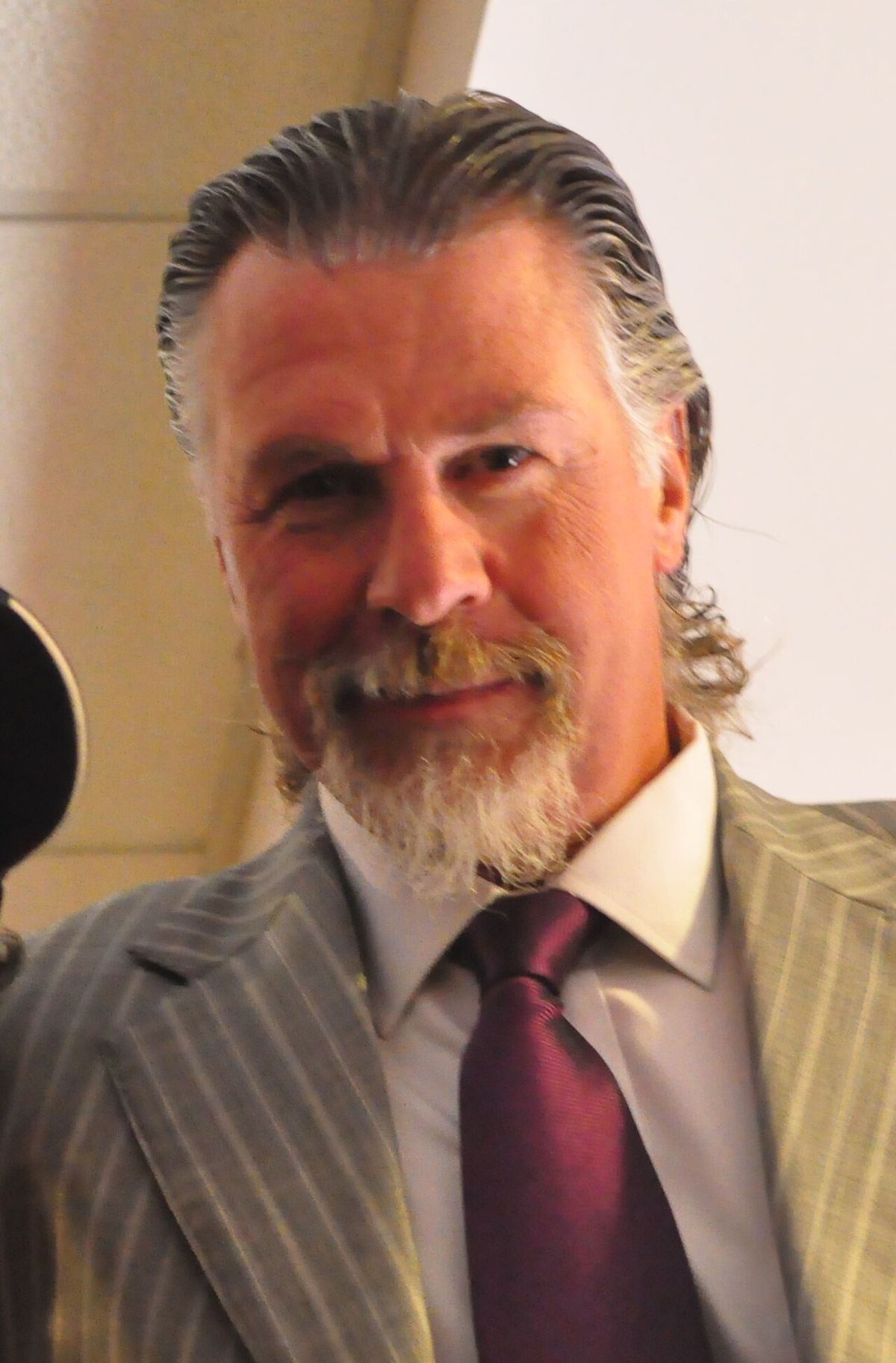
Mario Dumont is a Canadian television host and former politician from Quebec. He served as the leader of the Action démocratique du Québec (ADQ) and was a Member of the National Assembly from 1994 to 2009, including a term as Leader of the Opposition following the 2007 election. After retiring from politics, he transitioned to a prominent media career, hosting daily news and talk programs on television and radio. His shift from a key figure in Quebec's right-of-centre political movement to a mainstream media personality has made him a familiar and influential voice in Canadian public life.
Early life and education
Mario Dumont was born on May 19, 1970, in Saint-Georges-de-Cacouna, Quebec. He developed an early interest in politics, purchasing his first membership card for the Liberal Party of Quebec at the age of 15. He reportedly told his school friends that he would one day become Quebec's premier. Dumont pursued higher education in Montreal, earning a Bachelor of Arts in Economics from Concordia University in 1993. He subsequently undertook some graduate work at the Université de Montréal, further shaping his economic perspectives before his political career. His academic focus on economics provided the foundation for the fiscal policies he would later champion as a party leader.
Political career with the Quebec Liberal Party
Dumont's political activism began within the Liberal Party of Quebec, where he rose to become President of the party's Youth Commission. His tenure was marked by his alignment with the sovereigntist faction within the Liberal ranks, a position he shared with figures like Michel Bissonnet. This period was defined by the party's internal tensions following the collapse of the Meech Lake Accord. Dumont and his allies were strong proponents of the Allaire Report, which advocated for maximalist powers for Quebec within Canada. When the party leadership rejected this report, it led to a significant falling out for Dumont. His final major action as a Liberal was organizing the 'Liberals for the No side' during the 1992 referendum on the Charlottetown Accord, a campaign that ultimately succeeded. This early work established him as a skilled political organizer and a figure willing to challenge his own party's establishment on matters of Quebec's constitutional future.
Founding and ideology of the Action démocratique du Québec
In 1994, disillusioned with the Liberal Party, Mario Dumont played a central role alongside Jean Allaire in founding the Action démocratique du Québec. He succeeded Allaire as party leader that same year after Allaire resigned for health reasons. Dumont was elected as the MNA for Rivière-du-Loup in the 1994 election, a seat he would hold continuously through the 1998, 2003, 2007, and 2008 elections. The party's early identity was closely tied to constitutional issues, with Dumont campaigning for the 'Yes' side alongside Parti Québécois Premier Jacques Parizeau and Bloc Québécois leader Lucien Bouchard in the 1995 Quebec referendum. He later revealed to journalists Chantal Hébert and Jean Lapierre that the sovereigntist campaign's strategy was to use the referendum to advocate for a new partnership between Quebec and Canada, though Parizeau's goal was outright separation and both Bouchard and Dumont followed his direction at the time.
Over the following decade, the ADQ's constitutional stance evolved into Quebec autonomism, advocating for increased provincial powers while remaining within Canada. Specific policy proposals included creating a Quebec constitution, renaming the province the 'autonomous state of Québec,' and having Quebec collect all taxes, remitting only the funds necessary for the federal government to fulfill its constitutional responsibilities. Under Dumont's leadership, the party increasingly distinguished itself on economic and social policy, positioning itself to the right of Quebec's traditionally social-democratic political spectrum. This ideological shift was a deliberate strategy to capture voters dissatisfied with the major parties, focusing on pragmatic issues of governance and public finance.
Policy platform and political appeal
Since the 1998 provincial election, Dumont distinguished himself primarily through his stances on economic issues. He advocated for policies generally considered right of centre within Quebec's political context, which challenged the province's predominant social-democratic consensus. His platform was built on a series of specific proposals aimed at reducing government intervention and increasing individual choice. Key platform planks he championed included:
- The payment of a cash allowance to parents who did not wish to use the province's $7-a-day daycare program.
- Changes to allow private, for-profit healthcare and private health insurance alongside the public system.
- The abolition of school boards.
- The encouragement of private education.
- The implementation of a tougher criminal justice system.
- Reductions in the size of the provincial bureaucracy.
- A focused plan for repaying the province's $127 billion government debt.
Dumont was personally very popular for most of his career, far more popular than the ADQ as a whole. For many years, the party tried to capitalize on this by using the official name 'Action démocratique du Québec-Équipe Mario Dumont'. However, this personal appeal did not translate into broad-based party support, particularly in urban centres. The ADQ never won significant support in Montreal or the Outaouais region, which limited its ability to form a government. Political commentator Tasha Kheiriddin argued that the ADQ's result in 2007 gave a voice to right-of-centre currents swirling in Quebec politics, even if the party itself struggled to maintain that breakthrough.
Electoral performance and opposition leadership
Dumont led the ADQ through five provincial elections. The party's dramatic breakthrough came in the 2007 election, where it won 41 seats with 31 percent of the popular vote, forming the Official Opposition. This was a monumental increase from the five seats it held prior to the election's dissolution of the National Assembly. Despite this success, the party's support was geographically concentrated and almost nonexistent in several major cities. It won almost no seats in Montreal, Gatineau, Saguenay, Longueuil, Laval, and Sherbrooke. The following table details the ADQ's performance under Dumont's leadership in the elections where he was leader.
The party's time as Official Opposition was short-lived and fraught with difficulty. In October 2008, two ADQ MNAs, André Riedl and Pierre-Michel Auger, crossed the floor to the governing Liberal Party, an event that embarrassed Dumont and destabilized his caucus. Premier Jean Charest subsequently called a snap election for December 8, 2008. A Léger Marketing poll conducted in mid-November 2008 showed the Liberals with 44 percent support, the Parti Québécois with 33 percent, and the ADQ with only 15 percent. The election resulted in a severe setback, with the party winning a meagre seven seats and 17 percent of the vote. On election night, Dumont announced his resignation as party leader and his retirement from political life.
Transition to television and media career
Shortly after leaving politics in 2009, Mario Dumont began a new career in television journalism. At the TQS network's 2009 upfronts presentation, it was announced he would join in the fall as host of a daily news and information series. The show, titled Dumont 360, launched in September 2009, shortly after the network was rebranded as V. In 2012, Dumont moved to the all-news channel LCN, where he began hosting a program called Mario Dumont. Expanding his media presence further, he launched a radio show in 2018 called Le retour de Mario Dumont on QUB Radio. This career in broadcasting has established him as a persistent and analytical commentator on Quebec and Canadian affairs, allowing him to maintain a public platform and influence discussions on politics and policy.
Personal life and bibliography
Mario Dumont is married to Marie-Claude Barrette, and the couple has three children: Angela, Charles, and Juliette. He maintains a residence in his hometown region of Saint-Georges-de-Cacouna. His life and political rise were the subject of a 2007 biography by Denis Lessard titled L'Instinct Dumont, published by Voix Paralleles in Quebec. His educational background in economics from Concordia University continues to inform the perspectives he shares in his broadcasting work on LCN and QUB Radio. Dumont's key electoral victories as MNA for Rivière-du-Loup demonstrate his consistent local support throughout his political tenure.
- He was first elected in the 1994 Quebec election.
- He was re-elected in the 1998 Quebec election.
- He was re-elected in the 2003 Quebec election.
- He was re-elected in the 2007 Quebec election.
- He was re-elected in the 2008 Quebec election.
Mario Dumont is married to Marie-Claude Barrette, and the couple has three children named Angela, Charles, and Juliette. Since leaving politics and beginning his media career in 2009, he has maintained a focus on his professional work as a television and radio host. His daily news and talk show, Dumont, started on the network V in 2009. He later moved to the all-news channel LCN in 2012 and has also hosted a radio show on QUB Radio since 2018.
Questions about Mario Dumont
What is Mario Dumont doing now?
Mario Dumont is currently a television and radio host in Quebec. He hosts a daily talk show on the news channel LCN called Mario Dumont. Since 2018, he has also hosted his own radio program, Le retour de Mario Dumont, on QUB Radio. His work focuses on news analysis and political commentary, leveraging his experience as a former party leader and opposition leader in Quebec's National Assembly.
Did Mario Dumont support Quebec sovereignty?
Mario Dumont's position on Quebec sovereignty evolved over time. In 1995, he actively campaigned for the 'Yes' side in the referendum alongside Premier Jacques Parizeau. He later stated the strategy was to seek a new partnership with Canada. In subsequent years, he and the ADQ shifted to a stance of Quebec autonomism, seeking greater powers for the province within Canada and arguing that the sovereignty question had been settled, with no public desire to revisit it.
What political party did Mario Dumont lead?
Mario Dumont was the leader of the Action démocratique du Québec (ADQ) from 1994 to 2009. He and Liberal party insider Jean Allaire played a central role in the creation and development of the ADQ in 1994. Dumont succeeded Allaire as leader after the latter resigned for health reasons. He was elected as an ADQ member of the National Assembly for Rivière du Loup in multiple elections. For many years, the party tried to capitalize on his personal popularity by using the official name Action démocratique du Québec Équipe Mario Dumont. He resigned as leader following the party's poor showing in the 2008 Quebec election.
How many seats did the ADQ win under Mario Dumont in 2007?
In the 2007 Quebec election, the ADQ won 41 seats with 31 percent of the popular vote, which made it the Official Opposition in the National Assembly. Prior to that election, the ADQ had held only five seats and did not have official party status. Despite becoming the Official Opposition, the party was almost nonexistent in several of the province's major cities, winning almost no seats in Montreal, Gatineau, Saguenay, Longueuil, Laval and Sherbrooke. This result was significant as it gave a voice to right of centre currents in Quebec politics. Following this peak, the party's fortunes declined sharply in the 2008 election.
Where did Mario Dumont go to university?
Mario Dumont obtained a Bachelor of Arts in Economics from Concordia University in 1993. He also completed some graduate work at the Université de Montréal. His educational background in economics informed his later political career, where he distinguished himself primarily for his stances on economic issues. These positions were generally considered to be right of centre in Quebec's predominantly social democratic political scene. His policy proposals included reductions in the size of the provincial bureaucracy and the repayment of the province's government debt.
Sources and further reading
- Mario Dumont (Wikipedia)
- Mario Dumont (thecanadianencyclopedia.ca)
- Mario Dumont (qub.ca)
- Mario Dumont, Podcast (podcasts.apple.com)
- Mario Dumont (fraserinstitute.org)
Checked by the Yadude Books desk. Last updated 2026-11-03.