A&W (Canada)
A&W Food Services of Canada Inc. is the franchisor of the A&W fast-food restaurant chain in Canada, a distinct and publicly traded entity separate from its American namesake. The company was initially a subsidiary of the U.S.-based A&W Restaurants chain, with the subsidiary opening its first franchise in Winnipeg in 1956. In 1972, Unilever acquired A&W's Canadian operations, leading to the subsidiary's separation from the U.S.-based company. In 1995, a Canadian management group made up of A&W franchisees took ownership of the chain from Unilever. The company is headquartered in North Vancouver and, as of 2022, A&W was Canada's second-largest fast-food hamburger chain, with 1,029 franchises, after McDonald's. Known for its signature root beer and the reintroduced Burger Family lineup, A&W has carved a niche with a focus on menu innovation, including early adoption of plant-based Beyond Meat products and commitments to animal welfare.
Corporate History and Evolution
The first Canadian A&W restaurant opened in Winnipeg, Manitoba, in 1956 as a subsidiary of the American A&W chain. The brand expanded rapidly across the country, operating over 200 locations within a decade. In 1972, the Canadian operations were sold to the multinational conglomerate Unilever, formally separating them from the American parent company. This separation set the stage for the chain's eventual independent Canadian identity. For over two decades under Unilever, A&W competed in a market increasingly dominated by McDonald's, leading to notable marketing campaigns like the introduction of the Great Root Bear mascot in 1975.
In 1995, a management buyout led by senior executives and franchisees acquired the chain from Unilever, returning it to Canadian control. This change allowed for a strategic reinvention in the late 1990s, as the company began adopting a retro theme. It reintroduced classic menu items like the Burger Family and renovated restaurants with 1950s inspired decor, moving away from the mall focused strategy of the 1980s. The last traditional drive in restaurant closed in Langley, British Columbia, in 2000, marking the end of an era. The company's financial structure was further solidified in 2002 with the listing of the A&W Revenue Royalties Income Fund on the Toronto Stock Exchange, which owns the Canadian trademarks and licenses them back to the operating company.
During 1997 and 1998, American comedian Drew Carey served as a spokesperson for the A&W chain. He appeared in television advertisements alongside the Great Root Bear mascot. Carey was dismissed after a November 1998 episode of The Drew Carey Show featured him eating at a McDonald's location in China, and legal action ensued. By the end of the 1990s, the company retired the Great Root Bear and the 'ba-dum ba-dum' tuba theme from most English-language advertising. The famous tuba jingle, which was composed with help from Canadian composer Robert Buckley and played by trombonist Sharman King, is still used in French-language advertisements.
Business and Financial Structure
A&W Food Services of Canada Inc. operates as a franchisor, deriving revenue primarily from royalties paid by its franchisees. The company's unique financial model involves the A&W Revenue Royalties Income Fund, which owns the A&W trademarks in Canada. The fund licenses these trademarks to the operating company in exchange for a royalty of three percent of the gross sales from each restaurant. This structure provides a steady income stream tied directly to system wide sales performance. The operating company, A&W Food Services of Canada Inc., supports the franchise network with services like marketing, supply chain distribution, and new restaurant development.
As a publicly traded entity on the TSX under the symbol AW, the company reports quarterly financial results. For the third quarter of 2026, it reported system sales of $497.6 million, a 3.8 percent increase driven by same store sales growth and network expansion. Net income for the quarter was $19.5 million, with adjusted earnings before interest, taxes, depreciation, and amortization (EBITDA) of $26.6 million. The company ended the quarter with 1,113 restaurants, having opened nine new locations during the period, and had 26 more under construction. In July 2024, the company announced an agreement for a strategic combination between the operating company and the income fund, which is expected to create a new publicly traded franchisor entity pending regulatory approvals.
The company's revenue in the third quarter of 2026 was $79.3 million, an increase of 11 percent or $8.1 million from the same period in 2025. This growth was attributed to higher equipment and turnkey revenue, service fees, distribution revenue, and advertising fund contributions. Operating costs rose 27 percent to $40.5 million, reflecting the cost of sales from additional restaurant openings and a $3.4 million increase in marketing costs largely due to timing. The adjusted EBITDA margin decreased to 33.6 percent from 36.2 percent in the prior year, a result of a higher proportion of lower margin turnkey and equipment revenue, which the company described as a temporary timing effect.
Menu and Product Strategy
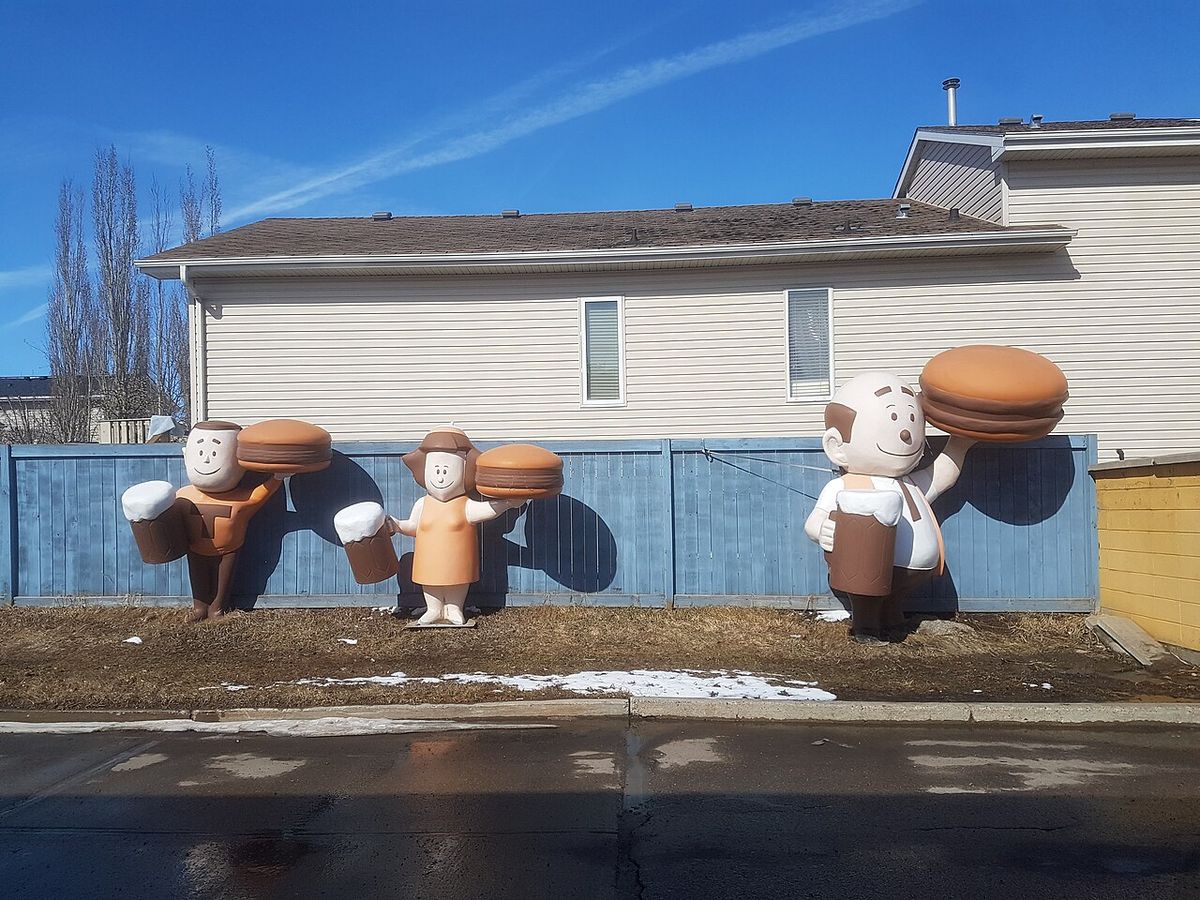
The core of A&W's Canadian menu is the Burger Family, a lineup of hamburgers originally created by the American chain in the 1960s but largely discontinued there. Reintroduced in Canada in the late 1990s, the family includes the Baby, Mama, Teen, and Papa burgers, along with later additions like the Uncle and Grandpa burgers. Each burger has a specific combination of toppings and sauces, such as the signature Teen Sauce on the Teen Burger. This nostalgic product line differentiates A&W from other major chains and appeals to a broad customer base. The menu also features the Chubby Chicken line, which includes breaded chicken burgers and strips, reintroduced as part of the retro themed revival.
In recent years, A&W has aggressively pursued innovation to meet evolving consumer demands. In 2012, it launched the Buddy Burger value menu to compete directly with McDonald's value offerings. A more significant shift occurred in July 2018 when A&W became the first major national chain in Canada to introduce the Beyond Burger, a plant based vegan patty, later expanding to a Beyond Meat breakfast sandwich. The company has also revamped its breakfast menu, offering items all day to remain competitive. Other notable products include the Mozza Burger and the periodically returning Whistle Dog hot dog. The Canadian menu diverges significantly from A&W restaurants in the United States, which do not offer most of the Burger Family items and feature different products like cheese curds.
The Burger Family specifications are precise, with the Baby Burger featuring a 45 gram beef patty on an unseeded bun, while the Papa Burger contains two 85 gram patties. The Teen Burger, a popular item, includes bacon, lettuce, tomato, and cheese. Discontinued members of the family include the Grandma Burger, a prime rib burger with caramelized onions and horseradish sauce, and the Sirloin Burger Twins, a pair of sliders. The Chubby Chicken line offers three burger varieties, the Original, Spicy Habanero, and BLT, all made with breaded white meat chicken breasts. The company's ketchup and mustard are processed by French's at its Ontario facility using Canadian ingredients.
Marketing, Branding, and Public Perception
A&W's marketing history in Canada is marked by several memorable campaigns. The most prominent was the Great Root Bear, an orange clad mascot introduced in 1975 to combat competition, accompanied by a distinctive tuba jingle known as Ba Dum, Ba Dum. The campaign was successful enough that the American chain later adopted the mascot. In the late 1990s, as part of the retro rebranding, the company retired the bear from most English language advertising, though the jingle persists in French language markets. The company's advertising has since shifted focus, notably emphasizing animal welfare and its commitment to serving chicken and beef raised without antibiotics.
The company's labour relations practices came under public scrutiny in 2019 after a presentation by senior executives at a conference was reported by PressProgress. Executives described internal processes for monitoring franchises considered high risk for unionization and a rapid response protocol for potential organizing efforts. The remarks drew criticism from some politicians and advocacy groups. On environmental initiatives, A&W made headlines in June 2018 by becoming the first major North American fast food chain to replace plastic straws with paper alternatives system wide. The company's overall brand positioning continues to balance its heritage as Canada's original burger chain with modern commitments to food quality and social responsibility.
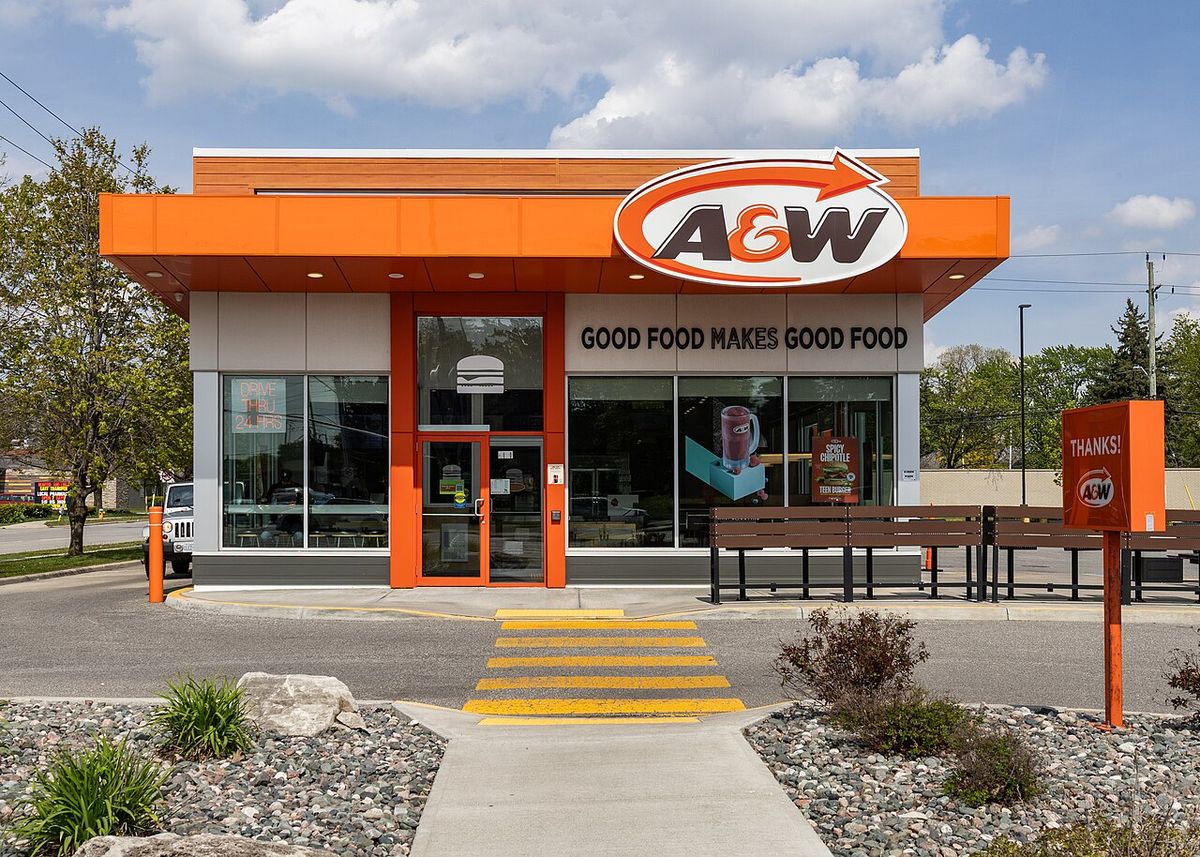
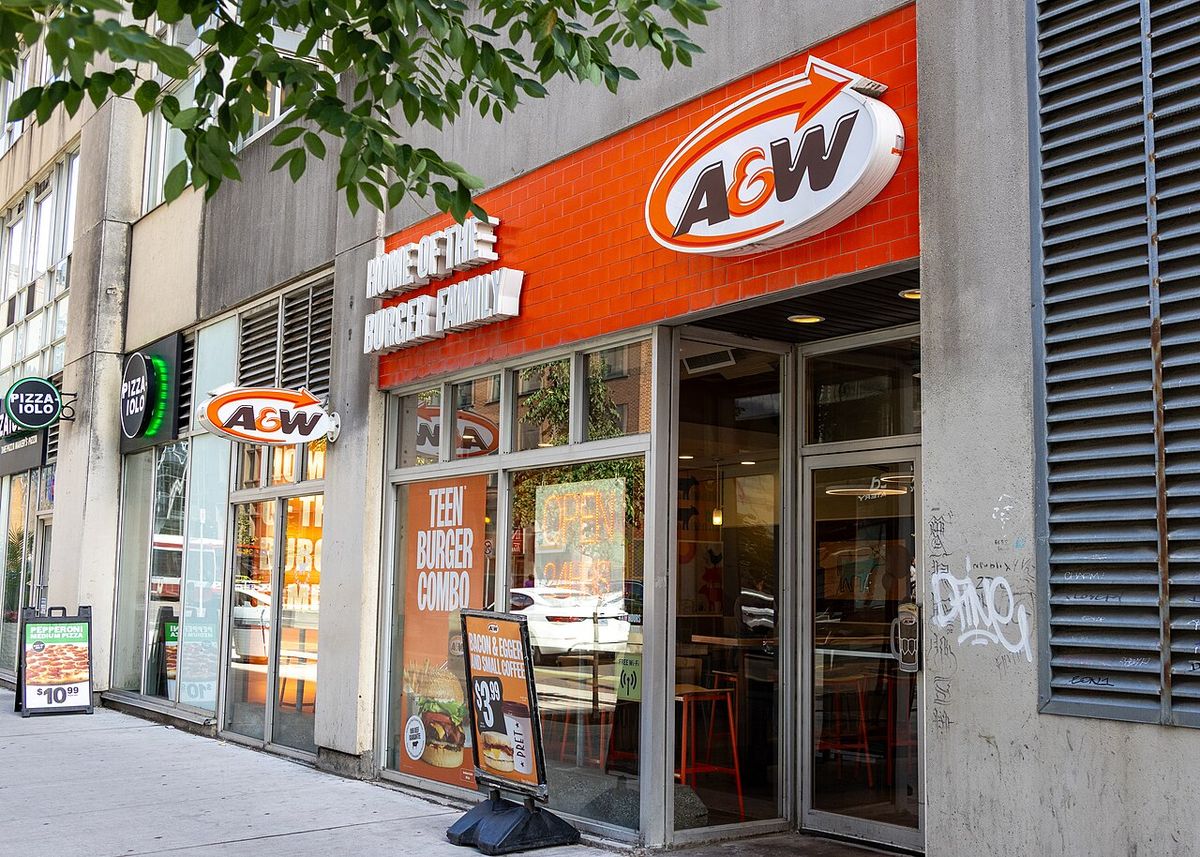
In 2009, A&W introduced two new restaurant design concepts, an ultra modern standalone design and a separate format scaled back for urban downtown locations. Television advertisements for the chain are filmed at locations in British Columbia's Fraser Valley. The company celebrated 50 years in Canada in 2006 and opened its 800th location in downtown Montreal in November 2013. Some Quebec locations were historically co branded with Dunkin' Donuts until that chain closed most of its operations in the province.
Recent Performance and Expansion
A&W has demonstrated consistent growth in its restaurant network and sales metrics. For the third quarter of 2026, the company reported same store sales growth of 1.8 percent, marking positive growth in six of the previous seven quarters. This performance was notably driven by successful limited time offers like the Smashed Burger, which at its peak contributed to a weekly same store sales increase of 15 percent. System sales reached $497.6 million, up 3.8 percent from the same period the previous year. The company's expansion strategy remains active, with 21 new A&W restaurants opened in the first three quarters of 2026 and a pipeline of 26 under construction by quarter's end.
Beyond its core brand, A&W is pursuing diversification through a master franchise agreement for the British sandwich and coffee shop chain Pret a Manger in Canada. As of the third quarter of 2026, four Pret a Manger shops were operating in Canada, including a second location at Vancouver International Airport. The company expects to have three to four franchised Pret shops open by the end of the 2026 fiscal year. This expansion into a complementary segment represents a strategic growth avenue. Financially, the company maintains a commitment to returning capital to shareholders, declaring a quarterly dividend of $0.48 per share in the third quarter of 2026 and repurchasing 61,000 common shares under a normal course issuer bid year to date. The company's fiscal 2026 guidance projected adjusted EBITDA between $103 million and $105 million, system sales growth between 2.5 and 5 percent, and same store sales growth between 0.5 and 3 percent. The net debt to adjusted EBITDA ratio improved to 2.2 times at the end of the third quarter of 2026, down from 2.3 times at the end of 2025. Free cash flow for the quarter was $19.5 million, an increase of $2.5 million, primarily due to timing differences and lower working capital use.
Animal Welfare and Sourcing Commitments
A&W has incorporated animal welfare standards into its brand messaging and supply chain requirements. A central pillar of this commitment is a policy against the routine use of antibiotics. The company states that the chicken and beef served in its restaurants are from animals raised without antibiotics, with antibiotics used only for treating illness, after which those animals are removed from the food supply. For eggs and poultry, A&W sources from hens housed in enriched cage systems and fed a vegetarian diet, a point that has drawn some commentary given chickens' natural omnivorous habits. The company has also expressed an ambition to source 100 percent of its pork from open housing systems by a target date and to have its meat production meet the Global Animal Partnership's level 2 animal welfare certification, though specific timelines for these goals have not been publicly finalized.
The company's advertising campaigns have explicitly highlighted these animal welfare commitments as a point of differentiation in the market. This focus forms part of a broader corporate strategy that includes environmental initiatives like the 2018 switch to paper straws. These policies are integrated into the company's operations and marketing, appealing to a segment of consumers concerned about food sourcing practices. The commitments, however, exist alongside the company's core business of operating a large scale fast food hamburger chain, requiring a balance between ethical sourcing and commercial viability.
Ownership and Trademark Structure
The A&W trademarks in Canada are owned by the A&W Trade Marks Limited Partnership. This partnership licenses the trademarks to A&W Food Services of Canada Inc., the operating company, in exchange for the three percent royalty on gross sales. A&W Food Services of Canada Inc. owns approximately 21 percent of A&W Trade Marks Inc., which is the sole general partner in the trademark owning partnership. The remaining ownership in the partnership is held by the A&W Revenue Royalties Income Fund, whose units are publicly traded. This structure separates the ownership of the brand assets from the day to day franchise operations while linking the fund's returns directly to system sales.
The proposed strategic combination announced in July 2024 aims to simplify this long standing structure by merging the operating company and the income fund into a single new publicly traded entity called A&W Food Services NewCo. The transaction was expected to close in October 2024, pending approval from the Toronto Stock Exchange and regulatory approval under Canada's Competition Act. This move would consolidate the corporate entities that have defined the company's financial model since the income fund's initial public offering in 2002. The initial public offering for the fund in 2002 involved 8.34 million units priced at $10 each, establishing the framework for the current ownership model.
Questions about A&W (Canada)
Is A&W Canada the same company as A&W in the United States?
No, A&W Canada has been a completely separate company since 1972. The Canadian operations were originally a subsidiary of the American chain but were sold to Unilever that year. In 1995, a Canadian management group bought the chain from Unilever. Today, A&W Food Services of Canada Inc. is a publicly traded Canadian company headquartered in North Vancouver, with its own management, menu, and marketing strategies distinct from the American brand.
What are the Burger Family burgers at A&W?
The Burger Family is a lineup of hamburgers originally introduced by the U.S. A&W chain in the early 1960s. The original lineup consists of the Baby, Mama, Teen, and Papa burgers, which are still sold today along with other burgers like the Uncle and Grandpa burgers. These burgers were mostly discontinued in the 1980s in favour of a more standard menu. They were then reintroduced in Canada and expanded upon beginning in the late 1990s as part of the chain's retro approach.
What is the A&W Revenue Royalties Income Fund?
The A&W Revenue Royalties Income Fund is a publicly traded income trust listed on the Toronto Stock Exchange. It owns the A&W trademarks in Canada and licenses them to A&W Food Services of Canada Inc., the operating company, in exchange for a royalty of three percent of the gross sales from every A&W restaurant. This structure provides investors with income derived from the chain's system wide sales. In 2024, the company announced a plan to combine the operating company and the fund into a single new publicly traded entity.
When did A&W start serving the Beyond Burger?
A&W locations in Canada began serving the Beyond Burger in July 2018. This vegan burger from Beyond Meat was a significant menu addition. The chain experienced a shortage of the product in August 2018 but announced that all locations would be restocked by October of that year. In 2019, A&W expanded its plant-based offerings by launching the Beyond Meat Sausage N' Egger breakfast sandwich. The Beyond Burger itself consists of a Beyond Meat patty with mustard, ketchup, mayonnaise, red onion, pickles, lettuce, tomato, and A&W seasoning on a sesame seed bun.
How many A&W restaurants are there in Canada?
As of September 2026, there were 1,112 A&W locations in Canada. This represents growth from the 1,029 franchises reported in 2022, when it was Canada's second-largest fast-food hamburger chain after McDonald's. The company's third quarter 2026 report stated it ended that period with 1,113 restaurants and had 26 more under construction. The province and territory with the most locations is Ontario, where the company continues to focus on expansion. This network growth contributes to the company's system sales, which were $497.6 million in Q3 2026.
Who is the CEO of A&W Canada?
Susan Senecal became the chief executive officer of A&W Food Services of Canada Inc. in February 2018. The company is a publicly traded entity headquartered in North Vancouver. Under her leadership, the company has continued to grow, reporting a net income of $19.5 million for the third quarter of 2026. In October 2026, the company announced its financial results for that quarter along with a new mission and corporate strategy. The company is franchised by A&W Food Services of Canada Inc., which was originally a subsidiary of the US based chain before becoming independently Canadian owned.
Sources: Wikipedia and current public reporting, checked by the Yadude Books desk. Last updated 2026-10-28.