ATI Technologies
ATI Technologies Inc. was a pioneering Canadian semiconductor company headquartered in Markham, Ontario, that specialized in designing graphics processing units (GPUs) and motherboard chipsets. Founded in 1985, the company became a dominant force in the global graphics industry alongside rival Nvidia, known for its Radeon and All-in-Wonder product lines. Its acquisition by Advanced Micro Devices (AMD) in 2006 for $5.6 billion was a critical moment in computing, enabling the development of integrated CPU-GPU processors. For Canadians, ATI represented a major homegrown success story in the competitive high-technology sector, leaving a lasting impact on personal computing, gaming consoles, and mobile devices.
Founding and early technological milestones
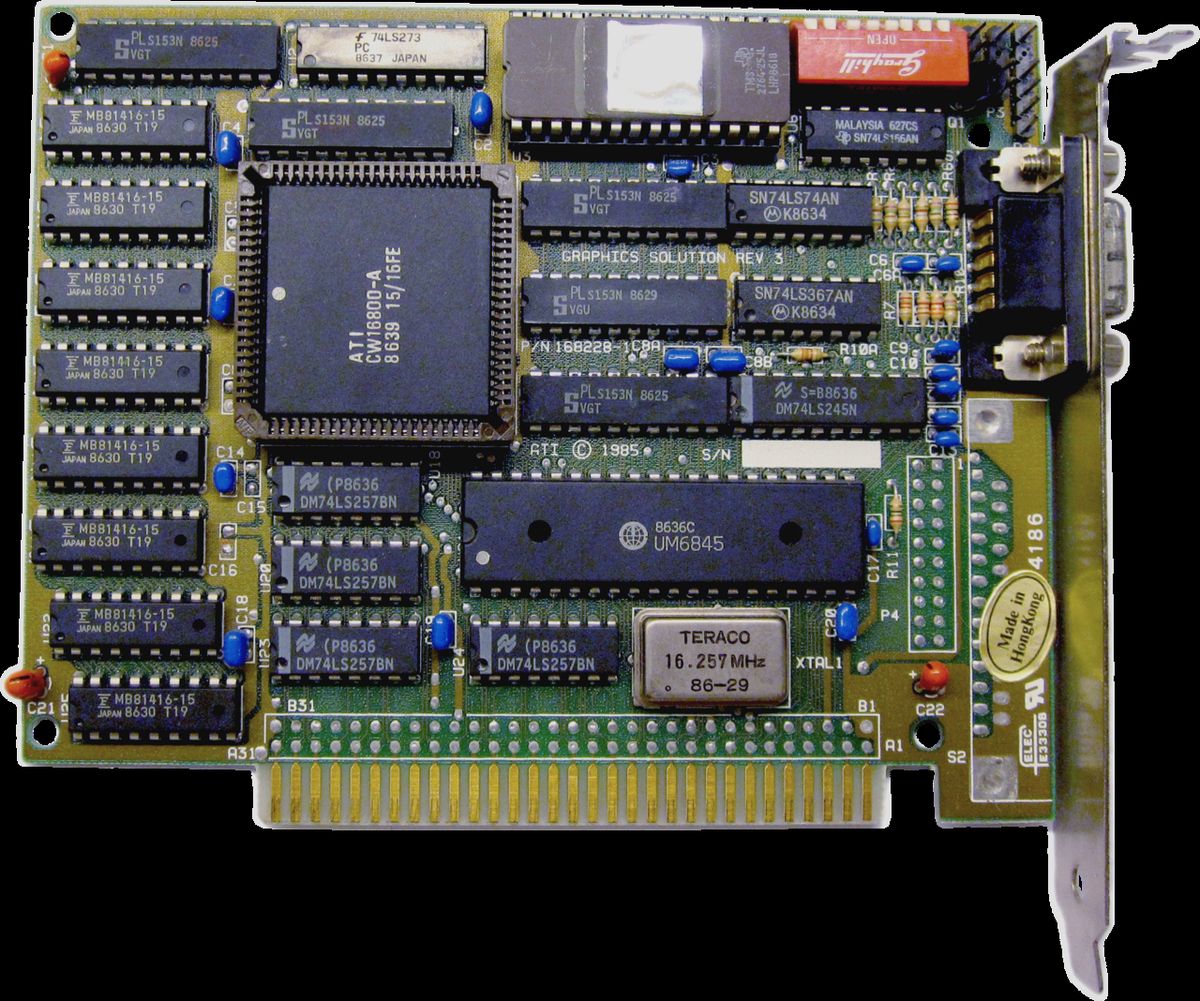
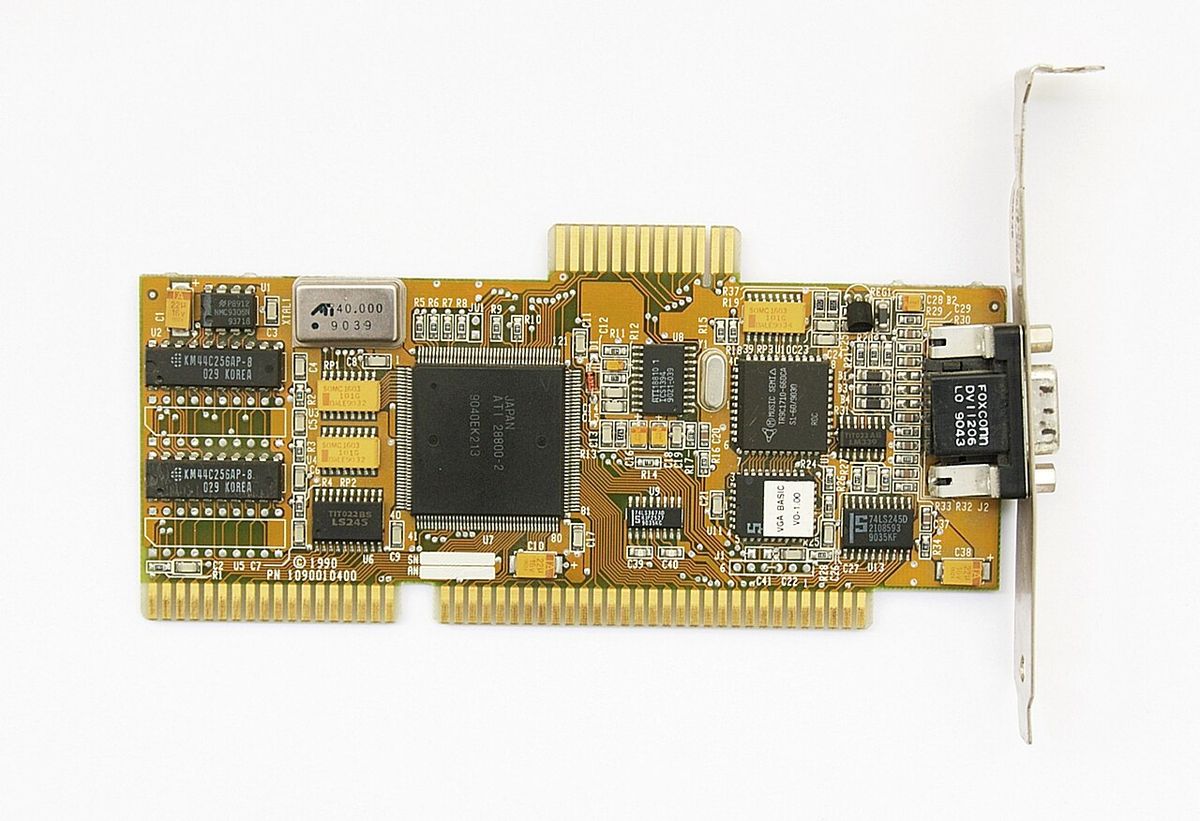
ATI was established in 1985 by Lee Ka Lau, Francis Lau, Benny Lau, and Kwok Yuen Ho under the name Array Technology Incorporated, later changed to ATI Technologies. The company initially operated as an original equipment manufacturer (OEM), producing integrated graphics cards for major PC builders like IBM and Commodore. By 1987, ATI had expanded into the retail market with the introduction of its EGA Wonder and VGA Wonder card lines, establishing itself as an independent graphics hardware supplier. The subsequent Mach32 in 1992 offered improved memory bandwidth and graphical user interface acceleration, solidifying ATI's position in the market. The company's growth was further validated by its initial public offering in 1993, with shares listed on both the NASDAQ and the Toronto Stock Exchange. The 1994 debut of the Mach64 accelerator brought hardware support for YUV-to-RGB colour space conversion and hardware zoom, which were early techniques for hardware-based video acceleration used in products like the Graphics Xpression and Graphics Pro Turbo.
The rise of 3D graphics and multimedia integration
The company's first foray into combined 2D and 3D acceleration came with the 3D Rage chip, which was based on the Mach64 architecture but featured elemental 3D acceleration. By 1999, the Rage 128 offered more advanced DirectX 6.0 acceleration, demonstrating the line's progression. A landmark product, the All-in-Wonder, was introduced in 1996, combining a 3D Rage II graphics chip with a TV tuner, video capture, and TV-out functionality, creating the first chip that enabled display of computer graphics on a television set. In 1996, ATI also entered the mobile computing sector with its Mobility line, designed for the low-power, high-integration demands of laptops, requiring minimized heat and power usage with integrated TMDS outputs for screens.
The company's technological portfolio expanded through strategic acquisitions and partnerships that extended its reach into new markets. Key developments during this period included the 1997 acquisition of Tseng Labs's graphics assets, which brought 40 engineers into the company. The 2000 acquisition of ArtX was particularly significant as it brought in the team that had engineered the Flipper graphics chip for Nintendo's upcoming GameCube console. That same year, Microsoft contracted ATI to design the Xenos graphics core for the Xbox 360. In 2005, ATI acquired Terayon's cable modem silicon intellectual property to strengthen its position in the consumer digital television market. Following the retirement of founder K. Y. Ho in November 2005, Dave Orton assumed the roles of president and CEO, leading the company into its final chapter as an independent entity.
The Radeon era and core product families
The unveiling of the Radeon line in 2000 marked a new chapter for ATI, introducing an all-new GPU design with DirectX 7.0 3D acceleration, video acceleration, and 2D acceleration. This line became ATI's flagship consumer brand and direct competitor to Nvidia's GeForce series. A key strategy was building technology for a specific Radeon generation into products with varying levels of features and performance, allowing ATI to address the entire market range from high-end to budget to mobile versions. The company often produced 'Pro' versions with higher clock speeds, and extreme 'XT', 'XT Platinum Edition (PE)', and 'XTX' variants. The Radeon architecture also became the basis for many subsequent All-in-Wonder boards. For mobile devices, the Mobility Radeon series introduced innovations like modularized RAM chips, DVD (MPEG-2) acceleration, notebook GPU card sockets, and 'PowerPlay' power management technology. In the professional workstation market, ATI launched the FireGL line in 2001 following its acquisition of FireGL Graphics from Diamond Multimedia, creating CAD/CAM video cards based on the Radeon series.
ATI developed several other major product families and technologies that defined its comprehensive market approach. In addition to high end GPUs for PCs and Apple Macs, ATI also designed embedded versions for laptops, called Mobility Radeon, and for PDAs and mobile phones, called Imageon. The company's product portfolio included integrated motherboard chipsets under the Radeon IGP name. This portfolio was built around several key hardware lines, each serving a distinct segment of the market.
- Rage Series (1995 to 2004): ATI's first combined 2D and 3D accelerator chips, evolving from rudimentary 3D to a competitive Direct3D 6 accelerator with MPEG-2 DVD acceleration.
- All-in-Wonder Series (1996): Multimedia graphics cards combining a Radeon GPU with a TV tuner and video capture on a single add-in card.
- CrossFire Technology: ATI's multi-GPU platform allowing two to four video cards to be combined for increased performance, developed as a response to Nvidia's SLI.
- Xpress 200 Chipset (2004): A PCI Express-based chipset for Athlon 64 and Pentium 4 systems, notable as the first integrated graphics chipset to offer DirectX 9.0 support.
- Imageon SoC (2002): A system-on-chip design to bring integrated 2D and 3D graphics to handheld devices, mobile phones, and Tablet PCs.
- FireStream (2006): A stream processor for high-performance computing using the Close to Metal (CTM) hardware interface.
Acquisition by AMD and integration
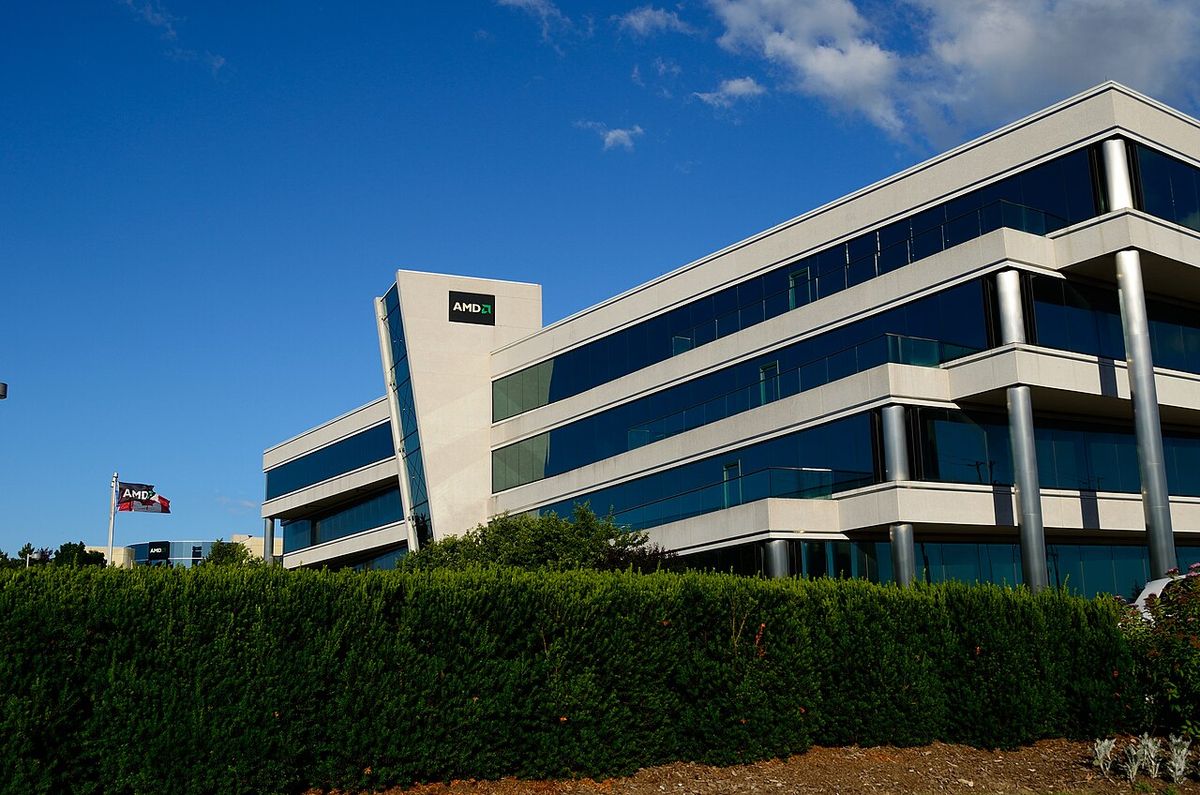
On July 24, 2006, AMD announced an agreement to acquire ATI Technologies in a transaction valued at $5.6 billion. The deal closed on October 25, 2006, financed through a combination of over $2 billion in loans and 56 million shares of AMD stock. ATI's operations were integrated into AMD as the Graphics Product Group (GPG), and CEO Dave Orton became AMD's executive vice president of Visual and Media Businesses, a role he held until his resignation in 2007. The acquisition was a strategic move for AMD, central to its plan to develop the Fusion series of accelerated processing units (APUs), which combined general-purpose and graphics processing on a single chip. The top-level management was reorganized with the senior vice president and general manager of the Graphics Product Group and the senior vice president and general manager of the Consumer Electronics Group both reporting directly to the CEO of AMD. While ATI initially operated as an AMD subsidiary, the ATI brand name was gradually phased out, culminating in the August 30, 2010 announcement that AMD would retire the ATI brand for its graphics chipsets in favour of the AMD name, rebranding the Radeon products accordingly.
Console graphics and embedded systems legacy
ATI's technology played a crucial role in the video game console industry of the 2000s, delivering custom graphics solutions for three major platforms. Through its acquisition of ArtX, it gained the Flipper graphics chip, which powered Nintendo's GameCube with features like four rendering pipelines, hardware T&L, limited pixel shader support, and 3 MB of embedded 1T-SRAM for ultra-fast texture and framebuffer storage. The Flipper team, which included members from the Nintendo 64 Reality Coprocessor team at SGI, later developed the Hollywood GPU for Nintendo's subsequent console, the Wii. In a separate partnership, ATI designed the custom Xenos graphics processor (codenamed 'C1') for Microsoft's Xbox 360, based on its R400 architecture and featuring a unified shader architecture, eDRAM, and hardware surface tessellation. In the embedded and mobile market, the Imageon system-on-chip (SoC) line, introduced in 2002, brought integrated 2D and 3D graphics to handhelds, mobile phones, and Tablet PCs. The Imageon 2298 supported DVD-quality recording and playback, TV output, and up to a 12-megapixel camera, while the 2300 series added OpenGL ES 1.1+ support.
ATI's embedded business achieved remarkable scale, with the company announcing in May 2006 that it had sold over 100 million 'cell phone media co-processors', a figure it said was significantly higher than rival Nvidia's. By February 2007, total shipments of Imageon products since 2003 had reached 200 million units. The company also supplied 3D and 2D graphics components to other vendors like Qualcomm for its MSM7000 series SoCs and Freescale for its i.MX processors. Following the AMD acquisition, these assets were divested. The Imageon technology was sold to Qualcomm in 2009 and rebranded as Adreno, while the digital TV Xilleon technology was sold to Broadcom. The FireStream line for high-performance computing, which used the Close to Metal interface, was succeeded by AMD FireStream in 2006 and later rebranded as AMD Stream Processor.
Corporate history and market position
ATI's journey from a private startup to a publicly traded industry leader is reflected in its financial milestones and competitive positioning. The company's 1993 IPO on the NASDAQ and TSX provided capital for expansion during a critical growth phase in the PC industry. The company's product strategy of offering a full range of solutions, from high-end add-in cards to integrated chipsets and mobile parts, allowed it to capture significant market share across multiple segments. The $5.6 billion acquisition by AMD in 2006 was one of the largest transactions in the semiconductor industry at that time, highlighting ATI's substantial value and strategic importance for AMD's future processor designs. The integration directly facilitated AMD's development of its Fusion APU series, which became a popular option in computers, especially lower-cost models, in the years that followed.
The following table outlines key financial, corporate, and product events in ATI's history, from its founding through its integration into AMD. ATI was founded in 1985 and went public in 1993. The company was acquired by AMD in 2006 for 5.6 billion dollars. After the acquisition, ATI's operations became part of the AMD Graphics Product Group. AMD retired the ATI brand name in 2010.
| Year | Event | Detail |
|---|---|---|
| 1985 | Company Founded | Founded as Array Technology Incorporated by Lee Ka Lau, Francis Lau, Benny Lau, and Kwok Yuen Ho. |
| 1987 | Retail Product Launch | Introduced EGA Wonder and VGA Wonder graphics card lines. |
| 1991 | Mach8 Release | Launched the Mach8, ATI's first graphics processor to work independently of the CPU. |
| 1993 | Public Listing | Listed on NASDAQ and Toronto Stock Exchange. |
| 1996 | All-in-Wonder Debut | Launched the first All-in-Wonder card, combining graphics, TV tuner, and video capture. |
| 1997 | Acquisition | Acquired graphics assets from Tseng Labs, gaining 40 engineers. |
| 2000 | Radeon Launch & ArtX Acquisition | Unveiled the Radeon graphics line and acquired ArtX, designer of the GameCube GPU. |
| 2005 | Xbox 360 Contract & Leadership Change | Contracted to design Xenos GPU for Xbox 360. K. Y. Ho retired, Dave Orton became CEO. |
| 2006 | Acquisition by AMD | Acquired by AMD for $5.6 billion. Deal closed October 25. |
| 2010 | Brand Retirement | AMD announced retirement of the ATI brand name on August 30. |
After integration into AMD, the technologies developed by ATI, particularly its graphics cores and APU designs, became fundamental components of AMD's product roadmap. The company's fictional marketing character Ruby, a computer animated mercenary created to promote products at shows like CeBIT and CES, also became a memorable part of its brand identity during its independent years. ATI's corporate philosophy regarding its proprietary drivers was clear. Before the merger with AMD, ATI stated it had no plans to release its graphics drivers as free software. The company stated that proprietary, patented optimizations were part of the value it provided to its customers.
Key innovations and industry contributions
Throughout its history, ATI was responsible for numerous technical innovations that pushed the graphics industry forward. The company's All in Wonder product line, introduced in 1996, was the first combination of an integrated graphics chip with a TV tuner card. The Mobility product line for laptops introduced innovations like PowerPlay power management. The Radeon line unveiled in 2000 featured an all new design with DirectX 7.0 acceleration. Many of these innovations were not just incremental improvements but foundational developments that shaped how graphics hardware was used.
- First Independent Graphics Processor (1991): The Mach8 was ATI's first chip capable of processing graphics without relying on the computer's central processing unit.
- First Combined Graphics and TV Tuner Card (1996): The All-in-Wonder product line was the first to integrate a graphics chip with a TV tuner card and video capture.
- First DirectX 9 Integrated Chipset (2004): The Xpress 200 chipset was the first integrated graphics chipset to offer DirectX 9.0 support.
- Unified Shader Architecture in Consoles (2005): The Xenos chip for the Xbox 360 introduced a 'True Unified Shader Architecture' that dynamically balanced pixel and vertex processing.
- High-Volume Mobile Graphics (2002 to 2007): The Imageon line achieved sales of over 100 million units by 2006 and 200 million units by 2007 for mobile phones and handhelds.
- Embedded Memory for Consoles (2001): The Flipper chip for the GameCube incorporated 3 MB of embedded 1T-SRAM, providing extremely fast, low-latency memory bandwidth of 10.4 GB/second.
These contributions ensured ATI's technology was integral to personal computers, living room consoles, and pocket sized devices, cementing its legacy as a versatile and influential designer. The company designed the Flipper graphics chip for the Nintendo GameCube and the Xenos chip for the Microsoft Xbox 360. Its Imageon system on chip design brought graphics to handheld devices and mobile phones. This wide reach demonstrated the company's comprehensive approach to the semiconductor market.
Questions about ATI Technologies
Is ATI still a company?
ATI Technologies ceased to exist as an independent company after its acquisition by AMD in 2006. Its operations were fully integrated into AMD's Graphics Product Group. AMD officially retired the ATI brand name on August 30, 2010, renaming all graphics products, including the Radeon line, under the AMD brand. The technology and intellectual property live on within AMD's graphics and processor divisions.
What happened to ATI's mobile graphics technology?
ATI's mobile graphics technology for handheld devices, known as Imageon, was sold to Qualcomm in 2009 after AMD's acquisition. Qualcomm rebranded the technology as Adreno, which is an anagram of Radeon. Adreno GPUs have since become a standard component in Qualcomm's Snapdragon system-on-chip designs, powering graphics in a vast number of smartphones and tablets globally. ATI had announced shipping 200 million Imageon products between 2003 and 2007.
What does ATI stand for?
ATI originally stood for Array Technology Incorporated. The company was founded under this name in 1985 by Lee Ka Lau, Francis Lau, Benny Lau, and Kwok Yuen Ho. It was later renamed Array Technologies Incorporated and finally simplified to ATI Technologies. This Canadian semiconductor technology corporation was based in Markham, Ontario, and specialized in GPU and chipset development. The company went public in 1993 and was ultimately acquired by AMD in 2006.
What was ATI's most famous product?
ATI's most famous product line is the Radeon series of graphics processing units. This flagship line was unveiled in 2000 as ATI's consumer 3D accelerator add-in cards and served as the direct competitor to Nvidia's GeForce. The initial Radeon GPU offered an all-new design with DirectX 7.0 3D acceleration, video acceleration, and 2D acceleration. The Radeon series was also the basis for many ATI All-in-Wonder multimedia boards. After AMD acquired ATI, it eventually retired the ATI brand name in 2010 but continued the Radeon product line under the AMD branding.
What gaming consoles used ATI graphics?
ATI graphics technology was used in several major gaming consoles. In 2000, ATI acquired ArtX, which had engineered the Flipper graphics chip for the Nintendo GameCube. ATI then created a modified version of this chip, codenamed Hollywood, for the successor console, the Wii. Microsoft contracted ATI to design the custom graphics core, codenamed Xenos, for the Xbox 360. The Xenos chip was based on the R400 architecture family and featured innovations like a unified shader architecture.
Why did AMD buy ATI?
AMD acquired ATI in 2006 for a deal valued at 5.6 billion dollars. This acquisition was strategically important for AMD's development of its Fusion series of computer processors. The Fusion architecture aimed to integrate general processing abilities with graphics processing functions within a single chip. This integration became a popular option in computers in the following years, especially in lower cost models. The acquisition allowed AMD to combine its CPU expertise with ATI's leading GPU technology to create these new combined processor products.
Sources and further reading
- ATI Technologies (Wikipedia)
- ATI Technologies Inc. (encyclopedia.com)
Checked by the Yadude Books desk. Last updated 2026-11-02.