Bed Bath & Beyond (1987 to 2023)
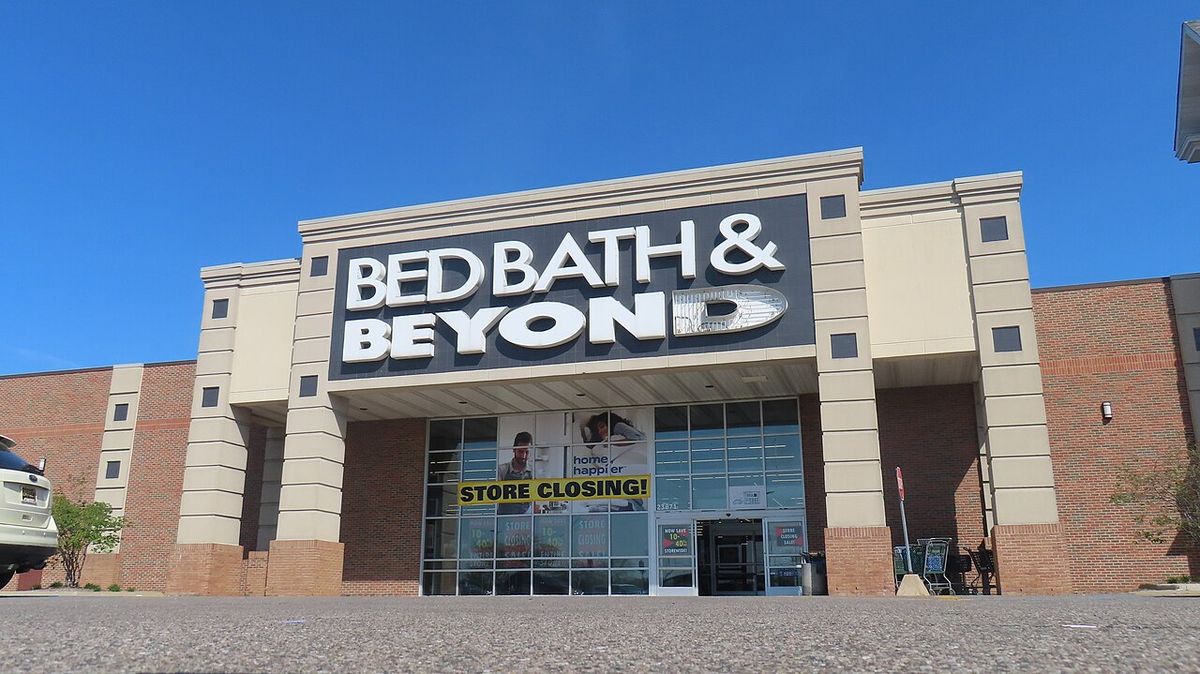
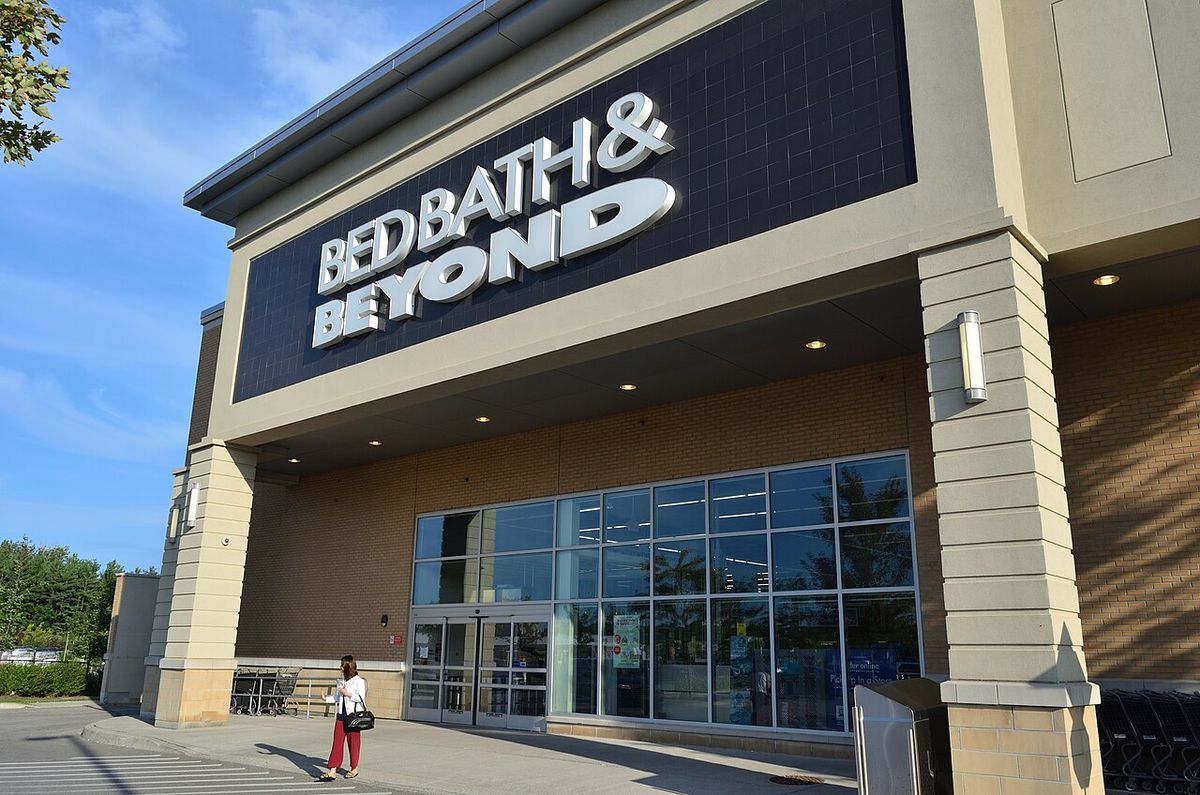
Bed Bath & Beyond was an American big-box retail chain that became a major destination for housewares, furniture, and home decor in Canada. Founded in 1971 as Bed 'n Bath and renamed in 1987, the company expanded into Canada in 2007, eventually operating over 50 stores across nine provinces before its dramatic collapse. After years of declining sales and mounting debt, the chain filed for Chapter 11 bankruptcy in April 2023 and liquidated all its physical stores, with the final locations closing on July 30, 2023. The brand name was subsequently acquired by online retailer Overstock.com, which now operates as Bed Bath & Beyond online, while the physical retail footprint in Canada was briefly revived under different names before a planned relaunch by Sleep Country Canada in 2026.
Founding and early expansion
Bed Bath & Beyond originated from the partnership of Warren Eisenberg and Leonard Feinstein, both former managers at the discount chain Arlan's. Believing the retail market was shifting toward specialty stores, they left to found their own company, opening the first Bed 'n Bath store in Springfield, New Jersey, in 1971. The chain grew steadily in the New York metropolitan area and California, operating 18 stores by 1985. That same year, facing competition from rivals like Linens 'n Things, the company opened its first superstore format. To reflect this larger store concept, the company officially changed its name to Bed Bath & Beyond in 1987, marking the beginning of its era as a big-box retailer.
To improve operational efficiency and better compete, Bed Bath & Beyond adopted integrated computer-based inventory management systems in 1993. The chain celebrated the opening of its 100th store in Irvine, California, in October 1996, and reached its 200th store in Palm Beach Gardens, Florida, less than three years later in August 1999. This period of aggressive expansion was capped by a significant financial milestone, as the company achieved $1 billion in annual sales for the first time in 1999. The foundational strategy combined expansive physical retail space with a deep, discount-driven merchandise selection that appealed to a broad customer base.
Peak growth and acquisition strategy
In 2002, the company acquired the health and beauty chain Harmon Discount, later rebranded as Harmon Face Values. A major expansion came in 2007 with the acquisition of Buy Buy Baby, a baby supply retailer founded by co-founder Leonard Feinstein's sons, which also marked the year of the company's international debut with its first Canadian store in Richmond Hill, Ontario. Further acquisitions included Cost Plus World Market, purchased for $495 million in 2012, which added a global home decor and gourmet food segment. By 2011, the total store count across all banners had reached 1,142 locations.
The acquisition spree continued later in the decade with a focus on digital and luxury home segments. In 2016, Bed Bath & Beyond acquired the luxury furniture e-commerce retailer One Kings Lane, followed in 2017 by the purchase of Decorist, an online interior design platform. At its peak around 2019, the corporation operated a vast retail empire including approximately 1,530 Bed Bath & Beyond stores across the United States, Canada, Puerto Rico, and Washington D.C., alongside roughly 280 Cost Plus World Markets, 100 Buy Buy Baby stores, 80 Christmas Tree Shops, and over 50 Harmon stores. This period represented the zenith of the company's physical footprint and market influence.
Operational challenges and executive turmoil
In March 2019, three investment firms announced their intent to remove CEO Steven Temares and restructure the board, citing poor business practices and perceived nepotism in past acquisitions like Buy Buy Baby and Chef Central. This pressure led to the resignation of five independent directors in April 2019 and a board reduction from 12 to 10 members. Temares stepped down as CEO in May 2019, replaced on an interim basis by board member Mary Winston. In November 2019, Mark Tritton, formerly of Target, was appointed as the new permanent CEO with a mandate to revitalize the struggling chain. Under new leadership, the company attempted strategic shifts to combat declining profitability, including a reduction in its famous promotional coupon mailers and the development of new private-label brands.
However, these efforts were quickly overtaken by larger crises. The COVID-19 pandemic accelerated financial strain, leading to an announcement in July 2020 of plans to close over 200 stores, about 21 percent of its fleet, over two years. Executive turmoil returned in July 2022 when Tritton was replaced by Sue Gove, first as interim and then as permanent CEO that October. That same August, the company announced layoffs affecting 20 percent of its corporate staff and plans to close 150 more stores. The situation was further traumatized by the death of Chief Financial Officer Gustavo Arnal, who died by suicide in New York City on September 2, 2022. Arnal was a target of a class action lawsuit alleging the company's stock had been part of a pump-and-dump scheme.
Divestitures and financial collapse
To raise capital and streamline operations, Bed Bath & Beyond sold many of its subsidiaries throughout 2020 and 2021. The company sold the luxury e-retailer One Kings Lane in April 2020 and the 80-store Christmas Tree Shops chain in November 2020. In February 2021, it finalized the sale of Cost Plus World Market. Despite these asset sales, the company's financial position continued to deteriorate due to high debt, much of it accrued from stock buyback programs dating back to 2004. By early 2023, the company openly warned investors it might not survive, and its stock was delisted from the Nasdaq in May 2023 after filing for bankruptcy.
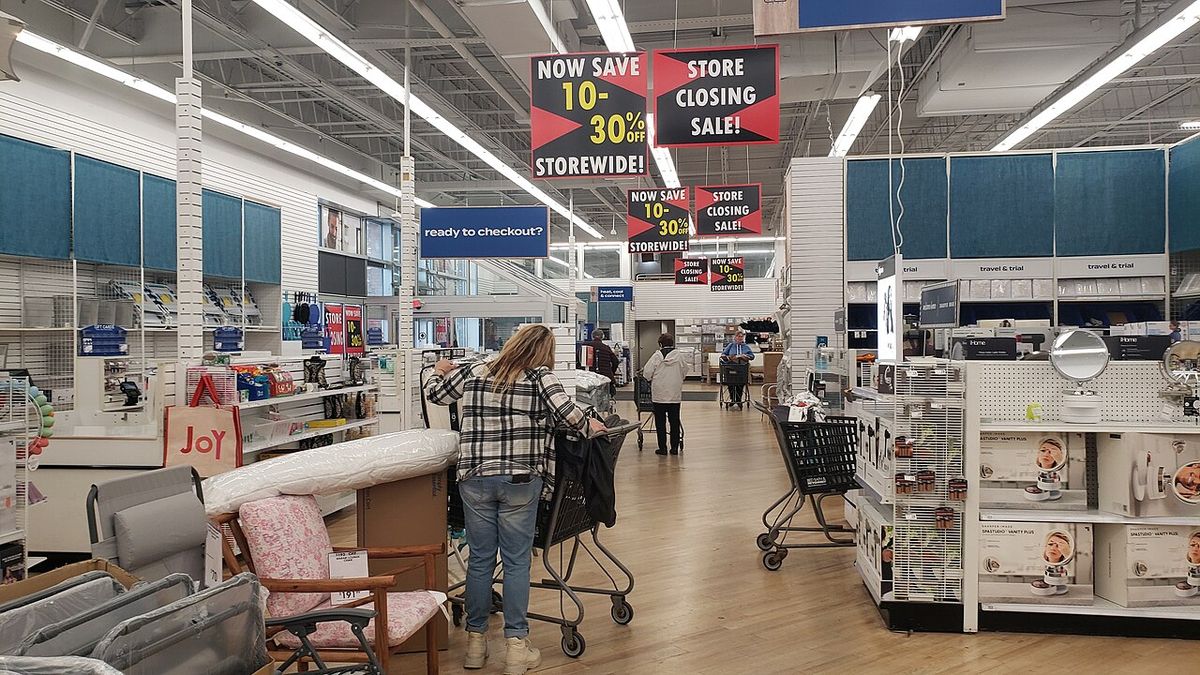
The final chapter unfolded rapidly in 2023 with successive waves of store closures and the end of Canadian operations. Key closure announcements included: January 2023: Closure of 62 stores announced. February 10, 2023: Announcement to close all 54 Bed Bath & Beyond and 11 Buy Buy Baby stores in Canada, citing an inability to independently restructure the Canadian division. February 10, 2023: An additional 149 store closures in the United States, eliminating the last locations in states like West Virginia and Wyoming. After failing to raise sufficient capital, Bed Bath & Beyond, along with Buy Buy Baby and 73 affiliated entities, filed for Chapter 11 bankruptcy protection on April 23, 2023, in New Jersey.
Post-bankruptcy brand and asset dispersal
The intellectual property and brand name of Bed Bath & Beyond were acquired in a June 2023 bankruptcy auction by online retailer Overstock.com for $21.5 million. Overstock.com subsequently rebranded its entire website and operations under the Bed Bath & Beyond name on August 1, 2023, just two days after the last physical stores closed. The defunct corporate entity, Bed Bath & Beyond Inc., changed its name to 20230930-DK-Butterfly-1, Inc., and cancelled its stock in September 2023. The Buy Buy Baby brand was sold separately in a July 2023 auction to New Jersey-based Dream on Me for $15.5 million, though its planned brick-and-mortar revival was short-lived, with all physical stores closed by the end of 2024 to focus on online operations.
In Canada, the physical retail spaces left vacant by the liquidation saw several revival attempts. Doug Putman, owner of Toys R Us Canada, acquired 21 former locations with plans to reopen them as a new chain called Rooms + Spaces under former Bed Bath & Beyond Canada general manager Greg Dyer. He also opened the first two stand-alone Babies R Us stores in Canada within former Buy Buy Baby spaces in Edmonton. The first Rooms + Spaces and Babies R Us locations opened in July 2023. However, this revival was brief. By February 2024, only two Rooms + Spaces locations remained open, and as of January 2025, all Rooms + Spaces stores and its website were permanently closed. Other Canadian leases were acquired by retailers like Mark's and Pro Hockey Life. In a new development, Sleep Country Canada purchased the Canadian and United Kingdom rights to the Bed Bath & Beyond name and logos in the summer of 2025, with plans to relaunch the retailer in those countries with physical stores and online operations in 2026.
Analysis of business failure
Industry analysts have cited multiple interconnected factors that led to the collapse of Bed Bath & Beyond. A critical strategic error was the company's late and ineffective entry into e-commerce, leaving it vulnerable to competitors who had built strong online platforms. The company also faced intense competition from large-scale rivals like Walmart, Target, and TJX Companies' HomeGoods, which offered similar products often at lower price points. Internally, decisions to reduce merchandise selection and quality alienated core customers, while supply chain issues further hampered inventory availability. The company's long-standing reliance on pervasive coupon promotions ultimately trained customers to rarely buy at full price, eroding profit margins.
The most significant factor, however, was the massive debt burden accrued from years of aggressive stock buyback programs. These buybacks, a practice in place since 2004, were a primary source of the company's eventual $5.2 billion in debt. This financial strain crippled the company's ability to pay vendors on time, leading many suppliers to halt shipments, which in turn created empty shelves and a poor in-store experience. The debt load left the company with little liquidity to invest in necessary store remodels, technology upgrades, or marketing initiatives, creating a downward spiral from which it could not recover even after asset sales and leadership changes.
Former subsidiaries and divisions
Over its history, Bed Bath & Beyond owned and later divested several retail chains and brands. The company acquired Buy Buy Baby in 2007 and Cost Plus World Market in 2012. It also acquired Harmon Face Values in 2002 and Christmas Tree Shops in 2003. The table below lists these and other key subsidiaries, their periods of ownership, and their eventual fates.
| Subsidiary | Acquired | Divested/Closed | Notes |
|---|---|---|---|
| Bed Bath & Beyond Canada L.P. | 2007 (founded) | April 2023 | Operated 53 stores. Liquidated in bankruptcy. |
| Buy Buy Baby | March 2007 | July 2023 (closed) | Founded by Feinstein's sons. Sold to Dream on Me in 2023. |
| Harmon Face Values | March 2002 | February 2023 | Originally Harmon Discount. All 52 stores closed. |
| Cost Plus World Market | May 2012 | February 2021 (sold) | Acquired for $495 million. Sold to Front Burner LP. |
| Christmas Tree Shops | 2003 | November 2020 (sold) | 80-store chain. Sold to Handil Holdings. Later closed in 2023. |
| One Kings Lane | June 2016 | April 2020 (sold) | Luxury e-commerce retailer. Sold to CSC Generation. |
| Decorist | 2017 | September 2022 (closed) | Online interior design platform. |
| Bed Bath & Beyond México | Joint venture | Still operating | Independent joint venture. Unaffected by U.S./Canada closures. |
The Mexican division, operated as a joint venture with Home & More, S.A. de C.V., remains an independent entity continuing to use the Bed Bath & Beyond name. Other smaller acquisitions included the content platform Of a Kind, which was acquired in 2015 and closed in 2019. The institutional linen supplier Linen Holdings was acquired in 2012 and sold in 2020. The online interior design platform Decorist was acquired in 2017 and closed in 2022. These were also part of the company's broader, ultimately unsustainable, expansion strategy.
Questions about Bed Bath & Beyond (1987 to 2023)
When did Bed Bath & Beyond open its first store in Canada?
Bed Bath & Beyond opened its first Canadian store in 2007 in Richmond Hill, Ontario. This marked the beginning of the company's international expansion, which coincided with its acquisition of the Buy Buy Baby chain that same year. At its peak, the Canadian division operated 54 Bed Bath & Beyond stores across nine provinces, alongside 11 Buy Buy Baby locations. All these stores were closed in April 2023 as part of the parent company's bankruptcy liquidation.
Why did Bed Bath & Beyond go out of business?
Bed Bath & Beyond's failure resulted from a combination of factors, with overwhelming debt from years of stock buybacks being the primary cause. This $5.2 billion debt load led to an inability to pay vendors, causing supply chain breakdowns. The company was also slow to adapt to e-commerce, faced fierce competition from retailers like Walmart and Target, and made strategic missteps like reducing merchandise quality. Its heavy reliance on discount coupons eroded profitability, and a series of leadership changes could not reverse the downward spiral, culminating in a Chapter 11 bankruptcy filing in April 2023.
What happened to Bed Bath & Beyond's Canadian stores after they closed?
Following the liquidation in April 2023, the leases for many former Canadian stores were acquired by other retailers. Doug Putman, owner of Toys R Us Canada, acquired 21 locations with plans to revive the chain as Rooms + Spaces, while also opening stand-alone Babies R Us stores in former Buy Buy Baby spaces in Edmonton. However, the Rooms + Spaces venture was short-lived, with all locations permanently closed by January 2025. Other leases were taken over by retailers like Mark's and Pro Hockey Life. Separately, Sleep Country Canada purchased the Canadian rights to the Bed Bath & Beyond name in 2025, planning a relaunch in 2026.
Who owns the Bed Bath & Beyond name now?
The Bed Bath & Beyond brand name and associated intellectual property were acquired by online retailer Overstock.com in a June 2023 bankruptcy auction for $21.5 million. Overstock.com subsequently rebranded its entire website and business under the Bed Bath & Beyond name on August 1, 2023. The Buy Buy Baby brand was sold separately to Dream on Me. In a distinct development, Sleep Country Canada purchased the rights to use the Bed Bath & Beyond name and logos in Canada and the United Kingdom in 2025, with plans for a new retail launch in 2026.
Are there any Bed Bath & Beyond stores still open anywhere?
As of early 2026, no brick-and-mortar stores operate under the original Bed Bath & Beyond corporate entity, with the last U.S. stores closing on July 30, 2023. The brand continues as an online-only retailer operated by Overstock.com. The independent Mexican joint venture, Bed Bath & Beyond México, continues to operate physical stores unaffected by the North American bankruptcy. Sleep Country Canada has announced plans to reopen physical Bed Bath & Beyond stores in Canada starting in 2026 under a new ownership structure, marking a potential return of the brand to physical retail in the Canadian market.
Can I still use Bed Bath & Beyond coupons?
Bed Bath & Beyond officially stopped accepting its popular coupons on April 26, 2023, as part of its Chapter 11 bankruptcy proceedings. This occurred when the company commenced liquidation sales at all its remaining stores. However, following this announcement, several other retailers, including The Container Store, Big Lots, Boscov's, and Kirkland's, publicly stated they would honour unused Bed Bath & Beyond coupons for a limited time. The original retail chain completed its liquidation, with the last stores closing on July 30, 2023. The Bed Bath & Beyond name was later acquired by Overstock.com, which now operates it as an online brand with its own separate promotional system and does not accept the old physical coupons.
Sources and further reading
- Bed Bath & Beyond (1987 to 2023) (Wikipedia)
- The Rise and Fall of Bed Bath & Beyond, Which Has Filed ... (businessinsider.com)
- Bed Bath & Beyond Canada relaunches online, hopes to ... (ca.finance.yahoo.com)
- What happened to bed bath and beyond? (hotbot.com)
- Bed Bath & Beyond Canada relaunches online under new ... (theglobeandmail.com)
Checked by the Yadude Books desk. Last updated 2026-11-03.