Best Buy
Best Buy Co., Inc. is an American multinational consumer electronics retailer, and the largest specialty retailer in the United States within its industry. Founded in 1966 as Sound of Music, the company was rebranded to Best Buy in 1983 and has grown into a major presence in Canada through its Best Buy Canada division and the acquisition of the Future Shop chain. The retailer is known for its extensive selection of electronics, appliances, and related services, including the Geek Squad for technical support. For Canadian consumers, Best Buy represents a primary destination for technology purchases, operating a network of stores across the country and expanding its reach through partnerships like the 2024 licensing agreement with BCE to rebrand select The Source locations as Best Buy Express.
Origins and Early Growth
Best Buy originated as Sound of Music, an audio specialty store founded by Richard M. Schulze and James Wheeler in St. Paul, Minnesota, on August 22, 1966. Schulze financed the venture with personal savings and a second mortgage on his home. The company achieved $1 million in revenue in its first year and expanded to three stores by 1969, with Schulze buying out his partner. A significant event occurred in 1981 when a tornado damaged the profitable Roseville location, leading Schulze to hold a Tornado Sale in the parking lot that generated more revenue in four days than a typical month. This success directly inspired the company's new name and high-volume, low-price model. In 1983, with seven stores and $10 million in annual sales, Sound of Music was officially renamed Best Buy Company, Inc. and opened its first superstore in Burnsville, Minnesota, which outperformed all other stores combined in its first year.
A key strategic shift came in 1988 with the introduction of Concept II stores, which featured brighter lighting, merchandise displayed on the sales floor instead of in stockrooms, and the elimination of commissioned salespeople. This created a lower-pressure shopping environment but initially led suppliers like Maytag, Whirlpool, and Sony to withdraw their products, though they returned as sales grew. By 1992, Best Buy reached $1 billion in annual revenue, coinciding with the bankruptcy of its Midwest rival, Highland Superstores. Subsequent store concepts, Concept III in 1994 and Concept IV in 1998, introduced larger formats, interactive kiosks, and dedicated demonstration areas for home theatre and software, supporting continued expansion into new markets like Los Angeles and Washington, D.C.
Expansion and International Ventures
The early 2000s marked a period of aggressive expansion and diversification for Best Buy. In 2000, the company acquired Magnolia Hi-Fi, a high-end audio-video retailer, and formed Redline Entertainment, a music label and video distributor. A major acquisition came in 2001 with the purchase of Musicland Stores Corporation, which owned Sam Goody and Media Play, for $425 million plus assumed debt. More significantly for the Canadian market, Best Buy acquired the British Columbia-based Future Shop Ltd. chain in 2001 for approximately US$377 million, marking its entry into international retail. Future Shop operated as a separate subsidiary. The first Canadian store under the Best Buy brand opened in Mississauga, Ontario, in September 2002. That same year, Brad Anderson succeeded Richard Schulze as CEO, and Best Buy acquired the computer repair service Geek Squad, which was then rolled out to all US stores by October 2004.
International growth continued with ventures into China and Europe. Best Buy acquired a majority stake in Chinese appliance retailer Jiangsu Five Star Appliance in 2006 and opened its first Best Buy-branded store in Shanghai in 2007. However, by February 2011, it closed all branded stores in China, merging operations with the wholly owned Five Star subsidiary. In Europe, a 2008 deal gave Best Buy a 50% stake in The Carphone Warehouse's retail division, leading to the launch of Best Buy Mobile stores. The company opened its first UK store in 2010, but by April 2013, it exited the European consumer electronics market entirely, selling its stake back to The Carphone Warehouse for around $775 million. Other international operations included a store in Mexico, opened in 2008, which was closed in December 2020 due to the COVID-19 pandemic.
Business Model and Operations
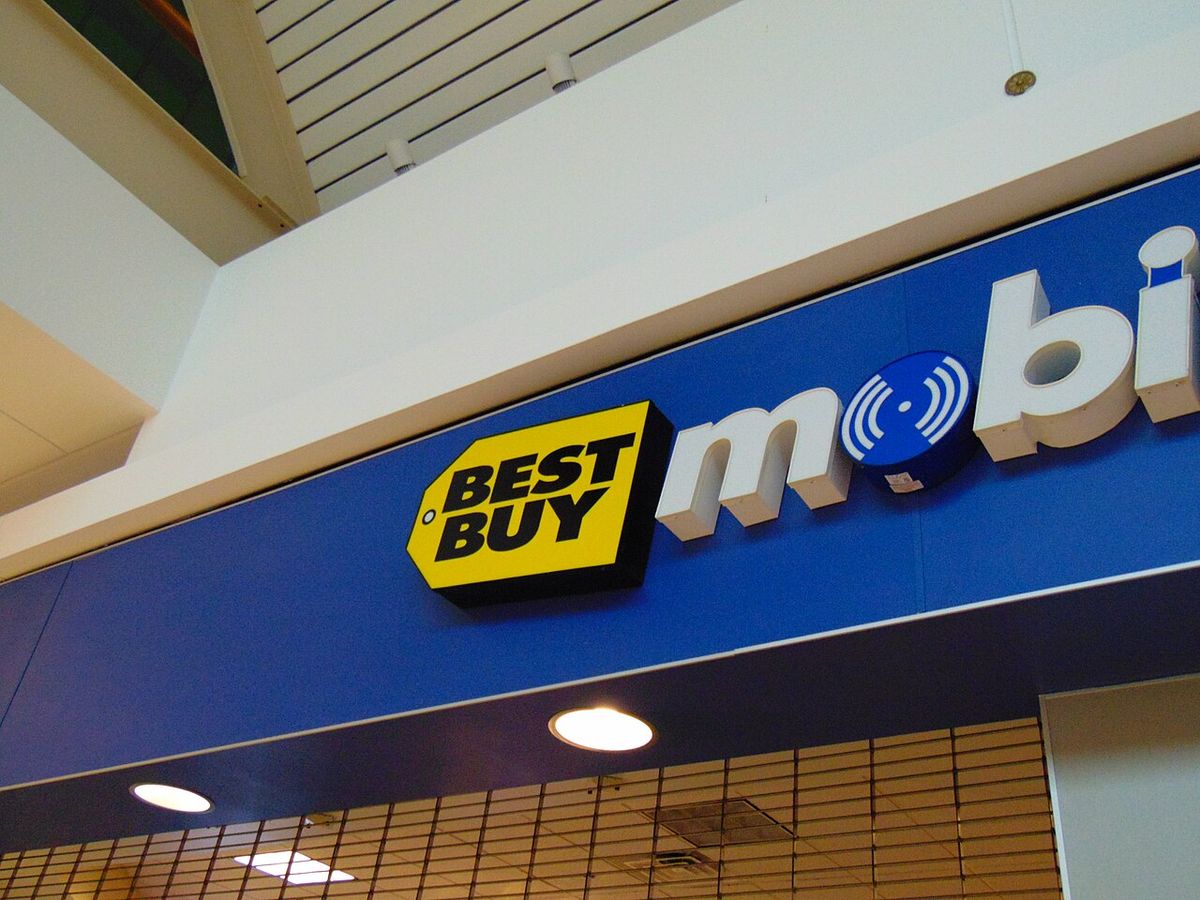
Best Buy operates as a noncommissioned, big-box retailer specializing in consumer electronics, home appliances, entertainment software, and related services. Its product range includes mobile phones, computers, televisions, major appliances, video games, and, until its 2024 phase-out, physical home video media. A central part of its service offering is the Geek Squad, which provides technical support, repair services, and warranty plans. The company also operates several subsidiary brands, including the premium Magnolia Audio Video and Pacific Sales kitchen and bath appliance stores. In North America, it markets products under the Insignia house brand and operated standalone Best Buy Mobile stores, though the US standalone mobile stores were largely closed by May 2018 due to low revenue, accounting for only about 1% of company revenue.
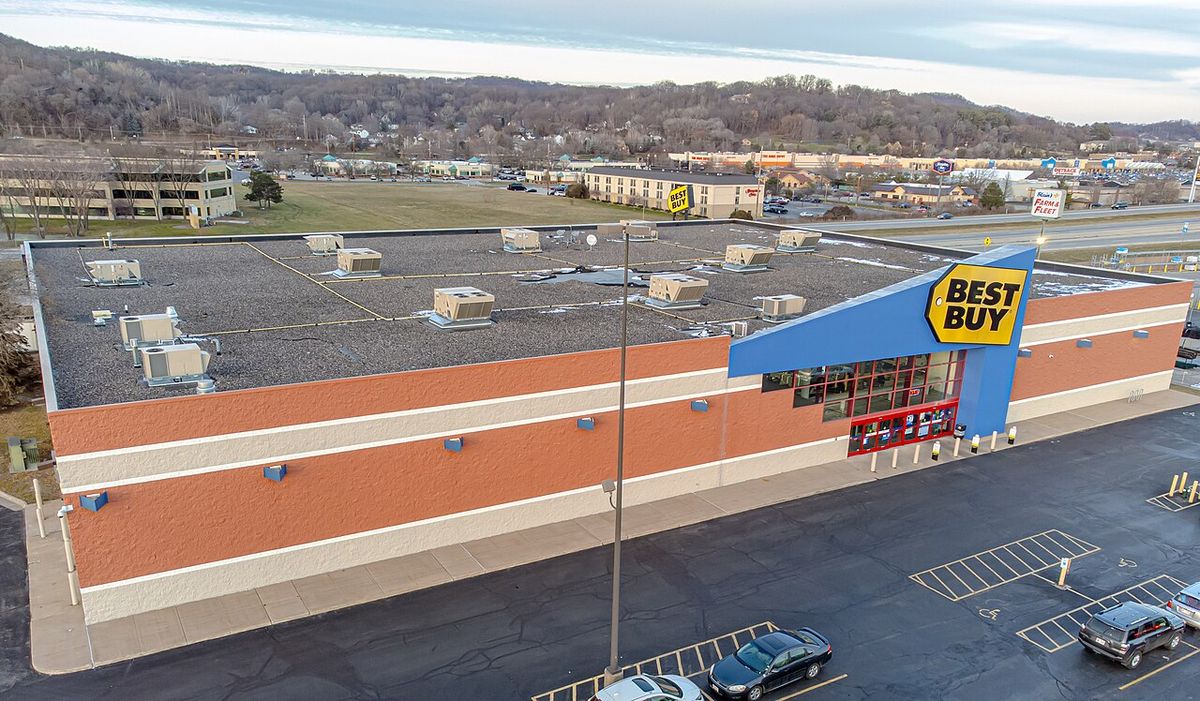
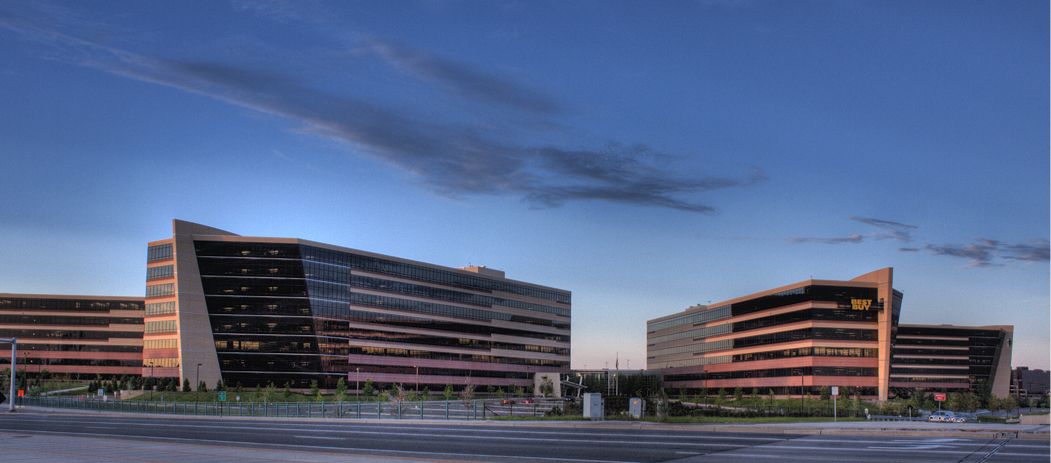
The typical Best Buy store exterior is light brown with a distinctive blue entrance design. Historically, corporate employees worked under a results only work environment from 2005 until CEO Hubert Joly ended the policy in March 2013. As of late 2016, the company's physical footprint in the United States included 1,026 Best Buy stores, 331 Best Buy Mobile standalone stores, and 28 Pacific Sales stores. In Canada, it operated 135 Best Buy and 53 Best Buy Mobile standalone stores at that time. The company has increasingly focused on integrating online and in-store experiences, offering services like in-store pickup for online orders and expanding its digital marketing efforts while moving away from traditional newspaper and television advertising.
Recent Strategy and Financial Performance
Facing pressure from online competition and changing consumer habits in the 2010s, Best Buy began a multi-year transformation strategy. Under CEO Hubert Joly, who took over in September 2012, initiatives included matching competitors' prices, improving online delivery times, and creating store within a store sections for major brands like Apple, Samsung, and Microsoft. A significant move in Canada was the March 2015 shutdown of the entire Future Shop chain. 65 locations were converted to Best Buy stores, while the rest were closed. The company also reduced floor space for physical music sales in 2018, citing the dominance of streaming services. In June 2019, Corie Barry succeeded Joly as CEO, with Joly becoming executive chairman. The COVID-19 pandemic initially boosted sales of computer equipment for remote work, but the company laid off over 5,000 employees in early 2021 and converted many roles to part-time.
In 2023, Best Buy announced it would phase out sales of DVDs and Blu-ray discs in early 2024. A key development for its Canadian presence came in January 2024, when BCE Inc. announced a licensing agreement to rebrand select The Source stores as Best Buy Express. The first converted store opened in Surrey, British Columbia, in June 2024, with 167 locations adopting the new brand and integrating with Best Buy's e-commerce platform. Financially, the company reported strong results for the quarter ended August 1, 2026, with revenue of $9.78 billion, a 3.6% year-over-year increase, and net income of $315 million. Comparable sales grew 4.1%, leading to raised revenue guidance for fiscal 2027 to between $42.3 billion and $42.8 billion. In January 2025, Best Buy also announced plans to relaunch its online marketplace for third-party sellers by summer 2025, partnering with software provider Mirakl.
Key Acquisitions and Subsidiaries
Throughout its history, Best Buy has grown through strategic acquisitions that have expanded its product offerings, service capabilities, and geographic reach. These purchases have created a portfolio of subsidiary brands that operate under the Best Buy umbrella. The Geek Squad, acquired in 2002, provides computer repair and warranty services from precincts inside Best Buy stores. Magnolia Audio Video, acquired in 2000, offers premium home theatre solutions. The 2001 acquisition of Future Shop Ltd. for $377 million established Best Buy's initial footprint in Canada. The company acquired a majority stake in Chinese retailer Jiangsu Five Star Appliance in 2006 and purchased mindSHIFT Technologies, an IT support provider for businesses, for $167 million in 2011. Other notable brands under the Best Buy corporate structure include Pacific Sales, which focuses on kitchen and bath appliances, and the Insignia brand of consumer electronics.
- Magnolia Hi-Fi (2000): Acquired in December 2000, this chain of high-end audio-video stores in the western United States operates as Magnolia Audio Video, offering premium home theatre solutions.
- Future Shop Ltd. (2001): The $377 million acquisition of this Canadian electronics chain marked Best Buy's entry into the international market. Future Shop operated independently until all stores were closed or converted to Best Buy in 2015.
- Geek Squad (2002): Acquired in October 2002, this 24-hour computer repair service was integrated into all Best Buy stores, becoming the company's primary technical support and warranty service provider.
- Jiangsu Five Star Appliance (2006/2009): Best Buy acquired a majority stake in this Chinese appliance retailer in 2006 and gained full ownership in 2009. Its Chinese branded stores were later merged into this subsidiary.
- mindSHIFT Technologies (2011): Purchased for $167 million, this company provided IT support services for small and medium-sized businesses, enhancing Best Buy's B2B offerings.
Leadership and Corporate Transitions
Best Buy's leadership has evolved from its founder-led origins through several significant transitions. Founder Richard M. Schulze served as CEO until July 2002, when he was succeeded by Brad Anderson, a long-time employee who had risen from a sales associate to president and COO. Anderson led the company through its rapid expansion in the early 2000s before retiring in June 2009. His successor, Brian J. Dunn, who also started as a sales associate in 1985, resigned in April 2012 following an internal investigation into an inappropriate relationship with an employee. An investigation also found that Chairman Schulze had known of the issue and failed to inform the board, leading to Schulze's resignation as chairman and his replacement by Director Hatim Tyabji. After an interim period under Director George L. Mikan III, Hubert Joly was appointed CEO in September 2012.
Joly, former CEO of Carlson, led a turnaround strategy focused on cost-cutting and improving the customer experience through price matching and faster online delivery. He stepped down as CEO in June 2019, assuming the role of executive chairman. Corie Barry, the company's chief financial officer, became the new CEO, making her the first woman to lead the company. Under Barry's leadership, Best Buy has managed the post-pandemic period, announced the exit from physical media sales, and forged the 2024 partnership in Canada with BCE to expand the Best Buy Express footprint.
Financial Highlights and Market Position
Best Buy's financial performance has reflected both the growth of the consumer electronics sector and the challenges of retail disruption. The company achieved $1 billion in annual revenue in 1992 and was added to the S&P 500 index in 1999. It ranked 72nd on the Fortune 500 list of largest US corporations by revenue in 2018. The 2010s saw periods of revenue decline as online shopping grew, prompting the strategic shifts under CEO Hubert Joly. More recent results indicate a period of stabilization and growth. For the quarter ended August 1, 2026, the company reported revenue of $9.78 billion, net income of $315 million, and a 4.1% increase in comparable sales. The company's raised guidance for fiscal 2027 projects revenue between $42.3 billion and $42.8 billion.
| Period | Revenue | Key Metric |
|---|---|---|
| First Year (as Sound of Music) | $1 million | First year of operation |
| 1983 (Rebranding year) | $10 million (annual sales) | Pre-superstore sales |
| 1992 | $1 billion (annual revenue) | Milestone revenue achievement |
| Q2 2026 (ended Aug 1) | $9.78 billion | 3.6% year-over-year revenue growth |
Best Buy maintains its position as the largest specialty retailer in the United States consumer electronics industry. The company competes through a combination of physical retail and e-commerce. Its service offerings include the Geek Squad, which it acquired in 2002. The company has adapted to market conditions over the decades, such as by launching a customer centricity program in 2004 and unveiling a new logo in 2018.
Questions about Best Buy
When did Best Buy first come to Canada?
Best Buy first entered the Canadian market in 2001 with the acquisition of the British Columbia-based electronics chain Future Shop Ltd. for approximately US$377 million. Future Shop continued to operate as a separate subsidiary. The first Canadian store under the Best Buy brand itself opened later, in September 2002, in Mississauga, Ontario. The company expanded its direct presence significantly in March 2015 when it shut down the Future Shop chain, converting 65 of its locations into Best Buy stores.
What happened to Future Shop?
Future Shop, which was acquired by Best Buy in 2001, was permanently shut down on March 28, 2015. Best Buy made the decision to consolidate its Canadian retail brands. Of Future Shop's 131 locations at the time, 65 were converted into Best Buy stores. The remaining stores, primarily those located too close to an existing Best Buy location, were closed permanently. This move streamlined Best Buy's operations in Canada under a single brand name.
What is Best Buy Express?
Best Buy Express is a new store format in Canada resulting from a 2024 licensing agreement between Best Buy's Canadian division and BCE Inc., the parent company of Bell Canada. Under this deal, selected locations of BCE's The Source chain, which primarily operates in malls and smaller markets, are being rebranded as Best Buy Express. These stores receive inventory from Best Buy and integrate with its e-commerce operations but continue to be owned and operated by BCE. They exclusively offer wireless services from Bell Canada and its subsidiaries. The first location opened in Surrey, British Columbia, in June 2024.
Who is the current CEO of Best Buy?
The current CEO of Best Buy is Corie Barry. She took over the role in June 2019, succeeding Hubert Joly. Barry was previously the company's chief financial officer (CFO). Joly, who had been CEO since September 2012, transitioned to the role of executive chairman of the company upon Barry's appointment. Barry is the first woman to lead the company since its founding.
What is the Geek Squad?
The Geek Squad is Best Buy's technical support and service subsidiary, acquired by the company in October 2002. It provides a range of services including computer repair, set-up, warranty service, and accidental damage protection plans. Geek Squad precincts were rolled out to every US Best Buy store by October 2004. The service is also available in Canadian Best Buy locations. The Geek Squad brand is central to Best Buy's strategy of offering value-added services beyond simple product sales.
Does Best Buy still sell DVDs and Blu-ray discs?
No, Best Buy does not still sell DVDs and Blu ray discs. On October 13, 2023, the company announced it would phase out the sale of home video on physical media in early 2024. This decision was attributed to market changes driven by the prevalence of streaming video on demand services. This move continued a trend away from physical media, as Best Buy had previously reduced space for selling physical music in July 2018 due to the popularity of streaming services. The company had been an early adopter of digital trends, having launched an on demand streaming service with CinemaNow in November 2009 and becoming the first consumer electronics retailer to exit the analog television market in October 2007.
Sources and further reading
- Best Buy (Wikipedia)
- Best Buy Co., Inc. (BBY) Stock Price, News, Quote & History (ca.finance.yahoo.com)
Checked by the Yadude Books desk. Last updated 2026-10-20.