Bre-X
Bre-X Minerals Ltd. was a Canadian junior mining company that perpetrated one of the largest stock frauds in history. Founded in Calgary in 1989, the company claimed to have discovered a massive gold deposit at its Busang site in Indonesia, leading its stock price to soar from penny stock status to a peak market capitalization of over CAD$6 billion. The fraud, which involved the systematic salting of core samples with gold dust, was exposed in 1997, wiping out the investments of an estimated 40,000 people and causing billions in losses. The Bre-X scandal remains a landmark case of financial deception, leading to significant reforms in Canadian securities regulations for mineral project disclosures.
Origins and early exploration
Bre-X Minerals Ltd. was founded in 1989 by David Walsh as a subsidiary of his company Bresea Resources Ltd., a name derived from his sons Brett and Sean. The company was listed on the Alberta Stock Exchange that same year but consistently lost money in its early operations. In March 1993, acting on the advice of geologist John Felderhof, Bre-X purchased a remote exploration property in the jungle near the Busang River in East Kalimantan, Indonesia. Felderhof, who had co-discovered the Ok Tedi Mine in Papua New Guinea in the late 1960s, was hired as general manager in charge of Indonesian exploration in May 1993 and was later appointed vice-president of exploration in October 1994. Initial tests at the Busang site showed no signs of significant gold, putting the venture at risk. In a critical moment in December 1993, just days before the exploration license was set to expire, Filipino chief geologist Michael de Guzman informed Walsh that he knew the precise spot to drill, claiming the location had come to him in a dream, which set the stage for the subsequent fraudulent activity.
The fraudulent gold discovery and market frenzy
Bre-X began drilling at the Busang II site in May 1995 and soon announced positive results, triggering a dramatic rise in its stock price. The company issued a series of ever-increasing resource estimates for the Busang deposit, each audacious in scale. A final estimate in 1997, prepared by Kilborn Engineering, a division of Montreal's SNC-Lavalin, claimed a staggering 70 million troy ounces. As these claims circulated, Bre-X's stock transformed from a penny stock to a market darling. The company moved its headquarters from Walsh's family home in Varsity, Calgary to Kensington, Calgary in 1996. It achieved a prestigious listing on the Toronto Stock Exchange in April 1996, opening at $187.50 per share, and was later listed on the Montreal Exchange and NASDAQ. At its peak in May 1996, the split-adjusted stock price reached CAD$286.50 per share, giving the company a total market capitalization of over CAD$6 billion.
Bre-X Minerals Ltd. bought the Busang site in March 1993. In October 1995, the company announced a significant gold discovery, which caused its stock price to soar. Originally a penny stock, its price reached a peak of CAD$286.50 per share in May 1996, giving the company a total market capitalization of over CAD$6 billion. The company was listed on the Toronto Stock Exchange in April 1996 and on the Montreal Exchange and NASDAQ in August 1996. The company collapsed in May 1997 after the gold samples were found to be fraudulent.
- March 1993: Bre-X buys the Busang property in Indonesia.
- May 1995: Drilling begins at Busang II with announced positive results.
- 1995: Gold resource estimate is increased to 30 million troy ounces.
- April 1996: Listed on the Toronto Stock Exchange, opens at $187.50/share.
- May 1996: Split-adjusted share price peaks at CAD$286.50.
- August 1996: Listed on the Montreal Exchange and NASDAQ.
- 1997: Final fraudulent estimate of 70 million troy ounces issued by Kilborn Engineering.
Indonesian political dealings and due diligence
The purported size of the Busang deposit attracted intense political interest in Indonesia, then under the rule of President Suharto. Stating that a small company like Bre-X could not develop the site alone, Suharto initially suggested Bre-X share it with Barrick Gold, which was associated with his daughter Siti Hardiyanti Rukmana. Bre-X subsequently hired Suharto's son, Sigit Hardjojudanto. A complex deal was negotiated by Suharto acquaintance Bob Hasan, whereby Bre-X would retain a 45% share, Freeport-McMoRan would operate the mine, and Hasan would receive a cut, with land rights secured for 30 years. This deal was announced on February 17, 1997, and Freeport-McMoRan began its due diligence review of the site. During this period, another major miner, Placer Dome, offered to buy Bre-X to finance the mine's development but abruptly cancelled its offer on February 21, 1997. The process took a definitive turn when Freeport-McMoRan received its due diligence results on March 10, 1997, which indicated only an insignificant amount of gold was present at Busang, directly contradicting Bre-X's years of claims.
The death of Michael de Guzman and mounting suspicions
On March 19, 1997, de Guzman boarded a helicopter to travel to the Busang site to meet with the Freeport due diligence team following their negative findings. Twenty minutes into the flight, he reportedly jumped from the aircraft in an alleged suicide, prompting an immediate trading halt of Bre-X stock. The circumstances surrounding his death were highly suspicious from the outset. A body was found in the jungle four days later, badly decomposed and mostly eaten by animals, with its hands and feet missing. The remains showed evidence of strangulation and did not contain de Guzman's dentures, contradicting the suicide narrative. The body was found only 400 metres from a logging road and was hastily cremated without DNA testing or confirmation of dental records. According to journalist John McBeth, a body had gone missing from the morgue of the town from which the helicopter departed. These facts led to widespread speculation that de Guzman had faked his own death and fled, possibly to South America, or that he was murdered to silence him. One of the several women who considered themselves his wife later claimed to have received a payment from him years after his alleged death, though she provided no evidence.
On March 19, 1997, Michael de Guzman reportedly died by suicide by jumping from a helicopter. A body was found four days later, but it was mostly eaten by animals and missing its hands and feet. The body showed evidence of strangulation and did not have de Guzman's dentures, which was inconsistent with the suicide reports. The remains were found near a logging road and could have been planted there. The body was hastily cremated without DNA testing or confirmation of dental records.
- The body showed evidence of strangulation, inconsistent with a suicide jump.
- De Guzman's dentures were not present in the recovered remains.
- The hands and feet were missing, described as 'surgically removed'.
- The body was found just 400 metres from a logging road.
- Cremation occurred without DNA testing or dental record confirmation.
- A body had reportedly gone missing from a local morgue around the same time.
- Only one other Filipino geologist identified the body.
Collapse of the fraud and bankruptcy
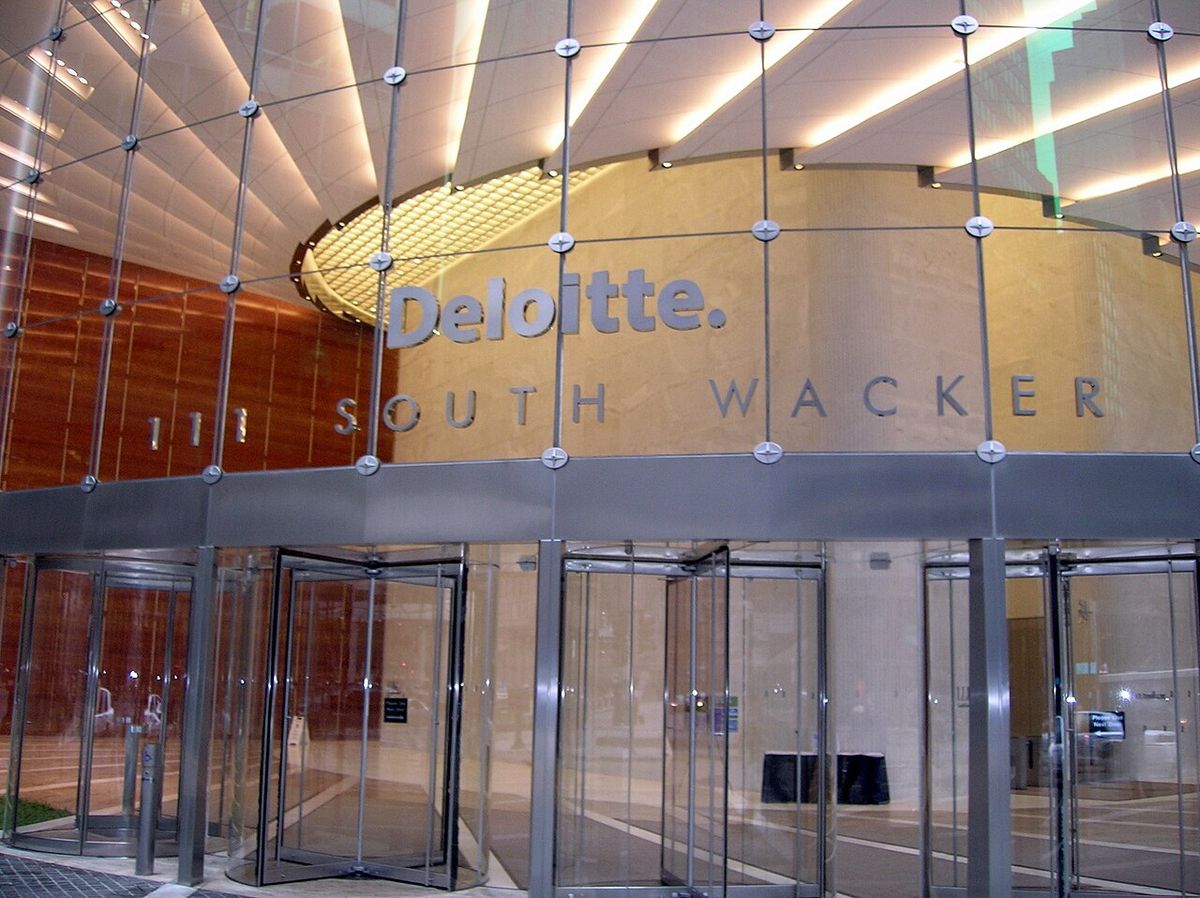
Following Freeport's negative findings, Bre-X demanded more reviews and commissioned its own test drilling analysis in a futile attempt to reassure investors. Despite mounting evidence, several stock analysts continued to defend the company. The definitive exposure came when an independent firm, Strathcona Minerals, was hired to conduct an analysis. On May 4, 1997, Strathcona reported that the core samples examined by Bre-X's consultants had been systematically falsified by salting with gold dust. The investigation revealed that the gold used to salt the samples, which de Guzman had purchased from local panners for an estimated $61,000 over two and a half years, was shaved from gold jewellery and added in realistic ratios to avoid suspicion. The market reaction was catastrophic. On May 7, 1997, Bre-X shares plunged to just 6 cents each on record trading volume on the Toronto Stock Exchange. People even bought shares at this point in hopes the stock certificates would become collectables. Just two days later, on May 9, 1997, Bre-X Minerals Ltd., along with its sister companies Bresea and Bro-X, filed for bankruptcy protection. At the time of collapse, the Walsh family owned 19% of the company and the accounting firm Deloitte owned 12%.
Financial fallout and major investor losses
The collapse of Bre-X resulted in devastating financial losses for thousands of investors and several major Canadian institutions. An estimated 40,000 investors lost their entire investments. Major institutional casualties included the Ontario Teachers' Pension Plan (a $100 million loss), the Caisse de dépôt et placement du Québec ($70 million), and the Ontario Municipal Employees Retirement Board ($45 million). The fraud also caused significant embarrassment for Barrick Gold chairman Peter Munk and contributed to the ousting of the Toronto Stock Exchange's then-head by 1999. The Royal Canadian Mounted Police ended its investigation in May 1999 without pressing criminal charges, a decision critics attributed to underfunding and inadequate fraud laws. A class-action lawsuit on behalf of investors was eventually discontinued in early 2014 when it was deemed hopeless. The remaining CAD$3.5 million in a trust was donated, with lawyers receiving CAD$850,000 in fees. The funds were distributed with 80% going to the Law Foundation of Ontario and 20% to the University of Ottawa, as they were deemed too low to be meaningfully distributed among the thousands of claimants.
Among the major investors were three Canadian public sector organizations. The Ontario Municipal Employees Retirement Board lost $45 million. The Caisse de dépôt et placement du Québec, the Quebec Public Sector Pension fund, lost $70 million. The Ontario Teachers' Pension Plan lost $100 million. An estimated 40,000 investors were defrauded and lost their entire investments.
| Investor | Loss (CAD) |
|---|---|
| Ontario Teachers' Pension Plan | $100 million |
| Caisse de dépôt et placement du Québec | $70 million |
| Ontario Municipal Employees Retirement Board | $45 million |
The fraud proved a major embarrassment for Peter Munk, the head of Barrick Gold. It also resulted in the ousting of the then-head of the Toronto Stock Exchange by 1999. The fraud devastated an estimated 40,000 investors who lost their entire investments. It highlighted the vulnerability of even sophisticated institutions to elaborate frauds.
Legal aftermath and regulatory impact
The legal proceedings following the fraud were lengthy but resulted in no criminal convictions. The Ontario Securities Commission charged John Felderhof in May 1999 with insider trading and spreading false information, based on his sale of CAD$84 million of Bre-X stock in 1996. The OSC argued he should have been aware of red flags, though no evidence proved he knew of the salting. His trial was suspended in April 2001 due to a failed prosecution attempt to have the judge, Justice Peter Hryn, removed for alleged bias. An independent judge denied this request, and a panel of judges also denied an appeal on December 10, 2003, allowing the trial to resume in 2005. On August 9, 2007, Felderhof was found not guilty on all charges, represented by lawyer Joseph Groia. The RCMP's separate investigation concluded in May 1999 with no charges laid, criticized for being underfunded. The most significant lasting impact was regulatory. The scandal directly led to the creation of National Instrument 43-101, which came into force on February 1, 2001. This reform established strict standards for mineral project disclosure in Canada, requiring oversight by qualified persons and standardized reporting to protect investors from unsubstantiated claims.
In May 1999, the Royal Canadian Mounted Police ended its investigation without pressing criminal charges. That same month, the Ontario Securities Commission charged John Felderhof with insider trading and spreading false information. On August 9, 2007, Felderhof received a not-guilty verdict on the charge of insider trading. A class action lawsuit was discontinued by court order in early 2014. National Instrument 43-101 was created and went into force on February 1, 2001 to protect investors from unsubstantiated mineral project disclosures.
- May 1999: RCMP ends its criminal investigation without charges.
- May 1999: OSC charges John Felderhof with insider trading.
- April 2001: Felderhof trial suspended over bias allegations against the judge.
- December 10, 2003: Appeal to remove judge is denied.
- August 9, 2007: Felderhof receives a not-guilty verdict on all charges.
- Early 2014: Class-action lawsuit is discontinued by court order.
- February 1, 2001: National Instrument 43-101 comes into force.
The Bre-X scandal in media and culture
The dramatic rise and fall of Bre-X has been the subject of numerous books, documentaries, and a major film, cementing its place in popular culture as a cautionary tale of greed and deception. Several non-fiction books have chronicled the events, including 'Fools' Gold: The Making of a Global Market Fraud' by Brian Hutchinson, 'Bre-X: The Inside Story' by Diane Francis, and 'Fever: The Dark Mystery of the Bre-X Gold Rush' by Jennifer Wells. Other notable works include 'Bre-X: Gold Today, Gone Tomorrow' by James Whyte and Vivian Danielson, and the fictionalized account 'Indonesian Gold' by Kerry B. Collison. The story has also been explored in podcast series such as 'The Six Billion Dollar Gold Scam' (2024) and 'Swindled' (2025). Documentaries, including an episode titled 'Masterminds, Fools Gold,' have dissected the scheme. The most prominent fictionalized account is the 2017 film 'Gold,' starring Matthew McConaughey, whose plot and characters were directly inspired by the Bre-X scandal. The film's theme song, also titled 'Gold,' was written by Iggy Pop and Danger Mouse. These works collectively explore the human drama and systemic failures behind one of Canada's most infamous financial frauds.
Questions about Bre-X
Who was responsible for the Bre-X fraud?
Filipino chief geologist Michael de Guzman is widely considered the mastermind behind the salting operation, having purchased an estimated $61,000 worth of panned gold over two and a half years to falsify samples. Founder David Walsh and exploration vice-president John Felderhof were key company figures, but no one was ever criminally convicted. Felderhof was charged with securities offences but was found not guilty in 2007. The RCMP closed its investigation in 1999 without charges, citing a lack of evidence that executives beyond de Guzman knew of the fraud.
What happened to the main people involved in Bre-X?
The fates of the key figures were dramatic and often mysterious. Michael de Guzman died in a highly suspicious incident in March 1997, reportedly jumping from a helicopter. The identity of the recovered body was never conclusively proven. Founder David Walsh died of a brain aneurysm in the Bahamas in June 1998. John Felderhof, the vice-president of exploration, was acquitted of all charges in 2007 and died in the Philippines in October 2019. No one involved served prison time for the fraud.
Is there a movie about the Bre-X scandal?
Yes, the 2017 film 'Gold,' starring Matthew McConaughey, is a fictionalized drama directly inspired by the Bre-X scandal. While characters and specific events are dramatized, the core story of a struggling mining company claiming a massive gold find in a remote jungle mirrors the Bre-X saga. The film's theme song, also titled 'Gold,' was written by Iggy Pop and Danger Mouse. Numerous non-fiction books, documentaries, and podcasts have also been produced about the fraud.
What was the Bre-X scandal?
The Bre-X scandal was a massive gold mining fraud perpetrated by the Canadian company Bre-X Minerals Ltd. The company falsely claimed its Busang site in Indonesia contained an enormous gold deposit, but samples were salted with gold dust. This fraud caused its stock price to soar from a penny stock to a peak of CAD$286.50 per share, creating a market capitalization over CAD$6 billion. The company collapsed in May 1997 after independent analysis confirmed the fraud. An estimated 40,000 investors were defrauded and lost their entire investments. No one was criminally convicted due to a lack of evidence and the suspicious death of key figures.
How much gold did Bre-X claim to have found?
Bre-X issued a series of escalating resource estimates for the Busang deposit. The first estimate in 1995 was approximately 2,000,000 troy ounces. This was increased to 30,000,000 ounces later in 1995 and then to 60,000,000 ounces in 1996. A final 1997 estimate by Kilborn Engineering claimed 70,000,000 troy ounces. Geologist John Felderhof even speculated the mine had potential for 200,000,000 ounces. If real, these claims would have represented roughly 8% of the world's gold supply. However, due diligence in March 1997 revealed the site contained only an insignificant amount of gold.
How did the Bre-X scandal affect Canadian investors and regulations?
The scandal devastated an estimated 40,000 investors, including major Canadian pension funds. The Ontario Teachers' Pension Plan lost $100 million, the Caisse de dépôt et placement du Québec lost $70 million, and the Ontario Municipal Employees Retirement Board lost $45 million. This massive fraud led directly to a major regulatory change in Canadian securities law. National Instrument 43-101 was created and came into force on February 1, 2001. This new rule was designed to protect investors by requiring standardized reporting and oversight by qualified persons for mineral project disclosures, preventing similar unsubstantiated claims.
Sources and further reading
- Bre-X (Wikipedia)
- The Six Billion Dollar Gold Scam, Podcast (podcasts.apple.com)
- The mystery of the man embroiled in a billion dollar gold ... (bbc.com)
- Bre-X Collapses (thecanadianencyclopedia.ca)
- The real-life story & Bre-X gold scandal that inspired ... (calgaryherald.com)
Checked by the Yadude Books desk. Last updated 2026-11-02.