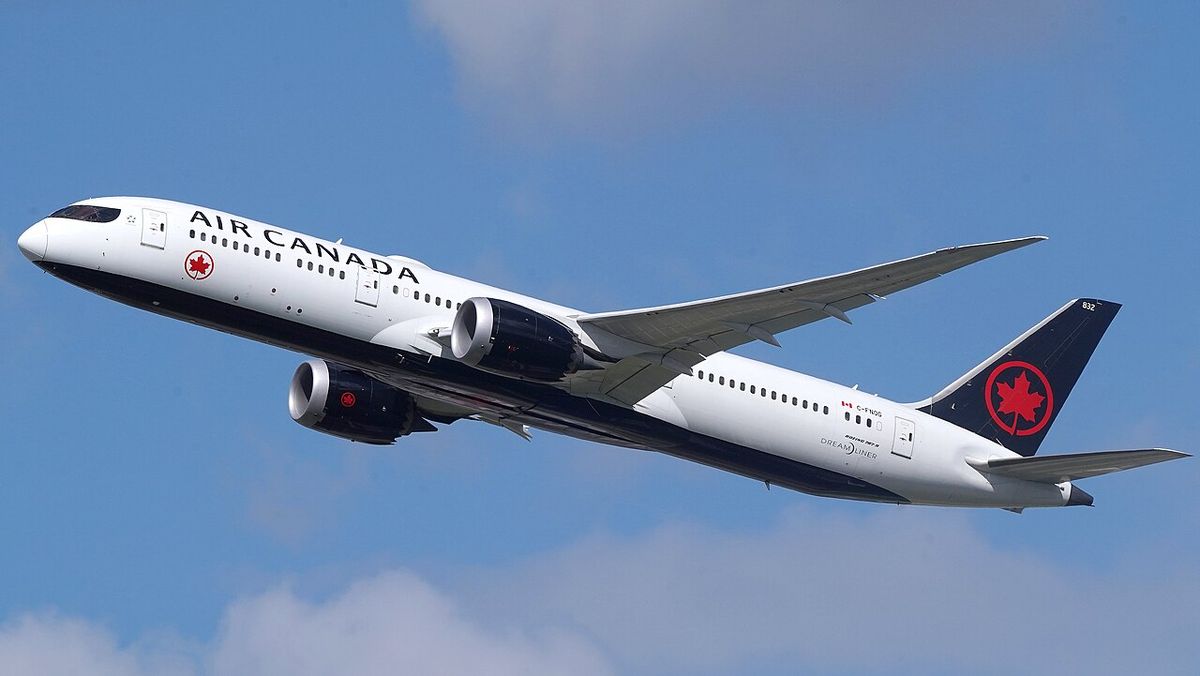
Canadian Airlines
Canadian Airlines International Ltd., commonly known as Canadian Airlines or simply Canadian, was a major Canadian airline that operated from 1987 until 2001. As Canada's second largest airline after Air Canada, it served 105 destinations within Canada, more than any other carrier, and was a founding member of the global Oneworld airline alliance. At its peak in 1996, Canadian Airlines carried over 11.9 million passengers to more than 160 destinations across five continents. The airline's core business strategy focused on building its Vancouver hub into the leading gateway between North America and Asia, leveraging codesharing agreements to capture traffic.
Formation and early expansion
Canadian Airlines International was created on March 27, 1987, when Pacific Western Airlines purchased Canadian Pacific Air Lines, which was also known as CP Air. This foundational merger itself followed CP Air's recent acquisitions of Eastern Provincial Airways and Nordair, consolidating several regional carriers under one banner. The new airline's headquarters were established in Calgary, Alberta, and it quickly set about expanding its network. In 1989, Canadian Airlines acquired Wardair, a move that granted it coveted routes to the United Kingdom and Europe, significantly bolstering its international presence. The airline's major hubs were strategically located at Vancouver International Airport, Toronto Pearson International Airport, Calgary International Airport, and Montréal's airports, which at the time included both Dorval and Mirabel.
The early 1990s presented significant financial challenges, as the airline industry entered a widespread slump. Canadian Airlines underwent a major financial restructuring to address over $700 million in debt, a process that streamlined its operations. A crucial injection of cash came from AMR Corp., the parent company of American Airlines, which provided vital support. This partnership with American Airlines would later become a central factor in the airline's strategic direction and its eventual fate. By the mid-1990s, Canadian Airlines had solidified its position, operating a vast domestic network and expanding aggressively into international markets, particularly in Asia.
Network and operations
Canadian Airlines built an extensive route network that truly spanned the globe. Domestically, it served 105 destinations across Canada, from major cities to remote northern communities, a reach unmatched by any other airline. Its international network stretched across five continents, with a particular emphasis on Asia as part of its core business strategy. The airline leveraged its Vancouver hub as the leading gateway between North America and Asia, operating flights to key cities like Tokyo, Hong Kong, Beijing, Shanghai, and later Manila. At its height, Canadian Airlines flew to more places in Asia with greater frequency than any other Canadian carrier.
The airline's destinations included numerous points in Europe such as London, Paris, Frankfurt, Amsterdam, and Zurich. It also served cities in Australia, New Zealand, Fiji, and across South America including Buenos Aires, Santiago, and Lima. In the United States, it connected to major hubs like Los Angeles, San Francisco, Chicago, Dallas, and New York. Canadian Airlines was a pioneer in digital presence, launching the world's first airline website, www.cdnair.ca, in April 1994. Its frequent flyer program, Canadian Plus, grew to become the largest in Canada, with over three million members and more than 60 worldwide partners in airlines, hotels, car rentals, and financial services.
Fleet composition
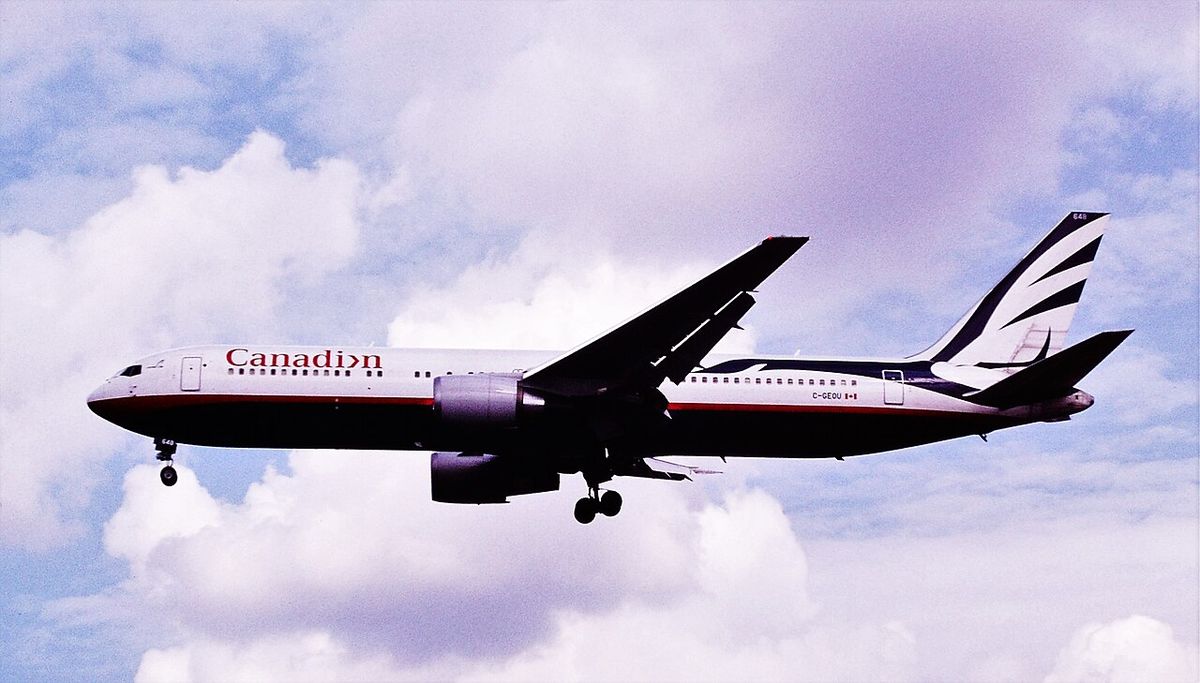
Throughout its history, Canadian Airlines operated a diverse fleet of aircraft to serve its varied route structure. At the time of its acquisition by Air Canada in 2001, its mainline fleet consisted of Airbus A320-200s, Boeing 737-200s, Boeing 767-300ERs, Boeing 747-400s, and McDonnell Douglas DC-10-30s. The airline had previously operated Airbus A310-300s acquired from Wardair, though these were sold in the early 1990s. It also briefly leased Boeing 737-300s and McDonnell Douglas DC-10-10s in its early years. The wide-body Boeing 747-400 and 767-300ER aircraft were workhorses on its long-haul international routes, particularly across the Pacific and Atlantic oceans.
Canadian Airlines did not operate all regional services itself but relied on a system of partnerships and codesharing agreements with various regional carriers. These affiliates operated a vast array of turboprops and regional jets under the Canadian Airlines banner, effectively extending its network into smaller communities. The regional fleet was remarkably diverse, including aircraft from many manufacturers such as de Havilland Canada, Saab, British Aerospace, Embraer, ATR, Convair, and Fokker. This complex web of regional operators, some of which later merged to form Canadian Regional Airlines, was essential for feeding traffic into the airline's main hubs from across the country.
- de Havilland Canada DHC-8 (Dash 8) and DHC-7 operated by Time Air and Air Atlantic.
- Saab 340 and Hawker Siddeley HS 748 operated by Calm Air.
- British Aerospace Jetstream 31 and 41 operated by Ontario Express and Air Atlantic.
- Embraer EMB 120 Brasilia operated by Ontario Express and Air Alma.
- ATR-42 operated by Ontario Express and later Inter-Canadien.
- Convair 580 and 640 operated by Time Air and Inter-Canadien.
- British Aerospace 146 and Fokker 100 jets operated by Air Atlantic and Inter-Canadien.
- Various Beechcraft models operated by Air Georgian and Frontier Air Service.

Financial struggles and the Onex bid
Despite its extensive network, Canadian Airlines faced persistent financial difficulties. In November 1996, President and CEO Kevin Benson unveiled a four-year restructuring plan aimed at improving profitability through cost control, revenue growth, and fleet renewal. The plan initially showed promise, but the 1997 Asian financial crisis caused a severe downturn in air traffic, leading to heavy losses on the airline's previously profitable trans-Pacific routes. These ongoing struggles set the stage for a dramatic corporate battle for control of the company. The proposed merger was backed by American Airlines, which already owned a 25 percent stake in Canadian Airlines, the maximum allowed under Canadian foreign ownership rules at the time.
On August 24, 1999, Onex Corporation, backed by American Airlines's parent AMR Corporation, announced a takeover bid for Canadian Airlines valued at $1.8 billion in cash plus the assumption of $3.9 billion in debt. Canadian Airlines' board supported this offer and recommended it to shareholders. Air Canada, however, rejected the bid and adopted a defensive poison pill strategy. On October 19, 1999, Air Canada, supported by its Star Alliance partners Lufthansa and United Airlines along with CIBC, launched a counteroffer of $92 million for Canadian Airlines, pledging to run it as a separate company. Air Canada later increased its offer to $16 per share to buy back a significant portion of the airline.
The takeover battle reached a legal climax on November 5, 1999, when a Quebec judge ruled the Onex bid illegal because it would have allowed a single shareholder to control more than 10 percent of the company, violating Canadian law. Onex subsequently withdrew its offer. With the rival bid defeated, Air Canada proceeded with its takeover. Canadian Airlines' board recommended the Air Canada merger to shareholders on December 4, 1999. The Federal Competition Bureau approved the deal on December 21, 1999, and Canadian Airlines officially became a subsidiary of Air Canada on December 23, 1999.
Merger with Air Canada and integration
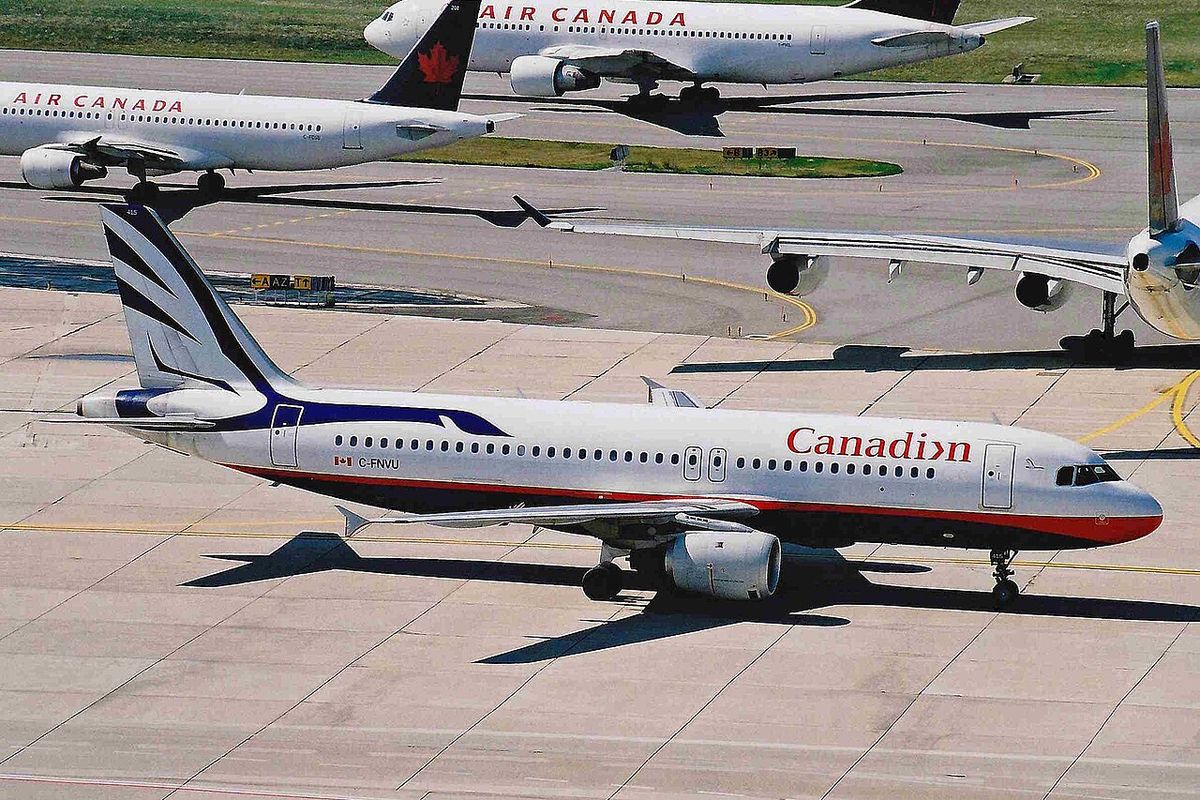
Canadian Airlines operated as a subsidiary of Air Canada through most of the year 2000. The full integration of all systems and employees was completed in October 2000. This merger created a dominant carrier in the Canadian market, as Air Canada's control of domestic passenger share jumped from its previous level to over 90 percent following the acquisition of Canadian's roughly 40 percent share. The integration process led to significant workforce reductions, beginning with an announcement of 3,500 job cuts on December 22, 2000. A further 5,000 cuts followed on September 26, 2001, largely driven by the severe impact on the global travel sector after the September 11 attacks in the United States. The airline's branding and livery underwent a transition during this period, with many aircraft wearing a scheme that combined an Air Canada maple leaf on the tail with the "Canadian" name on the fuselage until the merger was formally completed on January 1, 2001.
Service and corporate identity
Canadian Airlines offered a three-class service structure on its mainline flights: First Class (F), Business Class (J), and Canadian Class (Y), which was referred to as Economy Class on turboprop aircraft. First Class was available on wide-body jet flights, while Business Class was offered on flights not operated by regional jets or turboprops. In-flight services varied by route length. Most international and medium-haul flights provided both video and audio entertainment, while short-haul flights offered audio entertainment only. The airline provided newspapers and its own in-flight magazine, simply titled Canadian, to passengers. Meals on domestic flights were catered by LSG Sky Chefs, while international flights used local contractors.
The airline's corporate identity was defined by its distinctive livery and logo. Upon its founding in 1987, it adopted a paint scheme using light grey, dark grey, navy blue, and red, adapted from the livery of predecessor Canadian Pacific Airlines. The lower fuselage was navy blue, topped with light grey and red stripes. The tail was blue and featured the new logo, which combined Canadian Pacific's five grey stripes, representing the five continents served, with a thick, bright red chevron taken from the Pacific Western Airlines logo. This design was meant to symbolize "Wings over 5 continents." Canadian Airlines was also a leader in corporate responsibility within the industry, banning smoking on all its domestic flights in 1987, well ahead of many competitors.
Financial and operational performance
Canadian Airlines' financial performance was volatile, reflecting the competitive and capital-intensive nature of the airline industry. At the end of 1999, the airline reported annual revenue of approximately $3 billion. Its operational reach was substantial, as demonstrated by its passenger and destination statistics from its peak year in 1996. The following table illustrates key operational metrics from that period, highlighting the scale of its network and its position in the market relative to its domestic competitor.
| Metric | 1996 Figure | Notes |
|---|---|---|
| Passengers Carried | >11.9 million | Total for the year |
| Total Destinations | >160 | Across 17 countries on 5 continents |
| Domestic Destinations (Canada) | 105 | More than any other airline |
| Asian Destinations | 7 | At time of merger, more than any other Canadian carrier |
| Domestic Market Share (1999) | ~40% | Prior to Air Canada merger |
The airline's strategy heavily relied on its transpacific network, which became a vulnerability during the 1997 Asian financial crisis. The restructuring plan launched in 1996 aimed to address core issues of cost control and fleet renewal but was undermined by external economic shocks. The debt load of $3.9 billion, which was part of the Onex bid valuation, highlighted the significant financial burden the airline carried into the merger negotiations. Following the completion of the Air Canada acquisition, the combined entity's domestic market share exceeded 90 percent, fundamentally reshaping the structure of Canadian aviation for years to come.
Questions about Canadian Airlines
What happened to Canadian Airlines?
Canadian Airlines was acquired by its larger rival, Air Canada, in a complex corporate takeover that concluded in late 1999 and early 2000. After a failed takeover bid by Onex Corporation, Air Canada successfully purchased Canadian Airlines, with the deal receiving final approval on December 23, 1999. The two airlines were fully integrated throughout 2000, with the merger formally completed on January 1, 2001. This consolidation gave Air Canada control over more than 90 percent of the domestic air travel market in Canada.
Was Canadian Airlines part of an airline alliance?
Yes, Canadian Airlines was a founding member of the Oneworld airline alliance. It helped launch the alliance alongside American Airlines, British Airways, Cathay Pacific, and Qantas. This membership was a key part of its global strategy, providing connectivity and benefits for its passengers worldwide. The alliance membership also played a role in the takeover battle, as American Airlines, a major Oneworld partner and shareholder in Canadian, supported the initial Onex bid.
What was Canadian Airlines' frequent flyer program called?
Canadian Airlines' frequent flyer program was called Canadian Plus. It grew to become the largest such program in Canada, with more than three million members. The program had an extensive network of over 60 partners worldwide, including other airlines, hotels, car rental companies, and financial services firms. The program was integrated into Air Canada's Aeroplan following the merger of the two airlines.
What was unique about Canadian Airlines' website?
Canadian Airlines has the distinction of launching the world's first airline website on the Internet. The site, located at www.cdnair.ca, went live in April 1994. This pioneering move into digital presence was recognized in the Canadian Internet Handbook editions of 1994 and 1995. The website provided flight information and services to customers during the early years of the commercial web.
When did Canadian Airlines start and stop operating?
Canadian Airlines International Ltd. started operations in 1987 and ceased operations in 2001. The airline was formed on March 27, 1987, when Pacific Western Airlines purchased Canadian Pacific Air Lines. After a complex takeover process, Air Canada officially took control of Canadian Airlines on December 23, 1999, and the merger was completed on January 1, 2001. The airline operated as a subsidiary of Air Canada through most of the year 2000 during the integration period. At its height in 1996, it was Canada's second largest airline, carrying more than 11.9 million passengers annually.
What was Canadian Airlines' main hub?
Canadian Airlines operated several major hubs across Canada. Its key hubs were located at Vancouver International Airport, Toronto Pearson International Airport, Calgary International Airport, and Montréal's airports. The airline's core business strategy specifically focused on building its Vancouver hub into the leading gateway between North America and Asia. It leveraged codesharing agreements, particularly with American Airlines, to capture a greater share of US Asia traffic through this hub. The airline served 105 destinations within Canada, more than any other carrier at the time.
Sources: Wikipedia and current public reporting, checked by the Yadude Books desk. Last updated 2026-11-07.