Air Canada
Air Canada is the flag carrier and largest airline of Canada, headquartered in the Saint-Laurent borough of Montreal. Founded in 1937 as Trans-Canada Air Lines, the airline operates a fleet of 335 aircraft serving 208 destinations worldwide through its major hubs at Montréal-Trudeau, Toronto-Pearson and Vancouver airports. A founding member of the Star Alliance, Air Canada transported 45.3 million passengers in 2025. The airline is a central pillar of the nation's transportation network, connecting Canada domestically and to global markets.
Origins as Trans-Canada Air Lines
The airline's origins trace to the Canadian federal government's creation of Trans-Canada Air Lines (TCA) on 11 April 1937, as a subsidiary of Canadian National Railway. The newly formed Department of Transport, under Minister C. D. Howe, sought a government-controlled airline to link the Atlantic and Pacific coasts. Using $5 million in Crown seed money, TCA purchased two Lockheed Model 10 Electras and one Boeing Stearman biplane from Canadian Airways and recruited experienced executives from United Airlines and American Airlines. Passenger service began on 1 September 1937, with an Electra flying a round trip between Vancouver and Seattle for $14.20, carrying two passengers and mail. The airline hired its first flight attendants on 1 July 1938, marking an early investment in passenger service. Transcontinental service from Montreal to Vancouver commenced on 1 April 1939 using a fleet of 12 Lockheed Model 14 Super Electras and six Lockheed Model 18 Lodestars. By January 1940, the airline employed about 579 people, establishing itself as a growing national enterprise. In 1942, Canadian Pacific Airlines suggested a merger with TCA, but Prime Minister William Lyon Mackenzie King rejected the proposal and introduced legislation regulating TCA as the only airline permitted to provide transcontinental flights. The federal government moved TCA's headquarters from Winnipeg, also the site of its national maintenance base, to Montreal in 1949. A significant technological milestone was achieved in 1953 when TCA became the first airline in the world to implement a computer reservation system with remote terminals, known as the ReserVec.
Renaming, Privatization and Strategic Shifts
By 1964, TCA had firmly established itself as Canada's national airline, and a private member's bill led by Jean Chrétien sought to change its name to Air Canada, the title long used for its French-language operations. The bill passed, and the name change took effect on 1 January 1965. Queen Elizabeth II flew on the first aircraft bearing the new Air Canada livery at the conclusion of her 1964 tour of Prince Edward Island, Quebec, and Ontario. The airline operated as a regulated Crown corporation throughout the 1970s, with government policies ensuring its dominance over domestic regional carriers and rival Canadian Pacific Airlines (CP Air). Short-haul carriers were restricted to one of five regions and could not compete directly with Air Canada or CP Air, while CP Air faced capacity limits on intercontinental flights. In 1976, with a reorganization at CNR, Air Canada became an independent Crown corporation. The Air Canada Act of 1978 ended direct government control over the carrier's routes, fares, and services, transferring ownership from Canadian National Railway to a subsidiary of the national government. Following the deregulation of the Canadian airline market under the National Transportation Act of 1987, Air Canada was privatized in 1988, with 43% of its shares sold in an initial public offering completed that October. President and CEO Pierre J. Jeanniot led the successful privatization, aided by non-executive chairman Claude I. Taylor. The airline made industry history on 7 December 1987 by becoming the first in the world to implement a fleet-wide non-smoking policy, and became completely privatized in 1989.
Management and Financial Evolution in the 1990s
In the early 1990s, Air Canada encountered financial difficulties as the airline industry slumped following the Persian Gulf War. In response, the airline hired former Delta Air Lines executive Hollis L. Harris as its CEO. Harris restructured the airline's operations, reduced management positions, and moved the corporate headquarters to Dorval Airport. In 1992, the airline sold its enRoute card business to Diners Club. By 1994, Air Canada returned to profitability, and that same year won route access to fly from Canada to the new Kansai Airport in Osaka, Japan. In 1995, taking advantage of a new US-Canada open skies agreement, Air Canada added 30 new trans-border routes. A major strategic development occurred in May 1997 when Air Canada became a founding member of the Star Alliance, launching codeshares with several of the alliance's members. The second half of the 1990s saw the airline earn consistent profits, totalling $1 billion for the period from 1997 to 1999. On 2 September 1998, pilots for Air Canada launched the company's first pilots' strike, demanding higher wages. At the end of 1999, the Canadian government relaxed some aviation regulations aiming to consolidate the industry. That year, American Airlines in conjunction with Onex Corporation launched takeover bids for ailing rival Canadian Airlines and Air Canada, which spurred Air Canada to submit a competing offer for its largest rival.
Merger, Bankruptcy and Restructuring
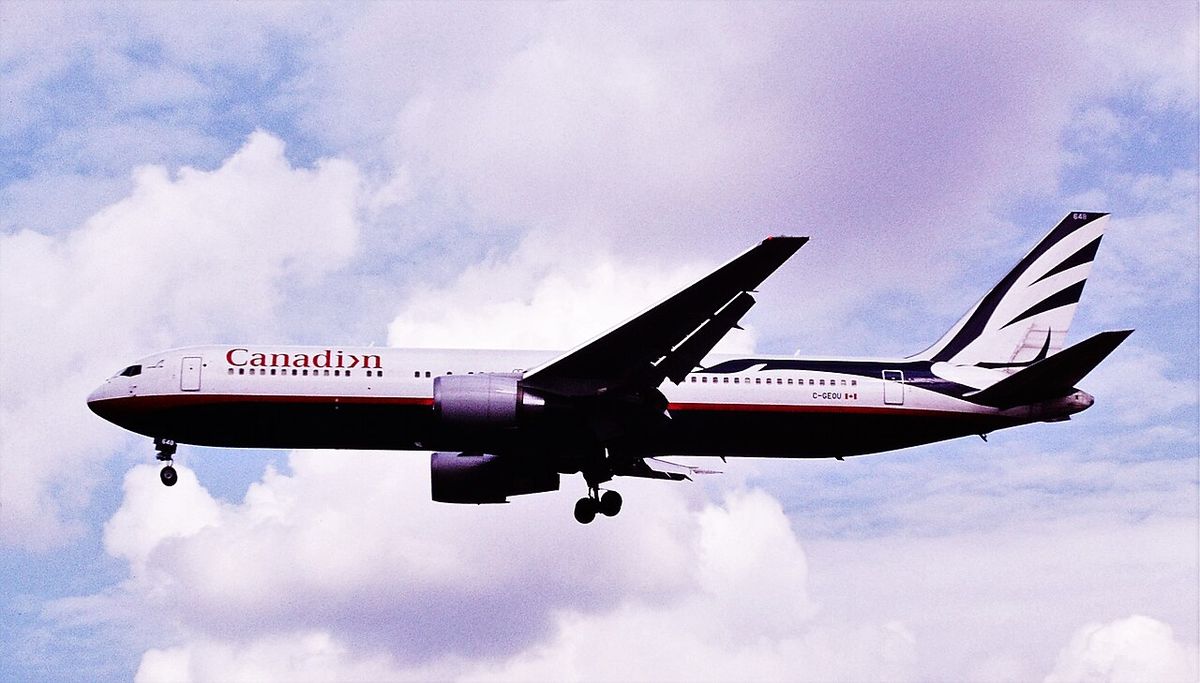
In January 2000, Air Canada acquired Canada's second-largest air carrier, Canadian Airlines International, merging the latter's operations and becoming the world's twelfth-largest airline. As Air Canada gained access to its former rival's financial statements, officials learned the carrier was in worse financial shape than previously believed. An expedited merger strategy was pursued, but integration efforts in the summer of 2000 led to flight delays, luggage problems and other frustrations. Service improved following Air Canada officials' pledge to do so by January 2001. The airline was then confronted by the global aviation market downturn after the September 11 attacks and increased competition, posting back-to-back losses in 2001 and 2002. Having employed a scorched earth policy to prevent the Onex proposed acquisition, Air Canada had burdened itself with onerous contracts with almost all of its suppliers. As a result, on 1 April 2003, Air Canada filed for protection under the Companies' Creditors Arrangement Act. During the 18-month restructuring period, the company was subject to two competing bids from Cerberus Capital Management and Victor Li. The Cerberus bid, which would have seen former Prime Minister Brian Mulroney installed as chairman, was rejected due to its reputation for changing employee pension agreements. Victor Li's Trinity Time Investments initially asked for a board veto and the chairmanship in return for a $650 million investment, but later demanded changes to the pension plan, leading to the bid's withdrawal after union refusal. Finally, Deutsche Bank unveiled an $850 million financing package for Air Canada, conditional on cutting $200 million in annual costs in addition to $1.1 billion in union-agreed cuts from 2003. The offer was accepted after last-minute talks between CEO Robert Milton and CAW president Buzz Hargrove. ACE Aviation Holdings became the new parent company for the reorganized Air Canada, which emerged from bankruptcy protection on 30 September 2004.
The post-bankruptcy period involved a major rebranding effort. In October 2004, Canadian singer Celine Dion became the public face of the airline's relaunch, recording the single "You and I" for its commercials. The airline unveiled a new silver-blue aircraft livery featuring a 'Frosted Leaf' design on the tail, colloquially known as the "toothpaste" livery. On 31 October 2004, the last Air Canada Boeing 747 flight landed in Toronto from Frankfurt, ending 33 years of 747 service with the airline. A major fleet modernization program, Project XM, began in July 2006 as a $300 million interior replacement project to install new cabins across the fleet.
- Executive First Suites featured new horizontal fully flat beds on Boeing 767s, 777s, and Airbus A330s.
- All classes received new seats with personal audio-video on-demand (AVOD) systems.
- Economy class seats were equipped with 8.9-inch touchscreen LCDs, while Executive First had 12-inch screens with noise-cancelling Sennheiser headphones.
- Interactive games and XM Radio Canada were available at every seat.
- USB ports for charging devices and game controllers were installed at all seats.
- 120 VAC plugs were available in most seats: two per triple seat in Economy, one per double, and three per quad, and in all First Class/Executive seats.
Fleet Modernization and Financial Challenges of the Late 2000s
Air Canada undertook significant fleet renewal in the mid-2000s to replace aging aircraft. On 9 November 2005, the airline agreed to purchase 16 second-generation Boeing 777s (10 -300ERs and 6 -200LRs) and 14 Boeing 787-8 Dreamliners. It placed options on 18 more Boeing 777s and 46 Boeing 787-8 and -9 variants. On 24 April 2007, Air Canada exercised half of its options for the Boeing 787, bringing its firm Dreamliner order to 37 plus 23 options, for a total of 60. The airline also cancelled orders for two Boeing 777 freighters. Deliveries of the 777s began in March 2007 and deliveries of the 787s began in May 2014. The late 2000s brought severe financial strain due to high fuel prices and the Great Recession. In June 2008, the airline announced it would lay off over 2,000 employees and cut its capacity by 7 per cent by the first quarter of 2009. President and CEO Montie Brewer, who had expressed confidence the airline would weather the downturn, resigned on 30 March 2009 and was replaced by Călin Rovinescu on 1 April. Rovinescu was the first Canadian to be company president since Claude Taylor in 1992 and had previously served as Air Canada's chief restructuring officer during its 2003 bankruptcy. The airline faced a critical $2.85 billion pension shortfall, which had grown from $1.2 billion in 2007, and was obligated to pay $650 million into the pension fund despite a first-quarter 2009 loss of $400 million. Federal finance minister Jim Flaherty appointed retired judge James Farley, who had presided over the 2003 bankruptcy, to mediate pension issues. In July 2009, Air Canada requested and received CA$1 billion in financial aid from a consortium including the Canadian government, ACE, and associate company Aeroplan.
| Year | Event | Key Detail |
|---|---|---|
| 2004 | Final Boeing 747 Flight | Ended 33 years of 747 service. Replaced by Airbus A340s. |
| 2005 | Wide-body Fleet Order | Ordered 16 Boeing 777s and 14 Boeing 787-8s. |
| 2007 | Boeing 787 Order Expansion | Exercised options, bringing firm Dreamliner order to 37. |
| 2008 | Capacity and Job Cuts | Announced over 2,000 layoffs and 7% capacity reduction. |
| 2009 | Leadership Change | Călin Rovinescu replaced Montie Brewer as CEO. |
| 2009 | Financial Aid Secured | Received CA$1 billion in financing support from a consortium. |
Brand Refresh and Expansion in the 2010s
The 2010s were marked by a renewed brand identity and strategic fleet investments. In December 2010, parent company ACE sold 44 million Air Canada shares, followed by the remaining 31 million shares in November 2012 to Cormark Securities Inc. On 9 February 2017, Air Canada launched a new retro-inspired red, white, and black livery to coincide with its 80th anniversary and Canada's 150th anniversary of Confederation. The design incorporated a black underside, a tail fin with a red maple leaf rondelle, black "Air Canada" lettering, and a black "mask" around the cockpit windows, drawing from the logo used between 1964 and 1992. In December 2013, the airline placed a major order for 61 Boeing 737 MAX aircraft to replace its Airbus A320 family fleet, with the first MAX 8 delivered on 2 November 2017. As part of this deal, Boeing purchased 25 of Air Canada's Embraer E190 aircraft, which were retired in 2016. That same year, Air Canada signed an agreement with Bombardier Aerospace to acquire Airbus A220 aircraft (formerly the CSeries) from 2019 to replace the E190s. Service enhancements included the reintroduction of Premium Economy on North American wide-body flights in July 2017. In April 2018, the airline rebranded its international business class as Air Canada Signature Class, offering an enhanced menu including a Signature Cocktail, new amenity kits, a BMW chauffeur service for connecting passengers at its hubs, and access to the Air Canada Signature Suite at Toronto Pearson International Airport. In May 2018, Air Canada listed Taiwan as part of China to comply with a requirement of China's civil aviation administration. On 6 June 2018, Air Canada and Air China signed a joint venture, the first of its kind between a North American and Chinese airline.
Attempted Acquisition and the COVID-19 Pandemic
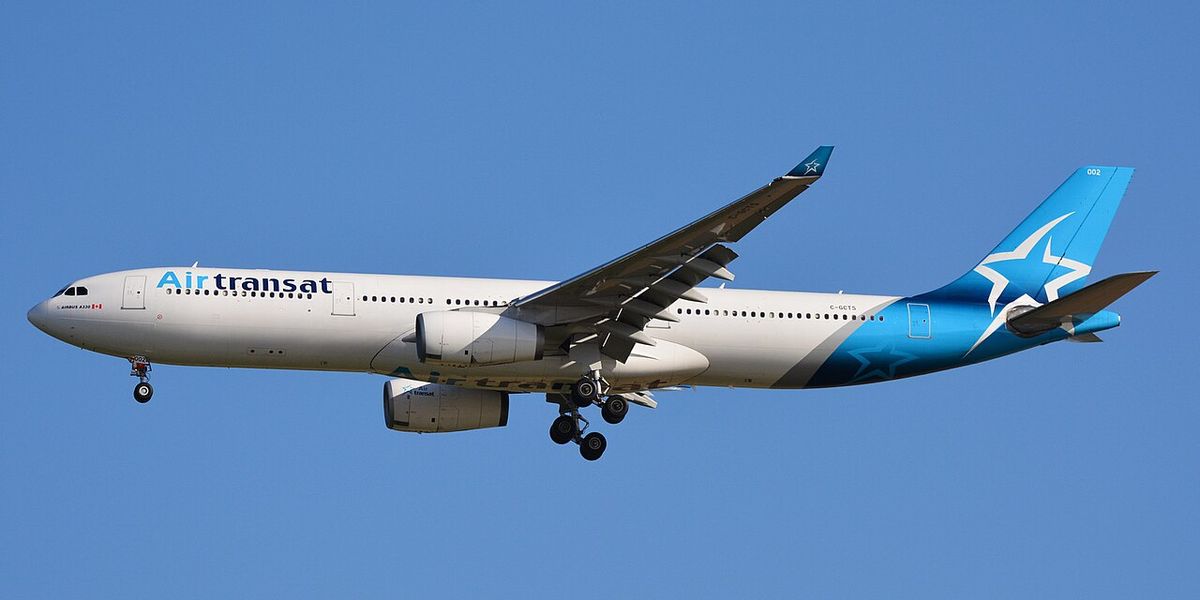
The airline pursued a major acquisition in 2019, announcing on 16 May that it was in exclusive talks to buy Transat A.T., the parent company of Air Transat, for CA$520 million. On 27 June 2019, Transat A.T. agreed to be purchased for CA$13 per share. On 11 August 2019, Air Canada raised the purchase price to CA$18 per share, valuing the overall deal at $720 million. On 23 August 2019, 95% of Transat A.T. shareholders approved the acquisition on that basis. Reflecting the severe impact of the COVID-19 pandemic on the airline industry, the agreement was revised downwards in October 2020 to CA$5 per share. While the Government of Canada approved the takeover on 11 February 2021, the deal was ultimately abandoned in April 2021 after failing to secure approval from the European Commission. The COVID-19 pandemic itself forced drastic service reductions. On 18 March 2020, Air Canada announced it would suspend most flights by 31 March due to travel restrictions. A gradual return to normal service began on 22 May 2020. Despite these challenges, the airline reported carrying 45.3 million passengers in 2025, demonstrating a significant recovery in operations.
Operations, Fleet and Subsidiaries
Air Canada operates a mixed fleet of Airbus and Boeing wide-body and narrow-body aircraft from its major hubs in Montreal, Toronto, and Vancouver. The airline's divisions and subsidiaries cater to distinct market segments and operational needs. Air Canada Cargo manages the airline's freight business. Air Canada Express is the brand for regional flights operated by contract carriers. Air Canada Jetz provides chartered services for sports teams and corporate clients. Air Canada Rouge operates as the airline's leisure carrier, focusing on vacation destinations with a lower-cost model, with some Airbus A319s transferred from the mainline fleet to this subsidiary. Air Canada Vacations is a tour operator offering vacation packages to more than 90 destinations. Together with its regional partners, the airline operates an average of more than 1,600 scheduled flights daily. The airline's commitment to technological innovation, dating back to the 1953 ReserVec system, continues with modern in-flight entertainment and connectivity across its fleet. Air Canada's history of industry firsts includes hiring Judy Cameron in 1978 as the first female pilot for any major Canadian carrier.
Questions about Air Canada
What are Air Canada's main subsidiary brands?
Air Canada operates several subsidiary brands and divisions. Air Canada Express provides regional flight service through partner carriers. Air Canada Rouge is its leisure-focused, lower-cost carrier. Air Canada Jetz offers chartered flights for groups like sports teams. Air Canada Cargo handles freight, and Air Canada Vacations is a tour operator selling vacation packages to over 90 destinations.
When was Air Canada founded and what was its original name?
Air Canada was founded on 11 April 1937 under the name Trans-Canada Air Lines (TCA). It was created by federal legislation as a subsidiary of Canadian National Railway, with the goal of linking Canada's Atlantic and Pacific coasts. The airline launched its first passenger flight on 1 September 1937, operating a Lockheed Electra between Vancouver and Seattle. On 1 July 1938, TCA hired its first flight attendants. The name was officially changed to Air Canada on 1 January 1965, a title the airline had already been using for its French-language operations for some time.
How many passengers did Air Canada carry in 2025?
In 2025, Air Canada transported 45.3 million passengers. The airline is Canada's flag carrier and largest airline by both fleet size and passengers carried. It operates a fleet of 335 aircraft and serves 208 destinations globally. Its operations are centred around major hubs at Montréal-Trudeau, Toronto-Pearson, and Vancouver airports. Together with its regional partners, Air Canada operates an average of more than 1,600 scheduled flights every day.
What is Air Canada's relationship with the Star Alliance?
Air Canada is a founding member of the Star Alliance. The airline joined this global network in May 1997, at the alliance's inception. As a member, Air Canada launched codeshare agreements with several other founding alliance carriers. This membership allows Air Canada to offer its passengers expanded global connectivity, coordinated flight schedules, and shared loyalty benefits across the alliance's worldwide network of airlines.
Did Air Canada ever file for bankruptcy?
Yes, Air Canada filed for bankruptcy protection on 1 April 2003 under the Companies' Creditors Arrangement Act. This action was prompted by significant financial burdens, including onerous contracts signed during a previous takeover defence and a downturn in the aviation market after the September 11 attacks. The airline emerged from this 18 month restructuring process on 30 September 2004. Its emergence was facilitated by an $850 million financing package from Deutsche Bank, which was contingent on the airline achieving substantial cost reductions agreed upon with its unions.
What happened with Air Canada's attempt to buy Air Transat?
Air Canada announced exclusive talks to acquire Transat A.T., the parent company of Air Transat, in May 2019. The initial offer was valued at 520 million dollars. By August 2019, the purchase price was raised to 18 dollars per share, valuing the deal at 720 million dollars, and was approved by 95 percent of Transat shareholders. The offer was later reduced in October 2020 to 5 dollars per share due to the impact of the COVID-19 pandemic. Although the Government of Canada approved the takeover in February 2021, the acquisition was ultimately abandoned in April 2021 after Air Canada failed to secure the necessary regulatory approval from the European Commission.
Sources and further reading
- Air Canada (Wikipedia)
- Air Canada Corporate Profile (aircanada.com)
- Air Canada (thecanadianencyclopedia.ca)
Checked by the Yadude Books desk. Last updated 2026-10-20.