Dollarama
Dollarama Inc. is a Canadian dollar store retail chain and the country's largest retailer of items priced at five dollars or less. Founded in 1992 by Larry Rossy, the company has grown from a single store in Matane, Quebec, to a national network of over 1,400 locations across all provinces and the Northwest Territories. Headquartered in Mount Royal, Quebec, Dollarama is a publicly traded company that has expanded its influence internationally through majority ownership of the Latin American chain Dollarcity and the acquisition of Australia's The Reject Shop. Its evolution from a strict one-dollar model to a multi-price point retailer reflects its significant position in Canadian discount retail.
Origins and the Rossy Family
The retail foundation for Dollarama was laid by the Rossy family, beginning with Lebanese immigrant Salim Rassy, who founded the first all-dollar store in Montreal in 1910. The family name later evolved to Rossy. His son George took over the business in 1937 and led the company until his death in 1973. At that time, leadership passed to his son, Larry Rossy, who was then overseeing a chain of 20 stores operating under the corporate name S.Rossy Inc. Under Larry Rossy's early guidance, the discount retailer expanded to 44 stores by 1992. These stores traded simply as Rossy, which was a distinct entity from Rossy Michael Ltd., a separate chain founded in 1949 by another son of Salim Rassy.
Establishment and National Expansion
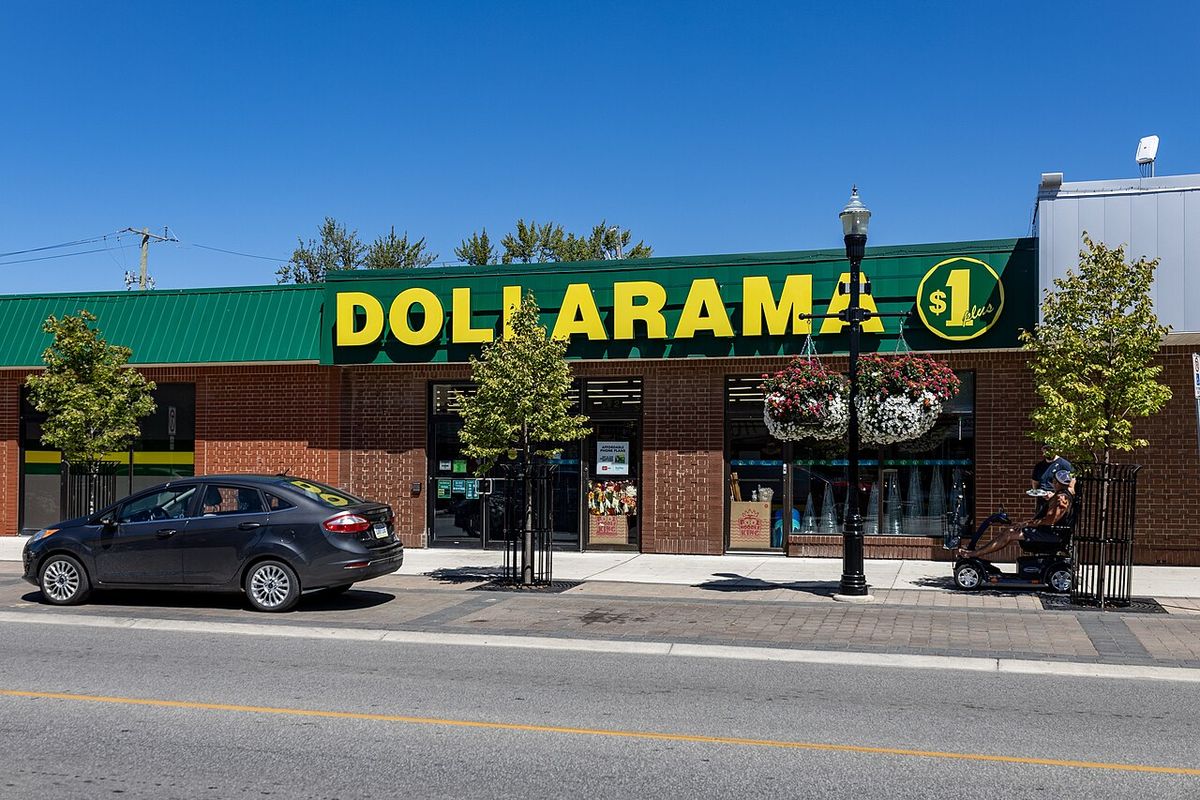
Larry Rossy launched the first store under the Dollarama banner in 1992 at the Les Promenades du St-Laurent shopping centre in Matane, Quebec. This new division quickly became the primary revenue driver for the Rossy family, rapidly overtaking the S.Rossy stores. Locations of the original S.Rossy chain became rare after 1997, and by the turn of the millennium, the chain had quietly disappeared. All remaining S.Rossy stores were either closed or converted into Dollarama branches. Following this consolidation, Dollarama began a sustained period of growth, opening new stores across Canada and reaching a milestone of 1,000 locations in 2015. The company's ownership structure changed in November 2004 when 80 percent of the chain was sold to the private equity firm Bain Capital for US$850 million.
Dollarama became a publicly traded company with its initial public offering on the Toronto Stock Exchange on 9 October 2009. By October 2021, its store count reflected a strong national presence, with the highest concentration in Ontario at 539 stores, followed by Quebec with 379, and significant numbers in Alberta, British Columbia, and the Maritime provinces. The company has also announced plans to open 700 new locations across Canada, including its first store in the Yukon Territory. In 2016, the company established a partnership with Marco G. R. Enterprise, resulting in the sponsorship of the first edition of the Formula Windsor Championship.
- 1992: First Dollarama opens in Matane, Quebec.
- 2004: Bain Capital acquires an 80% stake.
- 2009: Initial public offering (IPO) on the TSX.
- 2015: Reaches 1,000 stores in Canada.
- 2021: Operates stores in all provinces and the Northwest Territories.
- 2022: Announces maximum price point increase to $5.00.
International Ventures and Acquisitions
Dollarama has pursued strategic international growth primarily through partnerships and acquisitions. In 2013, it entered an eight-year agreement to provide business expertise and sourcing services to Dollarcity, a dollar store chain then operating 15 outlets in El Salvador and Guatemala. This partnership proved successful, and by March 2019, Dollarcity had expanded to 180 stores across El Salvador, Guatemala, and Colombia. In July 2019, Dollarama acquired a 50.1 percent controlling stake in Dollarcity. The Latin American chain continued to grow, entering Peru in 2021 and Mexico in 2025 through a new entity 80 percent owned by Dollarama. In 2024, Dollarama purchased an additional 10 percent stake, bringing its total ownership to 60.1 percent, and as of 31 December 2024, Dollarcity operated 632 stores.
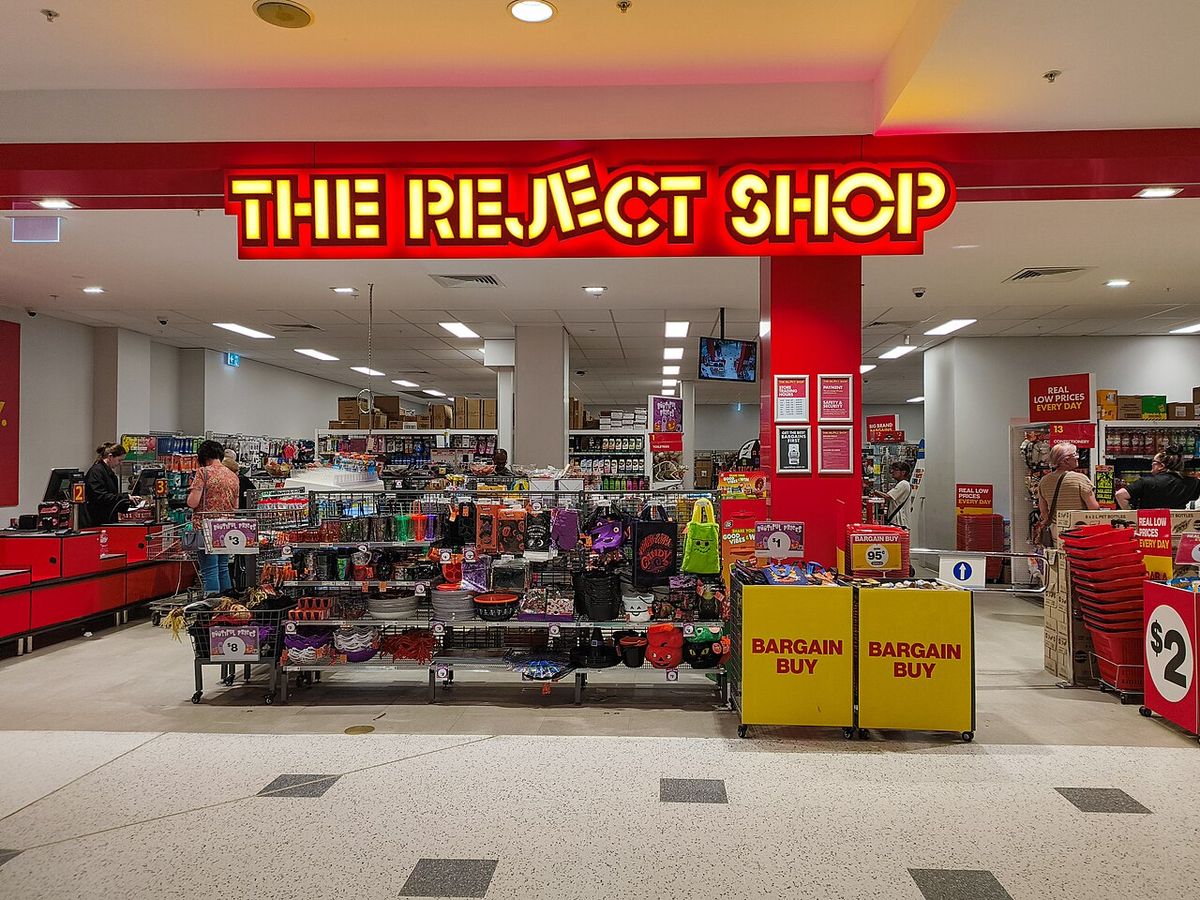
On 26 March 2025, Dollarama announced they would be acquiring Australian discount retailer The Reject Shop for CA$233 million. The investor presentation said it will deliver a "dollarama shopping experience" with a new store layout, design and merchandising experience. The Reject Shop stores would be rebadged as Dollarama. This acquisition represents a significant international expansion for the Canadian retail chain.
Pricing Evolution and Store Operations
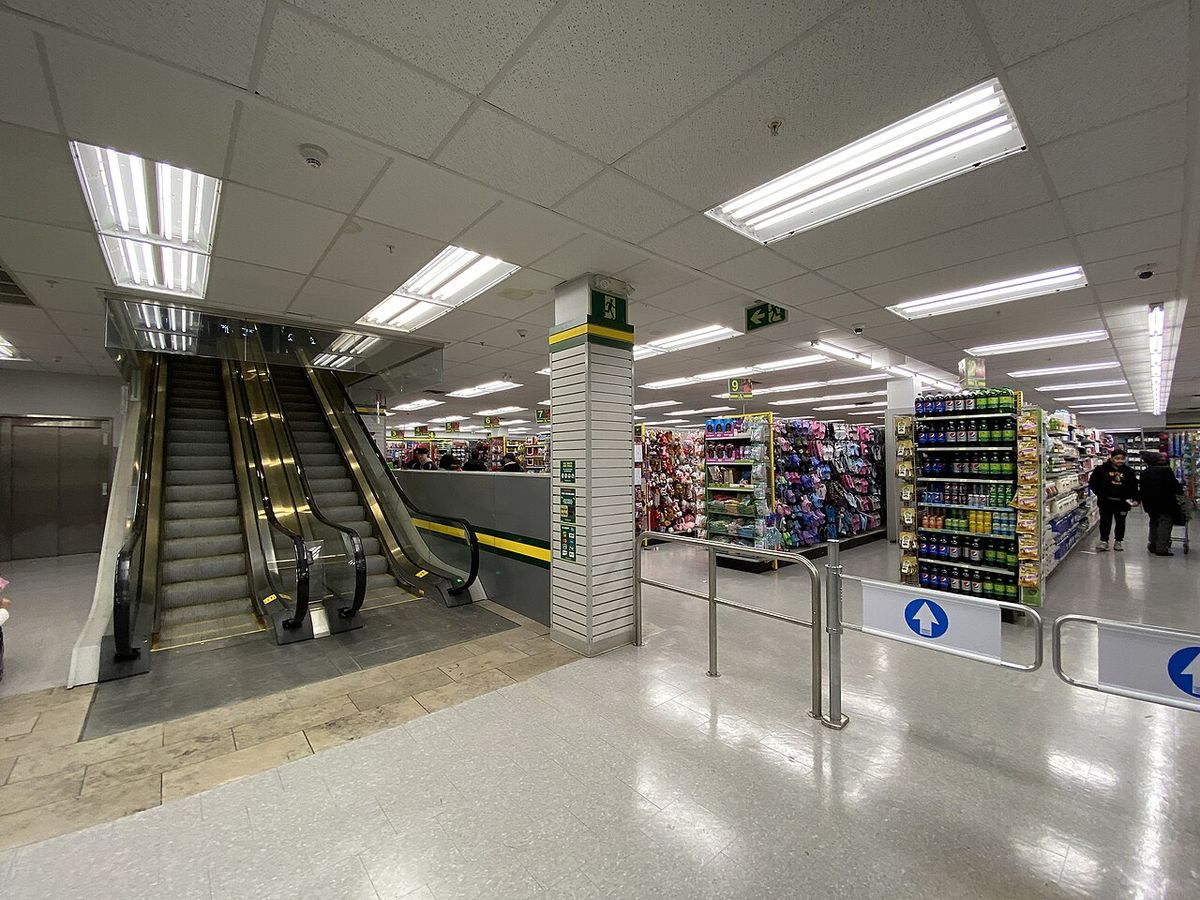
Dollarama's business model has undergone a significant transformation in its pricing strategy. Initially, almost all items were priced at one dollar or less. The company began introducing higher price points in early 2009, with items costing up to $2.00. This trend continued with the addition of $2.50 and $3.00 items in August 2012, followed by $3.50 and $4.00 items in August 2016. In 2022, Dollarama announced its maximum price point would increase to $5.00. These increases have allowed the chain to source a wider variety of products, including closeout merchandise. The company maintains a strict No Return and No Exchange Policy on all purchases. Payment methods have also evolved, with stores being cash-only until Interac debit cards were introduced in 2008.
Gift cards became available in 2011, and by 2015, all locations supported contactless Interac Flash payments. Credit cards were rolled out as a payment option at all stores by the end of summer 2018. Dollarama launched an online store on 21 January 2019, selling approximately 1,000 of its roughly 4,000 in-store products in bulk quantities. Many Dollarama stores were opened in place of former locations of the now defunct BiWay chain, which closed after a series of dubious financial transactions involving a new owner of its parent operation.
Store Network and Product Recalls
Dollarama's physical expansion has often involved occupying spaces left vacant by other retailers. Many of its stores were opened in former locations of the now-defunct BiWay discount chain. The company's growth has not been without challenges, including product safety issues. In 2018, Dollarama recalled over 50,000 children's toys due to the presence of dangerous levels of phthalates, highlighting the regulatory oversight faced by all major retailers. This recall was conducted in cooperation with Health Canada to remove the affected products from store shelves and from customers' homes.
Financial and Operational Highlights
Initially, almost all Dollarama items were priced at one dollar or less. In early 2009, the company began to introduce items priced up to two dollars. It introduced items at two dollars and fifty cents and three dollars in August 2012. In August 2016, it again increased price points to include three dollars and fifty cents and four dollars items. In 2022, Dollarama announced that its maximum price point would be increasing to five dollars. This price level increase allowed the chain to acquire products from a greater variety of sources.
| Year | Approximate Store Count |
|---|---|
| 1992 | 1 (first store) |
| 2009 | Hundreds |
| 2012 | Approaching 1,000 |
| 2015 | 1,000 stores |
| 2016 | Over 1,000 |
| 2022 | Over 1,400 |
Questions about Dollarama
Who founded Dollarama and when?
Dollarama was founded by Larry Rossy in 1992. The first store opened that year in Matane, Quebec. Larry Rossy came from a family retail business started by his grandfather, Salim Rassy (later Rossy), in Montreal in 1910. Larry assumed leadership of the family's S.Rossy Inc. chain in 1973 before launching the Dollarama concept.
What is the highest price for an item at Dollarama?
In 2022, Dollarama announced that its maximum price point would be increasing to $5.00. Many items are priced at $1.00 or less, and initially almost all items were priced as such. The stores introduced items at $2.50 and $3.00 in August 2012. It again increased price points to include $3.50 and $4.00 items in August 2016.
How many Dollarama stores are there in Canada?
Dollarama has over 1400 stores across all provinces of Canada and the Northwest Territories. The company's store count as of October 2021 included 539 locations in Ontario, 379 in Quebec, 134 in Alberta, and 111 in British Columbia, with stores in all other provinces and territories. Ontario has the most stores. The company announced plans to open 700 new locations across Canada, including its first store in the Yukon Territory. This expansion will also involve replacing some former Great Canadian Dollar Store locations.
Does Dollarama have an online store?
Yes, Dollarama launched its online store on 21 January 2019. The online platform sells many of the chain's products in bulk. However, only about 1000 of the roughly 4000 products available in physical Dollarama stores are sold online. The online selection focuses on items that are easily purchased in bulk quantities by customers.
What international companies does Dollarama own?
Dollarama owns The Reject Shop, an Australian discount variety store chain, and is the majority owner of the Latin American chain Dollarcity. Dollarama acquired a 50.1 percent stake in Dollarcity in July 2019 and purchased an additional 10 percent stake in 2024, bringing its total ownership to 60.1 percent. As of 31 December 2024, there were 632 Dollarcity stores operating in El Salvador, Guatemala, Colombia, and Peru. Dollarama also expanded into Mexico in 2025 through a majority owned entity.
What was the 2018 Dollarama toy recall about?
In 2018, Dollarama recalled over 50,000 children's toys due to dangerous levels of phthalates. This recall was a specific product safety action taken by the company. The recall notice identified the hazardous chemical as the reason for removing the toys from the market. This event is documented in the company's history as a notable consumer safety initiative.
Sources and further reading
Checked by the Yadude Books desk. Last updated 2026-11-06.