Hudson's Bay Company
The Hudson's Bay Company (HBC) was a Canadian retail and commercial property holding company that operated from 1670 until its liquidation in 2025. Founded by royal charter, it originally held a fur trade monopoly over the vast territory of Rupert's Land, acting as its de facto government until ceding the land to Canada in 1869. The company later became a dominant force in Canadian retail, establishing its namesake department stores and acquiring chains like Zellers, while also expanding into the United States. Following its 2025 insolvency, its brand and products, including the point blanket, were acquired by Canadian Tire, marking the end of North America's oldest corporation.
Founding and Early Fur Trade
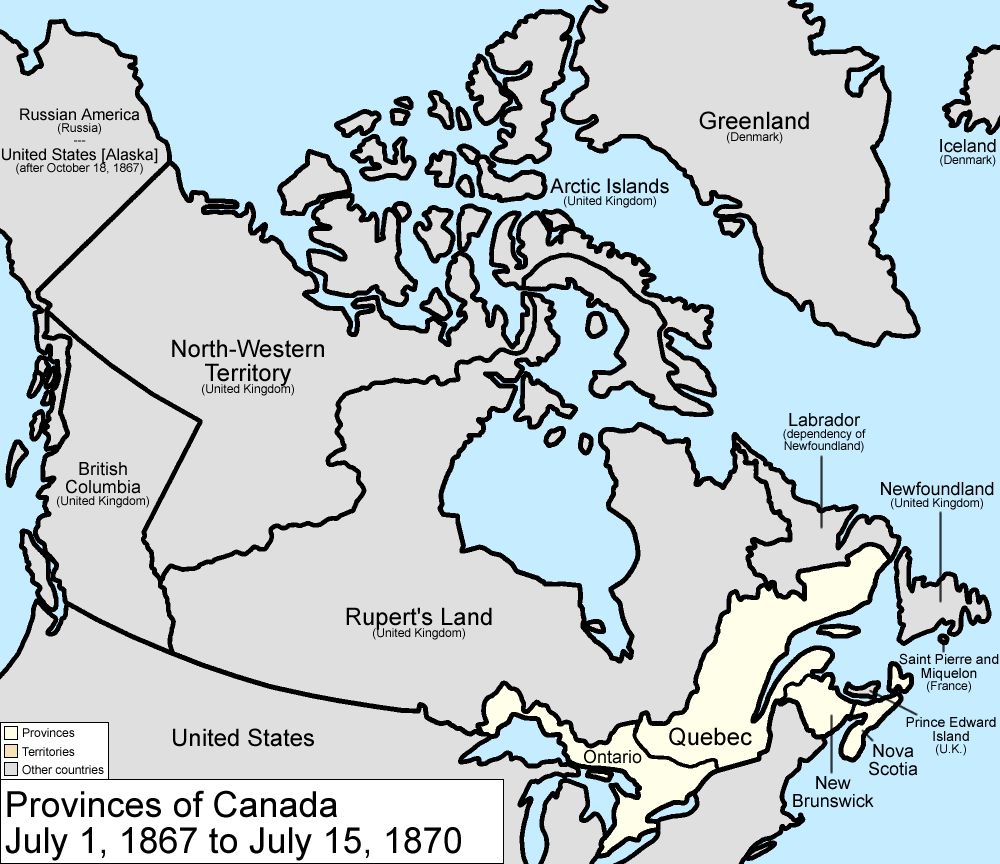
The Hudson's Bay Company originated from the explorations of French traders Pierre-Esprit Radisson and Médard des Groseilliers, who sought a northern trade route via Hudson Bay after being denied support by New France authorities. Their journey to England in 1665, sponsored by Prince Rupert, led to an expedition in 1668 aboard the ship Nonsuch, which established Charles Fort on James Bay at the mouth of the Rupert River. The successful return of valuable furs worth £1,233 prompted King Charles II to grant a royal charter on 2 May 1670, incorporating "The Governor and Company of Adventurers of England, trading into Hudson's Bay." This charter granted the company a monopoly over the trade of Rupert's Land, a territory defined by the Hudson Bay drainage basin encompassing over a third of modern Canada. The company's early operations were based on a system of coastal trading posts, or factories, where factors traded European goods like knives, kettles, beads, needles, and point blankets for furs trapped primarily by First Nations hunters.
The standard unit of trade became the "Made Beaver" (MB), representing a prime beaver pelt worn for a year and ready for processing, with all other goods and pelts valued in MB equivalents such as two otter pelts equalling one MB. The French, operating from New France, were immediate rivals and captured several HBC posts along James Bay in a 1686 raid led by the Chevalier de Troyes that travelled over 1,300 kilometres. Commander Pierre Le Moyne d'Iberville continued the conflict, capturing York Factory in 1694 and again in 1697 after winning the Battle of Hudson's Bay on 5 September 1697, the largest naval battle in the North American Arctic. France retained control of most posts until the 1713 Treaty of Utrecht, which returned the territory to British possession following the War of the Spanish Succession. The company's first official inland trading post was established by Samuel Hearne in 1774 with Cumberland House in present-day Saskatchewan, signalling a shift from the coastal factory model.
Prior to Cumberland House, the HBC had established other inland posts like Henley House in 1743 at the confluence of the Albany and Kenogami Rivers, though it was sacked in 1754 and again in 1759. Additional inland posts included Split Lake House, Nelson House, Capusco River, and Chickney Creek around 1750, with more like Brunswick House and Gloucester House built in the 1770s. The company's ships would routinely call at Stromness in Orkney to take on water and supplies, making Orkney the HBC's principal recruiting ground for much of the 18th century. For the initial years of the fur trade, the arrival of First Nations trappers at the posts was a major annual event met with formal ceremony, including a ritualized trading ceremony between the chief trader and the captain of the Indigenous contingent.

Expansion, Rivalry and Merger
Throughout the 18th century, the HBC faced intense competition from Montreal-based traders, who formed the North West Company (NWC) as a permanent entity in 1783 after earlier seasonal partnerships. The rivalry escalated into violent conflict, known as the Pemmican War, culminating in the 1816 Battle of Seven Oaks on 19 June 1816. To end the destructive competition, the British government forcibly merged the two companies in 1821, with the combined territory extended by a licence to the North-Western Territory reaching to the Arctic and Pacific Oceans. Under the management of Sir George Simpson from 1826 to 1860, the HBC reorganized its operations, reducing the number of trading posts from 175 to 52 for efficiency as many were redundant.
In the Pacific Northwest, the HBC's headquarters moved from Fort George to Fort Vancouver on the Columbia River by 1825, and its policy, enforced by Chief Factor John McLoughlin, was to discourage American settlement in the jointly occupied Oregon Country under the Anglo-American Convention of 1818. The company also issued its own sterling-denominated paper money, printed in London and issued at York Factory, between 1820 and 1870 for use primarily in the Red River Colony. Despite its monopoly, independent traders like James Sinclair and Andrew McDermot found ways to compete by shipping furs south via the Red River Trails to American buyer Norman Kittson. The HBC carried on the NWC's early presence in the Pacific Northwest after the merger, operating posts like Spokane House, Fort Okanogan, and Fort Nez Percés, with Fort Colville replacing Spokane House in 1825.
Exploration continued under the merged company, with Peter Skene Ogden leading a brigade of over 100 men south to trap in the area that is now Utah in the mid-1820s. The HBC invested £10,000 in the East India Company in 1732, viewing it as a major competitor in global trade. After the Treaty of Utrecht, the HBC built the stone star fort Prince of Wales Fort at the mouth of the Churchill River, though it was captured and demolished by a French squadron under Comte de Lapérouse in 1782 during the American Revolutionary War. The economic consequences of earlier French possession of HBC posts were significant, with the company unable to pay any dividends for more than twenty years following the conflicts of the late 17th century.
Transition to Retail and Diversification
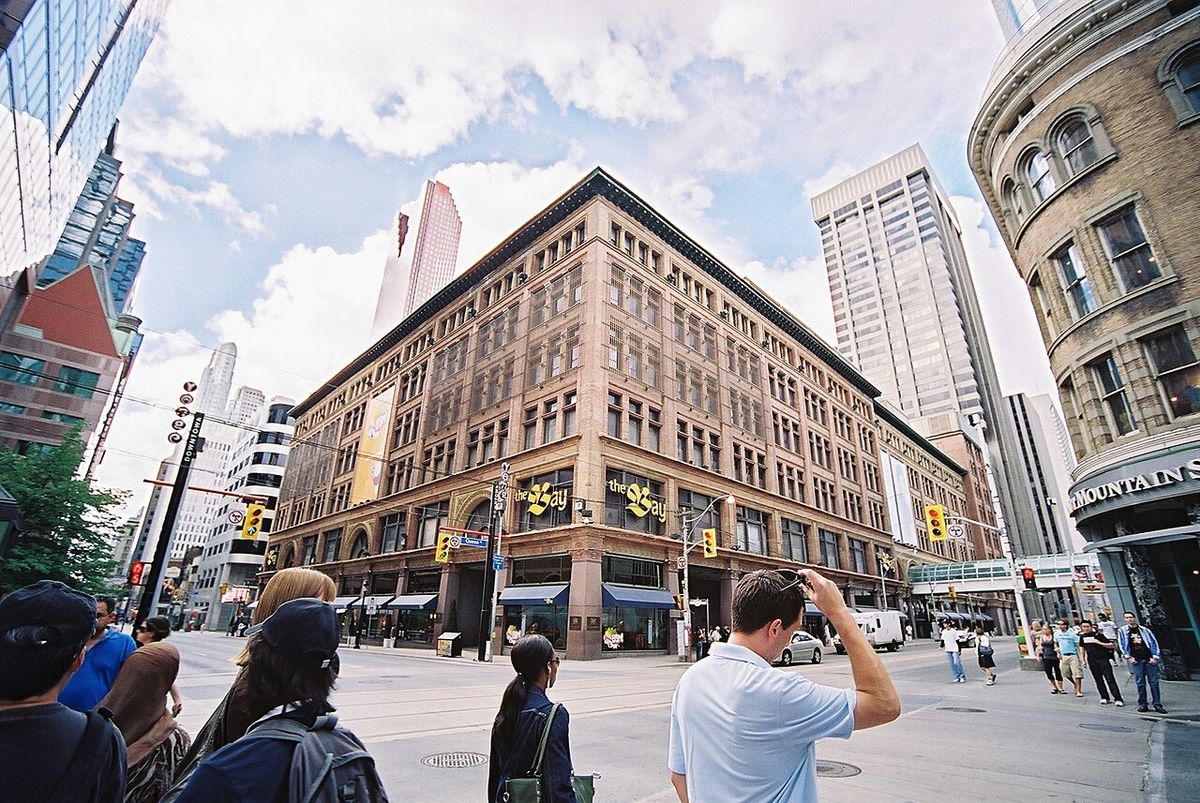
The HBC's era as a fur trade monopoly and land governor ended in 1869 when it relinquished control of Rupert's Land to the newly formed Dominion of Canada. This transition forced the company to reinvent itself, shifting its focus from fur trading to land development and retail. The company established its first department store in 1881 in Winnipeg, laying the foundation for its future as a retail giant. Throughout the 20th century, HBC grew through strategic acquisitions, purchasing the discount store chains Zellers and Fields in 1978. It also absorbed and converted several regional department stores into The Bay banner, including Morgan's, Simpsons, and Woodward's, expanding its national footprint significantly.
The Hudson's Bay Company diversified its business by owning and operating several retail businesses. It established its namesake department stores in 1881. The company acquired the Zellers and Fields discount stores in 1978. It also owned several regional department stores that were eventually converted to The Bay, including Morgan's, Simpsons, and Woodward's. The company established the Home Outfitters home furnishings stores in 1999. Expansions beyond Canada included the United States, where it owned department stores including Lord & Taylor, Saks Fifth Avenue, and Saks Off 5th in the 2010s.
- 1881: First Hudson's Bay department store opens in Winnipeg.
- 1978: Acquisition of Zellers and Fields discount stores.
- 1999: Launch of the Home Outfitters home furnishings chain.
The company's ownership changed hands several times in the late 20th and early 21st centuries. The Thomson family was the majority stockholder from 1979 to 1992, selling its last shares in the company in 1997. American businessman Jerry Zucker bought HBC and took it private in 2006, but following Zucker’s death in April 2008, the company was acquired by NRDC Equity Partners. HBC was then operated by NRDC's holding company Hudson's Bay Trading Company until 2012, when it returned to public trading on the Toronto Stock Exchange from 2012 to 2020, with NRDC as the main shareholder during that period.
International Expansion and Later Years
In the 2010s, HBC pursued an aggressive international expansion strategy, primarily through acquisitions in the United States. This move significantly diversified its portfolio beyond Canadian retail. It also owned the Lord & Taylor chain, acquired by NRDC in 2012 prior to the HBC public offering, and the off-price banner Saks Off 5th. This period represented the peak of HBC's modern scale and complexity, operating multiple banners across North America and Europe.
In the United States, the Hudson's Bay Company owned department stores including Lord & Taylor, Saks Fifth Avenue, and Saks Off 5th in the 2010s. The company also expanded into the Netherlands. It sold its remaining stores in the Netherlands in 2019. The company later spun-off its American assets into the holding company Saks Global in November 2024. This was part of the company's final business activities before liquidation.
| US Retail Banner | Acquired | European Operation | Exit |
|---|---|---|---|
| Lord & Taylor | 2012 (by NRDC prior to HBC public offering) | ||
| Saks Off 5th | Part of Saks acquisition |
However, this expansion proved difficult to manage financially and operationally. The company sold its remaining stores in the Netherlands in 2019, ending its European venture. In a major restructuring move in November 2024, HBC spun off its American assets, including Saks Fifth Avenue and Saks Off 5th, into a separate holding company named Saks Global. This left HBC's business consisting solely of the Canadian Hudson's Bay stores and the Canadian locations of Saks, a much-reduced operation that preceded its final collapse.
Insolvency and Liquidation
Stripped of its US assets and struggling financially, the Hudson's Bay Company filed for creditor protection in March 2025. At that time, it employed 9,364 people, a stark decline from its peak of approximately 70,000 employees in 2006. The remaining Hudson's Bay and Saks stores in Canada were closed by June 2025. The subsequent liquidation process saw the company's assets sold off, including the auction of its historic royal charter and corporate art collection. The company's intellectual property, most notably the rights to the Hudson's Bay name and its point blanket, was sold to Canadian Tire Corporation, which now sells those products in its stores.
In August 2025, the Hudson's Bay Company was formally renamed 1242939 B.C. Unlimited Liability Co. By December 2025, the liquidation of the company was essentially over. The former store leases were either sold to other parties or returned to landlords. As of February 2026, eight people were still working at the company. This compared to 9,364 employees when it had filed for creditor protection and closed its stores in 2025. The company was the oldest corporation in North America, founded in 1670 and liquidated in 2025.
Cultural Artifacts and Legacy
The Hudson's Bay Company left an indelible mark on Canadian history and commerce, with several enduring artifacts symbolizing its long tenure. The most recognizable is the Hudson's Bay point blanket, a wool blanket with distinctive coloured stripes, or points, woven into the edge. By 1700, these blankets accounted for over 60 per cent of the company's fur trade goods. The number of points indicated the blanket's finished size, not its value in beaver pelts, contrary to a long-held misconception. The blanket remains a Canadian symbol and is now produced and sold under licence by Canadian Tire. The company's governance of Rupert's Land for nearly two centuries was a unique chapter, drawing parallels to the East India Company's contemporary rule in India, in which HBC had also invested.
Other significant historical legacies include the network of forts and trading posts that became the nuclei for many Canadian communities, such as Waskaganish, Quebec, the site of the original Charles Fort, later known as Rupert House. The HBC's exploration and mapping of western and northern Canada, undertaken by figures like Samuel Hearne and Peter Skene Ogden, contributed greatly to geographical knowledge. The company's own paper currency, issued for use in the Red River Colony, was a notable feature of its economic control. The story of HBC encompasses the broader narratives of the North American fur trade, Indigenous-European relations, and the commercial development of a nation, from its 17th-century charter to its 21st-century retail demise.
The Hudson's Bay Company established its first fort on Hudson Bay, Charles Fort, in 1668 at the mouth of the Rupert River. It later became known as Rupert House and developed as the community of present-day Waskaganish, Quebec. The HBC established six posts between 1668 and 1717. These included Rupert House, Moose Factory, and Fort Albany on James Bay. Other posts on the western shore of Hudson Bay proper were New Severn, York Factory, and Fort Churchill. Inland posts were not built until 1774, with Cumberland House, Saskatchewan, being the first.
- Charles Fort/Rupert House (1668) on James Bay, the first fort.
- Moose Factory (1673) and Fort Albany, Ontario (1679) on James Bay.
- York Factory (1684), New Severn (1685), and Fort Churchill (1717) on Hudson Bay.
- Henley House (1743), an early inland post.
- Cumberland House, Saskatchewan (1774), the first official inland trading post.
- Fort Vancouver (1825), the Pacific Northwest headquarters after the NWC merger.
Questions about Hudson's Bay Company
When was the Hudson's Bay Company founded and by whom?
The Hudson's Bay Company was founded on 2 May 1670 by a royal charter issued by King Charles II of England. The charter incorporated "The Governor and Company of Adventurers of England, trading into Hudson's Bay" and granted it a monopoly over the fur trade in Rupert's Land. The company's formation was spurred by the successful trading expedition of the ship Nonsuch in 1668-69, which was sponsored by Prince Rupert of the Rhine, who became the company's first governor. This made HBC the oldest corporation in North America.
What happened to the Hudson's Bay Company stores?
The Hudson's Bay Company department stores in Canada, along with the Canadian locations of Saks, were permanently closed by June 2025. This closure followed the company's filing for creditor protection in March 2025 and the earlier spin-off of its American retail assets in late 2024. After the stores closed, the company's leases were sold or returned, and its remaining corporate assets were liquidated. The Hudson's Bay brand name and related intellectual property, however, were sold to Canadian Tire, which now sells Hudson's Bay branded merchandise, including the point blankets, in its stores.
Who owns the Hudson's Bay brand now?
As of 2025, the Hudson's Bay brand and its associated intellectual property are owned by Canadian Tire Corporation. This acquisition occurred during the liquidation of the former Hudson's Bay Company holding company after it filed for creditor protection. Canadian Tire now has the rights to produce and sell products under the Hudson's Bay name, most notably the classic point blankets. The original corporate entity was renamed 1242939 B.C. Unlimited Liability Co. in August 2025 and was effectively dissolved.
What is a Hudson's Bay point blanket?
A Hudson's Bay point blanket is a durable wool blanket traditionally traded by the company for beaver pelts. It is characterized by its distinctive coloured stripes, known as points, woven into the edge of the blanket. By 1700, these blankets made up more than 60 per cent of the goods traded by HBC. The number of points indicated the blanket's finished size, not its value in beaver pelts, which is a common misconception. The blanket remains a Canadian symbol and continues to be produced under licence by Canadian Tire.
What was Rupert's Land?
Rupert's Land was the territory granted to the Hudson's Bay Company by its royal charter from King Charles II in 1670. This charter gave the company a monopoly over the region drained by all rivers flowing into Hudson Bay. The HBC controlled the fur trade and was the de facto government in this territory. The company relinquished control of Rupert's Land to Canada in 1869.
Why did the Hudson's Bay Company go out of business?
The Hudson's Bay Company went out of business due to financial failure following a period of restructuring and asset sales. In November 2024, the company spun off its American assets into a separate holding company called Saks Global. By March 2025, its remaining business consisted only of Hudson's Bay stores and Canadian Saks locations, and it filed for creditor protection. All remaining stores were closed by June 2025, and the company's intellectual property was sold to Canadian Tire.
Sources and further reading
- Hudson's Bay Company (Wikipedia)
- Hudson's Bay Company (thecanadianencyclopedia.ca)
- Hudson's Bay Company Archives (gov.mb.ca)
- Hudson's Bay Company (nwcouncil.org)
- MHS Centennial Business: Hudson's Bay Company (mhs.mb.ca)
Checked by the Yadude Books desk. Last updated 2026-10-19.