Zellers
Zellers is a Canadian discount department store chain with a long and complex history, having served as a prominent retail destination for generations of thrifty shoppers. Founded by Walter P. Zeller in London, Ontario in 1928, the chain grew to become a national institution, known for its low-price guarantee and its beloved mascot, Zeddy the bear. After peaking at 350 locations in 1999, the chain faced intense competition and was largely wound down by 2013, though its brand has been revived multiple times, most recently under new ownership in 2025. The Zellers name remains a significant part of Canada's retail history, evoking nostalgia for its era of accessible, family-friendly shopping.
Founding, bankruptcy, and 1931 relaunch
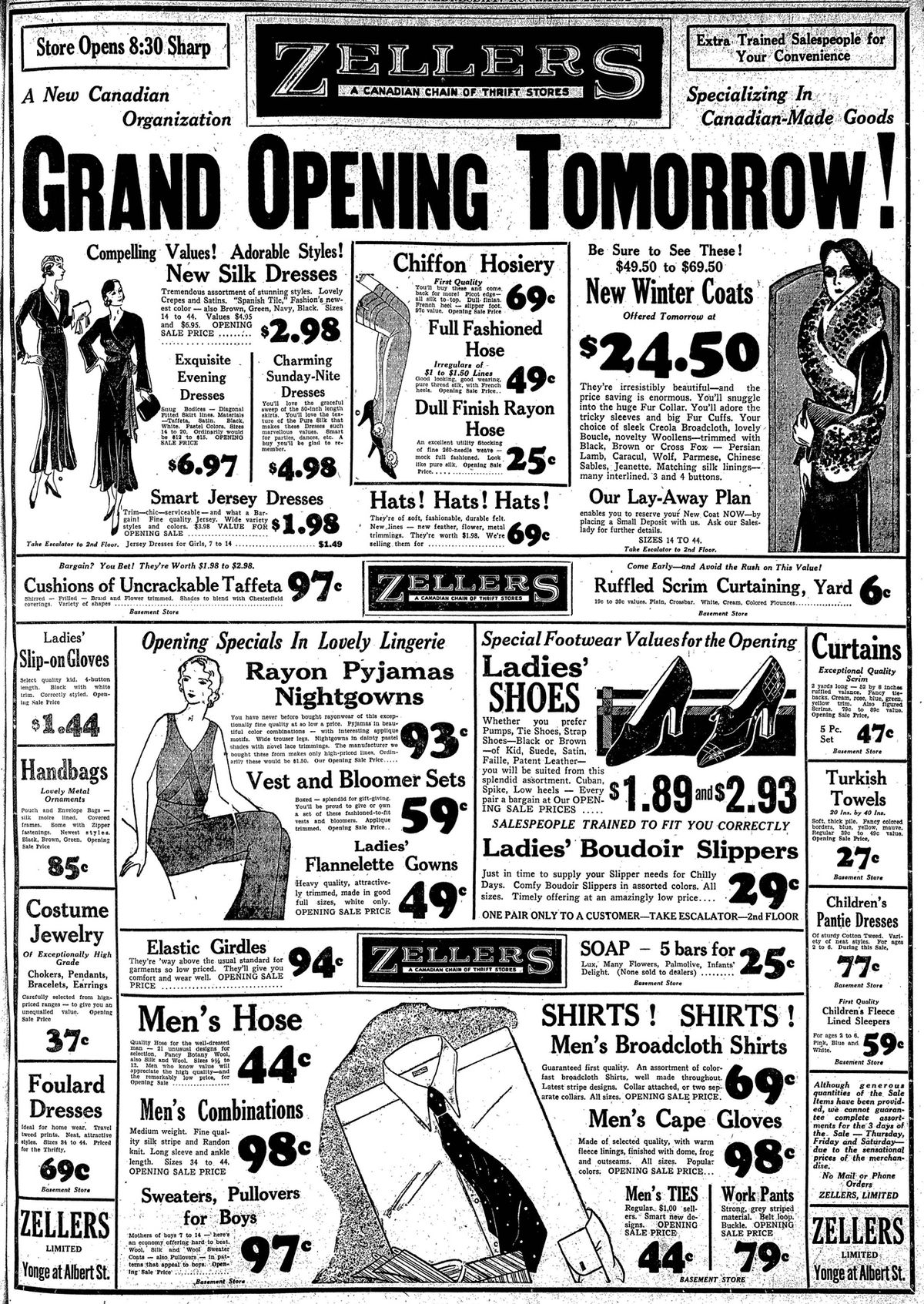
Walter P. Zeller opened the first Zellers store at 176 Dundas Street in London, Ontario on Saturday, August 4, 1928, after working for years at Metropolitan Stores, F. W. Woolworth Company, and Kresge's. The initial store had a street frontage of 53 feet and a depth of 137 feet, featuring 7,000 square feet of space on the ground floor with 2,000 square feet of counter space spread across 21 different departments. Zeller's ambitious plan was to establish a Canada-wide chain, with stores targeted for London, St. Catharines, Niagara Falls, Fort William (now part of Thunder Bay), and Saint John, New Brunswick. The business did well initially, but within months it was bought out by the American firm Schulte-United Ltd, which rebranded the stores and then went bankrupt just two years later in 1930. In late 1931, Walter Zeller promptly bought back fourteen Canadian locations of the failed Schulte-United chain, all in Southern Ontario, and relaunched Zellers as a store for thrifty Canadians, with one of the locations being the original Dundas Street store in London.
The relaunched chain pursued an aggressive expansion strategy, growing to 60 stores and employing 3,000 people within 25 years. A significant step in this growth was the 1952 acquisition of the Federal Stores chain of variety stores, which added more than 12 new Zellers locations and helped the chain expand into Atlantic Canada. In 1956, the chain opened its first self-serve location at the Norgate shopping centre in Saint-Laurent, Quebec, embracing a modern retail trend that would become standard. To fuel further growth and gain expertise, Zellers concluded a deal with the American mass merchandiser W.T. Grant Company, which purchased 10 percent of Zellers shares initially and eventually a 51 percent ownership stake in 1959.
Partnership with W.T. Grant and operational innovations
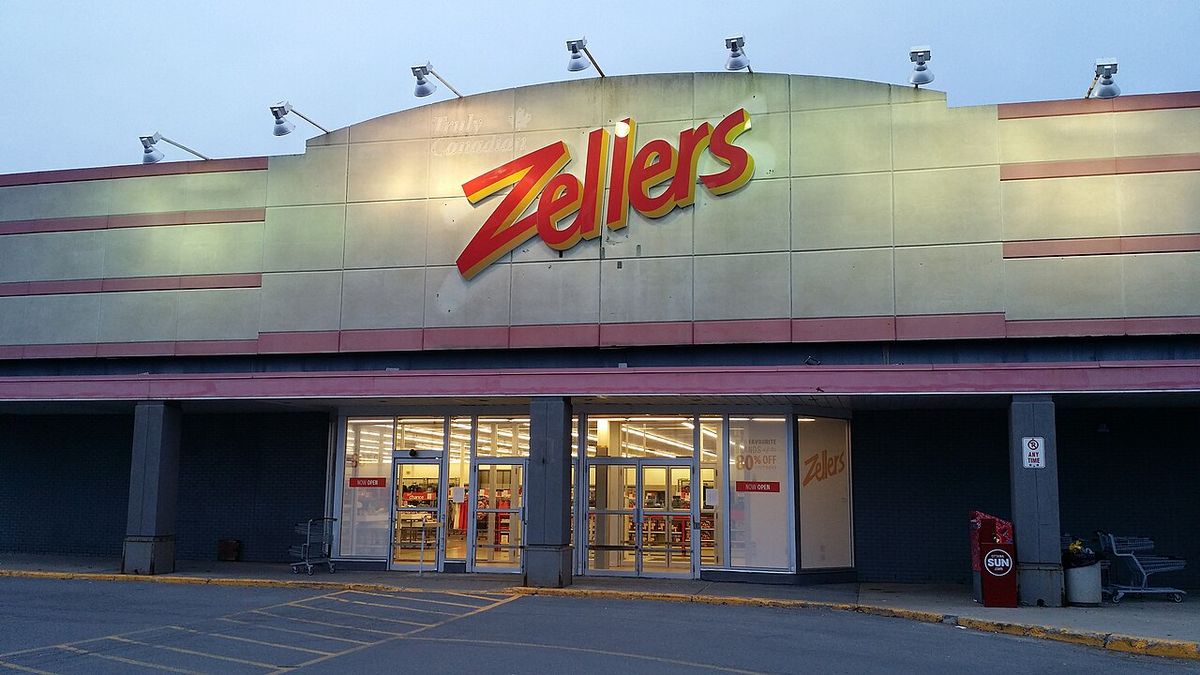
The partnership with W.T. Grant provided Zellers with valuable experience in merchandising, real estate, store development, and general administration throughout the 1950s and 1960s. Zellers employees were sent to Grant stores and head office for training, and the two companies made common buying trips to East Asia to source products. This collaboration supported a new wave of store openings, with locations launched in 1960 employing many new innovations for the chain. These innovations included the first Zellers in-store restaurant, the first automotive centre, and the first suburban location, marking a shift in how the stores were designed and experienced by customers. The chain also changed its logo in 1975 to the version that would become familiar to Canadians for decades, featuring the distinctive red script.
By 1976, Zellers had grown to a chain of 155 stores, with annual sales reaching $407 million, demonstrating the success of its expansion and partnership model. Although Zellers was prospering, its American partner W.T. Grant was facing intense competition in the United States from Kmart, Target, and Walmart, which led to financial difficulties. This pressure forced W.T. Grant to withdraw entirely from its Canadian operations, setting the stage for a new chapter in Zellers' ownership. The end of the Grant partnership coincided with an attempted takeover by the Vancouver-based clothing retailer Fields, which offered to purchase a 50.1 percent stake in Zellers for $32,675,000 in 1976.
Acquisition by Hudson's Bay Company and growth through mergers
Zellers shareholders, unhappy with the idea of Zellers becoming a subsidiary of Fields, reversed the proposed takeover and instead purchased Fields and its hardware store division, Marshall Wells. This sale added 70 Fields stores and 162 franchised Marshall Wells stores to the company, and Fields president and founder Joseph Segal was appointed as president of Zellers. In a major corporate manoeuvre in June 1978, Zellers itself presented a bid to acquire 100 percent ownership of the historic Hudson's Bay Company. HBC management, recognizing Zellers' profitability and the potential to enter a new retail segment, decided to purchase Zellers instead, acquiring full ownership of Zellers and Fields by 1981 and Marshall Wells by 1982.
Under HBC ownership, Zellers continued to expand through strategic acquisitions that dramatically increased its national footprint. In 1990, Hudson's Bay Company acquired the 51 stores of the Towers/Bonimart chain from the Oshawa Group and converted most of them to Zellers outlets, including a flagship location in the Scarborough district of Toronto. Advertisements at the time featured both the Towers mascot, Sparky, and the Zellers mascot, Zeddy, walking arm in arm to show the acquisition to the public. A major expansion in Western Canada came in 1993 when HBC purchased the assets of the bankrupt Woodward's chain, including 21 store locations, which were converted into Zellers and The Bay stores.
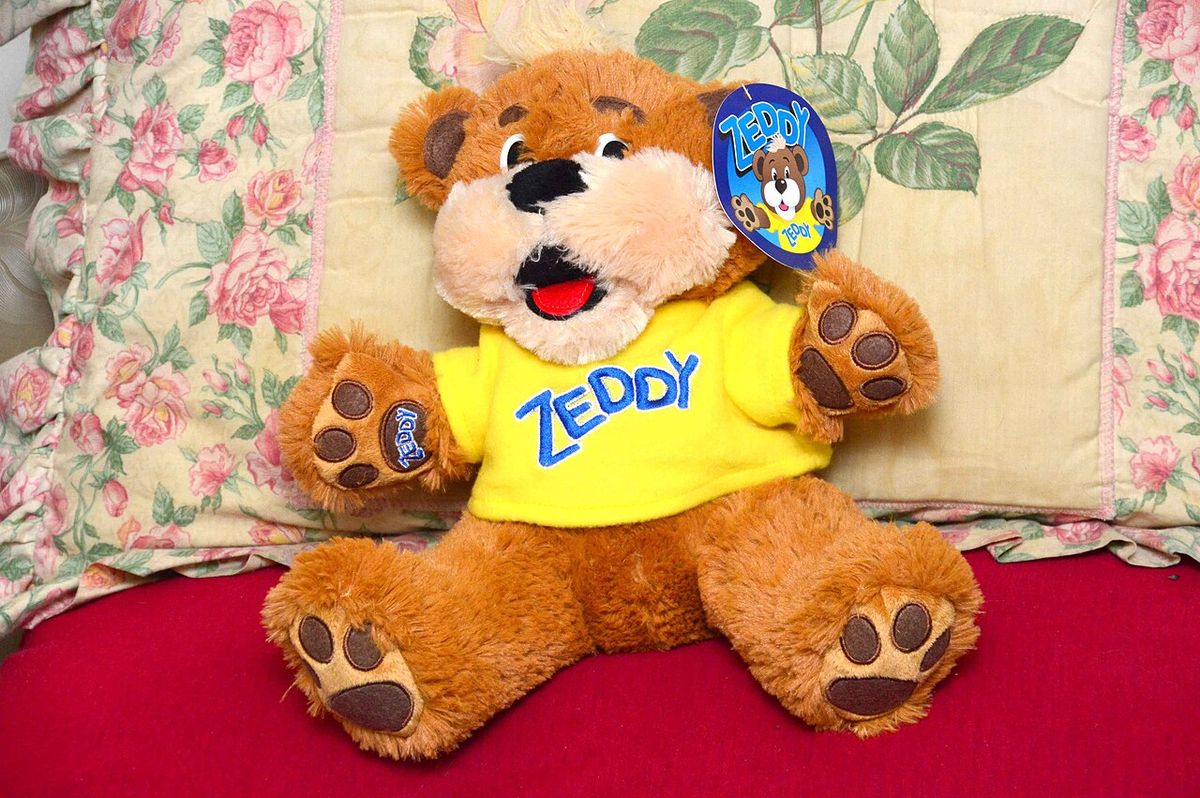
The chain reached its peak size in 1998 when Hudson's Bay Company acquired Kmart's Canadian division and merged it with the Zellers division to create a larger combined chain under the Zellers name. While some Kmart locations were closed, many sites became full Zellers outlets, and Kmart Canada president George Heller remained with HBC, eventually becoming HBC's president and CEO in the mid-2000s. By 1999, this series of mergers and acquisitions resulted in Zellers operating 350 stores across Canada, its highest number ever. During this era, Zellers was famously promoted with the slogan "Where the lowest price is the law" and its mascot, Zeddy, became a household icon.
Corporate restructuring, financial decline, and leadership
The 2000s marked a period of steep decline for Zellers as it faced ferocious competition from Walmart Canada and an inability to adapt to changing retail trends. In Hudson's Bay Company's last year as a publicly traded company, Zellers had 291 stores but lost $107 million on sales of $4.2 billion, highlighting its financial troubles. On February 28, 2006, Hudson's Bay Company was taken private by South Carolina businessman Jerry Zucker, and following Zucker's death in 2008, HBC and its subsidiaries including Zellers came under the ownership of a New York-based private equity firm, NRDC Equity Partners, headed by Richard Baker. NRDC also owned the Lord & Taylor chain in the United States and later invested heavily in repositioning The Bay as an upscale retailer, while the Zellers chain continued to struggle and was seen as a drag on the parent company.
Mark Foote was appointed President and CEO of Zellers in 2008, having recently served as president and chief merchandising officer at Loblaw Companies and prior to that was president of Canadian Tire Corp.'s retail division. Foote was credited with stabilizing the chain, though it still continued losing ground against Walmart Canada. His mandate in 2011 was to liquidate the 273 Zellers stores in preparation for Target's takeover by October of that year. Foote's strategy focused on raising profits by ramping up inventory levels of higher margin goods like apparel over loss leaders such as paper towels and detergent, and by slashing costs including replacing expensive fall television ads with a social media blitz on Facebook. Reportedly, this strategy paid off as Zellers' operating profit was well ahead of expectations and the retailer performed very well in 2011, even as it prepared for its own dissolution.
- 2006 Loss: $107 million on $4.2 billion sales.
- 2008 Owner: NRDC Equity Partners (Richard Baker).
- 2008 CEO: Mark Foote, former Loblaw and Canadian Tire executive.
- 2011 Strategy: Profit-focused liquidation, shift to high-margin goods.
- 2011 Store Count: 273 locations at time of Target deal announcement.
- 2011 Marketing: Social media campaign replaced TV advertising.
The Target Canada deal and store liquidation process
The chain's fate was sealed on January 13, 2011, when HBC announced it would sell the lease agreements of up to 220 Zellers stores to Target Corporation for $1.825 billion. Under the agreement, Zellers would sublease the properties and continue to operate them as Zellers locations until January 2012 at the earliest, and at the latest the end of March 2013. It was reported that Target would renovate 100 to 150 of the locations to reopen under its own banner during 2013 and 2014, while the remaining acquired sites would be transferred to other retailers. Of the maximum 220 locations, 105 were identified for transfer to Target in late May 2011, and another 84 in late September 2011, bringing the total number of Zellers stores acquired by Target to 189, of which 39 were resold to Walmart Canada.
The deal had significant repercussions for commercial real estate, as RioCan REIT was notably affected with many of its mall properties including Zellers locations. The United Food and Commercial Workers Union planned demonstrations as many Zellers staffers were to be laid off instead of being retained by Target or Walmart, a marked contrast to Walmart's 1994 takeover of Woolco where all employees were retained. In March 2012, the first 50 Zellers stores were put into liquidation, including all 39 stores slated to become Walmart outlets, and by mid-June those latter locations were closed to the public. On June 25, 2012, 17 more stores in Ontario were put into liquidation as the wind-down accelerated.
On July 26, 2012, Hudson's Bay Company announced it would close most of the 64 remaining stores that were supposed to continue operating as a smaller Zellers chain. A company spokesperson stated these stores employed 6,400 people, or approximately 100 per location, ranged in size from 48,000 to 128,000 square feet, and were mostly in small towns. The closings were to happen by March 31, 2013, coinciding with the deadline for HBC to vacate the sites acquired by Target, with the main reason cited being Zellers' lack of profitability and the non-viable geographical spread of the remaining stores. After this decision, these locations started their liquidation sale on December 26, 2012, and the company stopped accepting returns on January 31, 2013, with liquidators selling nearly all merchandise, store fixtures, and shopping carts at discounted prices.
Store formats, operations, and notable merchandise
At its peak, Zellers operated coast to coast, from St. John's, Newfoundland and Labrador, to Victoria, British Columbia, employing over 35,000 people. The average Zellers store was quite large, spanning approximately 94,000 square feet, while the Zellers Select format was designed for smaller markets with populations under 25,000, with stores averaging 45,000 square feet. Some multi-level locations featured specialized equipment like the Cartveyor, a system designed to transport shopping carts between floors alongside a standard escalator, and a few were also equipped with elevators. The company's operations were supported by a head office, which was located in Montreal until 1996 when it was merged with HBC's headquarters in downtown Toronto, and then reestablished in 1998 at the former Kmart Canada head office in Brampton, Ontario.
Zellers was known for introducing several retail innovations in Canada and for its involvement in the early home video game market. Stores opened in 1960 featured the chain's first in-store restaurant, its first automotive centre, and its first suburban location. In the early 1980s, Zellers sold counterfeit video games for the Atari 2600 console, which were manufactured in Taiwan under new names and artwork and were pirated copies of titles from Atari or third-party developers like Activision. Zellers was eventually forced by Atari to stop selling these 18 games due to copyright infringement. The chain also released its own line of products and maintained specific departments, with the original 1928 store having 21 different departments staffed by sixty women on opening day.
- Geographic Reach: St. John's, NL to Victoria, BC.
- Select Store Size: ~45,000 sq ft for towns under 25,000 people.
- Multi-level Feature: Cartveyor system for shopping carts.
- Head Office Timeline: Montreal (pre-1996), Toronto (1996 to 1998), Brampton (1998 onward).
- 1980s Merchandise: Sold 18 counterfeit Atari 2600 video games.
- 1928 Store Departments: 21 different departments on opening day.
Post-2013 revivals as liquidator and within Hudson's Bay
After the mass closures in 2013, HBC revised its strategy in January 2013 and decided to keep a total of three stores open under the Zellers banner, not as discount stores but as liquidation outlets for sister chain The Bay. HBC communications manager Tiffany Bourré described these locations as featuring fashion apparel and a refined home product offering with more from other HBC banners. These locations included Place Bourassa in Montreal North, Quebec, which closed in early 2014 and was replaced by a previously closed Zellers in the Ottawa community of Nepean, reopening on April 3, 2014. In September 2014, the last Zellers in Western Canada, at Semiahmoo Shopping Centre in Surrey, British Columbia, closed, leaving only two stores nationwide at Kipling Queensway Mall in Etobicoke, Ontario, and Bells Corners in Nepean, Ontario, both of which were closed by January 26, 2020.
In September 2021, as a pilot project, HBC relaunched the Zellers brand as a pop-up shop within a Hudson's Bay department store at the Burlington Centre mall in Ontario, invoking a fun and nostalgic experience. This store-within-a-store concept sported hanging Zellers logo banners, the classic red-and-white colour scheme, and red floor lines to mark off a small section, offering a limited selection of Canada-branded apparel, bedding, housewares, and toys. Subsequent reporting by Retail Insider indicated the pop-up may have been prompted by trademark filings by an unrelated group after HBC allowed a trademark on the Zellers logo to expire in 2020, leading HBC to sue to protect the brand. Some retail analysts believed the re-introduction was primarily due to this lawsuit, using it as a demonstration of ownership, and doubted any successful expansion.
In March 2023, HBC formally brought back Zellers as an e-commerce website and physical space within 12 select Hudson's Bay stores in Ontario and Alberta, expanding to 25 locations by April 2023. After another wave of openings in August, it was announced in September 2023 that all Hudson's Bay locations would have Zellers spaces by the end of the month, with shops ranging from 1,000 to 10,000 square feet. Customers were disappointed by this revival, finding pricing overly expensive and the experience dissimilar from the old discount stores, with small sections nearly indistinguishable from The Bay and no dedicated Zellers staff or indoor restaurants. This revival ended when HBC filed for bankruptcy in March 2025 and ceased all retail operations on June 1, 2025, with most HBC intellectual property acquired by Canadian Tire, though the Zellers brand was not included in that deal.
The 2025 relaunch under Les Ailes de la Mode and future plans
On August 28, 2025, for the third time in its history, it was announced that Zellers would be relaunched again, this time under the new ownership of Les Ailes de la Mode, the parent company of retailers Fairweather and International Clothiers. The first location was set to open in an anchor space formerly held by a Hudson's Bay at Londonderry Mall in Edmonton, with initial opening dates of August 29 and then September 1 being delayed. The store ultimately opened on October 30, 2025, marking the return of a standalone Zellers location after a twelve-year absence. In January 2026, Zellers announced it was planning to expand across Canada, signalling ambitions for a broader national presence under its new ownership.
On June 18, 2026, Zellers opened a second store at 80 Orfus Road in North York, Toronto, Ontario, establishing a presence in Canada's largest market. This move indicated a strategic focus on major urban centres as part of its expansion plans following the Edmonton launch. The ownership by Les Ailes de la Mode, a company with experience in value-oriented apparel retailing through its Fairweather chain, suggests a potential alignment with Zellers' historical focus on thrifty shopping. The future of this latest revival and its ability to recapture the chain's former prominence remains a developing story in Canadian retail.
Financial obligations and lease liabilities after 2011
The 2011 sale of leases to Target represented the culmination of the chain's financial struggles, providing HBC with a substantial cash infusion but effectively ending Zellers as a major national chain. After the deal with Target Corporation, HBC still carried a burden of half of the $226.4 million of Zellers lease obligations remaining through 2016, with the rent for 2012 alone being almost half of HBC's adjusted profit. With HBC preparing an initial public offering in late 2012, it needed to address these liabilities by either terminating them with landlords at steep discounts or finding new tenants to sublet the space. This financial cleanup was a necessary step for HBC to present a healthier balance sheet to potential investors.
The closure of hundreds of stores affected thousands of employees and altered the tenant mix of many Canadian shopping centres and malls. The various attempts to revive the brand, from liquidation outlets to store-within-a-store concepts, demonstrate the enduring, if nostalgic, power of the Zellers name in the Canadian consciousness. Its most recent revival under entirely new ownership suggests the brand's story may still have new chapters to be written, separate from the financial legacy of its time under Hudson's Bay Company. The table below outlines key financial figures and obligations related to the chain's decline and dissolution.
| Year | Event or Metric | Figure or Detail |
|---|---|---|
| 1976 | Annual Sales | $407 million |
| 1976 | Fields Acquisition Offer | $32,675,000 for 50.1% stake |
| 1985 | Marshall Wells Sale Price | $20 million |
| 1999 | Peak Store Count | 350 locations |
| 2006 (approx.) | Annual Loss (pre-privatization) | $107 million on $4.2 billion sales |
| 2011 | Target Lease Acquisition Price | $1.825 billion for up to 220 stores |
| 2012 | Remaining Lease Obligations | $226.4 million through 2016 |
| 2012 | Remaining Store Employees | 6,400 people across 64 stores |
Questions about Zellers
When did Zellers first open and who founded it?
Zellers was first founded by Walter P. Zeller, who opened the inaugural store at 176 Dundas Street in London, Ontario on Saturday, August 4, 1928. The store launched with 7,000 square feet of sales space, 2,000 square feet of counter space, and 21 different departments staffed by sixty women. After a brief period under different ownership ending in bankruptcy, Zeller bought back fourteen locations in late 1931 and relaunched the chain. The original London location remained in operation until the late 1980s.
Why did Zellers close most of its stores?
Zellers closed the majority of its stores due to intense competition, primarily from Walmart Canada, and an inability to adapt during a changing period in retail. Financially, the chain was struggling, losing $107 million on $4.2 billion in sales in the year before HBC was taken private. In 2011, HBC sold the lease agreements for up to 220 locations to Target Canada for $1.825 billion. The remaining 64 stores were closed by March 31, 2013, after HBC determined they were not profitable and the geographical spread was not viable for a smaller chain.
Is Zellers coming back?
Yes, the Zellers brand has been revived multiple times. After the 2013 closures, HBC operated a few liquidation outlets until 2020. In 2023, HBC relaunched Zellers as store-within-a-store sections inside Hudson's Bay locations, but this ended when HBC filed for bankruptcy and closed all stores in 2025. A new revival began on October 30, 2025, under the ownership of Les Ailes de la Mode, with the first store opening in a former Hudson's Bay at Londonderry Mall in Edmonton. A second location opened in Toronto in June 2026, with plans for further expansion across Canada.
What was Zellers famous for?
Zellers was famous for its discount department store model and its commitment to low prices, encapsulated in the slogan "Where the lowest price is the law. It was also well-known for its mascot, Zeddy the bear, and for introducing retail innovations like the first in-store restaurant and automotive centre in 1960. The chain sold a wide range of goods and, in the early 1980s, controversially sold counterfeit Atari 2600 video games. For many Canadians, it is remembered as a family-friendly, affordable shopping destination that was an anchor in communities across the country.
How many Zellers stores were there at its peak and who owned it?
Zellers reached its peak size in 1999 with 350 store locations across Canada, operating under the ownership of the Hudson's Bay Company which had acquired it in 1978. This expansion was driven by a series of acquisitions including the Towers/Bonimart chain in 1990, the Woodward's stores in 1993, and the merger with Kmart Canada in 1998. At its height, the chain employed over 35,000 people and operated from Newfoundland to British Columbia. The average store size was 94,000 square feet, with a smaller Zellers Select format for towns under 25,000 people.
What happened to Zellers employees when Target took over?
When Target Corporation took over, Zellers employees faced widespread layoffs as Target and Walmart Canada did not retain the majority of the staff. This situation prompted the United Food and Commercial Workers Union to plan demonstrations in protest. The layoffs stood in marked contrast to Walmart's 1994 acquisition of Woolco, where all employees were retained. The remaining 64 Zellers stores that Hudson's Bay Company initially kept open also closed by March 2013, resulting in job losses for approximately 6,400 more people. The closures were due to Zellers' lack of profitability and the nonviable geographical spread of the remaining locations.
Sources and further reading
- Zellers (Wikipedia)
- Zellers is back! Inside the decades-long journey of ... (ca.finance.yahoo.com)
- A look back at the history of Zellers (cp24.com)
- Zellers is making a comeback, again (bnnbloomberg.ca)
Checked by the Yadude Books desk. Last updated 2026-11-04.