Marshalls
Marshalls is a major American off-price department store chain owned by The TJX Companies, Inc., operating over 1,000 stores across the United States and Puerto Rico. The brand expanded into Canada in March 2011 and now operates 61 stores nationwide, providing Canadian shoppers with access to discounted brand-name and designer family apparel, footwear, and home fashions. Its business model, established in 1956, is based on purchasing manufacturers' post-season, overrun, and close-out stock to offer items at prices 20 to 60 percent below traditional department stores. As a sister company to TJ Maxx under the TJX corporate umbrella, Marshalls differentiates itself with a stronger emphasis on family footwear and larger men's and juniors departments, contributing to the competitive off-price sector in Canada.
Founding and the Original Store Concept
Marshalls was founded in 1956 by entrepreneur Alfred Marshall in partnership with Bernard Goldston, Norman Barren, and Irving Blitt, with Frank Estey and Bernard Ribas joining the venture in 1960 by purchasing Goldston's shares. The group aimed to create a 'Brand Names For Less' concept, opening a self-service department store in Beverly, Massachusetts, to capitalize on postwar economic growth and suburban expansion. The original store sold apparel and homewares at low prices and utilized a unique operational model where additional floor space was sublet to independent vendors for shoes, hardware, sporting goods, and a soda fountain grill called the 'A & M Luncheonette'. The separate ownership of these sublet departments was not apparent to shoppers, creating a unified store experience. The decision to carry clothing originated when Irving Blitt, who handled the sporting goods concession, informed Alfred Marshall of an opportunity to purchase factory-second Arrow shirts during a trip to New York. This off-price buying strategy for apparel became central to the chain's success, allowing it to grow into the nation's leading off-price retail chain within ten years.
Growth Under Melville Corporation and Challenges
The Melville Corporation acquired Marshalls in 1976 when the chain operated 36 stores in New England and California, plus five independently owned stores in St. Thomas, St. Croix, and St. Maarten in the Caribbean. Under Melville's ownership, Marshalls achieved a significant milestone by surpassing one billion dollars in sales in 1982, demonstrating the scale of the off-price model. Expansion continued rapidly, reaching 261 stores across the United States by April 1987 and extending into 42 states, including Hawaii, by 1993, with the first Puerto Rico location opening in 1994. Profits began to decline in the mid-1980s after a strategic shift toward lower-priced goods that placed Marshalls in direct competition with other discount stores rather than department stores. This was a critical problem as Marshalls constituted 28 percent of Melville's total sales at the time, prompting intense focus on a turnaround. Despite the geographic expansion, the company's pretax operating earnings fell by 20 percent between 1993 and 1994, and it was consistently outperformed by its main rival, TJ Maxx, throughout the early 1990s.
Acquisition by TJX and Operational Integration
In 1995, Marshalls was purchased by TJX, the parent company of its rival TJ Maxx, for 550 million dollars, at which point Marshalls operated 496 stores. The acquisition brought the two leading off-price chains under common ownership, with Marshalls and TJ Maxx now operating as sister stores sharing a similar national footprint and store layout. While both chains offer near-identical prices and a constantly rotating assortment of goods, Marshalls maintains distinct merchandising priorities, notably its emphasis on family footwear and larger men's and juniors departments. A major format innovation began in 2005 with the introduction of Shoe MegaShop departments within existing stores, a concept that expanded to 240 locations by 2008 with another 200 planned for the 2009 fiscal year. The chain celebrated the opening of its 1,000th store in 2015 and launched an e-commerce website in 2019 to capture online sales. The COVID-19 pandemic led to the complete shutdown of all stores, online operations, distribution centres, and offices in March 2020, with TJX overseeing a phased reopening from May through the end of June that same year.
Canadian Market Expansion and Presence
Marshalls launched its Canadian operations in March 2011, marking its first international expansion beyond the United States and Puerto Rico. This entry brought the off-price retail format directly to Canadian consumers, offering brand-name family apparel, home goods, and footwear at discounted prices comparable to those in the U.S. The growth in Canada was steady, with the chain operating 50 stores as of November 2016 and corporate plans at that time to operate approximately 100 stores across the country. As of the latest information, Marshalls Canada operates 61 stores, establishing a permanent presence within the Canadian retail sector. The expansion is part of TJX's broader international growth strategy for its portfolio of off-price banners. The parent company's 2025 announcement of five new Marshalls locations is included in a larger plan to open at least 1,300 new stores worldwide across the TJX portfolio, which includes T.J. Maxx, Marshalls, and HomeGoods.
Legal Settlement and Charitable Partnerships
Marshalls and its parent company TJX have been involved in significant legal proceedings related to employment practices. In 2002, TJX paid a 100 million dollar settlement in California to resolve a class-action lawsuit filed by employees. The suit alleged that Marshalls had misclassified employees in certain roles regarding exempt and non-exempt status under the federal Fair Labor Standards Act to avoid paying overtime or compensation time for non-exempt job duties. On the philanthropic front, Marshalls has established national and local partnerships with several major United States charitable organizations. All corporate donations and fundraising initiatives are directed toward programs that support children, families, and their communities. The company's charitable focus areas include domestic violence prevention, Breakthrough T1D (which was formerly known as JDRF), the National Youth Anti-Drug Campaign, St. Jude Children's Research Hospital, and the United Way.
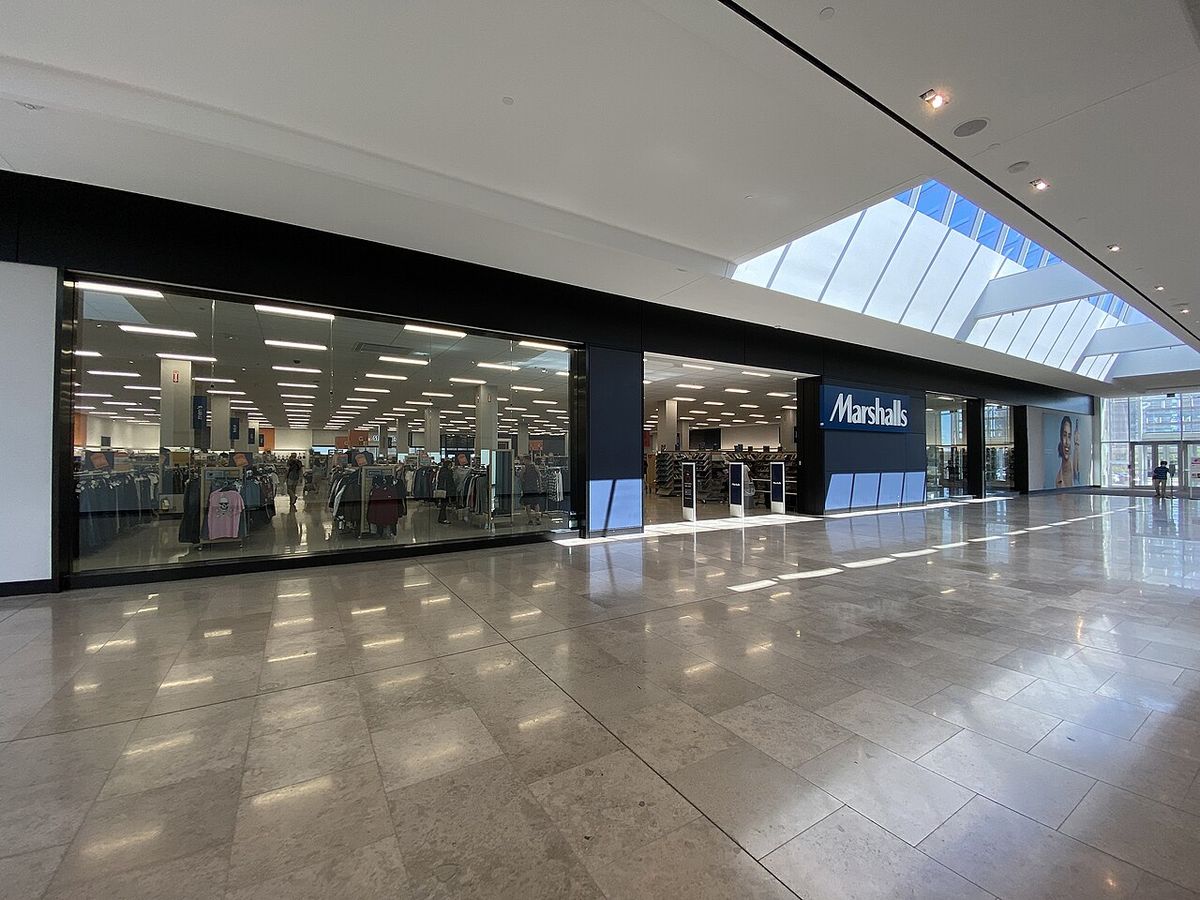
Merchandise Sourcing and Key Product Categories
The foundational strategy of Marshalls is its off-price sourcing model, which involves purchasing excess inventory directly from manufacturers and other retailers. The company specifically buys post-season merchandise, overrun stock, and close-out goods, which enables it to offer fashionable, high-quality brand-name and designer items at discounts of 20 to 60 percent below department store prices. This model creates a 'treasure hunt' shopping experience with a rapidly changing assortment that encourages frequent customer visits. The merchandise is organized into several key categories, with family apparel being a core offering that includes expanded sections for men and juniors compared to its sister chain TJ Maxx. Footwear is another major focus, supported by the dedicated Shoe MegaShop departments that began rolling out in 2005. The home fashion category rounds out the selection, featuring items like bedding, decor, and kitchenware sourced through the same off-price channels.
The primary merchandise categories at Marshalls include family apparel and home fashion. The company is one of the largest off-price retailers for these goods in the United States. It also emphasizes family footwear and larger men's and juniors departments. The stores offer fashionable, high-quality items at prices significantly lower than department stores.
- Family apparel, with emphasis on men's and juniors
- Footwear, featured in Shoe MegaShop departments
- Home fashions and decor
- Brand-name and designer goods at off-price discounts
Corporate Structure and Recent Developments
TJX's portfolio also includes TJ Maxx, HomeGoods, Sierra, and Homesense, with Marshalls and TJ Maxx often located in the same shopping plazas as complementary sister chains. Financial performance for Marshalls is reported within TJX's consolidated financial results, though historical sales milestones like the one billion dollar mark in 1982 indicate the brand's significant scale. The 1995 acquisition for 550 million dollars reflected the chain's value as a national retailer with hundreds of stores. Continued investment in the banner is evident in ongoing store openings and format innovations like the Shoe MegaShops. The 2025 announcement of new store openings aligns with TJX's stated objective to grow its global store count by at least 1,300 locations across all its banners, demonstrating Marshalls' role as a key growth vehicle within the corporate portfolio.
Historical Performance and Store Count Data
The growth trajectory of Marshalls can be tracked through key milestones in its store count and ownership changes, which reflect its evolution from a single store to a continent-wide chain. Following its founding in 1956, the chain grew steadily, reaching 36 stores by the time of its acquisition by Melville Corporation in 1976. Expansion accelerated under Melville, with the store count reaching 261 by April 1987 and 496 by the time of the TJX acquisition in 1995. The table below outlines selected years and corresponding store counts or milestones, illustrating the chain's physical expansion.
| Year | Store Count / Milestone |
|---|---|
| 1956 | First store opens in Beverly, Massachusetts |
| 1976 | 36 stores at acquisition by Melville |
| 1982 | Sales surpass $1 billion |
| 1987 (April) | 261 stores nationwide |
| 1995 | 496 stores at acquisition by TJX |
| 2011 | Expands into Canada |
| 2015 | Opens 1,000th store |
| 2025 | Announces opening of five new locations |
Marshalls has demonstrated resilience through different economic cycles and ownership structures. The chain grew from 36 stores in 1976 to 261 stores across the country by April 1987. It expanded into Canada in March 2011, marking a key international move. Marshalls reached a major milestone by opening its 1,000th store in 2015. The company announced the opening of five new locations in 2025 as part of a larger expansion plan.
Questions about Marshalls
When did Marshalls first open in Canada?
Marshalls opened its first stores in Canada in March 2011. This marked the brand's initial expansion beyond the United States and Puerto Rico. The move was part of a broader strategy by parent company TJX to grow its off-price retail presence in international markets. As of the latest information, Marshalls Canada operates 61 locations across the country.
Who owns Marshalls?
Marshalls is owned by The TJX Companies, Inc., a publicly traded corporation and the world's largest off-price retailer. TJX acquired Marshalls in 1995 for 550 million dollars from the Melville Corporation. TJX also owns Marshalls' main sister chain, TJ Maxx, as well as HomeGoods, Sierra, and Homesense. All these banners operate under the same corporate parent but maintain distinct store identities.
What is the difference between Marshalls and TJ Maxx?
Marshalls and TJ Maxx are sister stores owned by TJX, offering similar off-price merchandise at nearly identical prices. The primary differences are in their merchandise emphasis and department sizes. Marshalls typically features larger family footwear departments and more extensive men's and juniors clothing sections. Both chains have similar store layouts and sourcing strategies, but these focused departments help Marshalls differentiate its in-store shopping experience.
What does Marshalls sell?
Marshalls sells a wide range of brand-name and designer merchandise at discounted prices. Its core categories include family apparel for men, women, and children, with a noted emphasis on juniors and men's departments. The chain also has a strong focus on family footwear, often housed in dedicated Shoe MegaShop sections. Marshalls offers home fashions such as bedding, decor, kitchenware, and other home goods, all sourced through off-price channels.
How many Marshalls stores are there?
Marshalls has over 1,000 stores in the United States, covering 48 states and Puerto Rico. In Canada, Marshalls operates 61 stores. The company first expanded into Canada in March 2011. Marshalls opened its 1,000th store in 2015. In 2025, the company announced the opening of five new locations.
What charities does Marshalls support?
Marshalls supports U.S. charitable organizations focused on helping children, families, and communities. Its national and local partnerships include organizations for domestic violence prevention and Breakthrough T1D. Other partners are the National Youth Anti-Drug Campaign, St. Jude Children's Research Hospital, and the United Way. All donations and fundraising efforts are connected to these programs.
Sources: Wikipedia and current public reporting, checked by the Yadude Books desk. Last updated 2026-11-02.