QNX
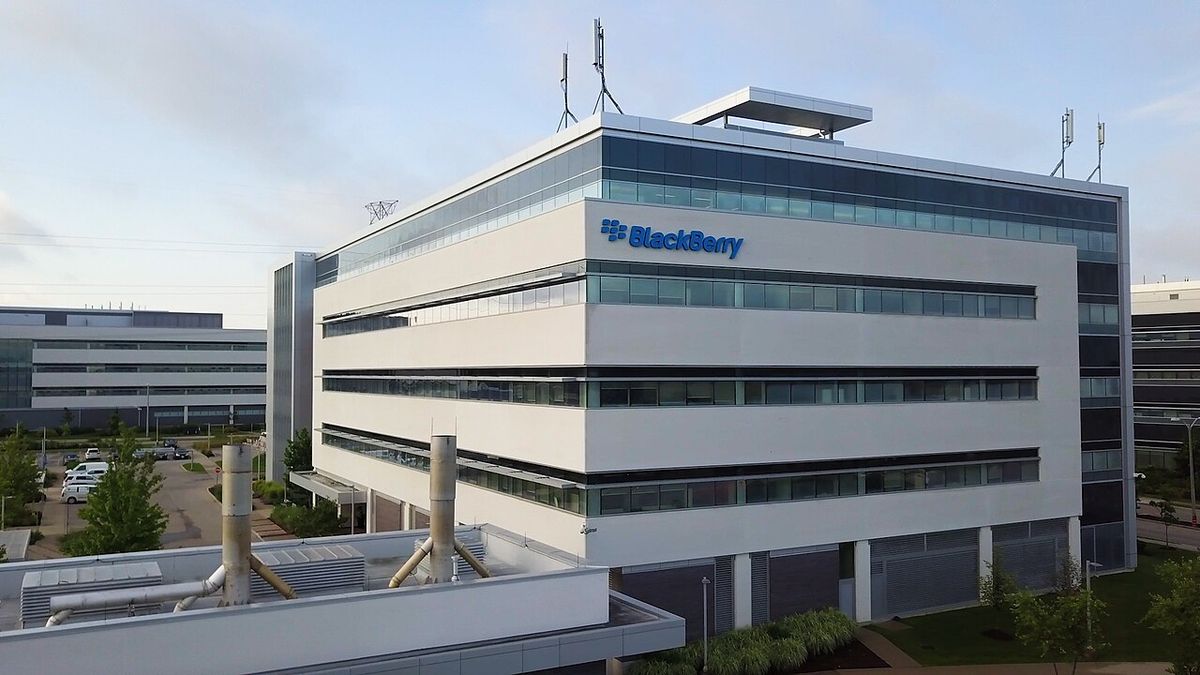
QNX is a Canadian commercial Unix-like real-time operating system (RTOS) designed primarily for embedded systems. Founded in 1980 by University of Waterloo students Gordon Bell and Dan Dodge, the company pioneered a microkernel architecture that prioritizes reliability, security, and deterministic performance. As a division of BlackBerry Limited headquartered in Ottawa, QNX software is foundational to safety-critical applications worldwide, most notably in the automotive industry where it is embedded in over 275 million vehicles. The company's technology is also central to emerging fields like software-defined vehicles, robotics, and physical artificial intelligence.
Origins and Early Development
The genesis of QNX traces back to a real-time operating systems course at the University of Waterloo in 1980, where students Gordon Bell and Dan Dodge constructed a basic real-time microkernel. Convinced of its commercial potential, they moved to the high-tech community of Kanata, Ontario, and founded Quantum Software Systems that same year. The company's first product, QUNIX, was released in 1982 for the Intel 8088 CPU. To avoid trademark challenges, the name was changed to QNX, short for Quantum's Network eXecutive, in 1984. An early and significant non-embedded deployment came when the Ontario education system selected QNX as the operating system for its Unisys ICON computers. Throughout the 1980s, QNX earned a strong reputation for reliability in industrial machinery, despite its 44-kilobyte kernel being considered large for the era's single-chip computers.
Recognizing the industry's shift toward the Portable Operating System Interface (POSIX) standard in the late 1980s, the company undertook a major rewrite to enhance compatibility. The result was QNX 4, released during a period of significant graphical innovation. Intern Patrick Hayden and employee Robin Burgener developed a new, patented windowing system that evolved into the QNX Photon microGUI, an embeddable graphical user interface. The company also provided a version of the X Window System. In a notable demonstration of the OS's efficiency in the late 1990s, QNX released a bootable 1.44 MB floppy disk image containing the full QNX 4 OS, a GUI, a text editor, TCP/IP networking, a web browser, and a web server.
Architectural Foundation and Core Technology
QNX is built on a microkernel architecture, a design philosophy where the core kernel is kept minimal and most operating system services run as separate user-space processes called Resource Managers. The QNX kernel, named procnto, contains only essential functions: CPU scheduling, interprocess communication (IPC), interrupt redirection, and timers. All other components, including device drivers, file systems, and even process creation and memory management, operate outside the kernel. This design allows developers to disable unneeded services without modifying the core OS, enhancing modularity and security. The network stack is based on code from NetBSD, and the system supports both native drivers and a legacy io-net manager.
A central element of QNX's performance is its highly efficient IPC mechanism, centred on the MsgSend operation. When a process sends a message and waits for a reply, the kernel copies the message and transfers CPU control directly to the receiving process if it is ready, bypassing the scheduler. This tight integration between message passing and scheduling prevents performance penalties and is critical for hard real-time determinism. All traditional I/O, file system, and network operations were originally designed to work through this message-passing system. The boot loader is another key component, capable of loading a complete system image containing the kernel and selected user programs into ROM, which is ideal for diskless embedded systems.
QNX Neutrino, released in 2001, introduced several advanced features. It supports symmetric multiprocessing (SMP) and bound multiprocessing (BMP) for processor affinity, which improves cache performance. Its scheduling includes strict priority-preemptive scheduling and adaptive partition scheduling (APS). APS guarantees minimum CPU allocations to groups of threads, maintaining system responsiveness even under load, while still allowing critical threads to run in a strictly real-time mode. The microkernel design also inherently supports distributed computing. A patented technology, Transparent Distributed Processing, allows QNX kernels on separate devices to access each other's services using the same local IPC mechanism, effectively making QNX a distributed operating system.
Corporate Evolution and BlackBerry Acquisition
The company, renamed QNX Software Systems, began developing a new ground-up, SMP-capable, and fully POSIX-compliant system in the late 1990s, culminating in the QNX Neutrino RTOS in 2001. In 2002, as a founding member of the Eclipse consortium, it released the QNX Momentics Tool Suite, an integrated development environment based on Eclipse. A major shift occurred in 2004 when the company was sold to Harman International Industries. This acquisition solidified QNX's position in the automotive sector, where its software was already used in telematics systems. Under Harman, design wins expanded rapidly, with QNX software featured in over 270 automobile models by the mid-2010s, and the QNX CAR Application Platform running in over 20 million vehicles by mid-2011.
In a significant move for the Canadian tech industry, Research In Motion (later BlackBerry Limited) announced its acquisition of QNX Software Systems from Harman on April 9, 2010. Concurrently, public access to the QNX source code was restricted. BlackBerry quickly leveraged the technology, announcing the QNX-based BlackBerry Tablet OS for its PlayBook tablet in September 2010. This foundation was later adapted for smartphones as the BlackBerry 10 operating system, announced in late 2011. Although BlackBerry's smartphone business declined, QNX continued to thrive as an embedded software division. The company expanded its automotive middleware portfolio with products like the QNX Aviage Multimedia Suite and the QNX HMI Suite.
Primary Applications and Market Reach
QNX's primary market is embedded systems, where its reliability, safety certifications, and real-time performance are critical. The most dominant application is in the automotive industry. As of December 2025, QNX software is embedded in over 275 million vehicles worldwide across most leading original equipment manufacturers (OEMs) and Tier 1 suppliers. Key automotive customers include BMW, Ford, General Motors, Honda, Mercedes-Benz, Toyota, Volkswagen, Volvo, and suppliers like Bosch and Continental. QNX software powers infotainment systems, digital instrument clusters, advanced driver-assistance systems (ADAS), and foundational software for software-defined vehicles. Its technology also facilitates the integration of smartphone projection systems like Apple CarPlay and Android Auto.
Beyond automotive, QNX is used in a diverse array of safety-critical and industrial domains. Its operating systems and hypervisors are certified for use in medical devices and industrial control systems. The company's software has been foundational in telecommunications, notably in the microkernel for Cisco Systems' IOS-XR. Other historical uses include the Netpliance i-Opener internet appliance and the BlackBerry PlayBook tablet. Today, QNX is actively targeting growth areas such as robotics and physical artificial intelligence, presenting its technology at major industry events like Embedded World and CES. The RTOS supports a wide range of processor architectures, including x86, ARM, PowerPC, and MIPS.
- Automotive: Infotainment, telematics, ADAS, and software-defined vehicle platforms.
- Industrial Automation: Programmable logic controllers and automated manufacturing systems.
- Medical Devices: Certified software for critical healthcare equipment.
- Transportation: Systems in trains and other rail applications.
- Networking: High-availability routing and switching infrastructure.
- Consumer Electronics: Past use in internet appliances and tablets.
- Emerging Fields: Robotics, physical AI, and secure embedded edge computing.
Safety Certifications and Security
QNX has established itself as a leader in functionally safe and secure software for regulated industries. Its flagship safety products, QNX OS for Safety and QNX Hypervisor for Safety, have achieved rigorous international certifications. These products are certified to Automotive Safety Integrity Level D (ASIL D), the highest risk classification under the ISO 26262 standard for road vehicles. They also meet Systematic Capability level C and Safety Integrity Level 3 (SIL 3) as defined by IEC 61508 for general industrial functional safety. For the medical sector, QNX OS for Safety is certified to Class C of IEC 62304, the most stringent level for software in medical devices.
In response to growing cyber threats, particularly in connected vehicles, QNX has also achieved certification for the ISO/SAE 21434:2021 standard. This cybersecurity engineering standard provides a framework for managing cybersecurity risks throughout the lifecycle of road vehicle systems. These certifications are not merely accolades but are essential for manufacturers who must comply with stringent safety and security regulations to bring products to market in automotive, medical, and industrial sectors. The company's focus on a secure microkernel foundation, combined with these certified product offerings, positions it as a trusted supplier for mission-critical systems.
Developer Ecosystem and Recent Initiatives
QNX actively cultivates a global developer community through several strategic programs. Historically, the company operated Foundry27, a web-based portal for registered developers to access source code and toolkits. An independent community portal, OpenQNX, also provides forums and resources. A significant shift in accessibility began in January 2024 when BlackBerry introduced QNX Everywhere, a program to make the QNX Software Development Platform (SDP) more accessible to hobbyists, academics, and non-commercial users.
The company maintains a strong partner network with key silicon vendors and technology providers, including AMD, Intel, NVIDIA, Qualcomm, Renesas, and Texas Instruments. These partnerships ensure QNX software is optimized and supported on a wide array of hardware platforms. Recent product development has focused on next-generation capabilities. QNX SDP 8.0, released in December 2023, features a new microkernel with support for the latest 64-bit Intel and ARM (v8 and v9) platforms, a GCC12-based toolchain, and a toolkit for Visual Studio Code. The company continues to evolve its tools and middleware to address trends in software-defined vehicles, physical AI, and cybersecurity, as demonstrated by its presence at industry events like CES and Embedded World in 2026.
| Product/Initiative | Key Feature/Release | Year |
|---|---|---|
| QNX Neutrino RTOS | Ground-up SMP and POSIX support | 2001 |
| QNX Momentics | Eclipse-based tool suite released | 2002 |
| QNX OS for Safety | ASIL D, SIL 3 certifications achieved | 2010 onward |
| QNX SDP 7.0 | Support for C++14, 32/64-bit platforms | March 2017 |
| QNX Everywhere | Launched for hobbyists and academics | January 2024 |
| QNX SDP 8.0 | New microkernel, ARM v8/v9, GCC12 | December 2023 |
| QNX SDP 8.0.5 | Latest point release | June 2026 |
Questions about QNX
What is QNX and what is it used for?
QNX is a commercial Unix-like real-time operating system aimed primarily at the embedded systems market. As of 2022, it is used in a variety of devices including automobiles, medical devices, programmable logic controllers, automated manufacturing, and trains. As of December 2025, QNX software is embedded in over 275 million vehicles worldwide. It is also used in car infotainment systems and, since 2010, in automated drive or ADAS systems that require a functional safety certified RTOS.
Is QNX a Canadian company?
Yes, QNX is a Canadian technology company. It was founded in 1980 by University of Waterloo students Gordon Bell and Dan Dodge in Kanata, Ontario, a major high-tech hub. The company's global headquarters remains in Ottawa, Canada. Since 2010, it has operated as a division of BlackBerry Limited, another well-known Canadian technology firm based in Waterloo, Ontario.
How can developers or students get access to QNX software?
On January 6, 2025, QNX made its software development platform available for non-commercial use. QNX offers a license for noncommercial and academic users. In January 2024, BlackBerry introduced QNX Everywhere to make QNX more accessible to hobbyists. Developers can also access community resources like the independent OpenQNX portal or the company's Foundry27 site.
What is the relationship between QNX and BlackBerry?
QNX is a division of BlackBerry Limited. The relationship began on April 9, 2010, when Research In Motion, later renamed BlackBerry Limited, announced it would acquire QNX Software Systems from Harman International Industries. Following this acquisition, QNX source code access was restricted from the public. BlackBerry then used QNX technology as the foundation for new operating systems, including the BlackBerry Tablet OS for the PlayBook tablet in 2010 and the BlackBerry 10 smartphone operating system announced in late 2011. Today, QNX operates as a division within BlackBerry, providing the trusted software foundation for embedded systems.
Why is QNX considered safe for use in cars and medical devices?
QNX is considered safe for critical applications due to its formal certifications against rigorous international safety standards. Specifically, QNX OS for Safety and QNX Hypervisor for Safety are certified to comply with Automotive Safety Integrity Level D, the most demanding level defined by ISO 26262 for road vehicle software. They are also certified to Systematic Capability level C and Safety Integrity Level 3 as defined by IEC 61508. For medical devices, QNX OS for Safety holds certification for Class C, the most onerous level under IEC 62304. It complies with the ISO/SAE 21434:2021 cybersecurity standard for road vehicles, ensuring resilience against modern threats.
What are the latest developments from QNX?
The latest major development is QNX Software Development Platform 8.0, released in December 2023. This version is powered by a next generation microkernel with support for the latest Intel and ARM 64 bit platforms, a GCC12 based toolchain, and a toolkit for Visual Studio Code. As of June 2026, the latest point release is version 8.0.5. QNX also actively shows its secure, real time software for software defined vehicles and physical AI at major industry events like CES and Embedded World in 2026.
Sources and further reading
- QNX (Wikipedia)
- QNX | Embedded Software for Physical AI & Safety-Critical ... (qnx.software)
Checked by the Yadude Books desk. Last updated 2026-10-29.