Suncor Energy
Suncor Energy Inc. is a Canadian integrated energy company headquartered in Calgary, Alberta, and a global leader in the production of synthetic crude from oil sands. Formed in 1979, the company grew significantly through major acquisitions, most notably Petro-Canada in 2009, solidifying its position as one of Canada's largest corporations. Suncor's operations span the full energy value chain, from upstream oil sands mining and upgrading to refining, marketing, and retail through its extensive Petro-Canada network. The company is a major economic force in Canada, providing energy, employment, and investment, while also facing significant scrutiny over its environmental performance and safety record.
Corporate History and Major Acquisitions
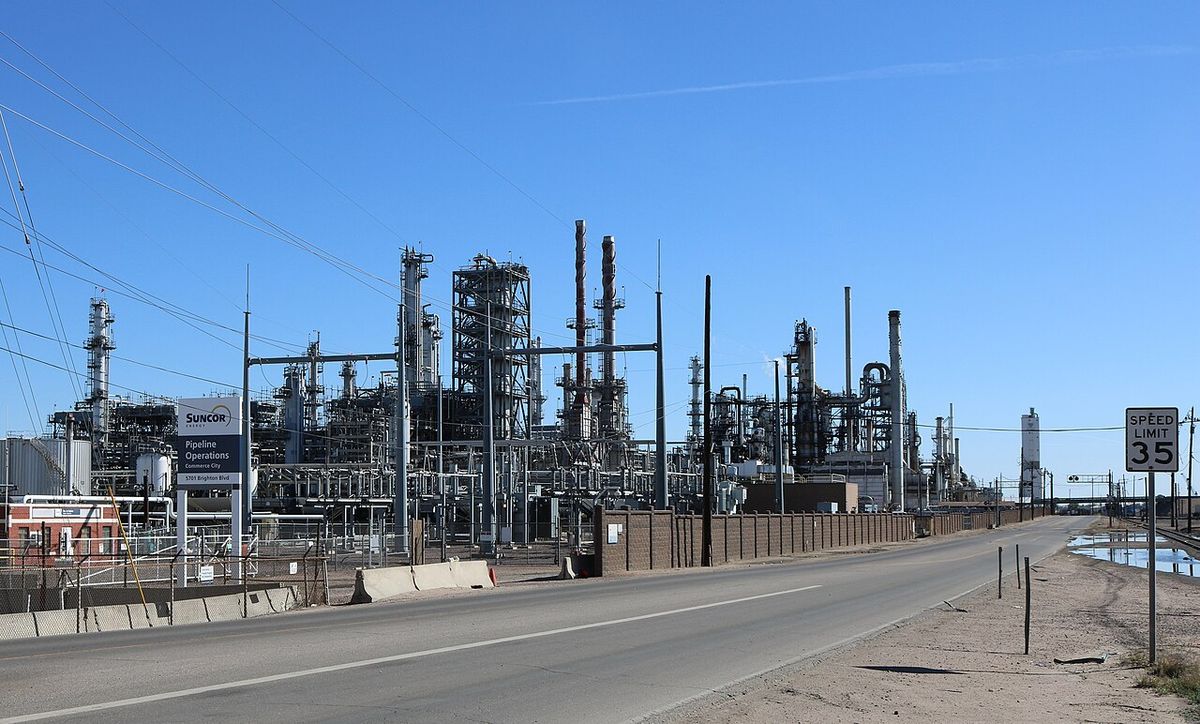
Suncor Energy was created in 1979 through the merger of Sun Oil's Canadian refining and retailing interests with Great Canadian Oil Sands (GCOS), the operator of the first commercial oil sands plant, and Sun's conventional oil and gas assets. This consolidation formed the foundation of an integrated Canadian energy company. The Government of Ontario purchased a 25 percent stake in 1981 but divested in 1993, followed by Sun Oil's own divestment in 1995, making Suncor a fully independent, widely held public company. The company's most significant event was the 2009 acquisition of the former Crown corporation Petro-Canada in a deal valued at approximately $21 billion, which created Canada's second-largest company by market capitalization at the time of C$43.3 billion. This merger led to the rebranding of nearly all Suncor retail outlets from Sunoco to Petro-Canada, significantly expanding its national footprint, and required Suncor to sell 98 gas stations in Ontario to Husky Energy as a regulatory condition. Suncor further consolidated its position in the oil sands by acquiring Canadian Oil Sands in 2016 for C$6.6 billion, raising its ownership in the Syncrude project from 12 to 49 percent, and later that same year purchased Murphy Oil's 5 percent stake for $937 million to become the majority shareholder with nearly 54 percent. In October 2023, Suncor Energy acquired TotalEnergies' Canadian operations for C$1.47 billion, continuing its strategy of growth through acquisition. The company's history of expansion also includes earlier moves into the United States market, such as the 2003 acquisition of a refinery and Phillips 66 stations in Commerce City, Colorado from ConocoPhillips and a second Commerce City refinery from Valero Energy in 2005.
Operations and Business Segments
Suncor operates across the entire energy value chain, with significant assets in Canada and select international markets. Its upstream division is the world's largest producer of bitumen, centred on its massive oil sands mining and upgrading operations near Fort McMurray, Alberta, which began as the Great Canadian Oil Sands project in 1967. The company also holds a 58.74 percent majority stake in the Syncrude joint venture, assuming operatorship in 2021 to improve its performance, and previously held a 36.75 percent interest in the Joslyn north oil sands project before selling it to Canadian Natural Resources Limited in 2018. Beyond oil sands, Suncor explores for and produces conventional oil, heavy crude, and natural gas in Western Canada, offshore eastern Canada, Colorado, and internationally in the North Sea, Libya, Syria, and Trinidad and Tobago. The company's refining segment operates four major facilities across North America that supply fuel to its extensive retail network and commercial customers.
- The 135,000-barrel-per-day Strathcona refinery in Edmonton, Alberta, runs entirely on oil sands feedstock and produces a high yield of light oils.
- The 137,000-barrel-per-day Montreal refinery in Quebec produces gasoline, distillates, asphalts, heavy fuel oil, petrochemicals, solvents and lubricant feedstocks.
- The 85,000-barrel-per-day refinery in Sarnia, Ontario, produces gasoline, kerosene, jet and diesel fuels, located at the site of Sun Oil's first Canadian refinery opened in 1953.
- The 98,000-barrel-per-day Commerce City refinery in Colorado produces gasoline, diesel fuel and paving-grade asphalt for the U.S. market.
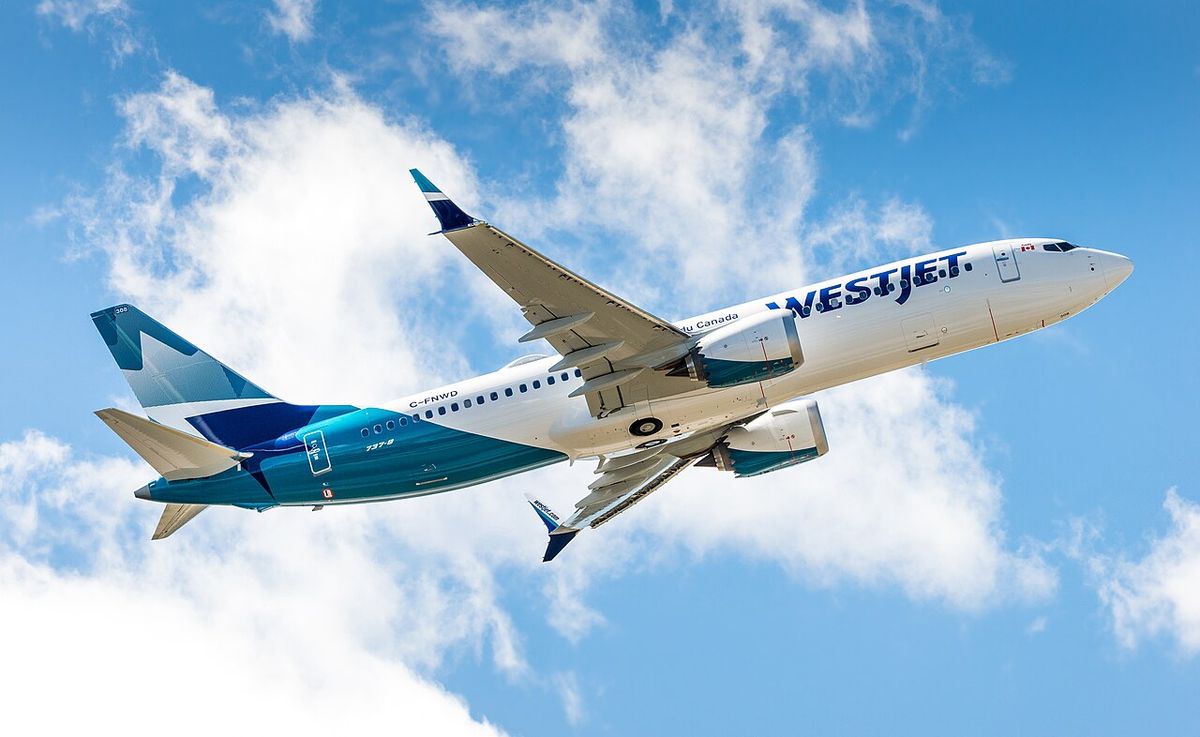
These refineries supply fuel to Suncor's extensive retail network, which is primarily marketed under the Petro-Canada brand across the country following the near-total conversion from the Sunoco brand after 2009. In the United States, the company operates retail outlets in Colorado under the Shell and Phillips 66 brands, having moved from Phillips 66 to Shell branding between 2009 and 2013 and adding Exxon and Mobil brands in Colorado and Wyoming in 2015. Suncor also operates an ethanol production facility in St. Clair Township, Ontario, which is Canada's largest corn ethanol producer, and previously operated four wind farms that provided 147 megawatts of power as of 2009 for an annual CO2 offset equivalent to 284,000 tonnes of coal-generated electricity. For corporate travel, Suncor sold its three Bombardier CRJ900ER aircraft in late 2016 and now uses WestJet to shuttle employees, though it still owns and operates a Bombardier Global Express (BD-700) aircraft with the ICAO designator JSN and telephony JETSUN as of February 2023.
Leadership and Governance Changes
Suncor's leadership has seen significant changes in recent years, driven by investor pressure and operational challenges. Mark Little served as president and CEO from November 2018 until his resignation in July 2022 following a series of workplace fatalities and safety incidents. Executive vice-president for downstream, Kris Smith, served as interim CEO until April 2023 when former Imperial Oil president and CEO Rich Kruger was named the new chief executive officer, with Smith transitioning to the role of chief financial officer and executive vice-president of corporate development after the annual general meeting in May 2023. The chair of the board also changed in March 2024, with Russell Keith Girling succeeding Michael M. Wilson, who had held the role since April 2017. Historical leadership includes a series of presidents beginning with Ross Allan Hennigar in 1979 and notable long-serving CEO Richard Lee George from 1991 to 2012, followed by Steven Walter Williams until 2018. The company faced a cyber attack in June 2023 that impaired transactions with customers and suppliers, though no customer information was reported stolen but some digital payment services crashed. In a notable business decision in May 2025, the Denver City Council unanimously rejected a $25 million asphalt contract with Suncor, despite its low bid, citing the company's ongoing pollution issues in Colorado.
Environmental and Regulatory Record
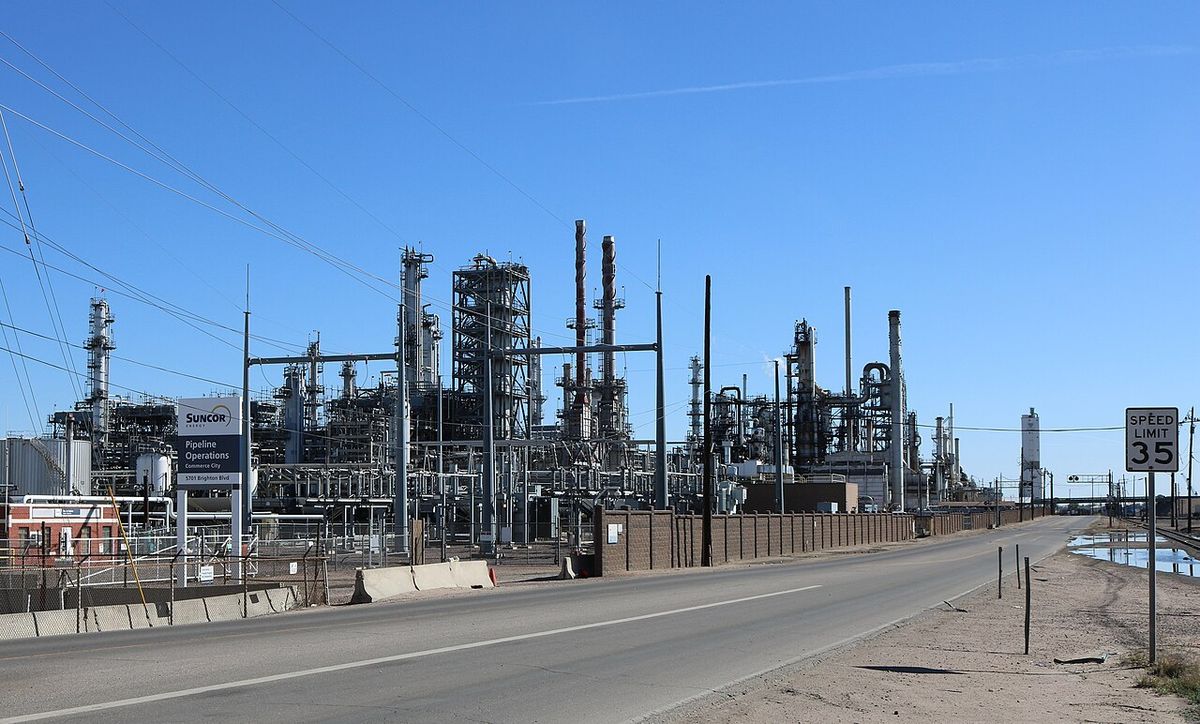
Suncor's environmental record is marked by both voluntary initiatives and significant regulatory penalties. The company has reduced the greenhouse gas emissions intensity of its oil sands operations by more than 50 percent since 1990, though total emissions have risen with growing production, and its operations had the sixth highest greenhouse gas emissions in Canada according to a 2007 Pollution Watch fact sheet. It has invested in renewable energy, operating four wind farms that provided 147 megawatts of power as of 2009 for an annual CO2 offset of 284,000 tonnes, and has partnered with the University of Alberta and Matrikon on research to reduce bitumen entering tailings ponds by up to 50 percent. However, Suncor has repeatedly faced fines for environmental violations in both Canada and the United States. Its Commerce City refinery in Colorado has been a persistent source of regulatory action, with major penalties occurring in 2012, 2020, and 2024.
| Year | Incident/Location | Penalty/Action |
|---|---|---|
| 2012 | Air pollution violations, Colorado | $2.2 million fine for failure to monitor and control emissions in 2009 to 2010 |
| 2018 | Climate change lawsuit, Colorado | Sued by Boulder and San Miguel counties, one of first suits in a landlocked area |
| 2020 | Air pollution violations, Commerce City | $9 million settlement for over 100 violations |
| 2024 | Air pollution violations, Commerce City | $10.5 million settlement ($2.5M fine, $8M improvements), largest in Colorado history |
| 2024 | Alleged continued benzene releases, Commerce City | Joint state/federal notice of violation after October 2023 inspection |
| 2024 | Alleged Clean Air Act violations | Federal lawsuit by environmental groups citing over 9,000 violations |
In April 2018, Suncor and ExxonMobil were sued by the city and county of Boulder, and the county of San Miguel over allegations that they were responsible for climate change in the state. This lawsuit was unique as it was one of the first to be based on these effects on a landlocked area. On April 13, 2012, Suncor paid a $500,000 fine after being found guilty of price fixing in Ontario. A benzene leak into Sand Creek from the Commerce City refinery was discovered in the fall of 2011, exposing employees at Suncor and the nearby Metro Wastewater Reclamation District Plant to benzene through the air and through drinking water. According to a notice in 2024, a federal and state inspection in October 2023 revealed that Suncor has continued to release benzene and other toxins in the air and water at the Commerce City plant.
Historical Predecessors and Brand Evolution
The Sun Oil Company began Canadian operations in 1919 when it formed the Sun Company of Canada, opening offices in Montreal and importing American products. It incorporated the Sun Oil Company Limited in March 1923, moved its headquarters from Montreal to Toronto in 1932, drilled its first successful Canadian oil well in Alberta in 1950, and opened a new refinery in Sarnia in 1953. Great Canadian Oil Sands (GCOS) was incorporated in December 1953, with origins in ventures dating back to 1920, and received a permit from the Alberta government in 1962 to build a plant in the Athabasca Oil Sands. The 1979 merger that created Suncor combined these entities. For decades afterward, Suncor marketed retail fuel in Canada under the Sunoco brand, a legacy of its Sun Oil parentage, operating 780 company-owned and 700 customer-operated sites primarily in Ontario. The 2009 acquisition of Petro-Canada led to a wholesale brand transition, with nearly all Sunoco stations converted to Petro-Canada as Suncor terminated its independent Sunoco franchises to implement Petro-Canada's multi-location franchise model. This move prompted a class-action lawsuit from affected franchisees alleging violation of Ontario's Arthur Wishart Act, though the case was blocked by an Ontario court. Today, at least one Sunoco-branded station remains in North Bay, Ontario, while Petro-Canada serves as Suncor's primary consumer brand nationwide.
Safety Incidents and Workplace Culture
Suncor has faced considerable criticism and leadership changes due to its safety record. A series of workplace deaths and safety incidents at its operations contributed to significant investor pressure and the resignation of president and CEO Mark Little in July 2022. These incidents highlighted ongoing concerns about operational safety within the company's extensive industrial footprint, particularly in the oil sands region. The safety challenges were a key factor in the board's decision to conduct a months-long search for new leadership, ultimately resulting in the appointment of Rich Kruger, who had a background leading another major integrated oil company. The company's operational challenges have extended beyond safety to include significant environmental compliance issues at its refineries, particularly the Commerce City facility in Colorado where repeated violations have occurred, and a 2023 cyber attack that disrupted digital payment systems. These combined operational, environmental, and technological pressures have shaped both public perception and corporate governance decisions at Suncor in recent years, influencing everything from executive appointments to municipal contracting decisions like Denver's 2025 asphalt contract rejection.
Questions about Suncor Energy
What does Suncor Energy do?
Suncor Energy is an integrated energy company involved in every stage of the energy supply chain. Its core business is the production of synthetic crude oil from the Athabasca oil sands in Alberta, where it is the world's largest bitumen producer. The company also explores for and produces conventional oil and natural gas, operates refineries in Alberta, Ontario, Quebec, and Colorado, and markets petroleum products across Canada primarily through its Petro-Canada retail network. Suncor holds a majority stake in the Syncrude oil sands project and has international operations in regions like the North Sea, Libya, Syria, and Trinidad and Tobago.
When did Suncor buy Petro-Canada?
Suncor acquired Petro-Canada in 2009. The merger was announced on March 23, 2009, received 98 percent shareholder approval on June 4, was approved by the Competition Bureau on June 21, and was finalized on August 1, 2009, in a deal valued at approximately $21 billion. This acquisition transformed Suncor into one of Canada's largest companies by market capitalization at the time, creating a combined entity worth C$43.3 billion. As a condition of the merger, Suncor sold 98 gas stations in Ontario to Husky Energy. Following the acquisition, Suncor rebranded most of its existing retail network from Sunoco to the Petro-Canada brand.
Who is the CEO of Suncor?
As of April 2023, the president and chief executive officer of Suncor Energy is Rich Kruger. He succeeded interim CEO Kris Smith, who had taken over following the resignation of Mark Little in July 2022. Kruger previously served as the president and CEO of Imperial Oil Ltd. His appointment concluded a months-long search for permanent leadership. Kris Smith transitioned to the role of chief financial officer and executive vice-president of corporate development following the company's annual general meeting in May 2023.
What is Suncor's relationship to Syncrude?
Suncor is the majority owner and operator of the Syncrude oil sands joint venture. The company steadily increased its stake through acquisitions, first buying Canadian Oil Sands in 2016 for C$6.6 billion to raise its ownership from 12 to 49 percent, and then purchasing Murphy Oil's 5 percent stake later that year for $937 million to become the majority shareholder with nearly 54 percent. As of the latest information, Suncor holds a 58.74 percent interest in Syncrude. In the fall of 2021, Suncor assumed the role of operator for the Syncrude project with the goal of improving its operational performance.
Has Suncor had problems with pollution?
Yes, Suncor has faced numerous fines and legal actions related to environmental pollution. In Canada, it has been fined for violations at its Alberta oil sands operations, including wastewater dumping and failure to install pollution controls. Its Commerce City refinery in Colorado has been a particular focus, with multiple major settlements for air pollution violations, including a record $10.5 million settlement in 2024. The company has also been subject to lawsuits alleging contributions to climate change and, in 2024, faced a federal lawsuit claiming over 9,000 violations of the Clean Air Act. Despite these issues, Suncor has also invested in emission reduction technologies and renewable energy projects including wind farms and tailings pond research.
What brands does Suncor use at its gas stations?
In Canada, Suncor's primary retail brand is Petro-Canada, adopted after its 2009 acquisition of that company. Prior to that, Suncor operated and franchised locations under the Sunoco brand, with 780 company-owned and 700 customer-operated sites primarily in Ontario. Following the merger, nearly all Sunoco stations were converted to Petro-Canada as Suncor terminated independent Sunoco franchises, though at least one Sunoco-branded station remains in North Bay, Ontario. In the United States, Suncor does not use the Petro-Canada brand but operates retail outlets in Colorado under the Shell and Phillips 66 brands, having transitioned from Phillips 66 to Shell branding between 2009 and 2013 and adding Exxon and Mobil brands in 2015.
Sources and further reading
- Suncor Energy (Wikipedia)
- Suncor Energy Inc. (SU.TO) Stock Price, News, Quote & ... (ca.finance.yahoo.com)
Checked by the Yadude Books desk. Last updated 2026-11-04.