WestJet
WestJet is a major Canadian airline headquartered in Calgary, Alberta, and is the country's second-largest carrier. Founded in 1994 and commencing operations in 1996, it was launched as a low-cost alternative to Canada's established airlines and has grown to serve over 100 destinations across North America, the Caribbean, Europe, and Central America. The airline operates scheduled, charter, and cargo services, utilizing Calgary International Airport as its primary global hub and Toronto Pearson as a key secondary hub. WestJet's operations include its regional subsidiary WestJet Encore and its dedicated cargo division, WestJet Cargo, playing a significant role in connecting communities across Canada and beyond.
Founding and early operations (1994 to 1999)
WestJet was founded on June 27, 1994, by a group of entrepreneurs: Clive Beddoe, David Neeleman, Mark Hill, Tim Morgan, and Donald Bell. The airline's business model was explicitly based on the low-cost carrier principles pioneered by Southwest Airlines and Morris Air in the United States. Its initial focus on serving cities in Western Canada directly inspired the company's name. The airline's first flight, operated by a Boeing 737-200, departed on February 29, 1996, connecting Calgary, Edmonton, Kelowna, Vancouver, and Winnipeg with a fleet of three used aircraft and 225 employees. By the end of that inaugural year, WestJet had expanded its network to include Regina, Saskatoon, and Victoria, demonstrating rapid early growth.
The young airline faced a significant operational challenge in September 1996 when its entire fleet was grounded for two weeks due to a disagreement with Transport Canada over maintenance schedule requirements. Service resumed after this temporary suspension, allowing the company to continue its expansion. In early 1999, founder Clive Beddoe stepped down as CEO, passing the role to former Air Ontario executive Steve Smith. That same July, WestJet made its initial public offering, selling 2.5 million shares at an opening price of $10 per share, marking a key step in its corporate development. The route network continued to grow in 1999 with the addition of Thunder Bay, Grande Prairie, and Prince George, further entrenching its presence in Western and Northern Canada.
Expansion across Canada and into the United States (2000 to 2006)
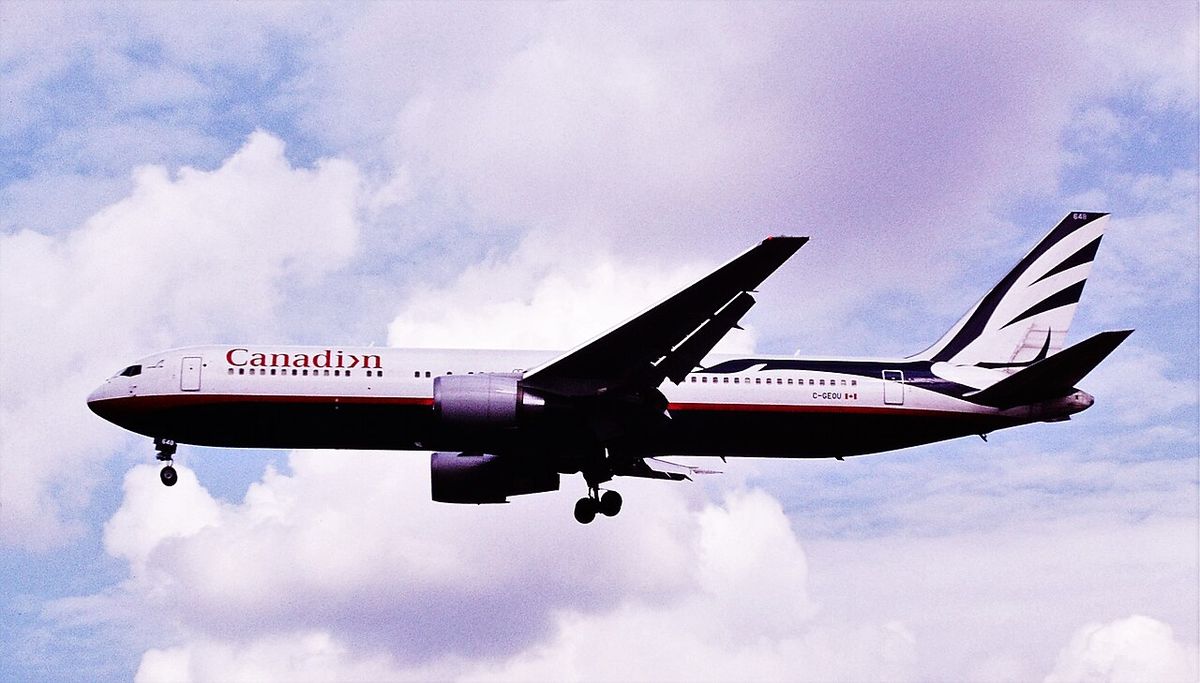
The Canadian airline industry underwent major restructuring in 2000 with Air Canada's takeover of Canadian Airlines, creating an opportunity for WestJet to expand eastward. The airline began service to Hamilton and Ottawa in Ontario, and Moncton, New Brunswick, selecting John C. Munro Hamilton International Airport as its initial focus city for Eastern Canadian operations. Expansion continued in 2001 with routes to Comox, Sault Ste. Marie, Sudbury, Thompson, and Brandon, though service to several of these cities was later withdrawn. The airline solidified its eastern presence in 2002 by adding London and Toronto, Ontario, to its network, directly competing in larger markets.
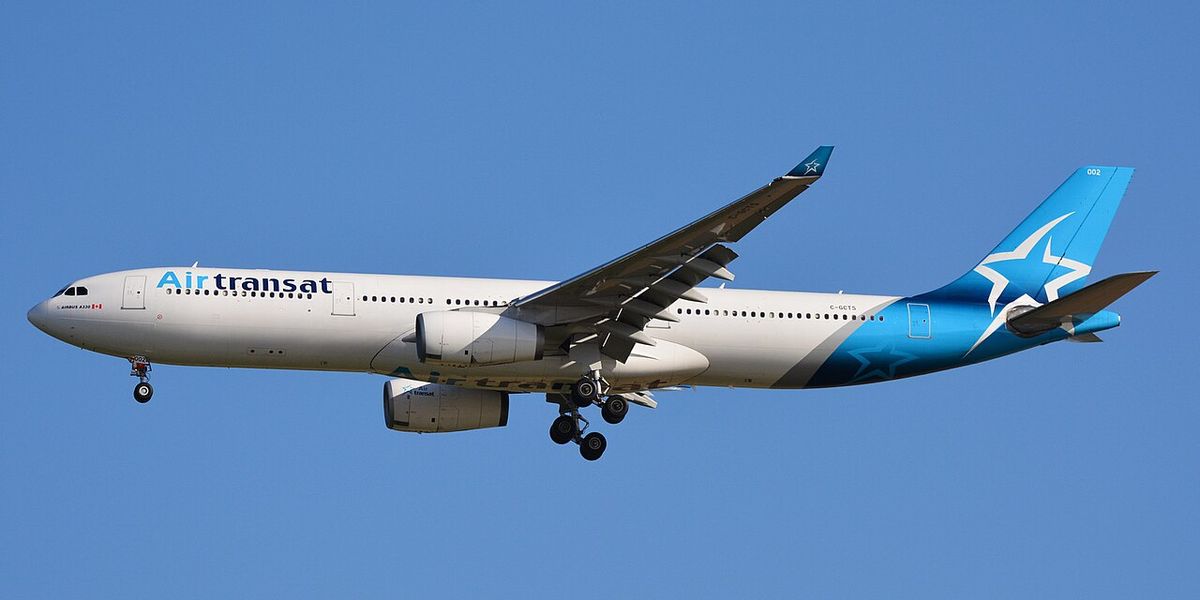
In April 2003, WestJet significantly grew its eastern footprint by launching service to Windsor, Montreal, Halifax, St. John's, and Gander. The airline also entered a commercial agreement with Air Transat in August 2003, whereby WestJet aircraft and crews operated charter flights to Mexico and the Caribbean for Transat's tour operators. This partnership ended amicably in February 2009. A major corporate dispute arose in 2004 when Air Canada accused WestJet of industrial espionage, filing a civil suit alleging WestJet accessed confidential information from a private Air Canada website. WestJet admitted to the charges in May 2006, agreeing to pay Air Canada $5.5 million for legal fees and donate $10 million to children's charities in the names of both airlines.
WestJet's strategic focus shifted in January 2004, when it announced the move of its Eastern operations hub from Hamilton to Toronto Pearson International Airport the following April, aiming to capture traffic in the lucrative Toronto-Ottawa-Montreal corridor. International expansion began in earnest in 2004 with the addition of several U.S. destinations including San Francisco, Los Angeles, Phoenix, Tampa, Fort Lauderdale, Orlando, and New York-LaGuardia. In early 2005, Palm Springs and San Diego were added to the company's list of destinations, while New York-LaGuardia service was dropped. In fall 2005, Fort Myers and Las Vegas were added to the growing list of destinations, broadening its sun and leisure travel options.
- September 2005: Announced new service to Hawaii from Vancouver, commencing in December to Honolulu and Maui.
- Late August 2005: Operated a humanitarian flight to Baton Rouge, Louisiana, transporting a Vancouver-based search and rescue team to assist with Hurricane Katrina relief efforts.
- 2006: Launched its first scheduled service outside North America to Nassau, The Bahamas, a milestone for future international growth.
In September 2006, Sean Durfy took over as president of WestJet from founder Clive Beddoe. On October 26, 2006, WestJet announced that it had its best quarterly profit to date, of C$52.8 million. By this time, WestJet was the third largest airline in Canada, behind Canadian Airlines International Inc. and Air Canada. This financial performance reflected the success of its expansion strategy.
Growth, wide-body aircraft, and transatlantic service (2007 to 2016)
WestJet continued to add domestic points in 2007, including Deer Lake, Saint John, and Kitchener-Waterloo, and expanded its sun destination network with new seasonal flights to the Caribbean and Mexico, such as Saint Lucia, Jamaica, the Dominican Republic, and Kona, Hawaii. The company also invested in its headquarters, commissioning a new, environmentally focused six-story office building at Calgary International Airport, which opened in May 2009 and later achieved LEED Gold certification in October 2011. Market share gains were substantial during this period, with WestJet's domestic share rising from approximately 7% in 2000 to 38% by the end of 2009, while Air Canada's share fell from 77% to 55%, indicating a major shift in competitive dynamics. In late April 2009, WestJet temporarily suspended service to several Mexican destinations including Cabo San Lucas, Mazatlán and Puerto Vallarta due to the H1N1 influenza outbreak, with service restored by mid June.
In March 2010, CEO Sean Durfy resigned citing personal reasons and was replaced by Gregg Saretsky, a former executive at Canadian Airlines and Alaska Airlines who had previously served as vice-president of WestJet Vacations and Executive Vice-president of Operations. The airline's network grew to 71 destinations by July 2010 with additions like Santa Clara, Cuba, and Grand Cayman, though service to New Orleans lasted only one season. To handle peak demand on popular Hawaii routes, WestJet wet-leased a Boeing 757 aircraft in late 2010 on a seasonal basis for flights between Calgary and Honolulu and Maui, and Edmonton to Maui. The airline also faced regulatory scrutiny from the Canadian Transportation Agency, which found aspects of its baggage policies unreasonable on several different occasions during this time.
A significant shift in strategy began in the 2010s as WestJet moved beyond a continental network. The airline won auctioned slots at New York's LaGuardia Airport in November 2011, returning service there in 2012, and expanded to other major U.S. hubs like Chicago O'Hare, Dallas/Fort Worth, Myrtle Beach, and New York's John F. Kennedy International Airport between 2012 and 2014. The most important development was the announcement in November 2013 of its first European destination: seasonal service from St. John's, Newfoundland to Dublin, Ireland, starting in June 2014. This marked the beginning of transatlantic operations and a new phase for the airline. In January 2014, WestJet chartered an Atlas Air Boeing 747-400 to transport stranded passengers and luggage from Toronto to Calgary during a major ice storm in Central and Eastern Canada.
To support longer routes, WestJet entered the wide-body aircraft market. In July 2014, it announced plans to source four Boeing 767-300ER aircraft, taking delivery of the first on August 27, 2015. These aircraft were initially used on Alberta-Hawaii routes and later on transatlantic services. On June 16, 2015, WestJet announced service to London Gatwick Airport, commencing on May 6, 2016, with flights from Edmonton, St. John's, Vancouver, Winnipeg, Calgary and Toronto going on sale in September 2015. During winter months, the 767-300ERs also served seasonal Edmonton-Maui, Calgary-Honolulu, and Calgary-Maui flights before their eventual retirement in 2020.

Strategic evolution and the Onex acquisition (2017 to 2019)
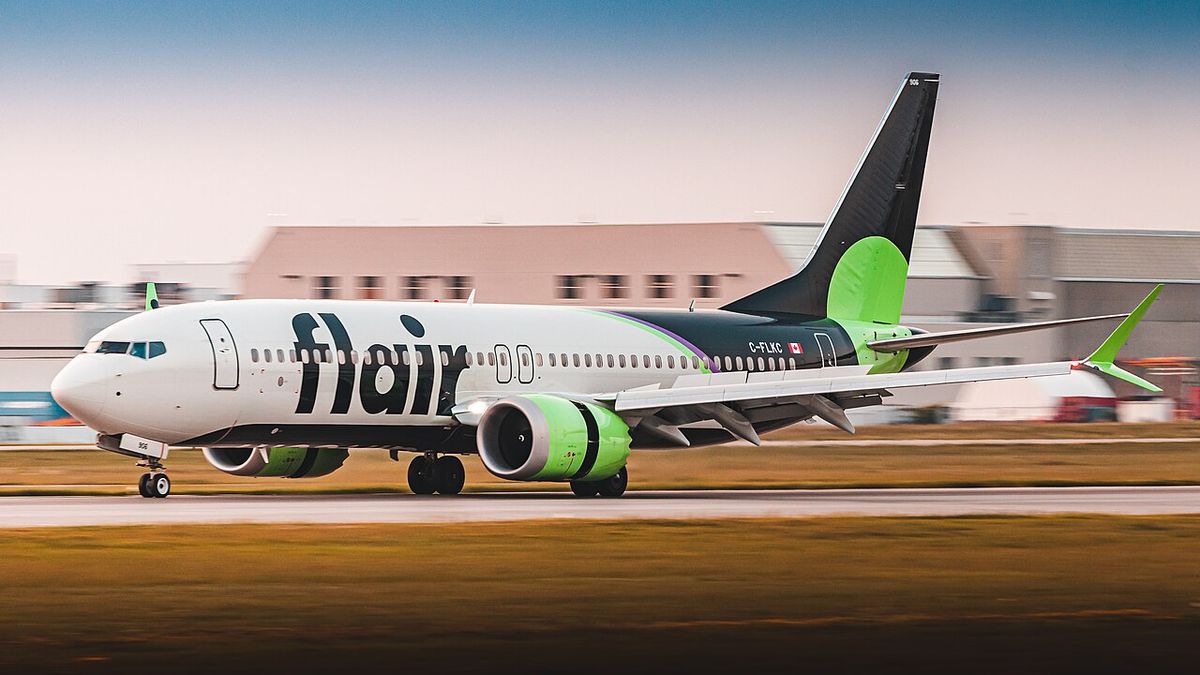
Under CEO Gregg Saretsky, WestJet publicly confirmed its strategic goal to evolve into a global, full-service carrier in January 2018. This period was marked by significant fleet modernization and brand transformation. In April 2017, the airline announced plans to launch an ultra-low-cost carrier named Swoop to compete with new market entrants like Flair Airlines, though its launch was delayed until June 2018. In December 2017, WestJet and Delta Air Lines signed a preliminary memorandum for a joint venture, which was finalized into a definitive ten-year agreement in July 2018 but ultimately scrapped by both parties in November 2020 as demands from the United States Department of Transportation were seen as unreasonable and unacceptable.
Leadership changed again in March 2018 when Gregg Saretsky retired and was replaced by company vice-president Ed Sims. A major fleet announcement followed in May 2018, with the airline confirming an order for the Boeing 787-9 Dreamliner, the first of which was delivered in January 2019. The same month, the airline introduced a new 2-2 Premium Economy seating configuration for its Boeing 737 fleet to replace the previous 3-3 layout with a middle seat blocker, with reconfiguration planned for completion by 2020. Labour relations became a focal point in May 2018 when the airline's unionized pilots voted 91% in favour of strike action, primarily over the outsourcing of work for Swoop operations. A settlement process was agreed upon later that month through the Federal Mediation and Conciliation Service.
On May 31, 2018, WestJet expanded operations into Europe beyond the UK and Ireland, with its inaugural flight from Halifax Stanfield International Airport to Paris' Charles de Gaulle Airport. The Canadian Union of Public Employees (CUPE) announced its application for certification of WestJet's approximately 3,200 flight attendants on July 9, 2018, and was certified by the Canada Industrial Relations Board on July 31, 2018. On October 12, 2018, WestJet announced its new branding, changing its slogan from "Owners Care" to "Love where you're going" and announcing a new logo. It also announced Boeing 787 routes commencing on April 28, 2019, from Calgary International Airport to London Gatwick, with service to Paris and Dublin following. On May 13, 2019, WestJet announced it had reached an agreement to be purchased by Onex Corporation for $5 billion Canadian dollars. At the time, it had 13 Boeing 737 MAX jets in suspended operation, with another 57 of the type ordered from the manufacturer. The purchase represented a major change in ownership for the publicly traded company.
The COVID-19 pandemic and cargo venture
The COVID-19 pandemic caused an unprecedented collapse in global air travel demand, severely impacting WestJet along with the entire aviation industry. In March 2020, the airline suspended all international flights and initiated widespread workforce reductions. On March 24, approximately 6,900 employees, nearly half of its workforce, were laid off. While about 6,400 were temporarily rehired in April through the federal Canada Emergency Wage Subsidy program, further restructuring led to layoffs totalling roughly 8,000 employees between April and June, leaving only 4,500 on the payroll compared to a pre-pandemic total of over 14,000. An additional 250 staff were laid off by February 2021 due to ongoing travel restrictions. A majority of employees were successfully recalled by February 2022 as operations gradually recovered from the crisis.
In response to the operational crisis and a surge in global cargo demand, WestJet announced in June 2021 that it would begin dedicated freighter operations using converted Boeing 737-800BCF aircraft. This move aimed to capitalize on the cargo market and disrupt the air cargo industry in Canada. The first freighter was delivered in April 2022, but certification by Transport Canada took over a year, with operations finally commencing in April 2023. The WestJet Cargo division launched with three Boeing 737-800BCF aircraft, adding a fourth later that same year. This established a new, dedicated revenue stream separate from passenger operations and represented a strategic adaptation to the market conditions created by the pandemic.
Recent strategy and network focus
Following the pandemic, WestJet announced a strategic refocusing on June 16, 2022, reaffirming a commitment to its cost-conscious roots and affordable air travel. A central element of this strategy involved consolidating operations and strengthening its presence in Western Canada, particularly at its Calgary hub. This shift represented a move away from the previous full-service, global carrier ambition towards a more disciplined, low-cost model tailored to the post-pandemic market. The airline continued to operate its wide-body Boeing 787-9 aircraft on key international routes while managing its mainline, WestJet Encore, and WestJet Cargo divisions under this revised strategic framework. The company's stated goal was to embrace its original cost-conscious philosophy in service of providing affordable air travel across its network, marking a return to its foundational business principles.
Fleet and subsidiaries
WestJet's operational structure is supported by distinct subsidiaries and a evolving fleet strategy. A significant expansion occurred with the introduction of wide-body aircraft for long-haul routes, starting with Boeing 767-300ERs in 2015 for Hawaii and transatlantic flights, which were retired in 2020. The airline subsequently introduced the modern Boeing 787-9 Dreamliner, with the first delivery in January 2019, serving as the flagship for its international network from Calgary to destinations like London, Paris, and Dublin. WestJet Encore, launched in 2013, operates as a regional subsidiary using a fleet of De Havilland Canada Dash 8 Q400 aircraft to connect smaller communities, primarily in Western Canada, to the mainline network. It has resumed service to cities like Brandon and Sudbury that were previously served and then withdrawn by the mainline carrier. WestJet Cargo was established as a dedicated division, operating a fleet of converted Boeing 737-800BCF freighters, with operations beginning in April 2023 after a lengthy certification process. The airline also previously operated the ultra-low-cost carrier Swoop, which was announced in 2017 and launched in June 2018 to compete in the budget travel segment using Boeing 737-800 aircraft.
| Aircraft Type | Role | Notes |
|---|---|---|
| Boeing 737 Family (Various) | Mainline short/medium-haul | Core of domestic and transborder fleet. |
| Boeing 767-300ER | Historical wide-body | Used 2015 to 2020 for Hawaii and transatlantic routes. |
| Boeing 787-9 Dreamliner | Flagship wide-body | Introduced in 2019 for long-haul international routes. |
| De Havilland Dash 8 Q400 | Regional (WestJet Encore) | Connects smaller communities to hubs. |
| Boeing 737-800BCF | Cargo (WestJet Cargo) | Converted freighters, operations began April 2023. |
The airline's fleet decisions have directly supported its network strategy, from the initial 737-200s that launched the company to the wide-body aircraft that enabled intercontinental travel. The addition of dedicated cargo aircraft marked a strategic diversification of the business. The subsidiaries Encore and Cargo allow WestJet to serve distinct market segments, from regional travellers to freight shippers, under the broader corporate umbrella. This multi-faceted approach enables the airline to maintain a comprehensive service offering across the Canadian market and beyond.
Questions about WestJet
When was WestJet founded and when did its first flight take off?
WestJet was founded on June 27, 1994, by Clive Beddoe, David Neeleman, Mark Hill, Tim Morgan, and Donald Bell. The airline's first commercial flight departed on February 29, 1996, operating a Boeing 737-200 on routes within Western Canada. The initial network connected Calgary, Edmonton, Kelowna, Vancouver, and Winnipeg with a fleet of three second-hand aircraft and 220 employees. By the end of 1996, it had added Regina, Saskatoon, and Victoria to its destinations.
Where is WestJet headquartered and what are its main hubs?
WestJet is headquartered in Calgary, Alberta, where it also built a dedicated, LEED Gold-certified campus headquarters that opened in 2009. The airline uses Calgary International Airport as its exclusive global connecting hub and primary operational base. Toronto Pearson International Airport serves as a strategic secondary hub for the airline's operations, particularly for flights in Eastern Canada and transborder routes to the United States. The airline previously used John C. Munro Hamilton International Airport as an eastern focus city before shifting to Toronto.
When did WestJet start flying to Europe?
WestJet launched its first transatlantic service to Europe in June 2014, with seasonal flights from St. John's, Newfoundland to Dublin, Ireland. This was followed by service to Glasgow. A major expansion occurred on May 6, 2016, with the start of flights to London's Gatwick Airport from several Canadian cities including Calgary, Toronto, and Vancouver. The airline further expanded into continental Europe with an inaugural flight from Halifax to Paris Charles de Gaulle Airport on May 31, 2018, using its mainline fleet.
Did WestJet ever have a corporate dispute with Air Canada?
Yes. In 2004, rival airline Air Canada accused WestJet of industrial espionage and filed a civil suit against WestJet in Ontario Superior Court. Air Canada accused WestJet of accessing Air Canada confidential information via a private website to gain a business advantage. On May 29, 2006, WestJet admitted to the charges levelled by Air Canada and agreed to pay C$5.5 million in legal and investigation fees to Air Canada and donate C$10 million to various children's charities in the names of Air Canada and WestJet.
How was WestJet affected by the COVID-19 pandemic?
The pandemic caused a severe decline in air travel, leading WestJet to suspend all international flights in March 2020. The airline undertook massive workforce reductions, laying off approximately half of its employees (6,900 people) on March 24. While about 6,400 were temporarily rehired in April through the federal wage subsidy program, further layoffs left only 4,500 employees on the payroll by mid-2020, down from over 14,000 pre-pandemic. The airline recalled a majority of employees by February 2022 as travel recovered, and launched a new cargo division in response to shifting market demands.
What are WestJet Encore and WestJet Cargo?
WestJet Encore and WestJet Cargo are two direct subsidiaries of WestJet. WestJet Encore operates the De Havilland Canada Dash 8 Q400NextGen on routes within Western Canada. WestJet Cargo operates three dedicated cargo aircraft, specifically Boeing 737-800BCF freighters, which were converted from former WestJet passenger planes. These subsidiaries are part of WestJet's broader operations, which include scheduled, charter, and cargo air service. The parent airline transports over 25 million passengers annually to more than 100 destinations across several continents.
Sources and further reading
- WestJet (Wikipedia)
- Who we are (westjet.com)
- WestJet Group Inc Company Profile, Overview (globaldata.com)
Checked by the Yadude Books desk. Last updated 2026-10-21.