Ubisoft Montreal
Ubisoft Divertissements Inc., operating as Ubisoft Montreal, is a Canadian video game developer and a major studio of the French publisher Ubisoft. Founded in April 1997, the studio has grown from a small operation into the largest video game development studio in the world, employing over 4,000 people as of 2023. Ubisoft Montreal is the principal developer behind globally successful franchises including Assassin's Creed, Far Cry, Watch Dogs, and Tom Clancy's Splinter Cell. Its establishment, supported by government subsidies, was crucial in transforming Montreal into a major international hub for video game development and creative technology.
Founding and Early Years (1997 to 2001)
Ubisoft Montreal was established on 25 April 1997 as Ubisoft Divertissements Inc., a strategic move by the French publisher Ubisoft to expand into global markets following its initial public offering in 1996. The company sought a Quebec studio to leverage French-speaking talent for easier communication with its Montreuil headquarters and to gain proximity to the large United States market. Concurrently, the city of Montreal and the provincial government of Quebec were actively pursuing job creation in technology and multimedia to counter manufacturing losses from the early 1990s. Lobbyist Sylvain Vaugeois initially proposed a subsidy plan called Plan Mercure, which was rejected by the government as too costly, but the concept ultimately led to a federal and provincial agreement to subsidize new multimedia jobs.
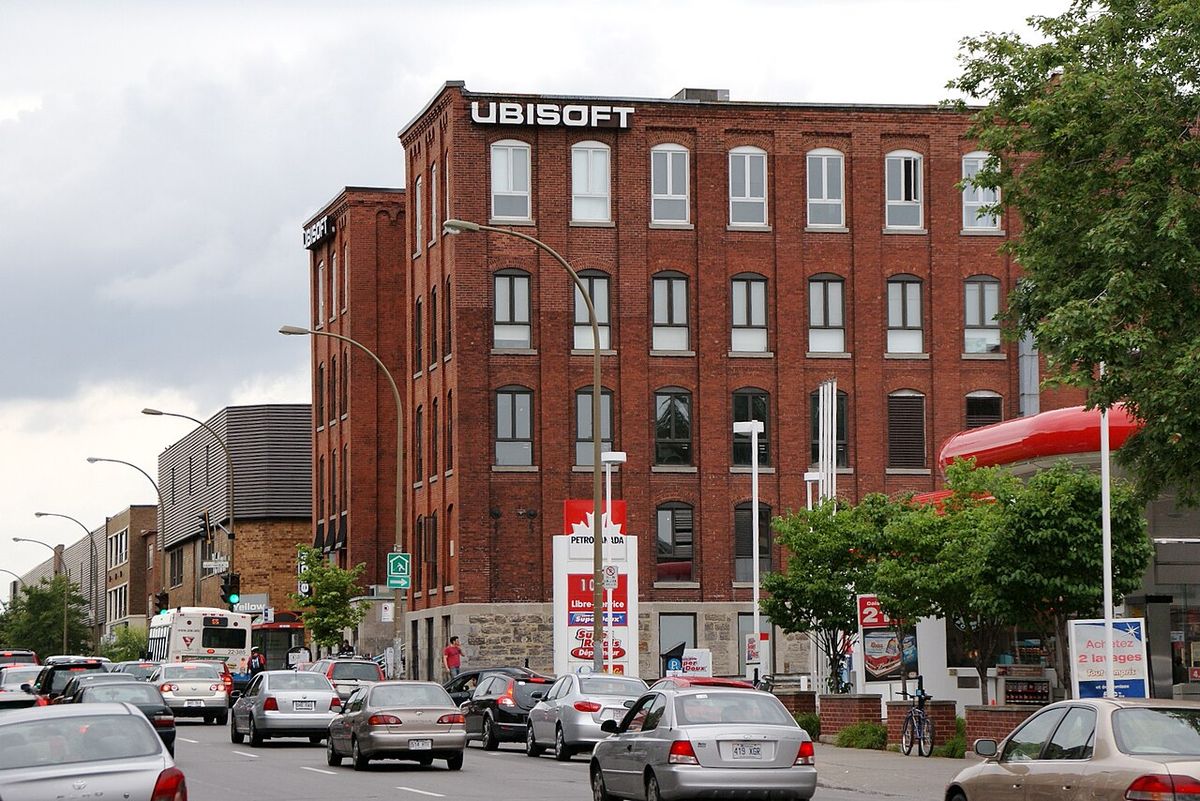
The final agreement involved the Quebec and Canadian governments splitting a subsidy of CA$25,000 per employee, with Quebec contributing CA$15,000, to create 500 new jobs for young people in the sector. This incentive convinced Ubisoft to choose Montreal over other considered locations like Boston or New Brunswick. The studio opened with 50 employees in the Peck Building, a former textile factory located on Saint-Laurent Boulevard in the Mile End neighbourhood. Half of the initial staff transferred from Ubisoft's French headquarters, while the other half were hired locally under the subsidy program. The studio's early output consisted of licensed children's games, such as titles based on Donald Duck and the Playmobil toy series, which provided crucial revenue and experience while the team built its development capabilities.
Breakthrough and Major Franchise Development (2002 to 2008)
Ubisoft Montreal's first major breakthrough came with the 2002 release of Tom Clancy's Splinter Cell. The project originated from unfinished work on a game called The Drift, transferred from a closed Ubisoft studio in New York, combined with the Tom Clancy license acquired through Ubisoft's 2000 purchase of Red Storm Entertainment. The studio was tasked with creating a competitor to the popular Metal Gear Solid series, resulting in a critically acclaimed stealth-action title that spawned several sequels developed in Montreal through 2010. The following year, the studio released Prince of Persia: The Sands of Time in 2003, a successful reinvention of the classic platforming series into a 3D action-adventure game that sold over 14 million copies by 2014.
Building on this momentum, a small team began working on a next-generation Prince of Persia concept in 2004, which evolved into an entirely new intellectual property. This game, released in 2007 as Assassin's Creed, featured an open-world setting during the Third Crusade and sold over 10 million units by 2014, launching one of gaming's most enduring franchises. Concurrently, Ubisoft Montreal inherited the Far Cry series after Ubisoft secured the rights from developer Crytek. The studio developed console versions and created the proprietary Dunia engine, leading to the release of Far Cry 2 in 2008. This period of explosive growth was supported by further government investment, including a CA$5 million grant in 2005 and a CA$19 million grant in 2007 to help the studio expand toward a goal of 3,000 employees.
- 2002: Release of breakout title Tom Clancy's Splinter Cell.
- 2003: Release of Prince of Persia: The Sands of Time.
- 2005: Receives CA$5 million from Quebec government for expansion.
- 2006: Yannis Mallat becomes CEO after Martin Tremblay's departure.
- 2007: Release of Assassin's Creed. Receives CA$19 million government grant.
- 2008: Release of Far Cry 2.
Expansion and New Directions (2009-Present)
From 2009 onward, Ubisoft Montreal solidified its reputation as a leader in open-world game development, continuing core franchises like Assassin's Creed and Far Cry while expanding its portfolio. The studio developed the Watch Dogs series, beginning with the 2014 release that blended open-world action with hacking and surveillance themes. In 2013, the studio expanded its workforce by acquiring and merging THQ Montreal into its operations. Another new intellectual property, For Honor, was released in 2017, representing the studio's first foray into a live-service, seasonal content model with its focused multiplayer combat system. The studio also developed smaller, critically acclaimed titles like the platformer Child of Light in 2014 and the virtual reality experience Transference in 2018.
The studio faced significant internal changes in 2020 amid industry-wide allegations of misconduct. As part of Ubisoft's corporate response, longtime CEO Yannis Mallat stepped down and left the company on July 11, 2020, and was replaced by Christophe Derennes. Under new leadership, Ubisoft Montreal continued to innovate, announcing Tom Clancy's Rainbow Six Mobile for Android and iOS in 2022 as an adaptation of its popular tactical shooter Rainbow Six Siege. The studio's development schedule remains active, with major releases including Assassin's Creed Shadows in 2025 and projects like Assassin's Creed Hexe in development, maintaining its central role within Ubisoft's global network.

Economic and Cultural Impact on Montreal
The establishment of Ubisoft Montreal had a significant effect on the city's economy and cultural identity. The studio's initial location in the Mile End neighbourhood helped catalyze the area's shift from a low-rent district into a commercial and creative centre, attracting new businesses, restaurants, and services catering to a young, tech-oriented workforce. More broadly, Ubisoft Montreal served as an anchor tenant that demonstrated Quebec's viability as a centre for video game development, leveraging generous government subsidy programs designed to create high-tech jobs. Its success prompted other major publishers, including Electronic Arts, Eidos Interactive, THQ, and Warner Bros., to establish their own studios in Montreal, creating a critical mass of talent and investment.
Ubisoft's investment in the province has been substantial, with the studio and its parent company spending up to CA$3.5 billion in Quebec. This commitment extended beyond Montreal, as Ubisoft used similar provincial incentives to found supporting studios in other Quebec cities, notably Ubisoft Quebec in Quebec City in 2005 and Ubisoft Saguenay in Saguenay in 2018. The studio's growth to over 4,000 employees by October 2022 solidified its status as the world's largest game development studio. This helped to establish Montreal as a creative city and brought other video game developers and publishers to establish studios there, cementing its reputation as a leading global location for the video game industry.
Key Franchises and Games Developed
Ubisoft Montreal is the principal developer for several of Ubisoft's most important and long-running video game franchises. While other Ubisoft studios often provide support, the Montreal studio is the creative and production lead for these core series. The studio's work is characterized by a focus on expansive open worlds, narrative-driven action, and technical innovation. Its portfolio demonstrates a consistent ability to both launch new intellectual properties and successfully steward established ones across multiple hardware generations.
- Tom Clancy's Splinter Cell Series (2002 to 2010): The studio developed the initial game and several sequels, defining the modern stealth-action genre.
- Prince of Persia Series (2003 to 2010): Rebooted the classic franchise with The Sands of Time and its subsequent entries.
- Assassin's Creed Series (2007 to present): Created and continues to lead development on this flagship open-world historical action series.
- Far Cry Series (2005 to 2019): Took over the franchise with console ports and developed mainline entries including Far Cry 2, 3, 4, and 5.
- Watch Dogs Series (2014 to 2016): Developed the first two games in this tech-themed open-world series.
- For Honor (2017): A unique multiplayer combat game representing the studio's venture into live-service models.
- Tom Clancy's Rainbow Six Series (2003 to present): Has contributed to several titles, including the ongoing Rainbow Six Siege.
In addition to its major franchises, the studio has developed standalone titles such as the artistic platformer Child of Light in 2014. It also developed the VR narrative Transference in 2018 and the free-to-play sports game Roller Champions in 2022. Ubisoft Montreal ventured into mobile game development, announcing Tom Clancy's Rainbow Six Mobile on April 5, 2022, for Android and iOS. This title is the mobile-adapted version of the studio's 2015 tactical shooter Tom Clancy's Rainbow Six Siege.
Studio Size and Employment
Ubisoft Montreal's growth from a 50-person startup to an industry behemoth is a central part of its story, directly tied to government support and commercial success. The studio began with 50 employees in 1997, with half coming from Ubisoft's Montreuil headquarters and the other hired under government subsidies. The studio's employee count serves as a key metric of its scale and economic impact. By 2007, the studio had already reached 1,600 employees with government support aiming for 3,000 by 2013. This rapid expansion was fueled by hit franchises like Assassin's Creed and Far Cry and significant public investment.
| Year | Approximate Employee Count | Key Context |
|---|---|---|
| 1997 | 50 | Studio founding with half staff from France, half hired locally. |
| 2005 | Growing | Quebec government grants CA$5M to help reach 2,000 employees by 2010. |
| 2007 | 1,600 | Quebec government grants CA$19M to help reach 3,000 employees by 2013. |
| 2013 | ~3,000+ | Studio merges with THQ Montreal, likely exceeding earlier targets. |
| 2022 | Over 4,000 | Studio confirmed as the world's largest game developer. |
| 2023 | Over 4,000 | Employee count remains above 4,000, sustaining its leading position. |
This growth was strategically planned and supported by public funds aimed at job creation in the multimedia sector. The governments of Montreal, Quebec, and Canada provided subsidies to help create new multimedia jobs, with incentives like CA$25,000 per employee. The studio's size enables it to undertake multiple large-scale projects simultaneously, often acting as the principal developer for major series. Maintaining a workforce of over 4,000 specialists solidifies its crucial role within Ubisoft's global development network. It also confirms its status as a major employer within Montreal's technology sector, having helped transform the city into a creative hub.
Questions about Ubisoft Montreal
When was Ubisoft Montreal founded and why?
Ubisoft Montreal was founded on 25 April 1997. Ubisoft, based in Montreuil, France, began looking to expand into more global markets following its initial public offering in 1996. Establishing a studio in Quebec was of strong interest as it would allow the company to bring in French-speaking employees and was in close proximity to the United States, a large video game market. Simultaneously, the city of Montreal was looking to recover from job losses and the governments of Montreal, Quebec, and Canada offered subsidies, providing CA$25,000 per employee for five years to convince Ubisoft to establish the studio in Montreal's Mile End neighbourhood instead of other considered locations like near Boston.
What are Ubisoft Montreal's most famous game series?
Ubisoft Montreal is the principal developer behind several blockbuster video game franchises. Its most famous and influential series include Assassin's Creed, Far Cry, and Watch Dogs. The studio also created the modern versions of Tom Clancy's Splinter Cell and Prince of Persia, with the 2002 release of Splinter Cell and the 2003 release of Prince of Persia: The Sands of Time serving as its initial major breakthroughs. Other notable titles from the studio include For Honor and Child of Light.
How big is Ubisoft Montreal?
Ubisoft Montreal is the largest video game development studio in the world by employee count. As of 2023, the studio employs over 4,000 people. This massive growth was supported by government grants from Quebec, including CA$19 million in 2007 to help the studio reach a goal of 3,000 employees by 2013. The studio's size allows it to lead development on multiple major AAA game titles simultaneously and coordinate work across Ubisoft's global network of supporting studios.
How did Ubisoft Montreal impact the city of Montreal?
Ubisoft Montreal's establishment had a major economic and cultural impact on the city. It served as an anchor that helped transform Montreal into a major international hub for video game development. The studio's success, backed by government job-creation subsidies, attracted other major publishers like Electronic Arts and Warner Bros. to open studios in the city. Its original location in the Mile End area contributed to the neighbourhood's revitalization into a commercial and creative centre. The studio and its parent company have spent billions of dollars in the province, significantly contributing to Quebec's technology sector.
Who is the current CEO of Ubisoft Montreal?
The current CEO of Ubisoft Montreal is Christophe Derennes. He was appointed to the position in July 2020 following the departure of the previous long-time CEO, Yannis Mallat. Mallat, a former producer on the Prince of Persia games, had led the studio since 2006 but stepped down amid a wider corporate restructuring at Ubisoft in response to allegations of misconduct within the company. Derennes now oversees the studio's operations and its portfolio of ongoing game development projects.
What new games is Ubisoft Montreal working on?
Ubisoft Montreal maintains an active development schedule with several known projects. The studio released Assassin's Creed Shadows in 2025 and is currently developing Assassin's Creed Hexe. It is also venturing into mobile gaming with Tom Clancy's Rainbow Six Mobile, an adaptation of its tactical shooter Rainbow Six Siege for Android and iOS devices. As the lead studio for flagship franchises, it is consistently involved in future entries for series like Assassin's Creed and Far Cry, while also exploring new intellectual properties and live-service models as seen with For Honor.
Sources and further reading
- Ubisoft Montreal (Wikipedia)
- About Us (ubisoft.com)
Checked by the Yadude Books desk. Last updated 2026-11-06.