Geddy Lee
Geddy Lee is a Canadian musician, singer, and songwriter, best known as the lead vocalist, bassist, and keyboardist for the rock band Rush. Born Gary Lee Weinrib in Toronto in 1953, he joined Rush in 1968 at the request of childhood friend Alex Lifeson and, alongside Lifeson and drummer Neil Peart, formed the core trio that drove the band to international fame over four decades. Lee is recognized for his skilled bass playing, distinctive high-register vocals, and complex keyboard arrangements, which were central to Rush's progressive rock sound. His contributions to music have been recognized with inductions into the Rock and Roll Hall of Fame and appointments as Officers of the Order of Canada, establishing his place as a key figure in Canadian rock history.
Early life and family background
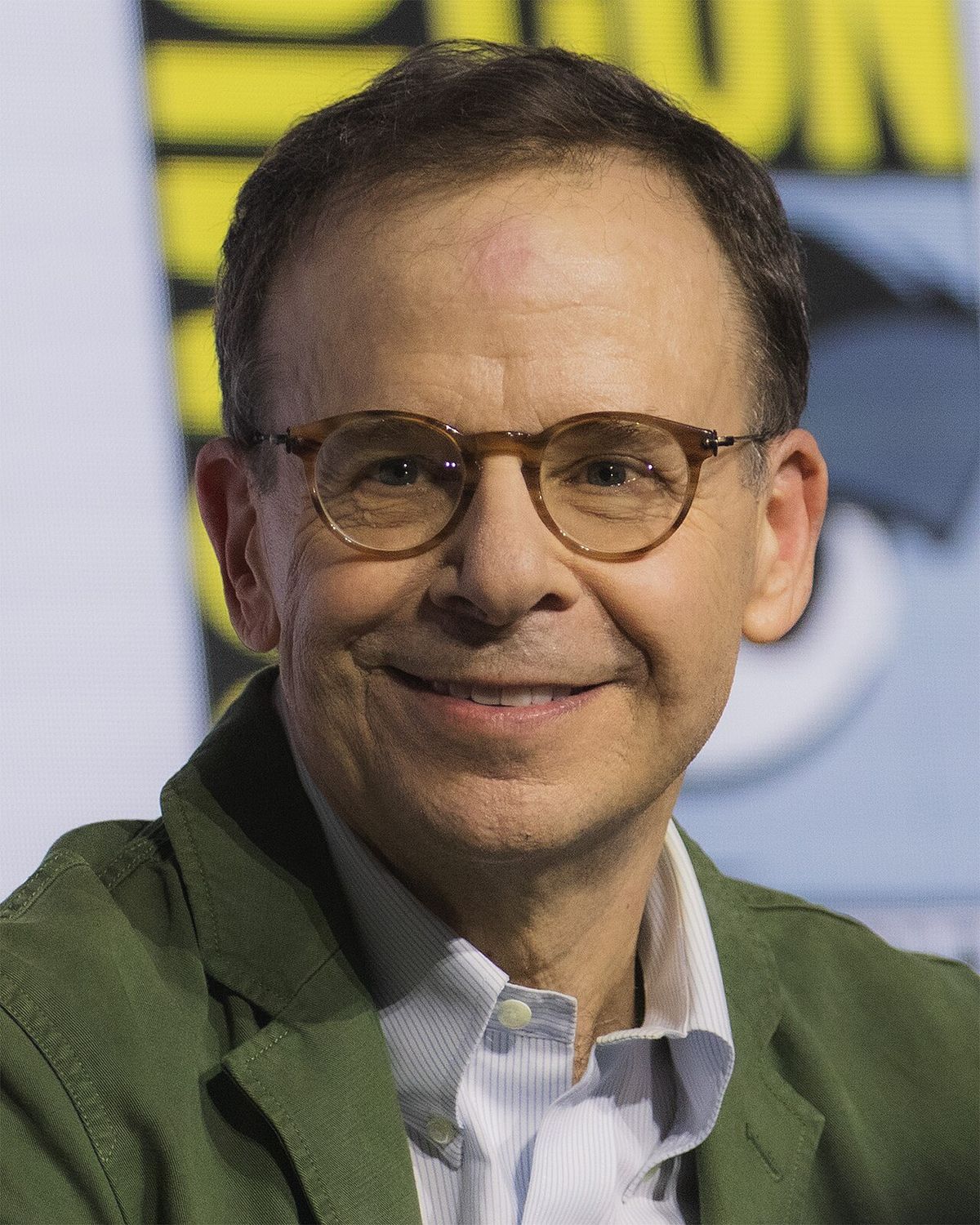
Geddy Lee was born Gary Lee Weinrib on July 29, 1953, in the Willowdale neighbourhood of Toronto, Ontario. His parents, Morris Weinrib and Mary Manya Rubinstein, were Jewish Holocaust survivors from Poland who had endured imprisonment in the Starachowice ghetto and later the Auschwitz, Dachau, and Bergen-Belsen concentration camps during the Second World War. They met in the ghetto and, after the war, reunited and married in a displaced persons camp before emigrating to Canada to start a new life. Lee's father died in 1965 when Lee was 12 years old, a loss that influenced his decision to pursue music with urgency. His mother subsequently ran the family's variety store in Newmarket, Ontario, to support Lee and his two siblings. The name Geddy originated from his mother's Polish-accented pronunciation of Gary, a nickname his school friends adopted and which he later made his legal and stage name. He attended elementary school with future actor Rick Moranis and discovered a passion for music in his early teens, eventually converting his basement into a band practice space.
Career with Rush
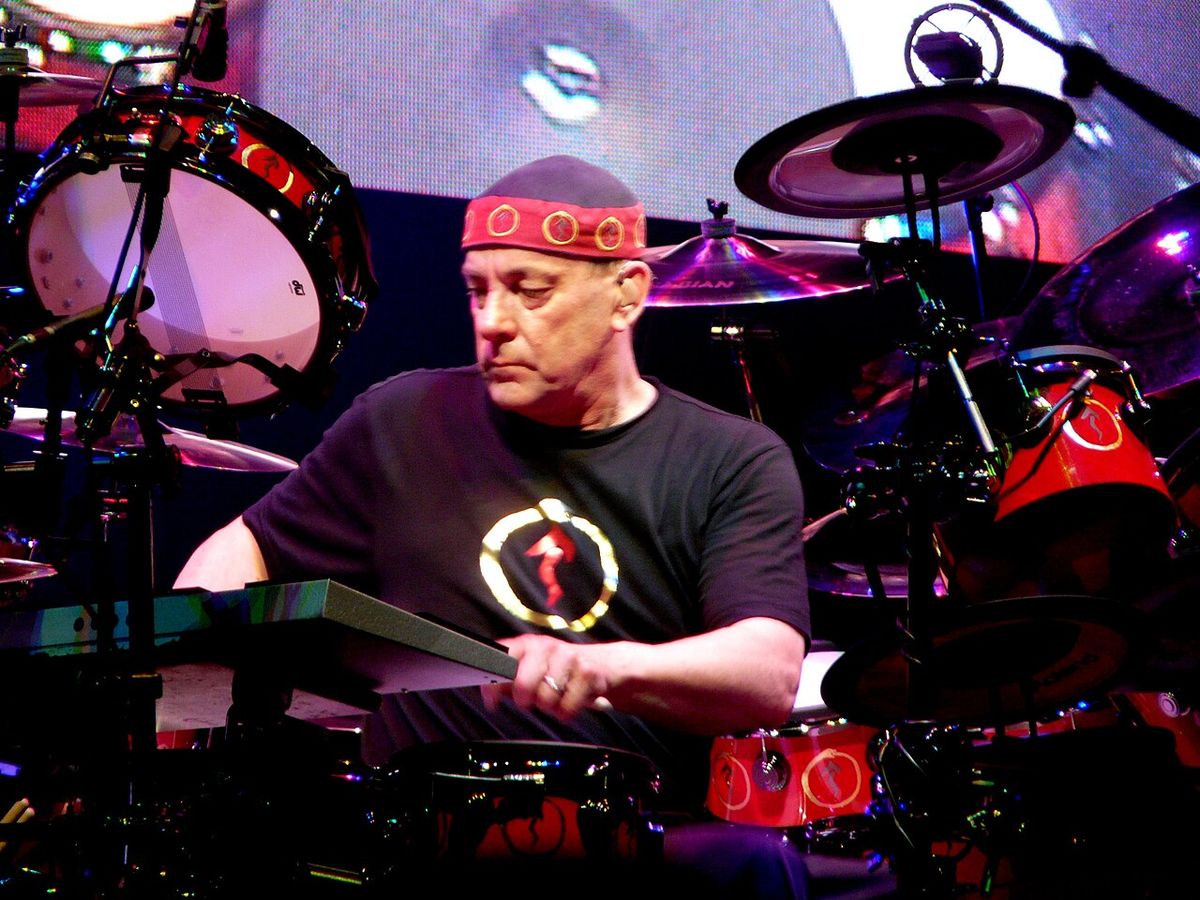
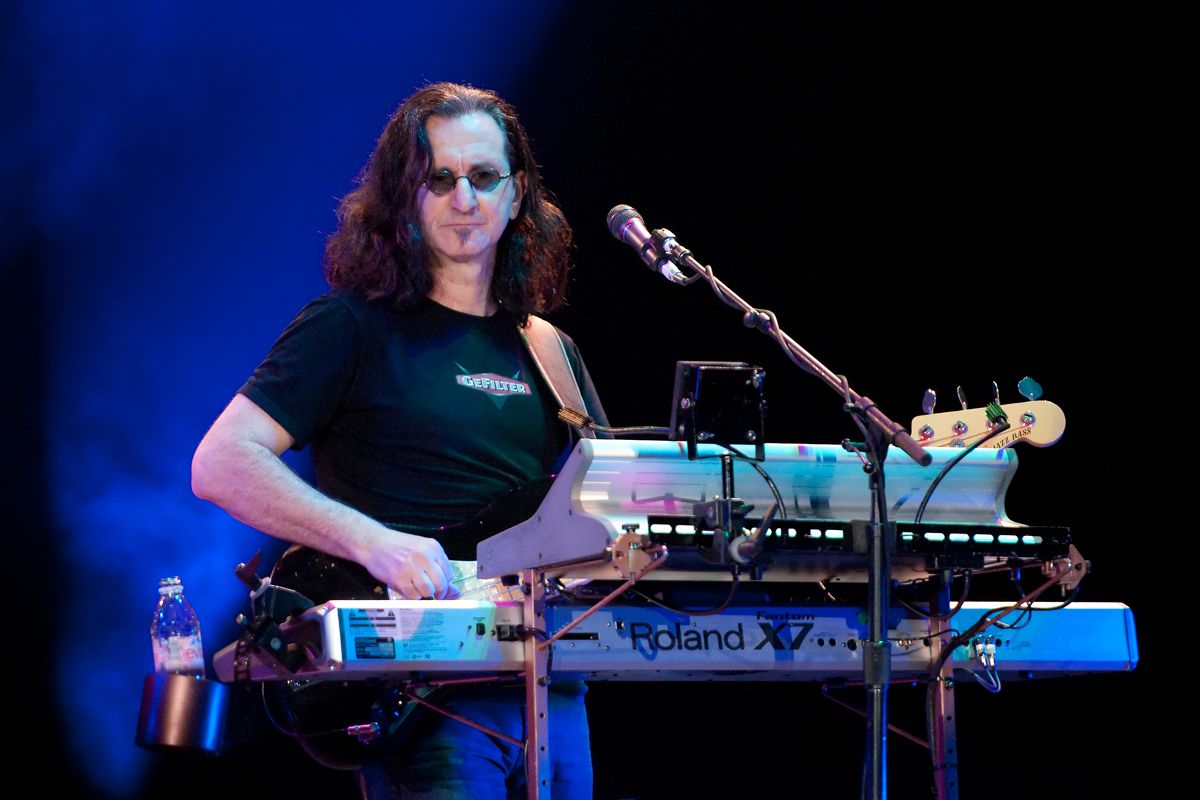
Lee's professional music career began in September 1968 when he joined Rush, replacing original bassist and vocalist Jeff Jones at the invitation of his friend Alex Lifeson. The band started by playing covers and original songs at high school dances, coffeehouses, and small Toronto clubs like the Gasworks. By the early 1970s, they were opening for acts like the New York Dolls and later for major rock bands such as Aerosmith and Kiss as their reputation grew. Rush's breakthrough came with a series of acclaimed albums in the late 1970s and early 1980s, including 2112, A Farewell to Kings, and Moving Pictures, which established them as global leaders in progressive rock. Lee's role expanded significantly during this period as he began incorporating synthesizers and keyboards into the band's sound, starting with 1977's A Farewell to Kings, allowing him to create layered textures while simultaneously playing bass and singing. He remained a constant member through every Rush album and tour until the band entered a hiatus following their R40 tour in 2015, which coincided with drummer Neil Peart's retirement. After Peart's death in January 2020, Lee and Lifeson reunited as Rush in October 2025 for performances, with drummer Anika Nilles.
Key milestones in Rush's ascent under Lee's musical direction include the successful albums 2112 in 1976, A Farewell to Kings in 1977, Hemispheres in 1978, Permanent Waves in 1980, and Moving Pictures in 1981. Lee began incorporating synthesizers with the 1977 album A Farewell to Kings, expanding the band's textural capabilities. By the 1980s, Rush had become one of the biggest rock bands, consistently selling out arenas on tour. Their live shows, such as the Test for Echo Tour starting in 1996, often lasted nearly three hours without an opening act.
- 1976: Release of the concept album 2112, a critical and commercial breakthrough.
- 1981: Release of Moving Pictures, featuring the hit Tom Sawyer, and Lee winning Keyboard magazine's Best New Talent poll.
- 1996: Lee, Lifeson, and Peart are appointed Officers of the Order of Canada, the first rock band to receive the honour.
- 2013: Induction of Rush into the Rock and Roll Hall of Fame.
- 2015: The band's final tour, the R40 Live Tour, marking their initial dissolution.
Solo work and side projects
Outside of Rush, Geddy Lee has engaged in a variety of musical and creative projects. His primary solo album, My Favourite Headache, was released in November 2000 during a Rush hiatus, featuring collaborations with musician Ben Mink and drummer Matt Cameron. In April 2025, he released a 12-inch single titled The Lost Demos, featuring re-recorded demos from that album, which charted in the United Kingdom. Lee has also been a prolific producer and guest musician for other artists. In 1980, he produced the album No Static for the Toronto band Wireless, and in 1982 he produced the debut album for the new wave band Boys Brigade. His guest appearances are numerous and varied, including a comedic vocal turn on Bob and Doug McKenzie's 1981 hit Take Off, which became his highest-charting single on the Billboard Hot 100. He contributed vocals to the Canadian charity single Tears Are Not Enough in 1985 and sang the national anthem at the 1993 MLB All-Star Game. Lee and Lifeson recorded a rock version of O Canada for the 1999 film South Park: Bigger, Longer & Uncut. In 2017, he honoured his influence Chris Squire by playing bass with Yes during their Rock and Roll Hall of Fame induction performance. More recently, in 2020, he participated in the all-star Canadian charity recording of Lean on Me for COVID-19 relief, and in 2022 he made a guest-star appearance on the CBC drama Murdoch Mysteries.
Musical style and influence
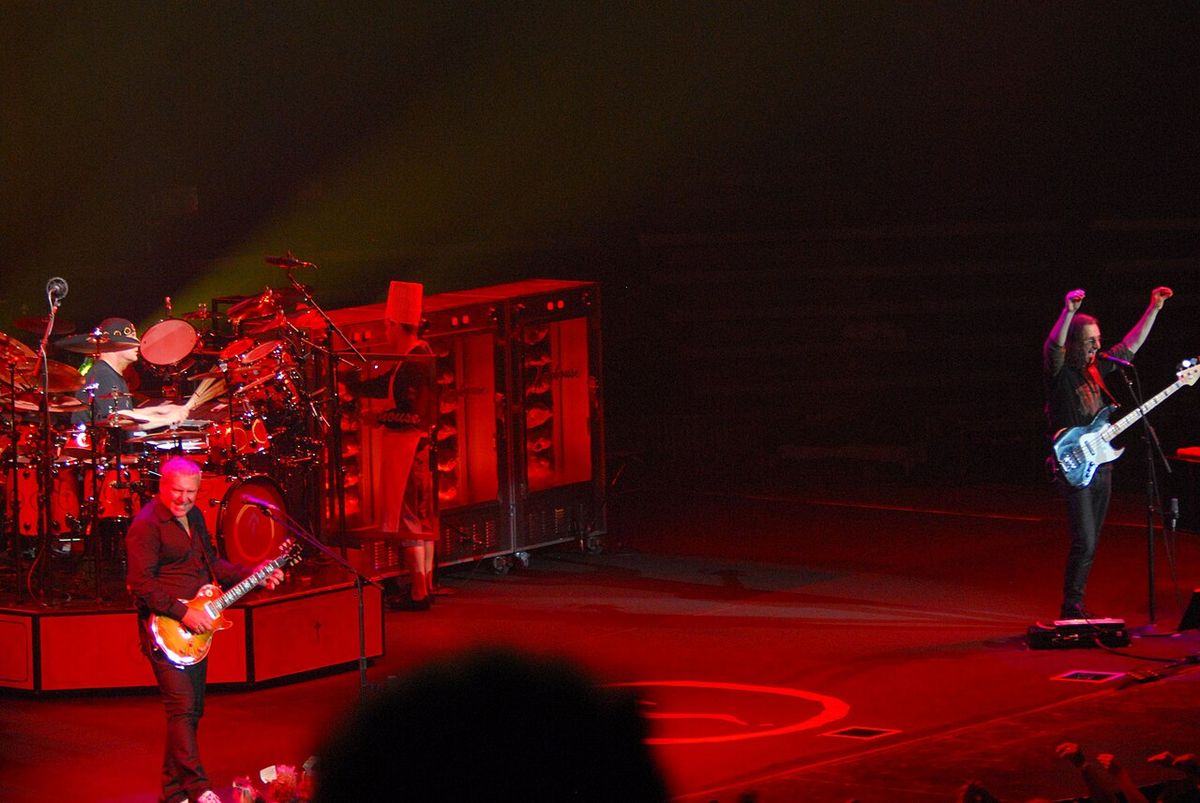
Geddy Lee's artistry is defined by his multi-instrumental prowess and distinctive vocal style within the power trio format of Rush. As the band's bassist, lead vocalist, and keyboardist, he developed a highly technical and melodic approach to the bass guitar, often treating it as a lead instrument with high-treble settings and aggressive playing. His vocal range spanned three octaves, characterized by a resonant countertenor that became a signature element of Rush's sound, though it lowered naturally with age. Lee's integration of synthesizers, beginning in the late 1970s, allowed Rush to expand their sonic palette into more orchestrated and complex progressive rock territories. He was known for his dynamic, energetic stage presence, managing multiple keyboards, bass pedals, and sequencers while singing lead vocals. This technical mastery established him as a highly influential figure, particularly among rock and metal bassists. Publications like Guitar Player magazine named him Best Rock Bass player for five consecutive years in the late 1980s, and in 2020, Rolling Stone ranked him 24th on its list of the 50 greatest bassists of all time. Notable bassists who have cited Lee as a major influence include Cliff Burton of Metallica, Steve Harris of Iron Maiden, John Myung of Dream Theater, Les Claypool of Primus, Steve Di Giorgio of Sadus and Proof, and Tim Commerford of Rage Against the Machine.
Collections and personal interests
Beyond music, Geddy Lee is a passionate and public collector with several focused interests. He is an avid oenophile with a personal wine collection of approximately 5,000 bottles. His love for baseball is well documented. He grew up a Detroit Tigers fan before adopting the Toronto Blue Jays and is a student of sabermetrics. Lee is a regular attendee at Blue Jays games, often seen keeping score from his seat behind home plate at Rogers Centre, and even had a cardboard cutout placed there when the team played in Buffalo during the 2020 pandemic season. He has donated parts of his baseball memorabilia collection to the Negro Leagues Baseball Museum. His most prominent collection is of bass guitars, comprising over 250 vintage instruments, including a 1961 Fender Precision Bass once owned by John Entwistle of The Who. Lee has authored books related to his passions, publishing Geddy Lee's Big Beautiful Book of Bass in 2018 and his autobiography, My Effin' Life, in November 2023, which he promoted with a 19-date book tour.
Equipment and signature gear
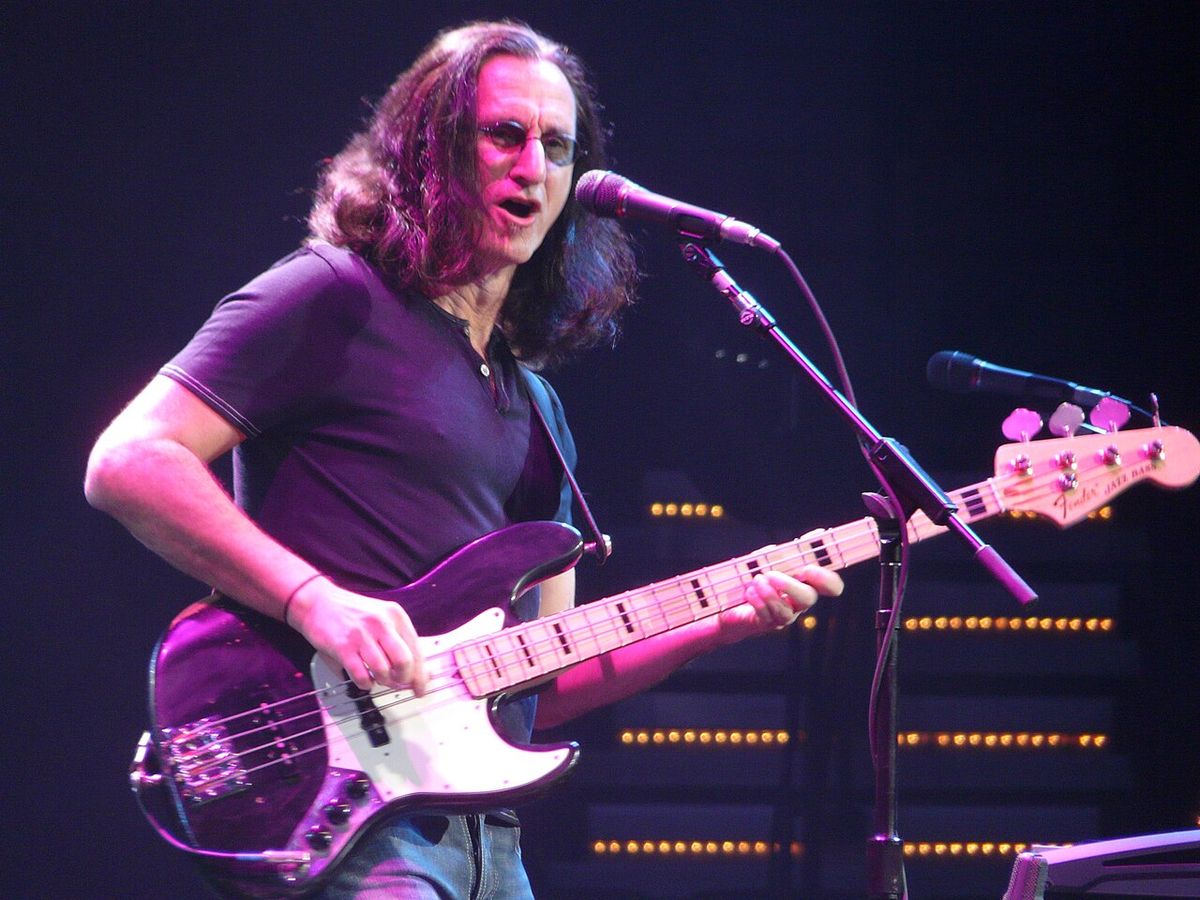
Geddy Lee's evolution as a bassist is closely tied to the instruments and equipment he has used throughout his career. In Rush's early days, he played a modified Fender Precision Bass before switching to a black Rickenbacker 4001 in the 1970s, inspired by the sound of Yes bassist Chris Squire. During the band's synth-heavy period in the mid-1980s, he adopted headless Steinberger and later Wal basses for their compact design and distinct tone. From the 1993 album Counterparts onward, he returned to a more traditional sound, using Fender Jazz Basses almost exclusively. An important instrument is his 1972 Fender Jazz Bass, purchased in a Michigan pawn shop in 1978, which became the blueprint for his signature model. Fender first released the Geddy Lee Jazz Bass in 1998 and updated the USA model in 2015 to reflect modifications Lee made to his own instrument. For strings, he has long preferred RotoSound, typically using Swing Bass RS66LD sets. On Rush's final tours, his amplification setup included Orange AD200 bass heads and OBC410 cabinets. His keyboard rig has featured synthesizers from Oberheim, PPG, and Roland, integral to crafting the band's layered studio and live sounds.
| Era | Primary Bass | Notable Characteristics |
|---|---|---|
| 1970s-Early 1980s | Rickenbacker 4001 | Black finish, high-treble lead sound |
| Mid-1980s (Synth Era) | Steinberger, Wal Basses | Headless design, jazzy tone |
| 1993 to 2015 | Fender Jazz Bass | Signature high-treble sound, includes his signature model |
Later projects and public presence
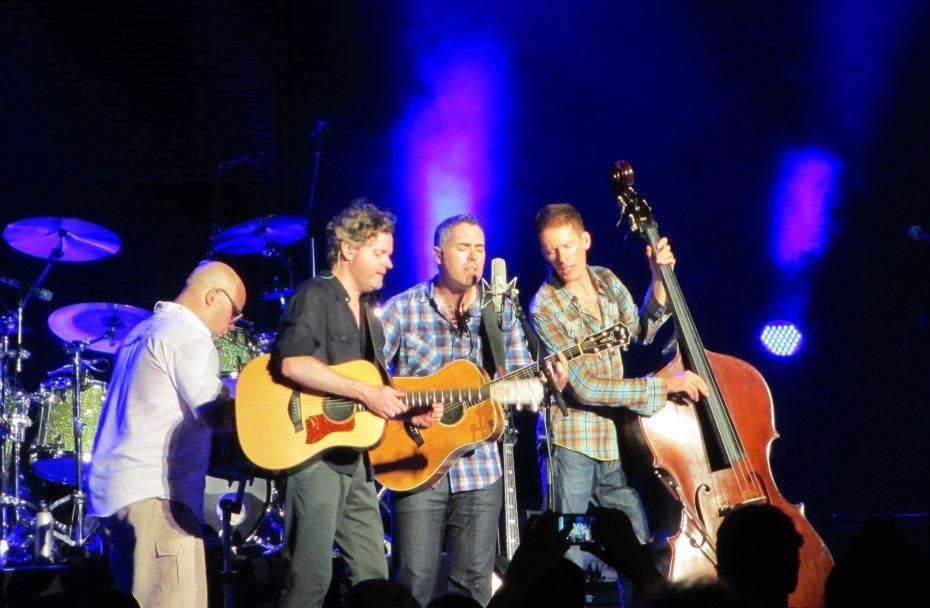
In the years following Rush's touring hiatus, Geddy Lee has remained active in the cultural sphere through various media projects and public appearances. In 2022, he made a guest-star appearance on the CBC period drama Murdoch Mysteries, playing the role of Thomas Sawyer. His 2023 autobiography, My Effin' Life, became a bestseller and was accompanied by a comprehensive North American and UK book tour. That same year, he launched a video series for Paramount+ titled Geddy Lee Asks: Are Bass Players Human Too?, a four-episode program featuring in-depth conversations with notable bassists Les Claypool, Robert Trujillo, Melissa Auf der Maur, and Krist Novoselic. Lee also collaborated with Barenaked Ladies frontman Ed Robertson on a secret project in 2021, which was later revealed to be voice work for a Rush-themed pinball machine. These endeavours demonstrate his ongoing commitment to engaging with fans, celebrating the art of bass playing, and exploring new creative outlets beyond the stage. He continues to be a visible supporter of the Toronto Blue Jays and maintains his extensive collections of wine, baseball memorabilia, and vintage bass guitars.
Questions about Geddy Lee
Is Geddy Lee involved in any projects after Rush stopped touring?
Yes, Geddy Lee has remained active with various projects. He published an autobiography, My Effin' Life, in 2023 and went on a book tour. That same year, he hosted a Paramount+ video series interviewing famous bass players. He also made a guest acting appearance on Murdoch Mysteries in 2022 and reunited with Alex Lifeson for Rush performances in October 2025 with a new drummer.
What is Geddy Lee's real name?
Geddy Lee was born Gary Lee Weinrib on July 29, 1953, in Willowdale, Toronto, Ontario. His stage and legal name, Geddy, originated from his mother's Polish-accented pronunciation of his given first name, Gary. His friends at school picked up this pronunciation, leading Lee to adopt it as his stage name. He later legally changed his name to Geddy Lee Weinrib, replacing his first name with Geddy and using his middle name Lee as his surname. His parents were Jewish Holocaust survivors from Poland who emigrated to Canada after the war.
When did Geddy Lee join Rush?
Geddy Lee joined the rock band Rush in September 1968 at the request of his childhood friend Alex Lifeson. He replaced the original bassist and frontman Jeff Jones. Along with Lifeson, Lee is one of the only two members to appear on every Rush album. He remained in the band until their initial dissolution from 2015 to 2025, following their final tour in 2015. Lee and Lifeson reunited as Rush in October 2025, with Anika Nilles filling in for the late Neil Peart.
Has Geddy Lee released any solo music?
Yes, Geddy Lee released his solo album My Favourite Headache on November 14, 2000, while Rush was on a hiatus. The album featured musicians such as friend and Rush collaborator Ben Mink and drummer Matt Cameron of Soundgarden and Pearl Jam. In April 2025, Lee released a 12 inch single titled The Lost Demos, consisting of re-recordings of two previously unpublished demos from the My Favourite Headache sessions. The single reached 30th on the UK Official Physical Singles Chart upon its release.
What awards has Geddy Lee won with Rush?
Along with his Rush bandmates Alex Lifeson and Neil Peart, Geddy Lee was made an Officer of the Order of Canada in 1996, with the trio being the first rock band to receive this honour. The group was inducted into the Rock and Roll Hall of Fame in 2013. Individually, Lee won Keyboard magazine's poll as Best New Talent in 1981. In 2020, Rolling Stone ranked him as the 24th greatest bassist of all time, and in 2006, Hit Parader ranked him 13th on their list of the 100 Greatest Heavy Metal Vocalists of All Time.
What are Geddy Lee's most famous bass guitars?
Geddy Lee is famously associated with several bass models. He used a black Rickenbacker 4001 as his main instrument from the 1970s up until the early 1980s. He also owns a notable 1961 Fender Precision Bass previously owned by The Who's John Entwistle. Lee's collection includes over 250 vintage basses.
Sources and further reading
- Geddy Lee (Wikipedia)
- Geddy Lee (rush.com)
- Geddy Lee: The Voice, Vision, and Virtuosity Behind Rush (armorgoldcables.com)
- Geddy Lee, Tour Dates, Song Releases, and More (consequence.net)
Checked by the Yadude Books desk. Last updated 2026-10-22.