Neil Peart
Neil Ellwood Peart was a Canadian musician, songwriter and author, best known as the drummer, percussionist and primary lyricist for the progressive rock band Rush. Known for his technical proficiency, exacting live performances and intellectual lyrics, Peart became a defining figure in rock music over a career spanning more than four decades. He earned the nickname "the Professor" and was inducted into the Modern Drummer Readers Poll Hall of Fame in 1983 at age 30, making him the youngest person ever to receive that honour. His work with Rush produced 19 studio albums and cemented a legacy that resonates deeply with Canadian cultural identity.
Early Life and Musical Beginnings
Neil Peart was born on September 12, 1952, in Hamilton, Ontario, the first child of Glen and Betty Peart. His early years were spent on the family farm in Hagersville before the family relocated to St. Catharines, where his siblings Danny, Judy and Nancy were born. The family later settled in the Port Dalhousie area of the town, and Peart described his childhood as happy, with a warm family life. He attended Gracefield School and later Lakeport Secondary School, developing an interest in music during early adolescence by listening to popular music stations from Toronto, Hamilton, Welland and Buffalo on a transistor radio. His initial musical training came from piano lessons, which he later said had little influence on him, but a penchant for drumming with chopsticks led to his parents buying him drumsticks, a practice pad and lessons for his 13th birthday.
After sticking with lessons for a year, Peart received his first drum kit for his 14th birthday and began formal instruction with Don George at the Peninsula Conservatory of Music. His stage debut occurred that same year at the school's Christmas pageant held at St. John's Anglican Church Hall in Port Dalhousie. He soon played with his first group, The Eternal Triangle, at Lakeport High School, performing an original song titled "LSD Forever" and his first drum solo. As a teenager, Peart worked at Lakeside Park in Port Dalhousie, a location that later inspired a Rush song, but was fired from his job for taking it easy during slow periods. He played in several local bands, including Mumblin' Sumpthin' and the Majority, performing at venues across Southern Ontario such as church halls, high schools and skating rinks in towns like Mitchell, Seaforth and Elmira, and even in the Northern Ontario city of Timmins.
Early Career and Joining Rush
At age 18, seeking to advance his musical career, Peart travelled to London, England, where he played in several bands and did occasional session work. To support himself, he worked selling jewellery at a shop called The Great Frog on Carnaby Street. During his 18 months in London, he encountered the writings of novelist and philosopher Ayn Rand, whose ideas on individualism and Objectivism became a significant early philosophical influence, later reflected in his lyrics for Rush. Becoming disillusioned with his lack of progress, Peart returned to Canada and worked for his father selling tractor parts at Dalziel Equipment in St. Catharines. Upon his return, he was recruited to play drums for a St. Catharines band called Hush, which performed on the Southern Ontario bar circuit.
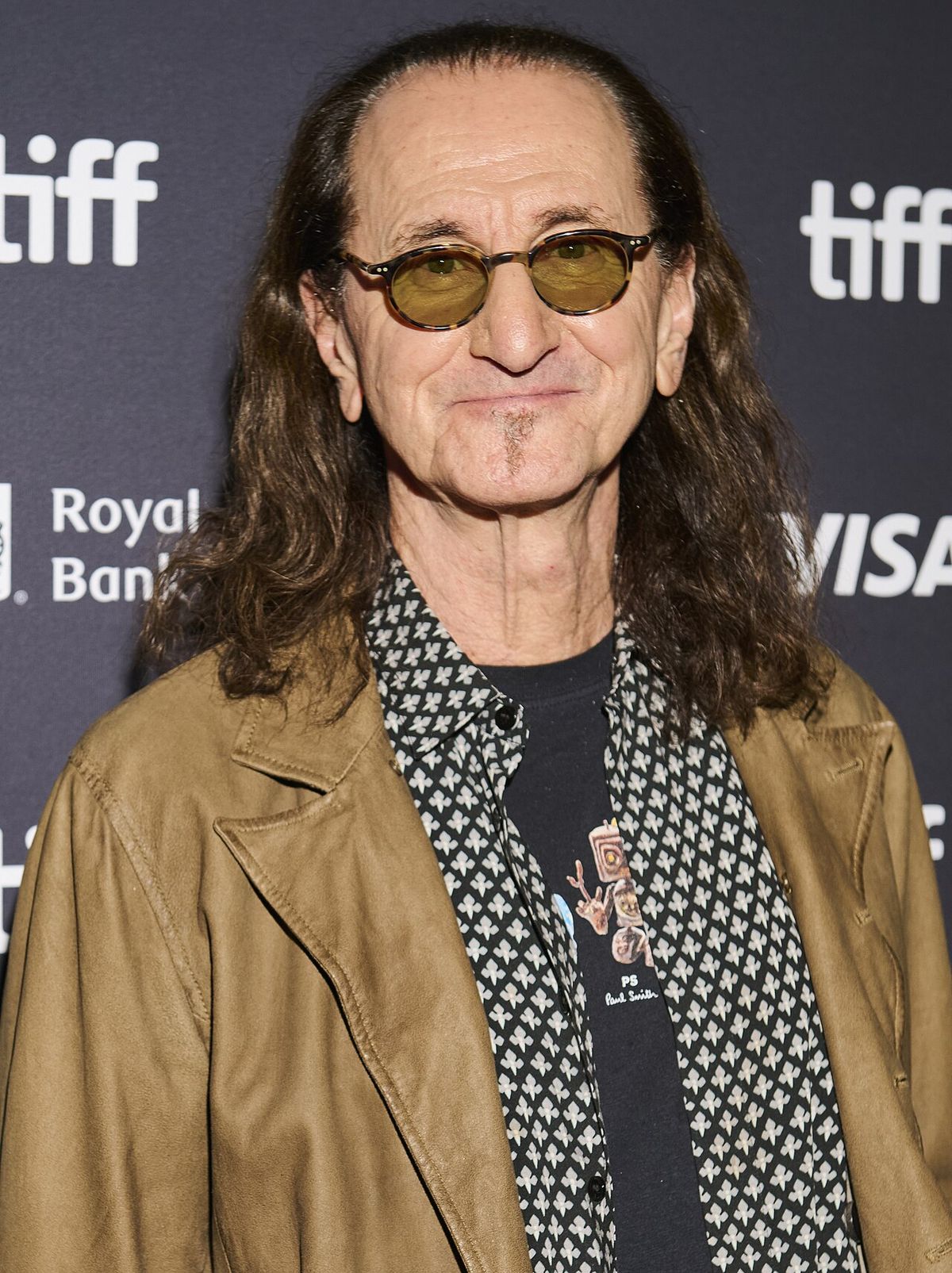
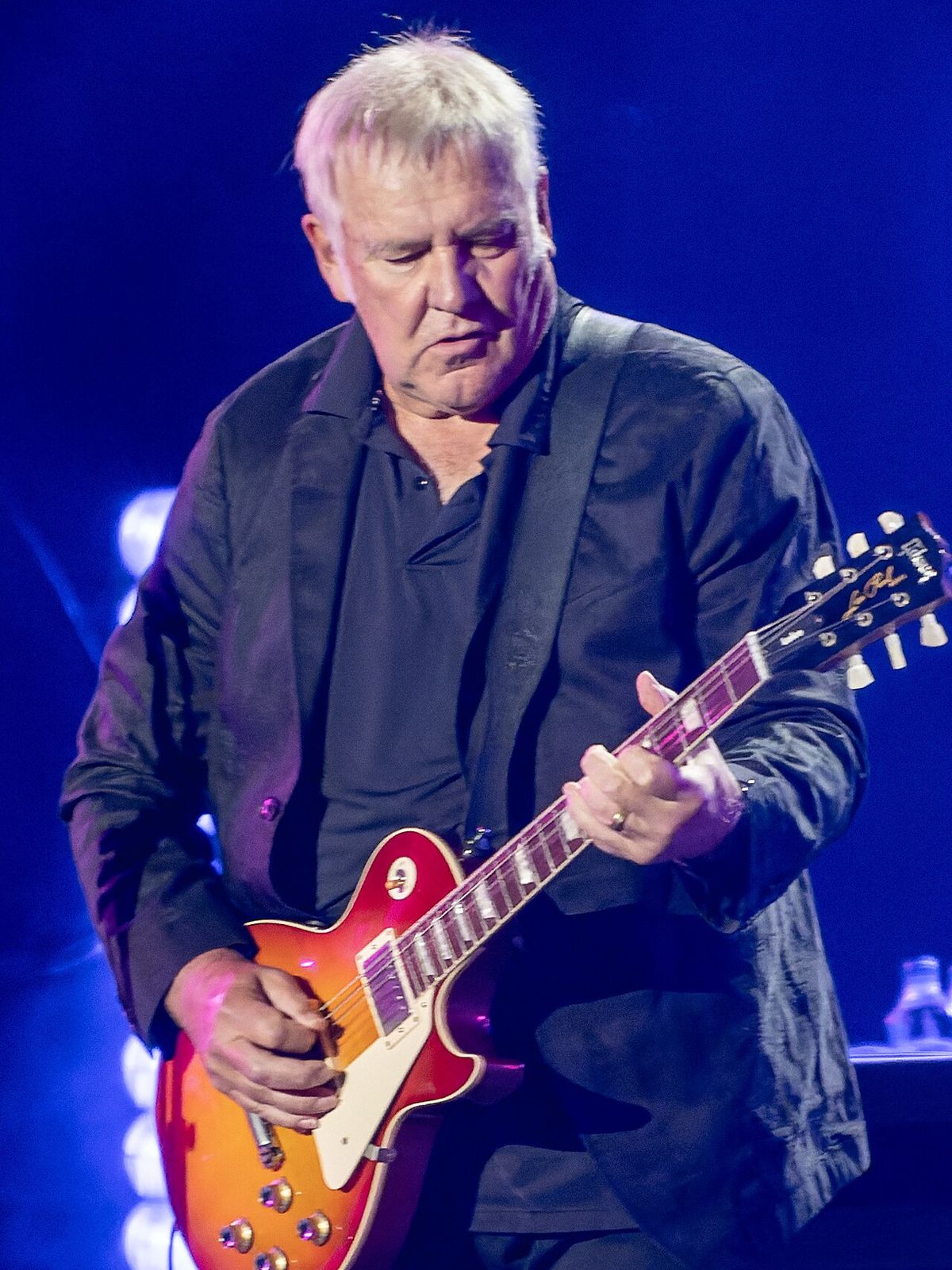
A mutual acquaintance soon convinced Peart to audition for the Toronto-based band Rush, which needed a replacement for its original drummer, John Rutsey. The audition was overseen by band members Geddy Lee and Alex Lifeson, with Peart arriving in shorts, driving a battered Ford Pinto with his drums stored in trash bags. Despite Peart feeling the audition was a disaster, Lee was impressed by his playing, particularly his triplets, and they connected on a personal level. After some discussion, Peart officially joined Rush on July 29, 1974, just two weeks before the band's first United States tour. His first gig with the band was on August 14, 1974, opening for Uriah Heep and Manfred Mann's Earth Band at the Civic Arena in Pittsburgh in front of over 11,000 people, where he played a silver Slingerland drum kit.
- July 29, 1974: Officially joins Rush in Toronto.
- August 14, 1974: First live performance with Rush in Pittsburgh.
- 1975: Records first album with Rush, Fly by Night. Band wins Juno Award for most promising new act.
- 1976: Breakthrough album 2112 is released, gaining a significant U.S. following.
- 1977 to 1978: Records A Farewell to Kings and Hemispheres at Rockfield Studios in Wales.
Peart quickly settled into his role, also becoming the band's primary lyricist. His first recording with Rush, 1975's Fly by Night, was successful and won the Juno Award for most promising new act. The follow-up, Caress of Steel, was poorly received, prompting Peart to pen the epic title track for 1976's 2112, which became a breakthrough despite record company indifference. The supporting tour culminated in a three-night stand at Toronto's Massey Hall, a venue Peart had long dreamed of playing, where Lee introduced him as "The Professor on the drum kit". The intense schedule of recording five studio albums in four years and performing up to 300 gigs annually led Peart to later describe this period as "a dark tunnel".
Musical Style and Evolution
Peart's drumming style was known for its technical proficiency, complexity and use of diverse influences. Early in his career, his style was deeply rooted in hard rock, drawing inspiration from British drummers like Keith Moon of The Who, Ginger Baker of Cream and John Bonham of Led Zeppelin. The Who was notably the first group that inspired him to write songs and play drums. Over time, his influences expanded to include jazz and big band drummers such as Gene Krupa and Buddy Rich, leading to a major change in his playing. In 1994, he began studying with jazz instructor Freddie Gruber, which prompted a complete revamp of his technique, shifting from a matched grip to a traditional grip and adding jazz and swing components to his rock foundation.
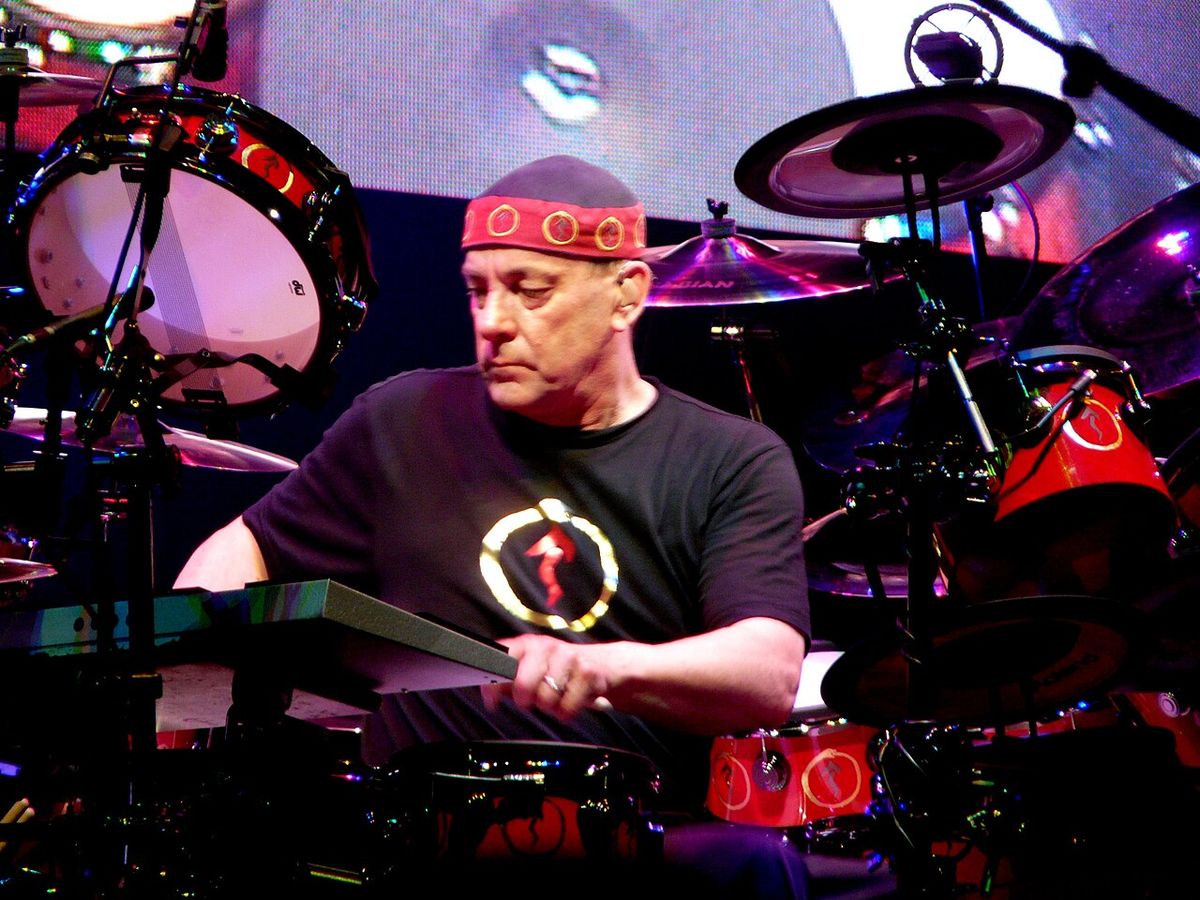
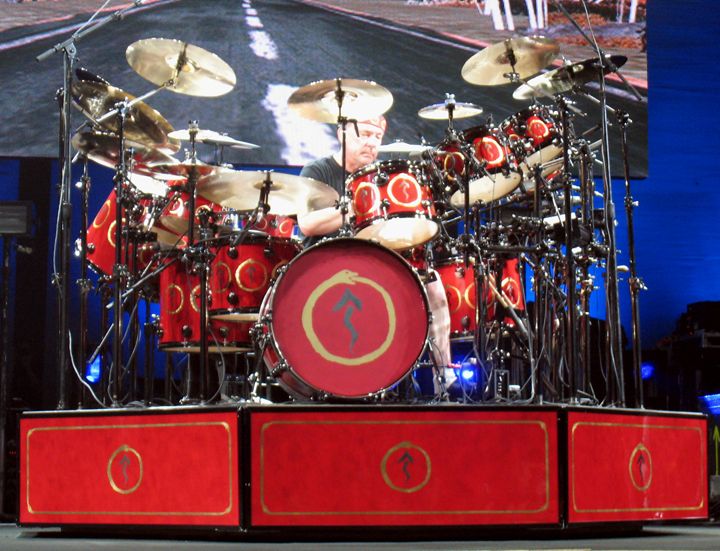
His playing was characterised by detailed passages in odd time signatures, complete separation of upper- and lower-limb patterns, and the use of a wide array of percussion. Peart was famous for his elaborate, advanced drum kits, which often contained more than 40 different drums and included rotating risers for live performances. He initially played Slingerland drums, then Tama, Ludwig, and finally Drum Workshop kits. His cymbals were primarily Zildjian A-series and Wuhan china until the early 2000s, when he switched to the Paragon line created for him by Sabian. Beginning in the late 1970s, he added diverse percussion like orchestra bells, tubular bells, wind chimes and timpani, later replacing many acoustic pieces with MIDI trigger pads and electronic drums from manufacturers like Simmons and Roland to trigger sampled sounds.
| Period | Primary Drum Brand | Key Stylistic Influence |
|---|---|---|
| Early Career (1974 to 1980s) | Slingerland, Tama | Hard Rock (Moon, Bonham, Baker) |
| Mid-Career (1980s-1990s) | Ludwig, Drum Workshop | Incorporation of electronic percussion |
| Later Career (1990s-2015) | Drum Workshop | Jazz/Swing (Gruber, Krupa, Rich) |
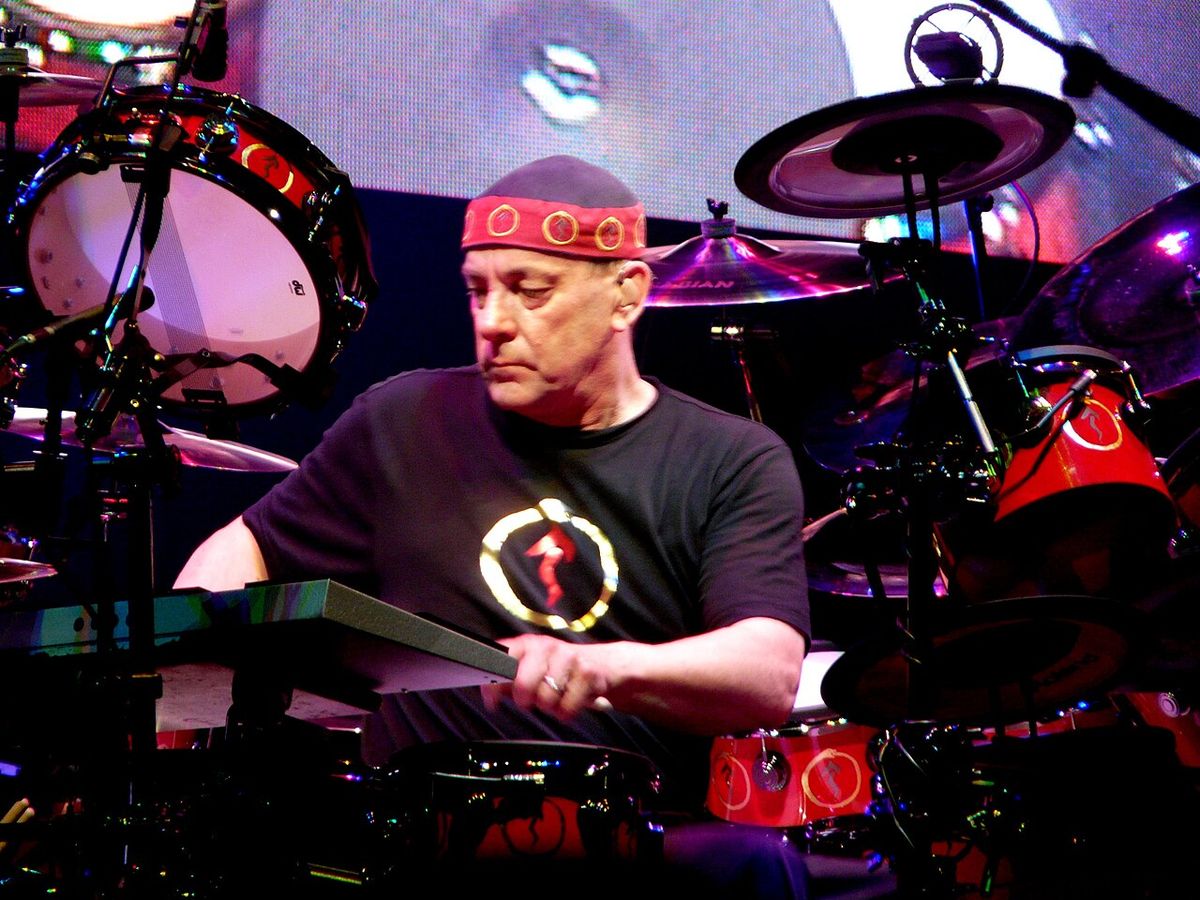
Peart's dedication to improvement was clear in his response to a 1991 performance with the Buddy Rich Big Band, where he felt his performance was lacking. This led him to produce and play on two tribute albums, Burning for Buddy: A Tribute to the Music of Buddy Rich in 1994 and 1997. He continued to refine his swing style with lessons from Peter Erskine, another Gruber pupil, and performed again at the Buddy Rich Memorial Concert in 2008. His solos, a staple of Rush concerts, were featured on every live album and were noted for their exotic percussion and complex arrangements, often featuring a rotating drum riser that allowed him to switch between acoustic and electronic kits mid-performance.
Lyricism and Literary Work
Beyond his drumming, Neil Peart served as the primary lyricist for Rush, addressing a wide array of universal themes and diverse subjects. His lyrics explored science fiction, fantasy, philosophy, and secular, humanitarian and libertarian themes, often inspired by his reading of authors like Ayn Rand. Early references to Rand's Objectivist philosophy are found in songs such as "Anthem" from 1975's Fly by Night and the epic "2112". This intellectual approach to songwriting distinguished Rush in the rock landscape and cultivated a deeply loyal fanbase that appreciated the band's conceptual depth. Peart's role as lyricist was solidified because his bandmates, Geddy Lee and Alex Lifeson, were largely uninterested in writing words, allowing his previously underutilised talent to develop.
In addition to his work with Rush, Peart was a published author, writing several non-fiction books based on his travels and personal experiences. He authored a total of seven travel memoirs, detailing journeys by motorcycle and car across North America and Africa. The two also co-authored a dark fantasy novella titled Drumbeats, inspired by Peart's travels in Africa. His writing displayed the same thoughtful, observant style present in his song lyrics, offering fans deeper insight into his personal perspectives and adventures outside of music.
- Primary Lyricist for Rush: Wrote lyrics for 19 studio albums from 1975 onward.
- Non-Fiction Books: Authored seven travel memoirs detailing personal journeys.
- Collaboration with Kevin J. Anderson: Co-authored three Clockwork Angels steampunk novels and the novella Drumbeats.
- Thematic Range: Lyrics addressed science fiction, fantasy, philosophy, individualism and humanism.
- Early Influence: Ayn Rand's writings on Objectivism inspired early songs like "Anthem" and "2112".
Equipment and Signature Gear
Neil Peart's approach to his drum setup was as meticulous and innovative as his playing. Over his career, he used drums from Slingerland, Tama, Ludwig and finally Drum Workshop, with his kits evolving into massive, technologically advanced setups. A defining feature of his live performances from the 1984 Grace Under Pressure Tour onward was a 360-degree rotating drum kit, allowing him to play different sections and, during solos, transition between acoustic and electronic setups. His cymbal setup initially featured Zildjian A-series and Wuhan china cymbals before he switched to his own signature Paragon line by Sabian in the early 2000s.
Peart extensively incorporated electronic elements into his acoustic foundation. Starting with 1984's Grace Under Pressure, he used Simmons electronic drums and Akai digital samplers to trigger a library of sampled acoustic and synthetic sounds. This allowed him to include sounds from instruments like orchestra bells and gongs without the physical stage space. Key electronic components included MIDI trigger pads and a MalletKAT Express, a two-octave electronic MIDI mallet controller. He designed his own signature drumstick with Pro-Mark, the PW747W Neil Peart Signature model, made from Japanese Shira Kashi white oak. For specific tours, Drum Workshop crafted custom kits, such as a red maple set for the 2007 Snakes & Arrows Tour and a copper-plated kit with steampunk clock imagery for the 2010 to 2011 Time Machine Tour.
Later Years, Retirement and Death
In his later years, Neil Peart faced significant physical challenges that impacted his ability to perform. He suffered from chronic tendinitis and shoulder problems, which contributed to his decision to step back from touring. In a December 2015 interview with Drumhead Magazine, Peart described himself as a "retired drummer," quoting his daughter's introduction of him and stating he would rather set drumming aside than face the decline described in Rush's song "Losing It". While bandmate Geddy Lee initially clarified that Peart was simply taking a break from the toll of touring, Alex Lifeson confirmed in January 2018 that Rush was "basically done" as a touring entity, largely due to Peart's health issues. Peart remained friends with his former bandmates following his retirement from the band.
During his final years, Peart lived in Santa Monica, California, with his wife, Carrie Nuttall, and their daughter. He had moved there partly to be closer to specialist medical care. After a private three-and-a-half-year illness, Neil Peart died of glioblastoma, an aggressive form of brain cancer, on January 7, 2020, at the age of 67. His death was confirmed by his family and sparked an outpouring of tributes from across the music world, honouring his significant influence as a musician and writer. His brother, Danny Peart, died in 2025. Neil Peart's legacy endures through his recorded work with Rush, his writings and his lasting impact on the art of drumming.
Awards and Recognition
Neil Peart received widespread acclaim and numerous honours throughout his career, primarily centred on his exceptional skill and influence as a drummer. The most notable of these was his induction into the Modern Drummer Readers Poll Hall of Fame in 1983. At 30 years old, he became the youngest person ever to receive this honour, a clear indication of his early and significant impact on the instrument. Modern Drummer magazine itself frequently cited him for his technical proficiency and innovation. With Rush, Peart also won a Juno Award in 1975 for Most Promising New Act following the release of the band's album Fly by Night, marking the beginning of their national recognition in Canada.
Beyond formal awards, Peart was consistently ranked and praised by peers, critics and publications as one of the greatest rock drummers of all time. Publications like Variety and USA Today placed him in the company of legends such as John Bonham, Keith Moon, Ginger Baker and Stewart Copeland. Variety specifically noted his fame for advanced drum kits, precise playing and showmanship. His influence extended beyond rock, as his work incorporating jazz techniques and his tribute projects to Buddy Rich earned him respect in wider musical circles. The elaborate, thematic drum kits he used on tours, like the copper-plated steampunk set for the Time Machine Tour, became widely recognized in their own right, celebrated as works of functional art.
Questions about Neil Peart
When did Neil Peart retire from drumming?
Neil Peart announced his retirement from touring in an interview with Drumhead Magazine in December 2015, citing chronic tendinitis and shoulder problems. He referred to himself as a 'retired drummer'. In January 2018, bandmate Alex Lifeson confirmed that Rush was effectively disbanded as a touring entity due to Peart's health issues. Peart's final performance with Rush was on the band's R40 Live Tour in 2015.
What was Neil Peart's cause of death?
Neil Peart died of glioblastoma, an aggressive brain cancer. He had been privately ill for three and a half years before his passing on January 7, 2020, at the age of 67. His death occurred in Santa Monica, California, where he lived with his wife and daughter. Bandmate Alex Lifeson had previously confirmed that Rush disbanded due to Peart's health issues. His struggle with chronic tendinitis and shoulder problems had also contributed to his decision to retire from touring years earlier.
How many albums did Neil Peart record with Rush?
Neil Peart recorded 19 studio albums with Rush after joining the band in July 1974. Ten of these albums sold over one million copies each in the United States. This prolific output contributed to Billboard ranking Rush third for 'most consecutive gold or platinum albums by a rock band'. His first recording with the band was the 1975 album Fly by Night, and their final studio album together was Clockwork Angels.
Did Neil Peart write books in addition to song lyrics?
Yes, in addition to being Rush's primary lyricist, Neil Peart was a published author. He wrote a total of seven non fiction books, which were memoirs focused on his personal travels and stories. He co authored three steampunk fantasy novels with Kevin J. Anderson, based on Rush's final album Clockwork Angels. The pair also collaborated on a separate dark fantasy novella titled Drumbeats, which was inspired by Peart's travels in Africa.
What was Neil Peart's nickname and why was he called that?
Neil Peart was nicknamed 'the Professor'. This moniker originated from his resemblance to the character known as the Professor on the television show Gilligan's Island. The nickname was used publicly, as evidenced when he was introduced as 'The Professor on the drum kit' by bandmate Geddy Lee during a concert at Massey Hall in Toronto. It became a familiar and affectionate term for him among fans and within the music community, reflecting both his intellectual lyricism and his studious approach to drumming.
Where in Canada did Neil Peart grow up?
Neil Peart grew up in Port Dalhousie, which is now part of St. Catharines, Ontario. He was born in Hamilton, Ontario, and lived early on his family's farm in Hagersville. His family moved to the Port Dalhousie area in 1956. He attended Gracefield School and later Lakeport Secondary School there, describing his childhood as happy with a warm family life. His early experiences in Port Dalhousie, including a job at Lakeside Park, later inspired a Rush song of the same name.
Sources and further reading
- Neil Peart (Wikipedia)
- Neil Peart, THE OFFICIAL NEIL PEART WEBSITE (neilpeart.net)
- Neil Peart (rush.com)
- Legendary drummer Neil Peart honoured by all-star ... (cbc.ca)
- Neil Peart (pas.org)
Checked by the Yadude Books desk. Last updated 2026-10-20.