Alberta oilsands producers weigh growth after policy changes
Industry executives are optimistic but say new investments must compete with shareholder returns and avoid past cost overruns.
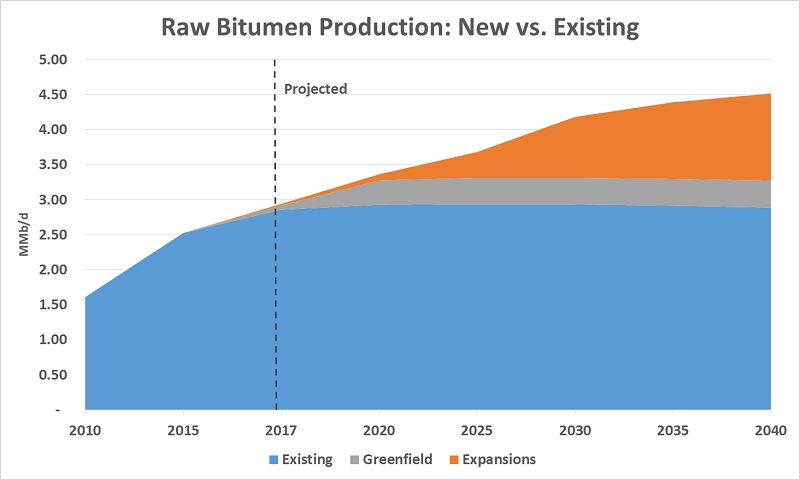
CALGARY · Alberta's oilsands industry is assessing expansion opportunities following recent policy shifts from the federal and provincial governments. Premier Danielle Smith has set a goal of doubling oilsands output within ten years. Ottawa has reversed several environmental policies from the Trudeau era and expanded eligibility for immediate tax deductions on investments. Alberta introduced a new royalty program last Friday to encourage development, and both governments are funding most of the proposed Pacific Link pipeline to British Columbia. "It's almost like the dog that got the car," said R.J. Johnston of the University of Calgary's School of Public Policy. "We got what we wanted as an industry. Now the pressure's on to invest."
Analysts warn that any significant new spending will compete with the strong dividends and share buybacks that investors now expect. Michael Berger, a senior analyst at Enverus, noted producers have focused on debt repayment and shareholder returns, a trend he expects to continue. "Expectations that the industry will follow through with massive investment are maybe a little unrealistic," Johnston said. He explained this view does not fully account for the industry's current position with its shareholders and capital providers.
Despite the focus on returns, Berger said there is still an appetite for growth among operators. "The large oilsands operators have multi-decade inventory profiles. It'll be a balancing act in terms of adequate shareholder distributions and prudent capital allocation decisions for growth barrels." Chris Seasons, a partner at ARC Financial, recalled a "go go go" mindset that dominated the sector from about 2000 to 2014, when investor demand for growth was high. That period saw projects rushed, driving up costs and hurting economics, a pattern that changed after the 2014 oil price crash. Seasons believes the cost discipline learned since then will remain.
READ MORE: U.S. drug pricing policy linked to some Canadian launch cancellations
READ MORE: Prairie provinces stay on daylight time, end seasonal clock changes
Executives from major producers expressed cautious optimism about growth on recent quarterly calls. Imperial Oil CEO John Whelan said his company could double its production with three steam-driven developments. A final decision on a 150,000-barrel-per-day project at Aspen, once expected at decade's end, could come sooner. "We are looking at, 'Do we want to bring it forward?' And we have options," Whelan said, adding that technology, economics and the fiscal environment will drive the choice. Suncor Energy's Rich Kruger said his company is studying six in-situ projects for the next decade but is also asking "what if we wanted to do more" or "go faster."
Cenovus Energy sees growth potential in its proposed $5.7-billion acquisition of Athabasca Oil Corp, which could boost production from the acquired assets to 115,000 barrels per day by 2032. CEO Jon McKenzie said recent policy announcements are critical. "Recent announcements around tax policy, royalties, new pipelines and regulatory efficiency are important steps in the right direction," McKenzie said. "These steps will have a meaningful impact on our ability to advance growth projects like the ones we are contemplating at Leismer and Corner."
Major producers are also in talks with governments about the Pathways carbon storage project, a condition for the Pacific Link pipeline under a 2025 energy accord. Pathways is designed to offset some emissions from the increased production the pipeline would enable. Canadian Natural Resources Ltd. president Scott Stauth said his company's growth plans depend on the outcome of these negotiations. "As we move forward, (the agreement) will hopefully enable growth opportunities," Stauth said. Berger said growth could come from redeveloping existing sites, adding expansions or new builds. "We think that there's enough resource, there are enough projects. It's ultimately just the cadence at which capital gets deployed."
With files from The Canadian Press and BNN Bloomberg