Mitch McConnell Returns to Senate After Three-Month Absence Following Hospitalization
Senate Republican Leader Mitch McConnell made his first public appearance since a June fall, appearing visibly frail but determined to participate in key votes during his final months in office.
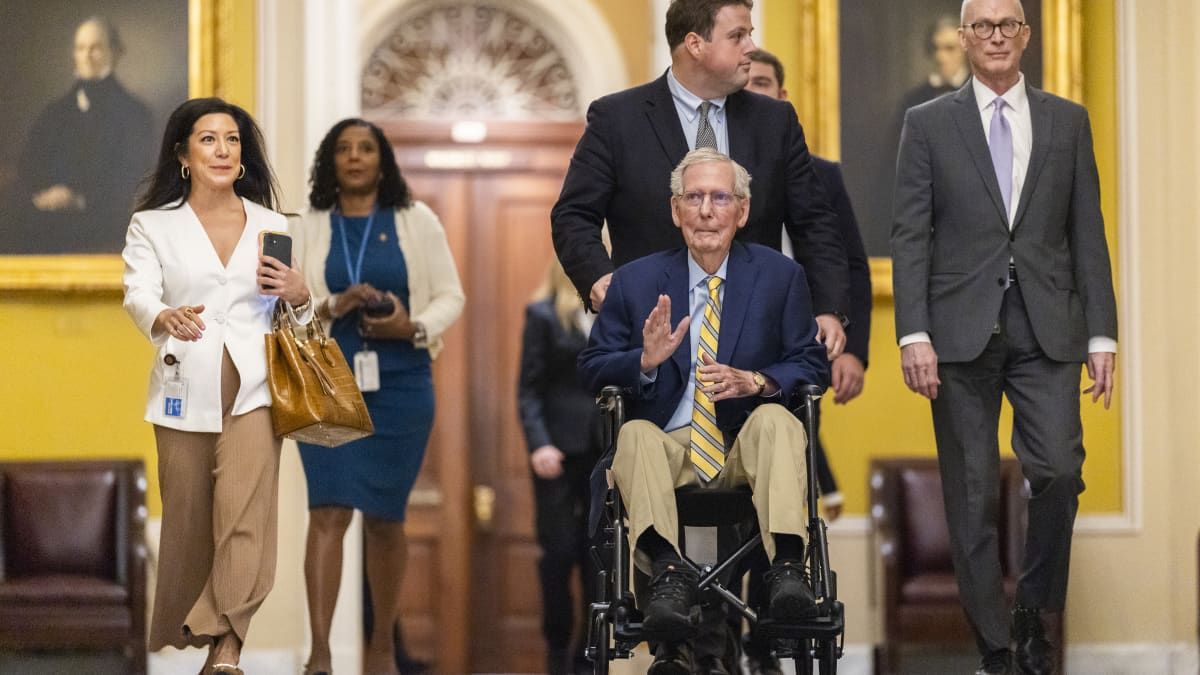
Republican Senator Mitch McConnell returned to the U.S. Senate on Monday after a three-month absence following a serious fall at his home in June that required hospitalization. The 84-year-old Kentucky lawmaker, who holds the distinction of being the longest-serving Senate leader in American history, appeared noticeably more frail as he addressed reporters from a wheelchair outside the Senate chamber. His return comes during a critical period for Senate Republicans as they attempt to advance key legislation before the end of the congressional session.
A Carefully Managed Return
McConnell's return was carefully orchestrated, with Senate staff instructing journalists not to take video of his remarks in the second-floor hallway, even though video recording is typically permitted in that area. The restriction allowed only still photographs of the senator's first public appearance since his hospitalization. McConnell spoke slowly and with some difficulty during his brief remarks, though he maintained his characteristic dry wit.
"I wasn't sure how many of you all would still be here after dodging so many questions during my almost two decades as leader,"he joked to assembled reporters. The controlled nature of the appearance reflected both medical considerations and political sensitivities surrounding his health status.
Legislative Priorities and Political Impact
The senator emphasized his determination to participate in key legislative matters during his remaining months in office. He specifically mentioned working on a pending farm bill that had stalled in committee during his absence and maintaining support for NATO allies against Russian aggression.
"I have an ongoing interest in backing up our good friends who are totally in the fight against the Russians,"McConnell stated. His return provides Republican leaders with a potentially crucial vote as they attempt to advance legislation on cryptocurrency regulation and college sports, two areas where McConnell has historically played a significant role in shaping policy.
Health Challenges and Medical History
In a statement released prior to his appearance, McConnell acknowledged his ongoing recovery challenges.
"I'm still not quite back to 100%, but I've assured Leader (John) Thune that, as I continue with physical therapy on the advice of my doctors, I will do my best to be present for tough votes when our Conference needs me,"he wrote. The senator revealed that his June fall left him briefly unconscious and required treatment for mild pneumonia during his hospitalization. His medical team has attributed his increased fall risk to post-polio syndrome, a condition McConnell has lived with since contracting polio as a child in the 1940s.
McConnell's physician disclosed that the senator has experienced multiple falls this year related to his post-polio condition, which has caused mobility issues throughout his adult life. A comprehensive medical evaluation found no fractures, cardiac abnormalities, stroke, tumor, or hemorrhage from his recent fall.
"My recovery has been a long and often frustrating process, and the lingering effects of childhood polio haven't made it any easier,"McConnell added in his statement. The senator's medical team has implemented a physical therapy regimen specifically designed to improve his stability and reduce fall risks.
Public Scrutiny of Aging Leadership
McConnell's extended absence amplified national conversations about aging leadership in American politics, particularly in a Senate where many members serve into their 70s and 80s. The speculation about his condition grew so intense that Kentucky's Democratic Governor Andy Beshear took the extraordinary step of issuing a public letter urging McConnell to provide transparent updates about his health status. This incident reflects broader societal debates about age and fitness for office that have become increasingly prominent in recent election cycles.
This health episode follows several concerning incidents in recent years. In March 2023, McConnell suffered a concussion from a fall in Washington that sidelined him for weeks. After returning, he experienced two high-profile episodes where he froze during news conferences, staring vacantly before colleagues intervened. He also sprained his wrist last year after falling while leaving a GOP luncheon. These incidents have fueled ongoing discussions about succession planning and the need for clearer protocols regarding health disclosures among senior elected officials.
Historical Context of McConnell's Career
McConnell's return marks the beginning of his final legislative session after four decades in the Senate. First elected in 1984, he served as Republican leader from 2007 until stepping down from leadership last year, guiding his party through both majority and minority positions during one of the most consequential careers in modern politics. His tenure saw significant shifts in judicial appointments, budget negotiations, and foreign policy stances that reshaped the Republican Party's direction.
Republicans have nominated U.S. Representative Andy Barr to replace McConnell, while Democrats selected former state lawmaker Charles Booker for the Kentucky seat. Despite his health challenges, McConnell has repeatedly stated his determination to complete his current term, which ends in January. This commitment reflects both his sense of duty and recognition that his vote could prove decisive in narrowly divided Senate battles during these final months.
Legislative Consequences of Absence
The senator's prolonged absence created significant legislative hurdles for Senate Republicans over the summer, most notably stalling progress on the farm bill that failed to advance out of committee without his participation. His return provides Republican leadership with greater flexibility in scheduling votes on contentious legislation during the remaining months of the congressional session. The farm bill, which affects agricultural subsidies and nutrition programs, represents just one of several high-profile measures where McConnell's presence could influence outcomes.
Medical Prognosis and Future Considerations
The Capitol physician's office noted that McConnell is undergoing physical therapy aimed at reducing his risk of future falls. Medical professionals have emphasized that post-polio syndrome can cause progressive muscle weakness and fatigue decades after the initial infection, potentially explaining some of the senator's mobility challenges. As McConnell navigates his final months in office, his health status will likely remain under close scrutiny from both political observers and medical professionals.
Balancing Privacy and Public Accountability
McConnell's situation reflects broader tensions between personal health privacy and public accountability for elected officials. While he eventually provided medical details about his condition, the initial period of silence fueled speculation and concern among constituents and colleagues alike. This case may prompt renewed discussions about establishing clearer standards for health disclosures among high-ranking government officials, particularly those in leadership positions or advanced age.
Looking Ahead to Transition
As McConnell prepares to leave office in January, attention will increasingly turn to the transition of power in Kentucky's Senate delegation and the broader implications for Republican leadership in the chamber. His determination to finish his term suggests recognition that his vote could prove decisive in narrowly divided Senate battles during these final months. The coming weeks will reveal whether McConnell can maintain sufficient physical stamina to participate fully in the demanding schedule of Senate business while continuing his recovery process.