York police release video of officer's 'NFL-worthy' tackle to arrest fleeing motorcyclist
Bodycam footage shows a York Regional Police officer executing a surprise tackle to arrest a motorcyclist who allegedly fled an accident scene in August, with the force joking about the officer's football-style takedown technique.
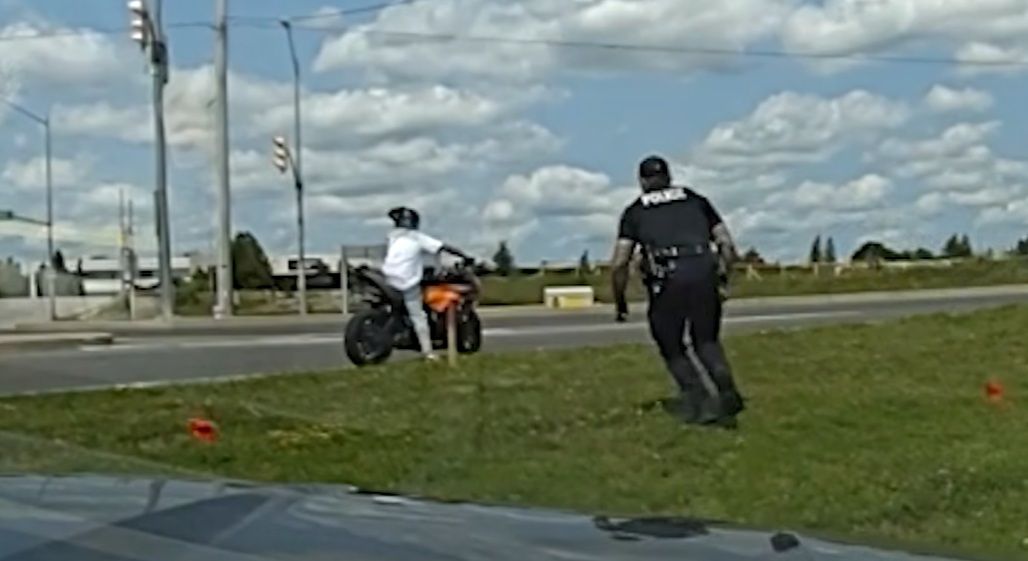
York Regional Police have released compelling body camera footage that showcases one of their officers employing an unconventional apprehension method against a motorcyclist who allegedly fled the scene of an accident. The August 9 incident near 16th Avenue and Mutual Street has garnered attention not only for the suspect's multiple alleged traffic violations but also for the officer's creative approach to making the arrest.
The dramatic takedown sequence
The footage provides a detailed account of the incident that began at approximately 1:42 p.m. Officers initially responded to reports of a motorcyclist involved in a collision who refused commands to remain at the scene to exchange information. According to police statements, the rider was explicitly advised he was under arrest before departing the area.
The subsequent bodycam recording shows an officer locating the suspect parked on the shoulder, where he appeared to be stationary but not attempting to flee at that moment. The officer's audio captures his observation to dispatch: "It looks like he's trying to taunt us." This comment suggests the officer interpreted the motorcyclist's stationary position as potential provocation rather than compliance.
The tactical approach that followed demonstrated calculated restraint and precision. The officer exited his cruiser without alerting the suspect, maintained a low profile by crouching, and executed what police later described as a "blindside approach." The full tackle brought the motorcyclist to the ground where he was promptly handcuffed without apparent resistance or injury.
Police commentary and social media response
York Regional Police's public engagement team seized on the football season timing to frame the incident with sports humor. Their social media post declared, "You could say our officers are happy the NFL is back," while praising the "beautiful form tackle." The additional quip about football fundamentals - "Rule number 1 of football: keep your head on a swivel" - served to highlight the element of surprise in the officer's approach.
This lighthearted framing continued as officers later displayed the suspect's personalized license plate reading "Run This" in the video. Police confirmed they had checked the plate's status and found it allegedly unauthorized, adding another layer to the motorcyclist's legal troubles beyond the initial flight from the accident scene.
Serious charges behind the viral moment
While the takedown generated humorous police commentary, the charges filed against the motorcyclist reflect serious traffic violations. The suspect faces six distinct charges including failure to stop after an accident, flight from a police officer, driving without insurance, failing to disclose insurance particulars, and permitting/using unauthorized plates.
These charges collectively represent significant breaches of Ontario's traffic laws, particularly the failure to remain at an accident scene which carries potential criminal implications. The uninsured vehicle and unauthorized plates compound the severity of the situation, suggesting systemic non-compliance with vehicle registration and insurance requirements.
Police tactics and use of force considerations
The video raises important questions about police tactics during traffic stops, particularly the decision to employ physical force against a stationary suspect who was not actively fleeing at that moment. The officer's approach - while effective in this instance - demonstrates an alternative to traditional vehicle pursuits or verbal commands.
Modern policing increasingly emphasizes de-escalation techniques, making this physical intervention noteworthy. The officer's choice to maintain stealth rather than announce his presence suggests a tactical calculation that the suspect might attempt to flee again if given the opportunity. York police have not commented on whether this specific apprehension method follows standard operating procedures or represents an improvised solution to the circumstances.
Broader implications for traffic enforcement
This incident occurs against the backdrop of ongoing discussions about police responses to traffic violations across the Greater Toronto Area. Recent years have seen heightened scrutiny of both fleeing suspects and the methods officers employ during pursuits. The case presents an unusual scenario where physical intervention prevented what might have become a dangerous vehicle chase.
Police departments nationwide continue to grapple with balancing public safety concerns against the risks posed by pursuits. This incident offers a case study in alternative apprehension methods that eliminate moving vehicle risks while still ensuring suspect accountability.
Legal consequences and public safety messages
Beyond the arresting visuals, the case serves as a stark reminder of the serious legal consequences for drivers who flee accident scenes. Ontario's Highway Traffic Act imposes significant penalties for hit-and-run offenses, which can include license suspension, substantial fines, and potential jail time for more severe cases.
The unauthorized plates and lack of insurance documentation compound the motorcyclist's legal exposure, demonstrating how traffic violations often intersect to create more complex legal situations. For the public, the incident reinforces the importance of complying with basic traffic laws and maintaining proper vehicle documentation.
Bodycam footage as a transparency tool
The decision to release this footage reflects growing police transparency practices where bodycam videos serve multiple purposes - demonstrating officer conduct, documenting suspect behavior, and engaging the public through accessible content. While the humorous framing made the video shareable, the underlying documentation provides valuable insight into modern policing challenges.
As police departments increasingly adopt body-worn cameras, the public gains more opportunities to witness the split-second decisions officers face during enforcement actions. This case presents a relatively low-risk scenario that nonetheless illustrates the judgment calls required during traffic stops.
Community impact and ongoing discussions
While the video's viral appeal stems from its dramatic visuals and police humor, the incident touches on substantive issues in contemporary law enforcement. The balance between effective policing and proportional use of force remains a dynamic conversation, particularly for non-violent offenses like traffic violations.
Community responses to such footage often vary, with some applauding creative solutions to prevent dangerous pursuits while others question whether less physical alternatives might have sufficed. These discussions form part of larger dialogues about police-community relations and the evolving nature of public safety strategies in urban environments.